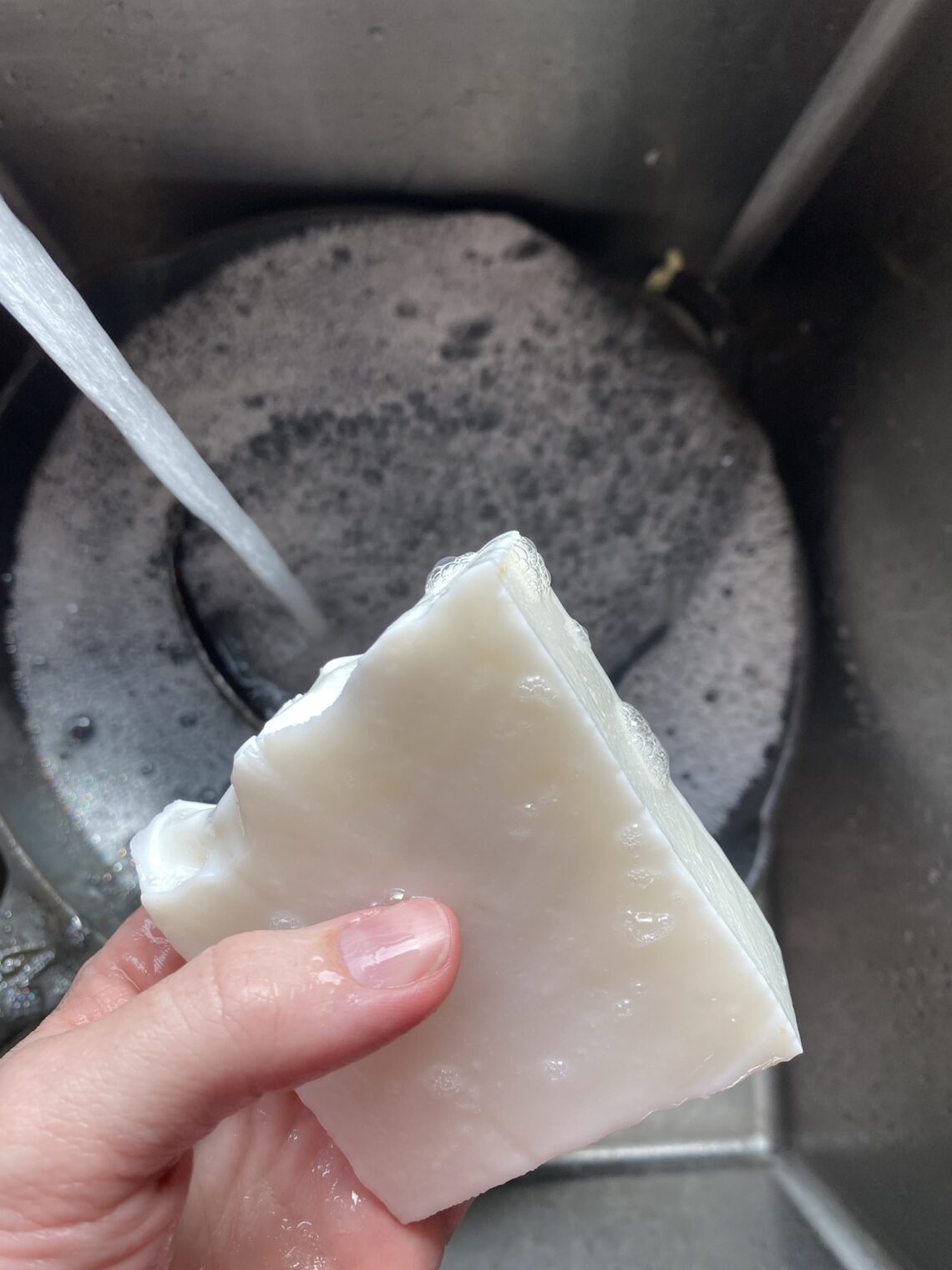
This is a great beginner cold process soap tutorial! With just four simple ingredients, learn to make a simple sudsy dish bar thats super fatted with beef tallow. The added beef tallow makes this a perfect dish soap to scrub cast iron with, without stripping the cast iron of its seasoning.
In my experience, sometimes cast iron needs a little sudsy elbow grease before I can dry it and reseason it, which is why I formulated this Cast Iron Dish Bar recipe. It used to be my biggest seller at local markets too. It’s great for dishwashing in general and the added beef tallow makes it gentle on hands.
If you’re interested to make your own cast iron ware care items, check out my cast iron lotion bar recipe for getting a silky smooth non stick finish built up!
A note on scent. I do not add essential oils or fragrances to this since cast iron is porous and I don’t want that building up into the cast iron ware.
Cast Iron Dish Bar Recipe
12 ounces water
5.9 ounces lye
33 ounces Coconut Oil
3 ounces Beef Tallow
The coconut oil creates a nice hard bar. Because this is a cold process soap, once you’ve mixed, poured and cut your bars, they’ll need to cure for 4-6 weeks. The longer you allow them to cure, the harder and longer lasting the bar will be.
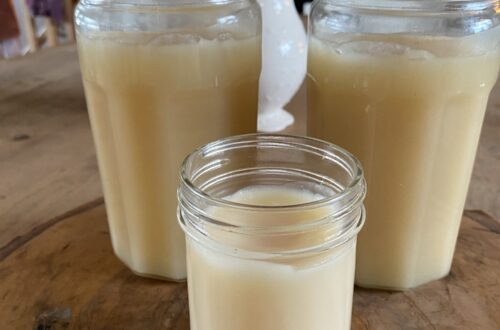
The beef tallow is added fat or superfatted fat in this recipe. Meaning I calculated enough fat so that not all of it would be turned into soap. Some will be leftover which leaves some fat on the skillet and doesn’t dry out hands.
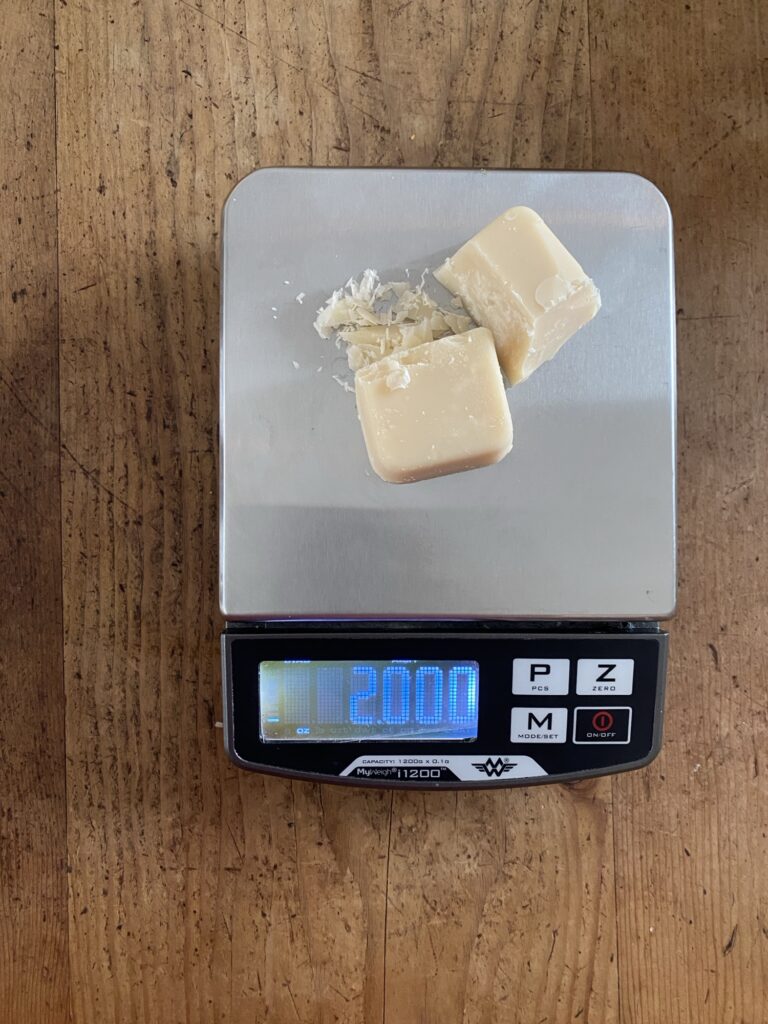
For my recipe I’m using sheep fat I rendered and had in my freezer. So I just cut it up and weighed it from a solid state.
My coconut oil was melting at room temperature and for this recipe I use my lye and water solution to melt my oils.
Other items you’ll need:
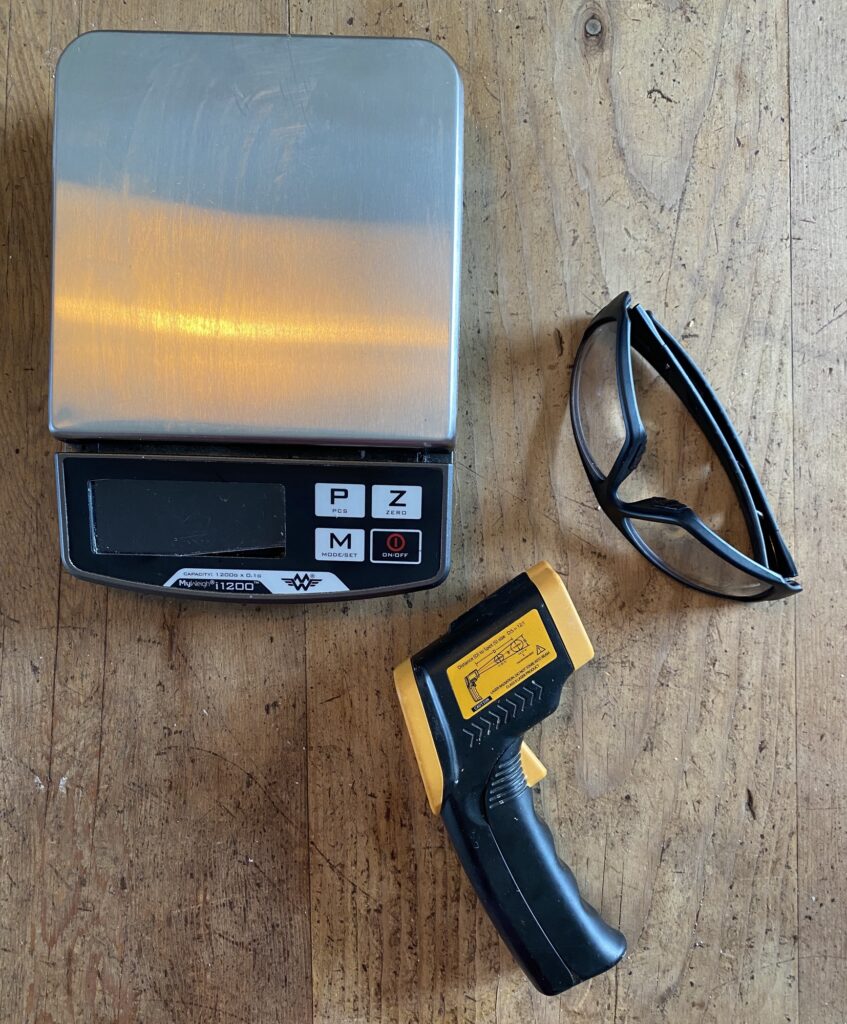
A digital scale to weigh your ingredients. A thermometer to check the temp of your soap batter and safety glasses to protect your eyes from possibly splashing lye in them. I would suggest too that you wear a long sleeve shirt and gloves. I’m being a bad example in this tutorial by wearing neither of these things. However, glasses are important. Immersion blender for mixing your soap batter.
One last word of caution. When lye amd water mix, they become caustic and release fumes. I mix mine under my range hood and turn my range hood on high. Do not do this if you’re tired or distracted. Don’t let toddlers help or be around the fumes. Same with indoor pets. Don’t leave your solution on the counter and walk away. The lye portion of this is definitely something you need to pay attention too as it can burn if you spill it and burn if you breathe it in. Soap making is simply and easy, but sodium hydroxide/lye should still be handled with care.
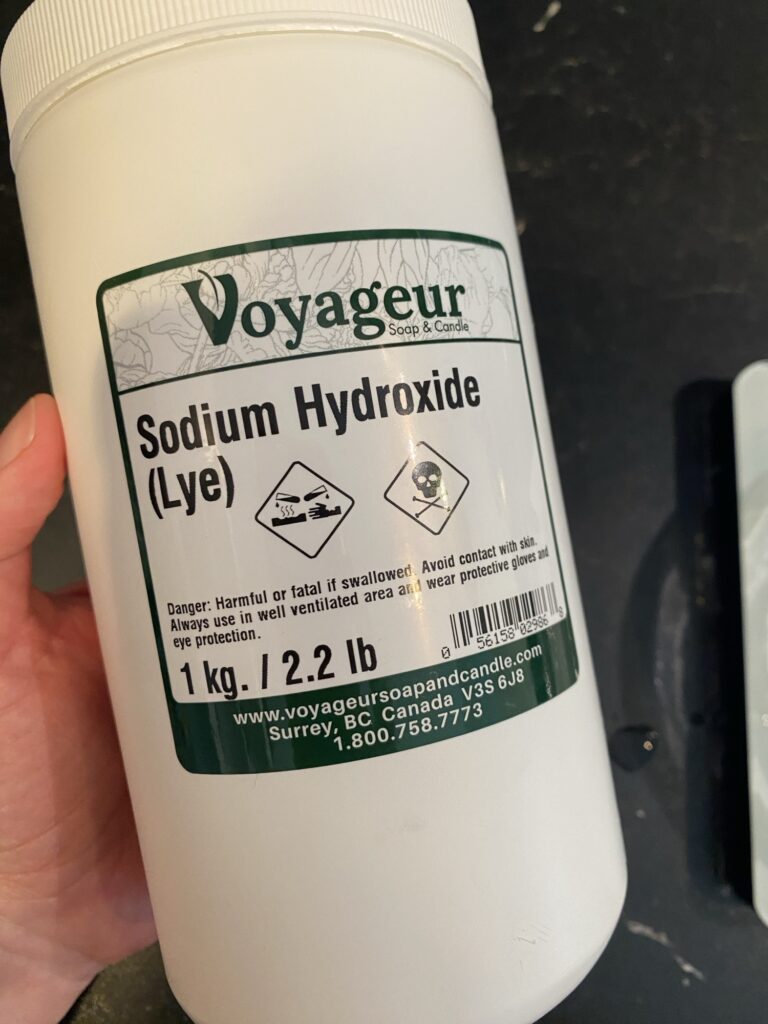
I have found my lye at my local health food store. There are a lot of raw material soap making stores online too. In Canada I pay a dangerous goods freight charge any time I purchase lye online but I still find it to be a better deal buying in bulk online than in smaller containers at my local health food store.
I use glass Pyrex bowls and cups for my soap making along with a spatula that I reserve just for soap making. I’ve read that you do not want to use aluminum but plastic is ok. If you use plastic do not reuse it for food.
I use a two quart Pyrex measuring bowl for my soap batter, a two cup Pyrex measuring cup for my lye and a one quart Pyrex measuring cup for my water and lye solution.
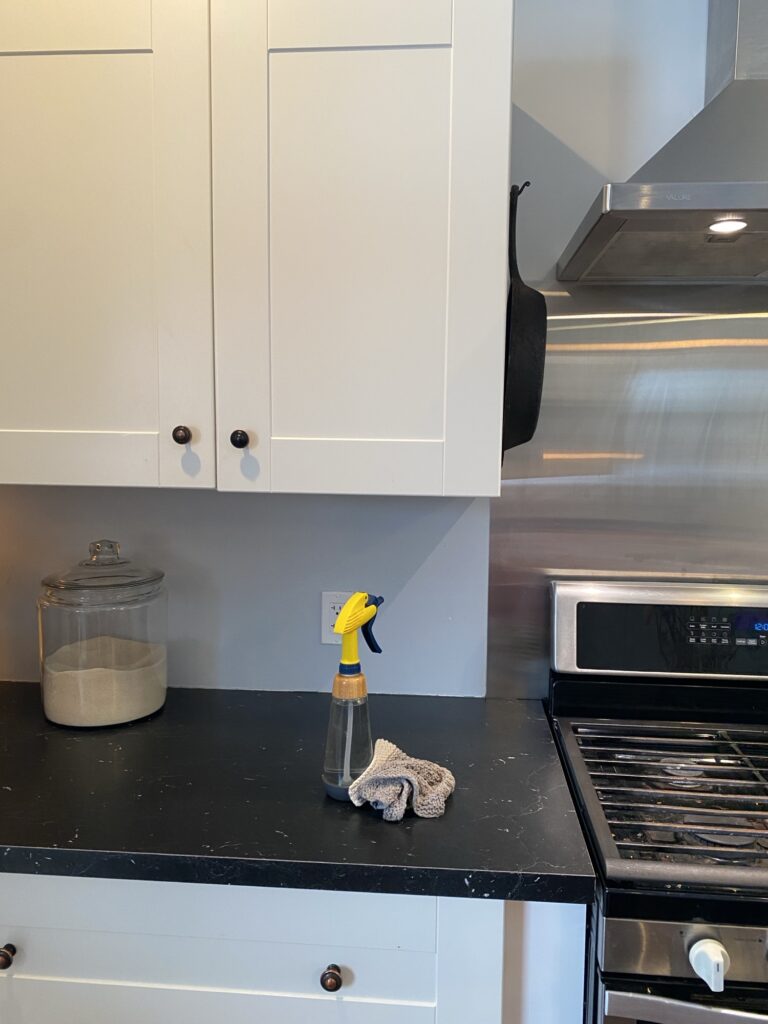
Before we begin, I always keep a spray bottle with one part vinegar and one part water on the counter. This neutralizes any lye that might spill. I move everything off my counter and spray and wipe it with my vinegar.
Once your area is prepped begin by weighing out 12 ounces of water. A lot of soap makers suggest distilled water but I never buy distilled water. I just use my filtered reverse osmosis water.
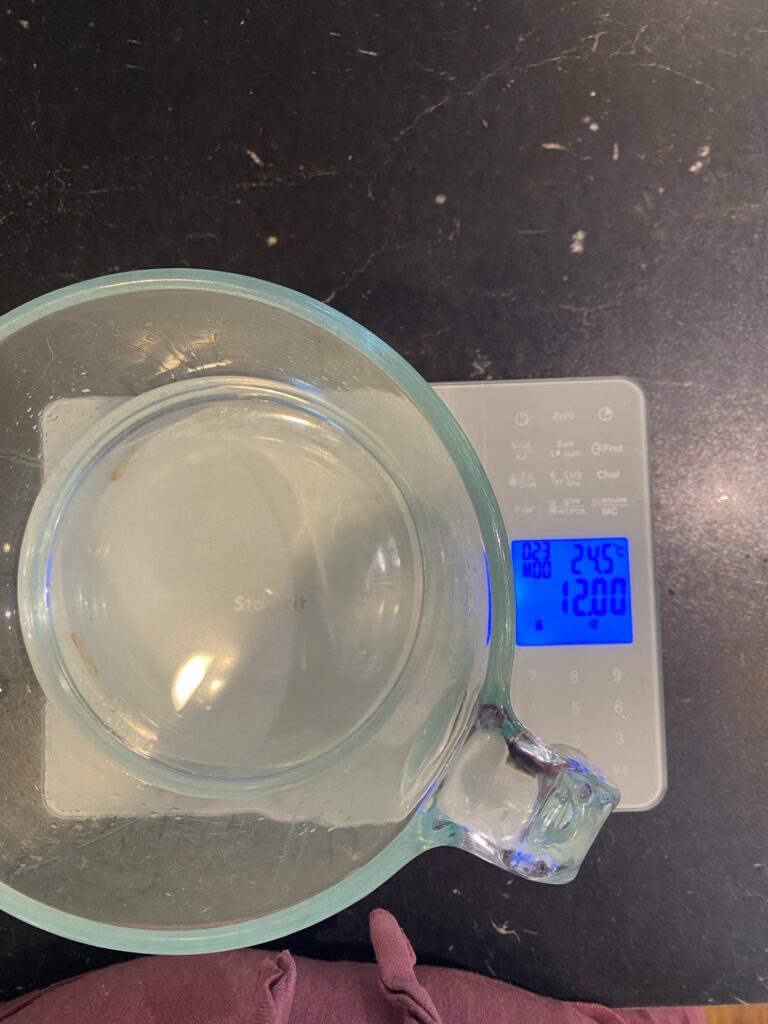
Once weighed, set your water aside, again I’m doing this under my range hood with it turned on high.
Now it’s time to carefully weigh out 5.9 ounces of sodium hydroxide.
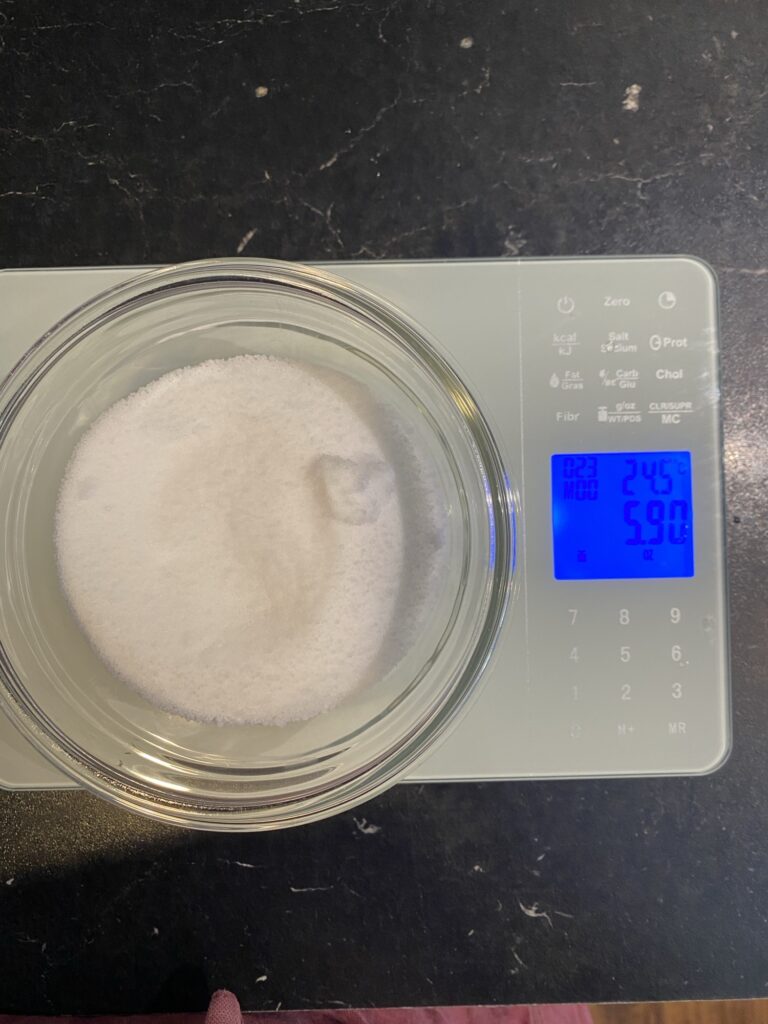
If you’re new to soap making, this is very important. Never pour water into lye. Never pour water into lye.
Always, always pour lye into water. Very slowly begin pouring your sodium hydroxide into your water and stirring carefully. I keep my head back as far as I can and as soon as I get the sodium hydroxide poured I step away for a moment so as to be sure I’m not breathing any fumes. I will come back to it and stir every few minutes.
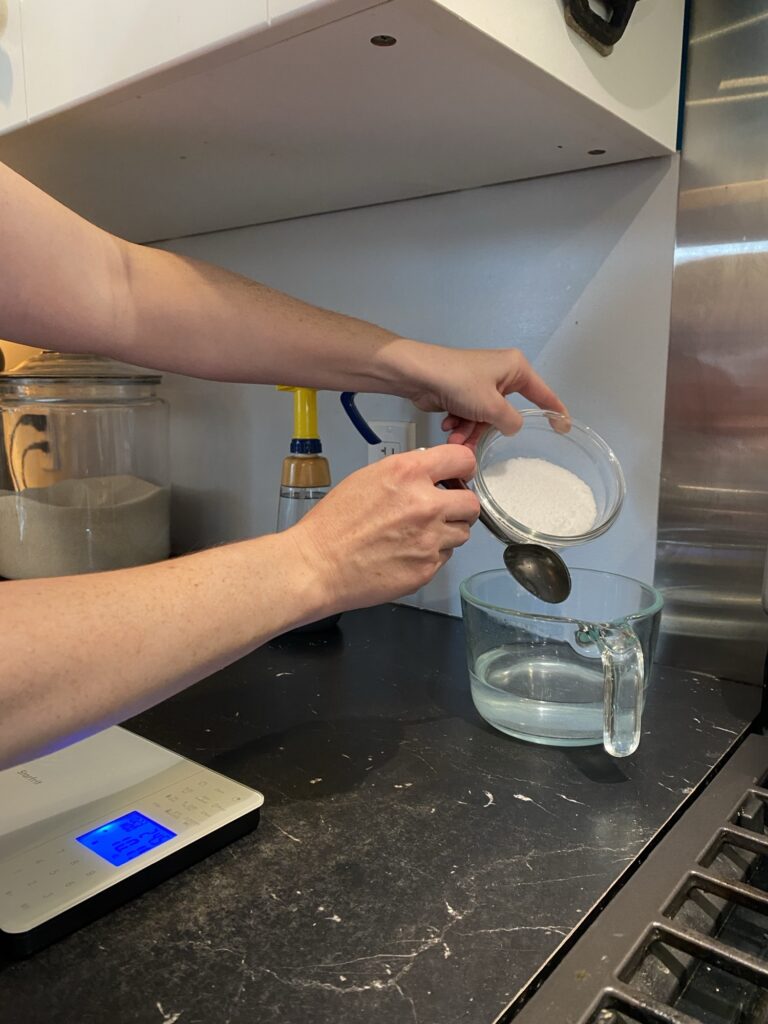
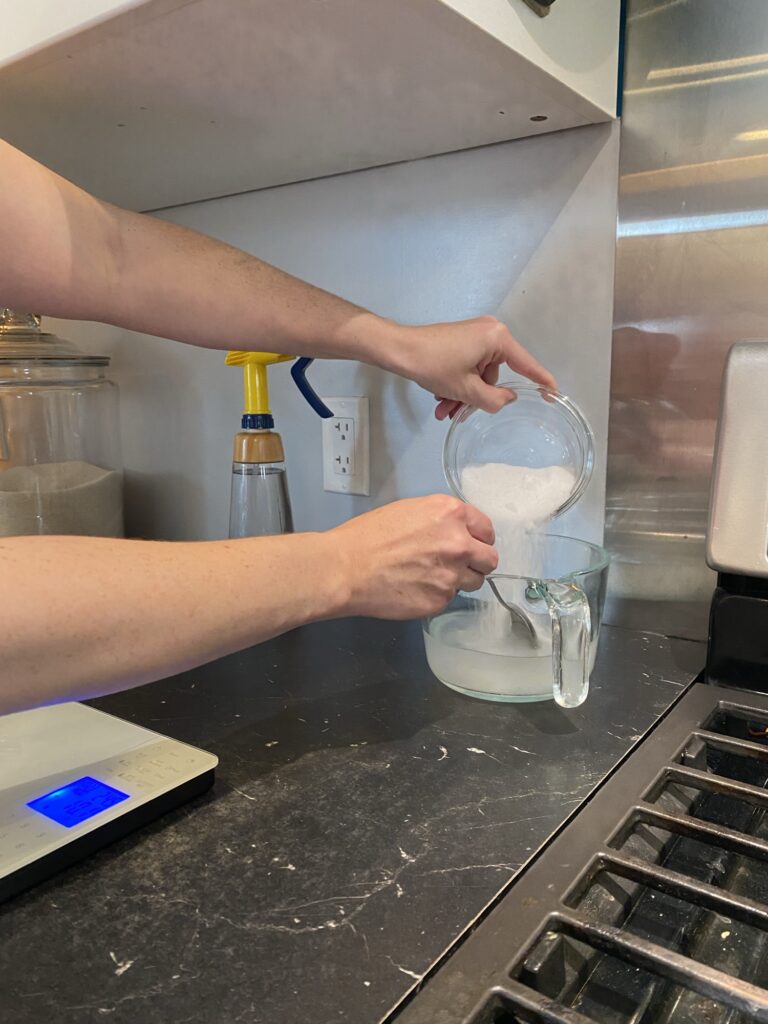
The solution will be very cloudy as the lye dissolves. It usually takes about 10 minutes for it to fully dissolve.
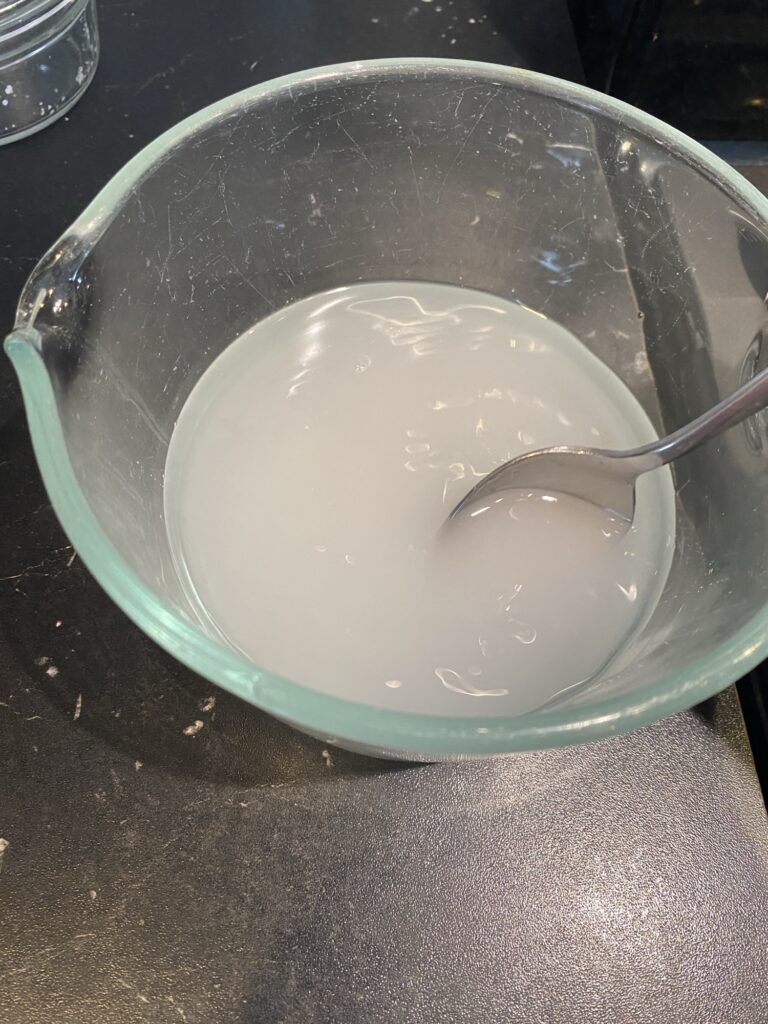
Setting the lye and water solution to the back and still under my range hood for ventilation, it’s time to weigh out the oils.
Weigh out 33 ounces of coconut oil.
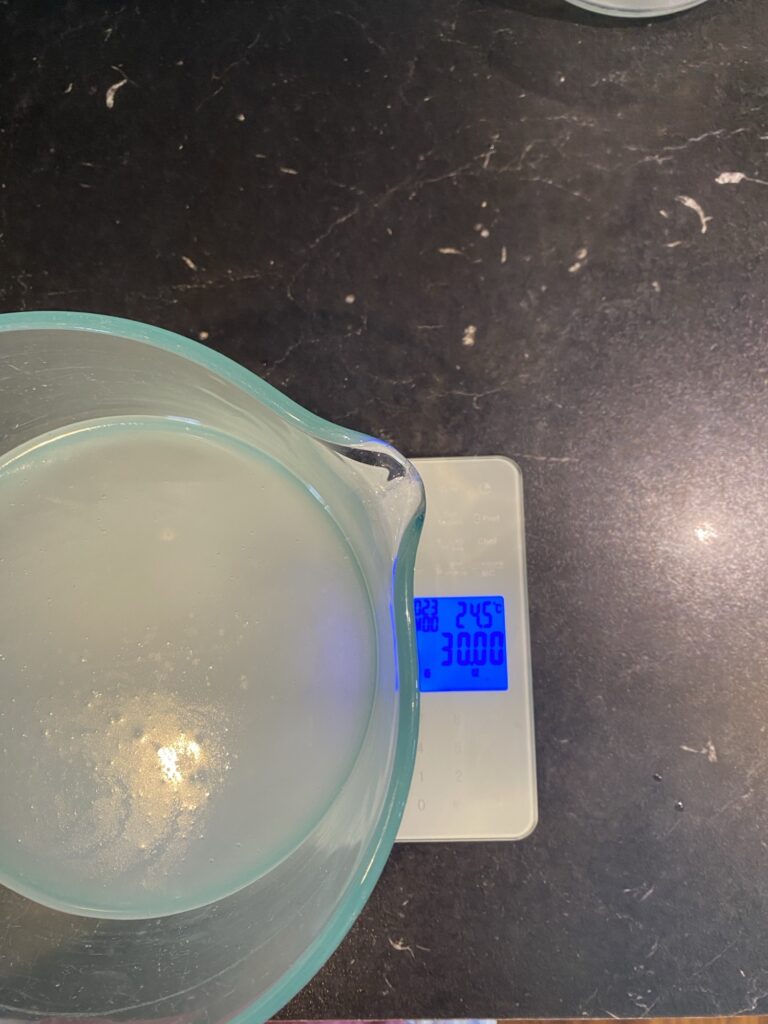
Now weigh out 2 ounces of tallow. I’m using sheep fat I rendered a few months ago. It was in my freezer so I added it in a solid state.
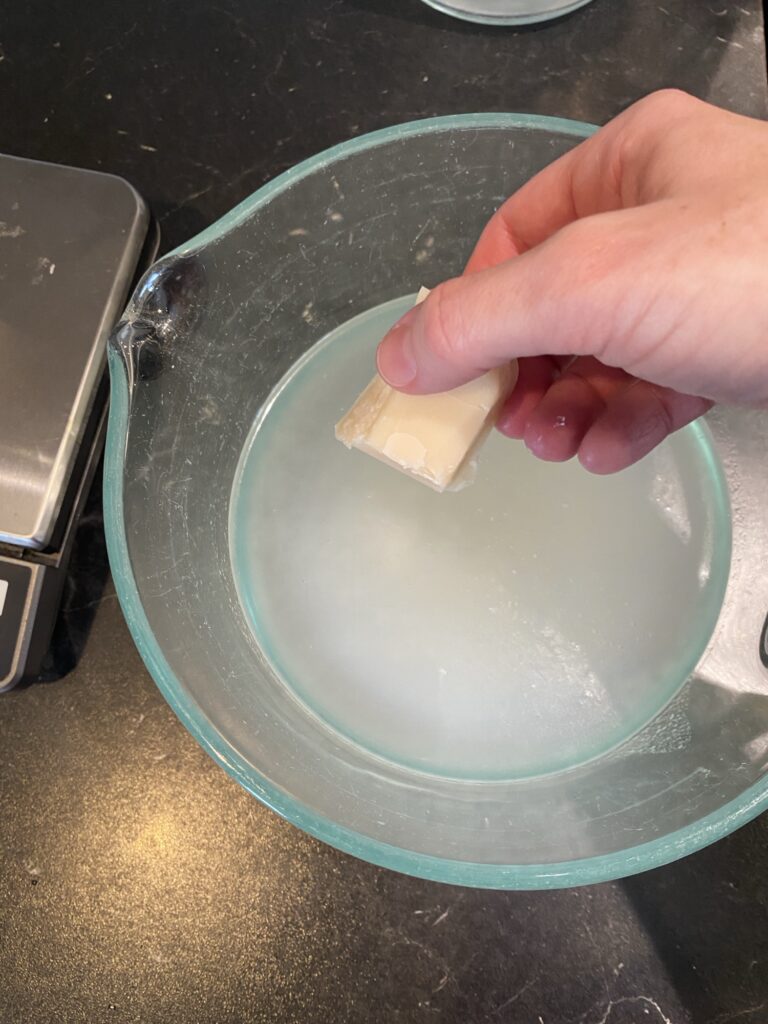
Once the lye solution is clear it’s time to add it to the fats. If I’m making a nicer soap where I want to control the temperature and keep the end product from cracking, I will lower the temperature of the lye and heat the oils so that they’re within 5 degrees of each other. But in this case, I’m just using the lye solution to melt my oils so I’m not too worried about how hot the lye solution is so long as it’s hot enough to melt my oils and turn them into fat, saponification.
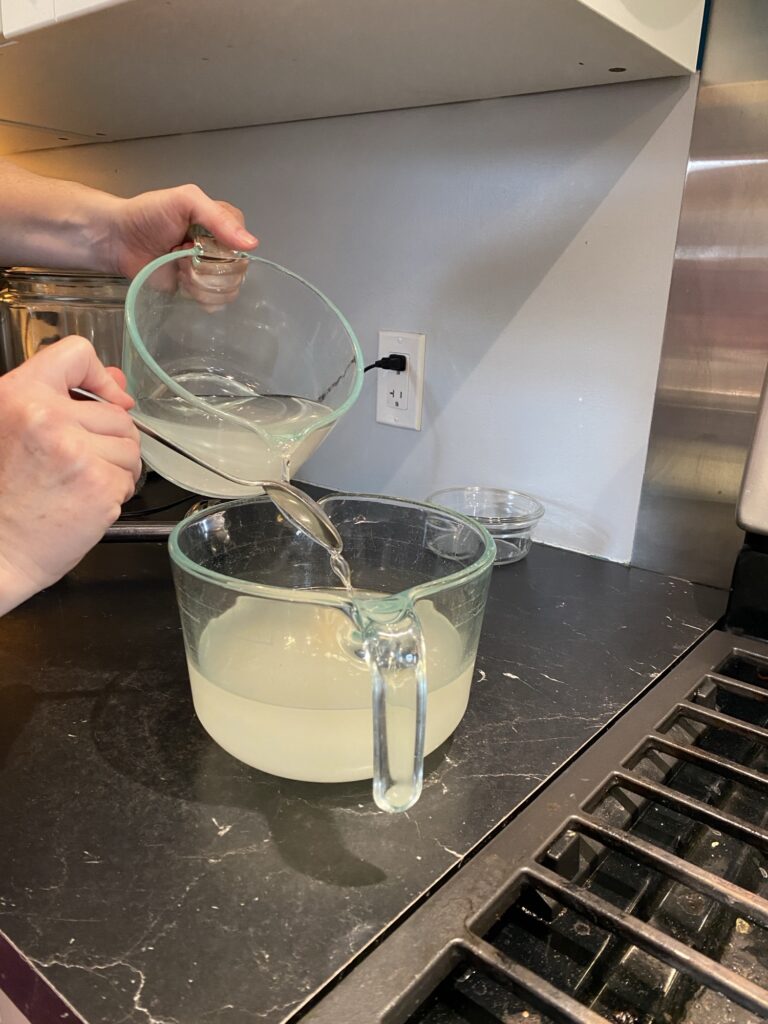
I carefully pour my lye solution over the back of my spoon to mitigate splashing.
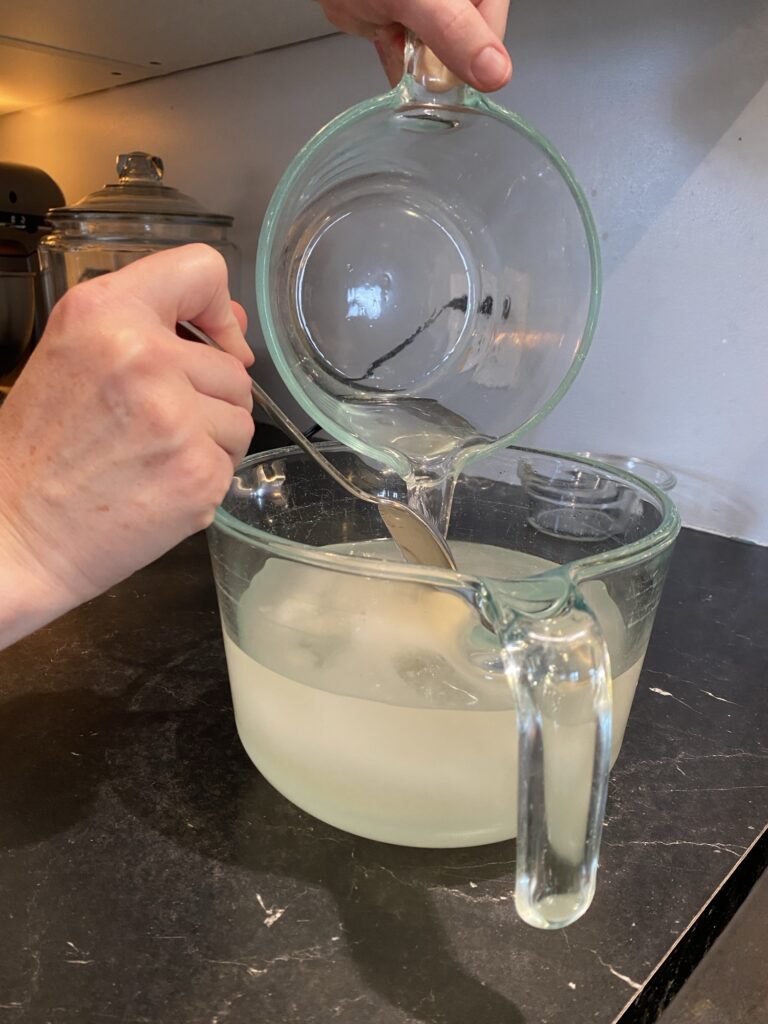
Now I’ll hand stir for a few minutes to fully melt my fats before using my immersion blender to bring it to trace.
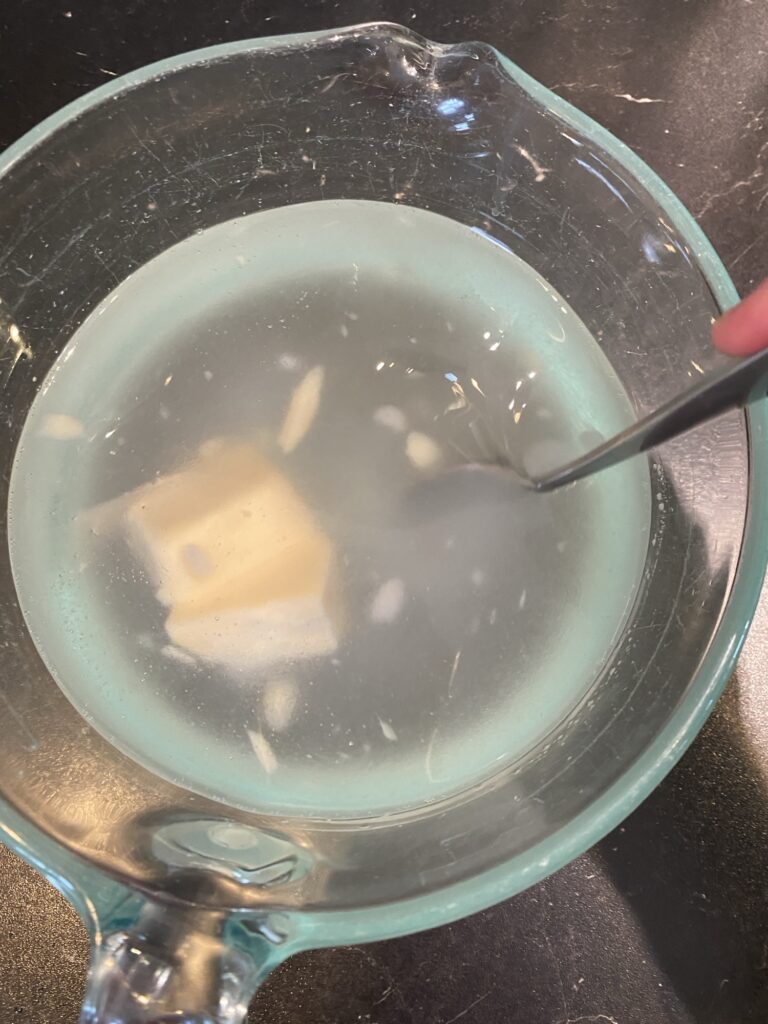
After hand stirring for a few minutes I move to using my immersion blender.
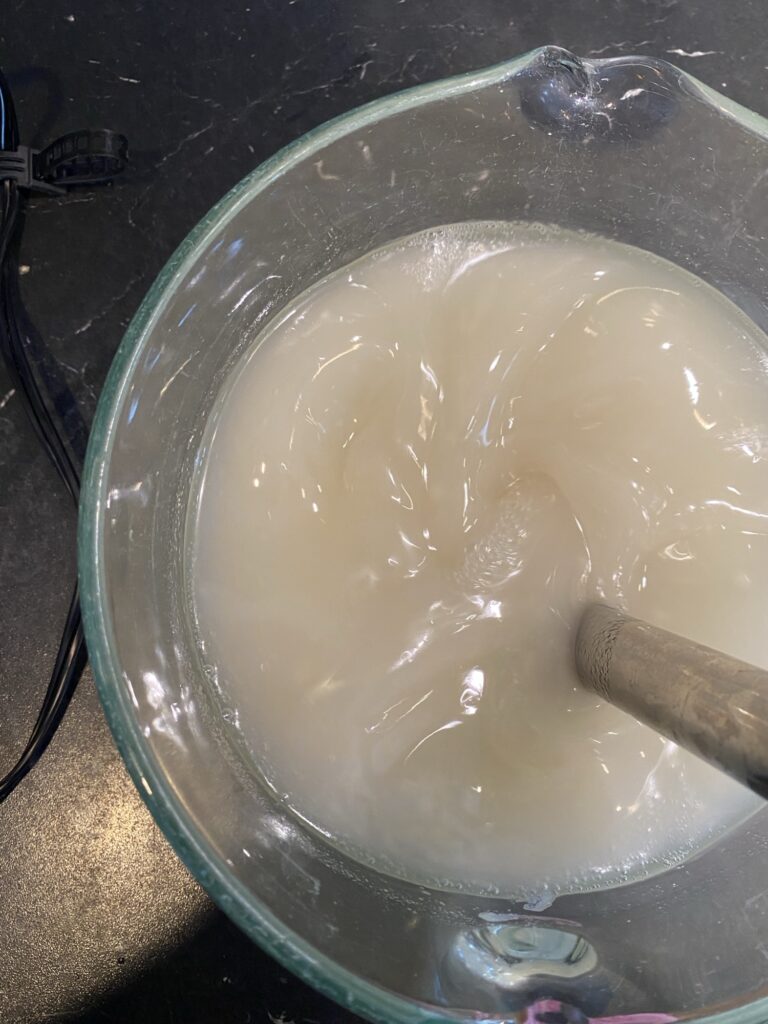
This takes anywhere from 5-10 minutes. We want to reach trace which means we want the batter to become nice and thick and when we stop blending, we want to lift our blender out and make a tracing pattern on top of our batter.
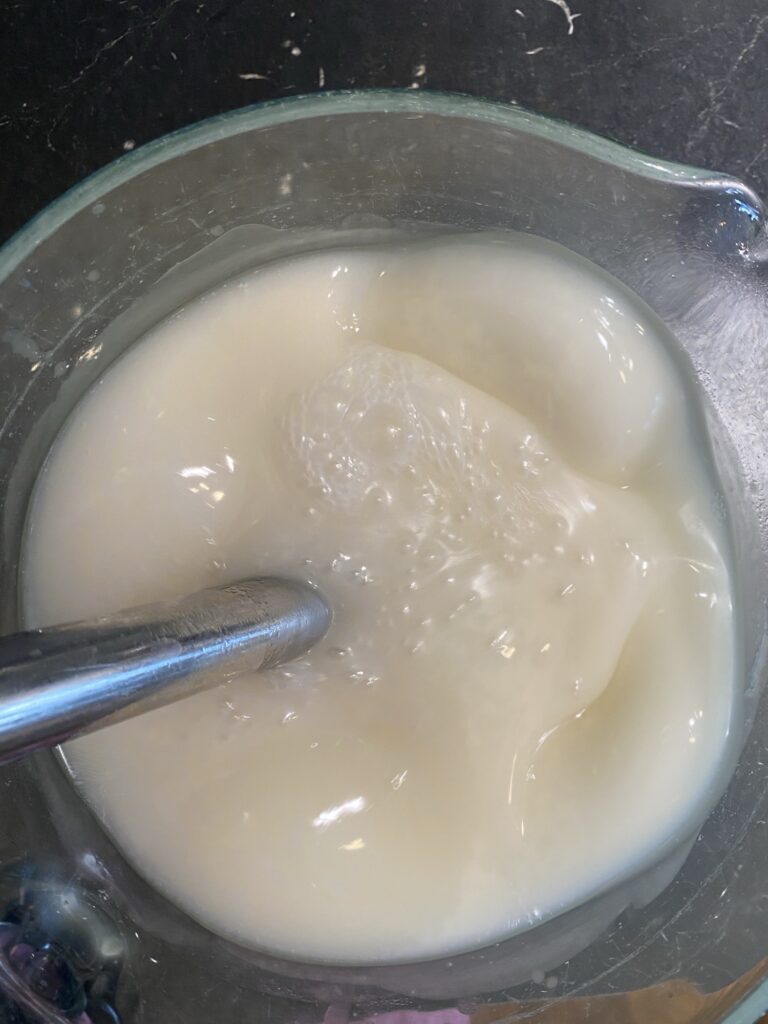
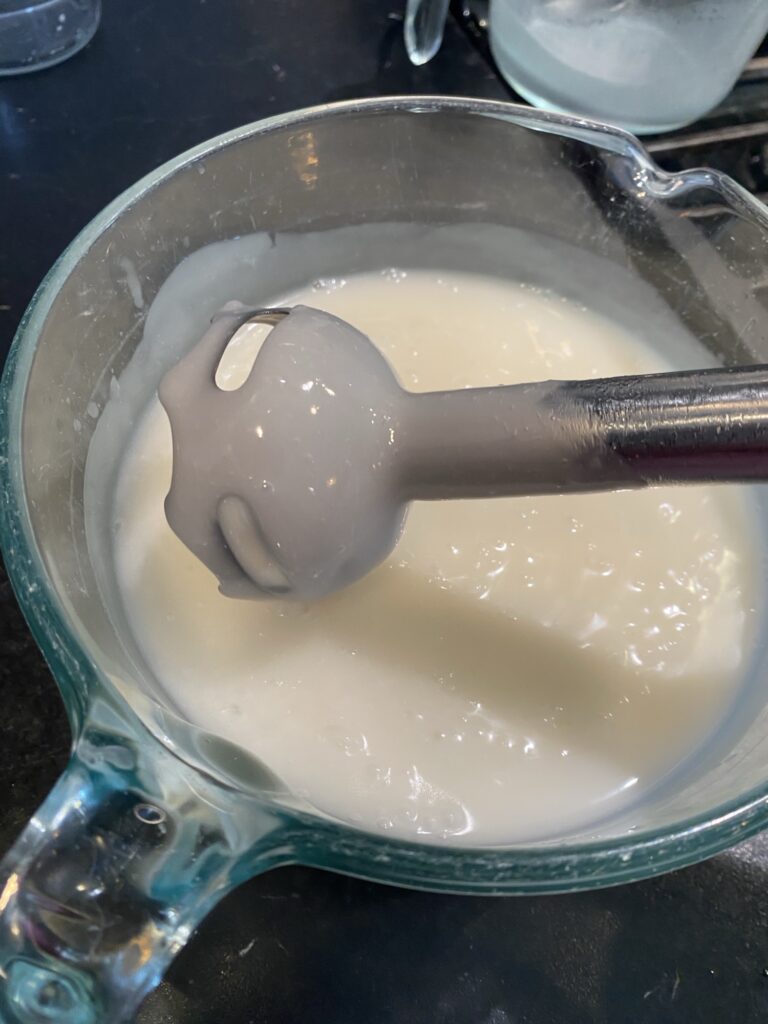
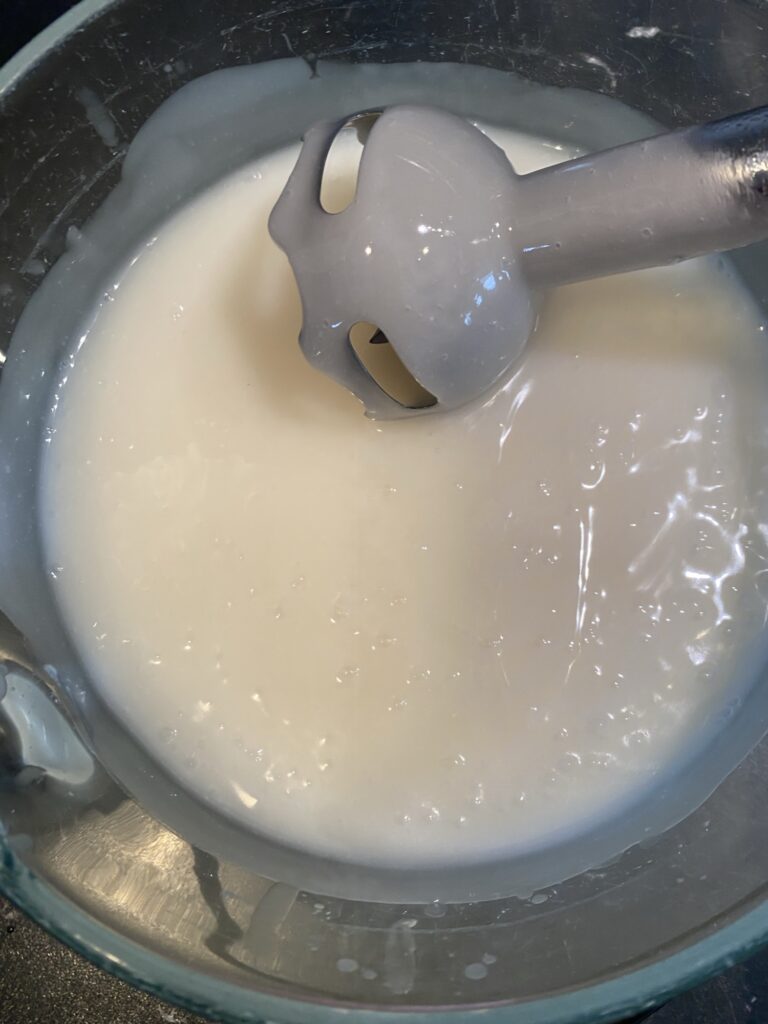
At this point I do take the temperature of the batter. I try to bring the temp down between 110 and 115 before pouring it. The batter will continue to heat up once we pour it.
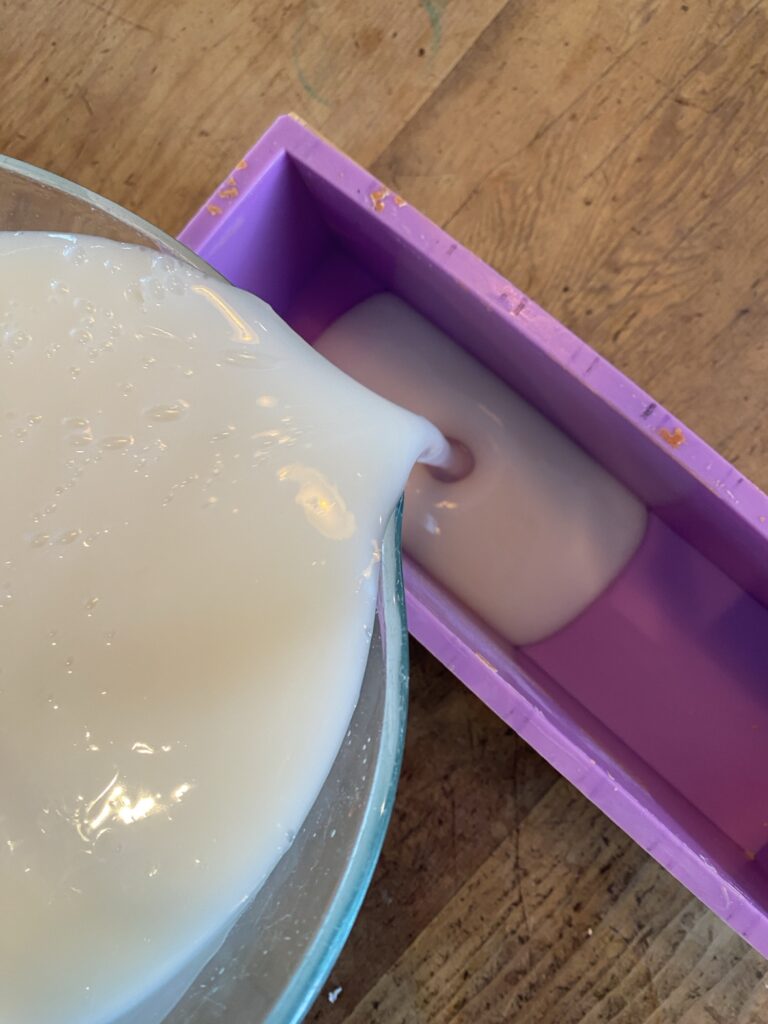
Once poured, I tap my loaf pan a bit on the table to remove air bubbles. You can use whatever molds you have. Silicone is easiest but you can line a loaf pan with parchment paper and use that too. I’ve lined small cardboard boxes with parchment and used that as a mold too. Scrape as much of the batter out of your bowl as possible. Ive read it’s best to wipe out your batter bowl with a paper towel to mitigate clogging pipes, I didn’t this time.
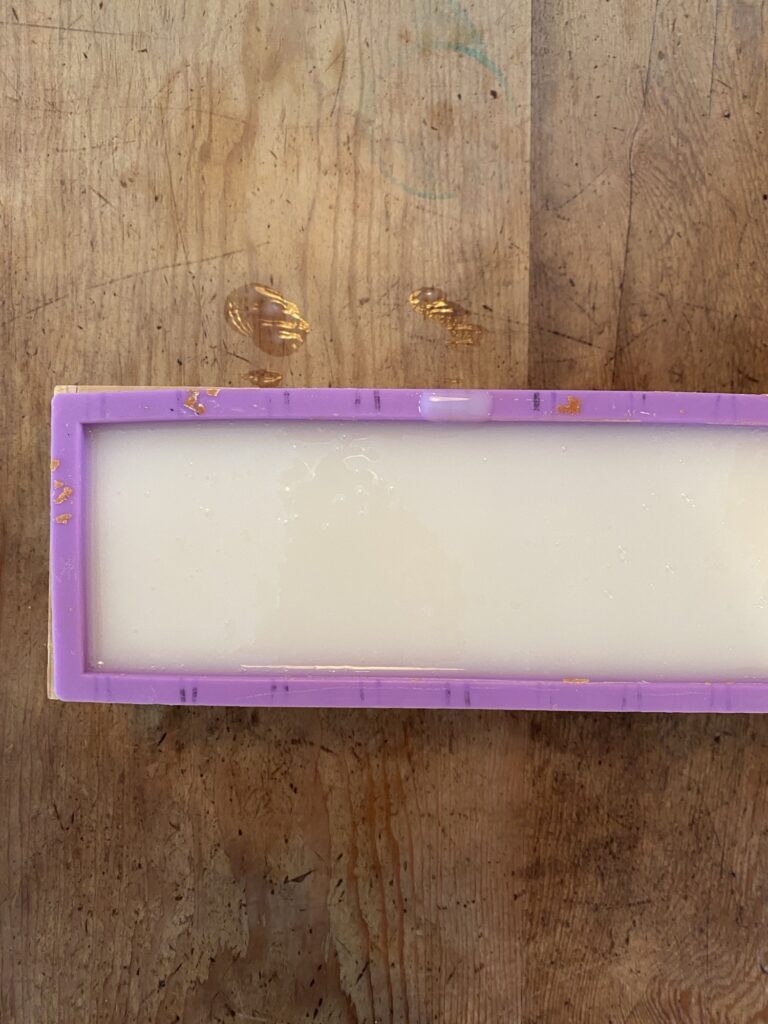
I like to make a swirling pattern on top of my soap but my batter was still a little thin so I left it on my table while I cleaned. Back to that in a moment.
It’s time the clean up. I put my bowls and spoons and spatula and immersion blender in my sink and spray each item liberally with vinegar before filling with warm water and soaking.
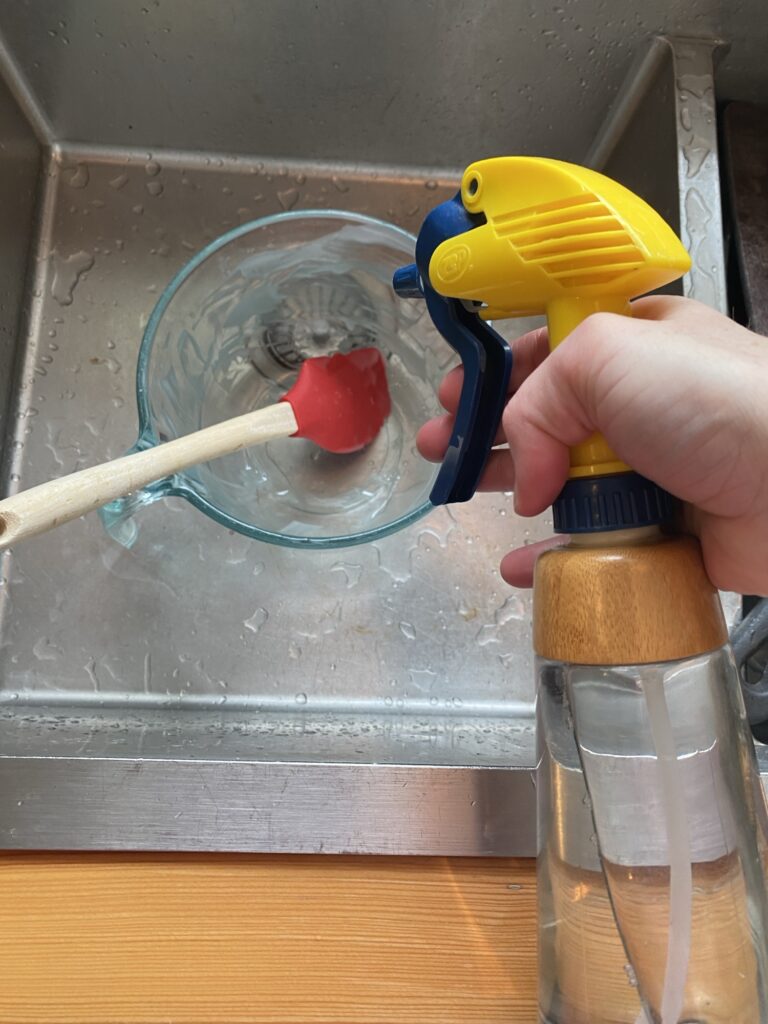
While my dishes are on their first soak, I spray my work space and any areas where I may have dropped some batter or possibly splashed a little lye.
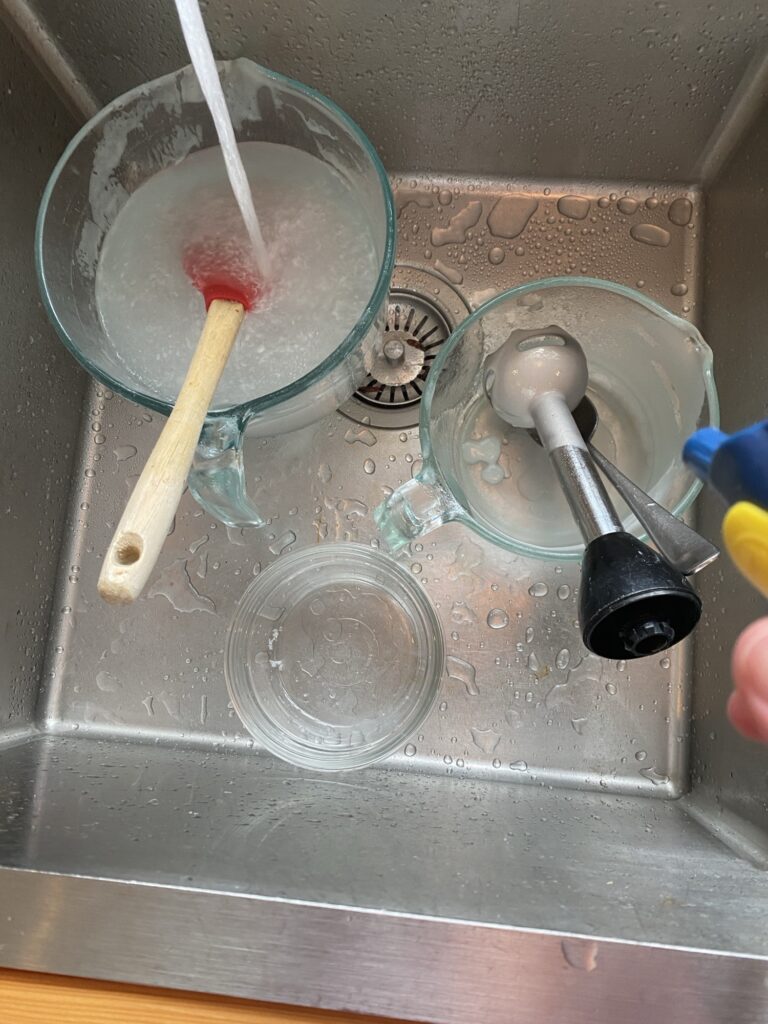
After soaking the first time I pour out the water and add a bit of dish soap and fill each bowl with hot hot water for a second soak.
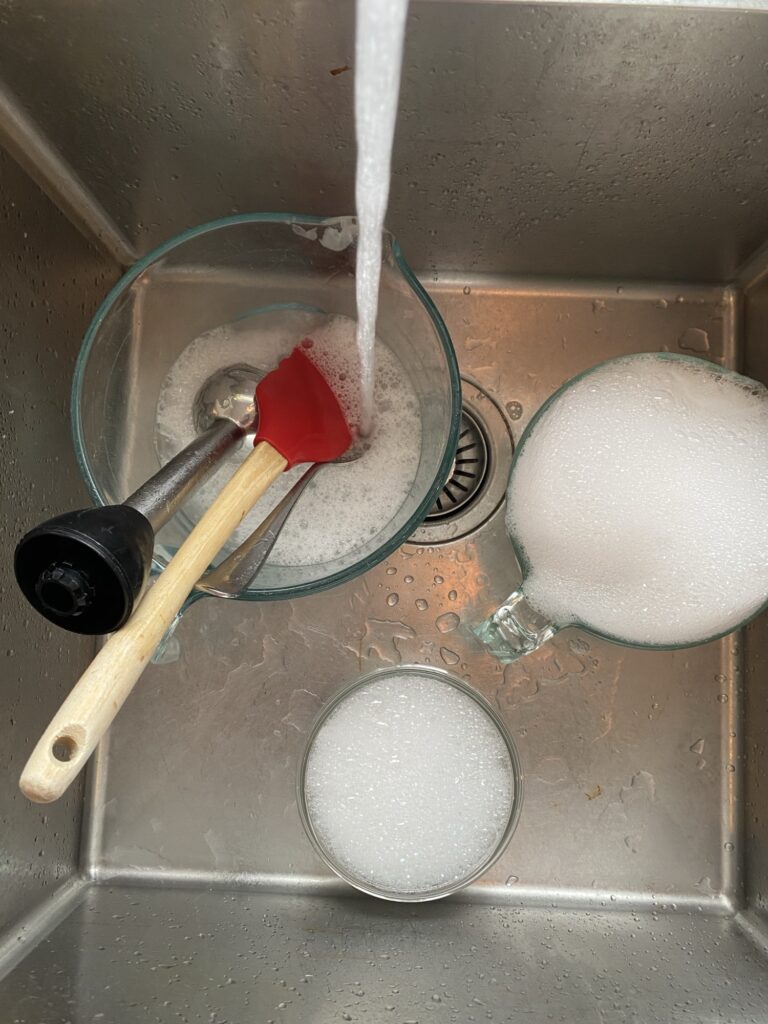
I let these soak until I have enough dishes built up on my counter to load my dishwasher then I just rinse these items well and add them to my dishwasher for a third wash.
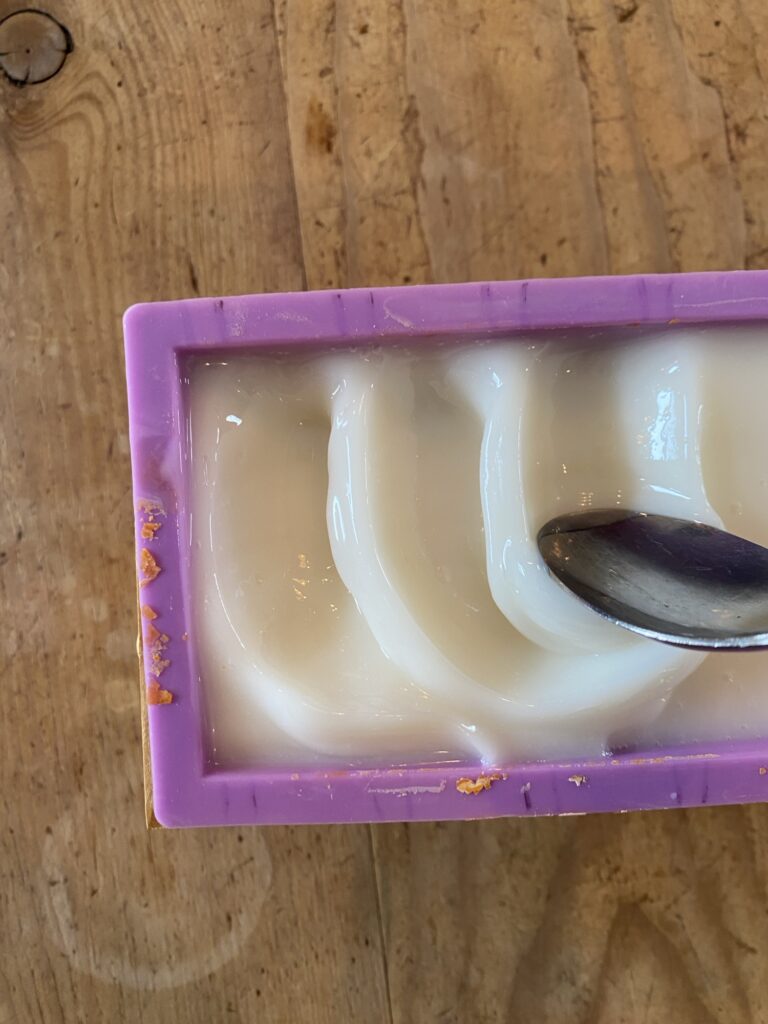
Once my batter sets up a bit, I use a spoon to create a swirly top. Be sure to spray your spoon with vinegar and rinse well when you’re done.
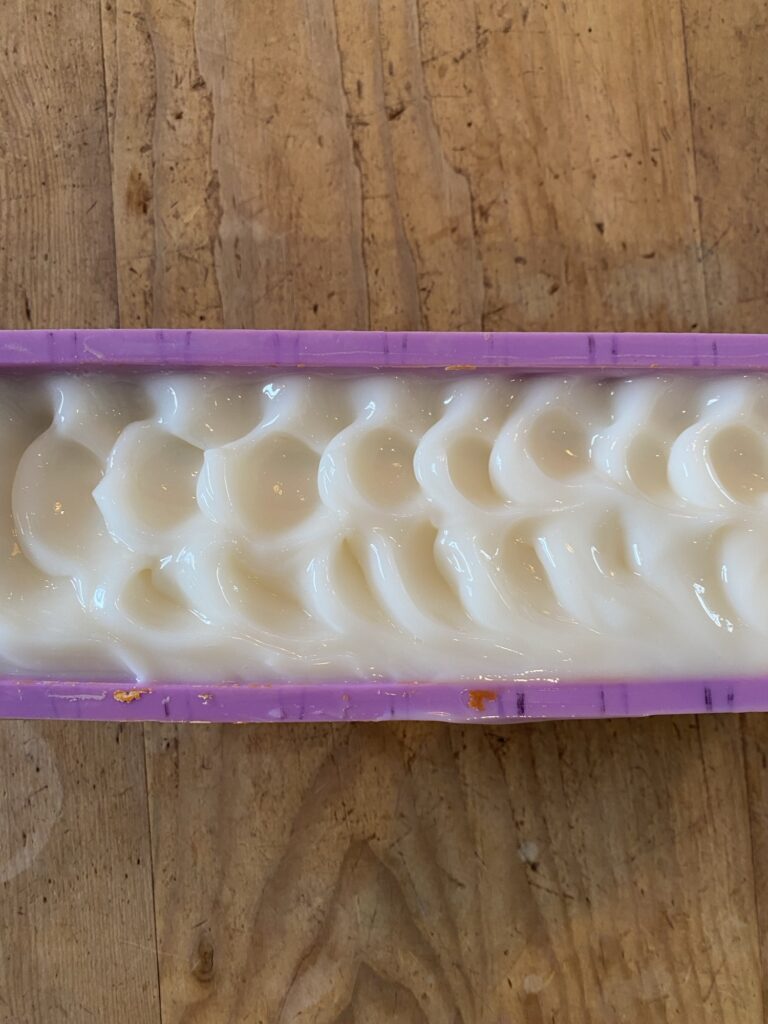
I cut this soap a few hours later as it’s fairly hard. You can cut slices with a knife or soap cutter.
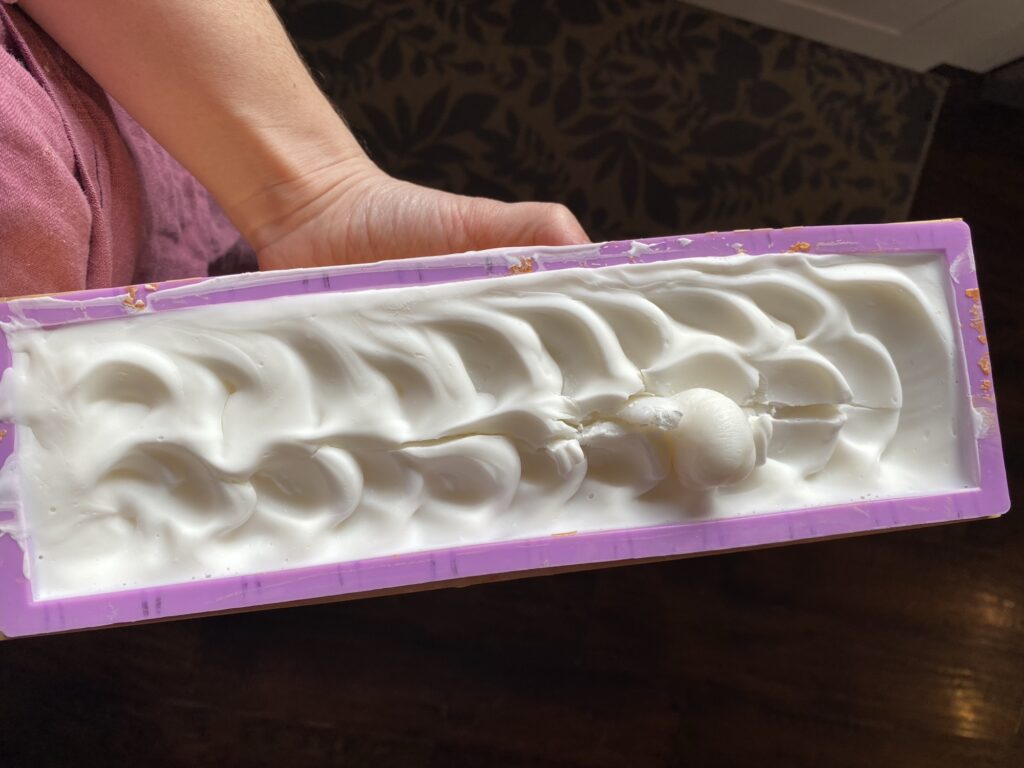
I left my soap on the window sill with the window cracked and it’s quite cold out so there was a swift temperature change and I had cracking. Some soapers will insulate their soap to try to control the temperature change. I’ve read some soapers will wrap their soap with plastic wrap then a towel then place in a cooler. I’m not very particular as I just make this for my use or as gifts but if you want to sell it and try insulating it to keep from cracking, give it a try. Although when I used to sell my soap my customers didn’t care at all when some of the bars had cracks!
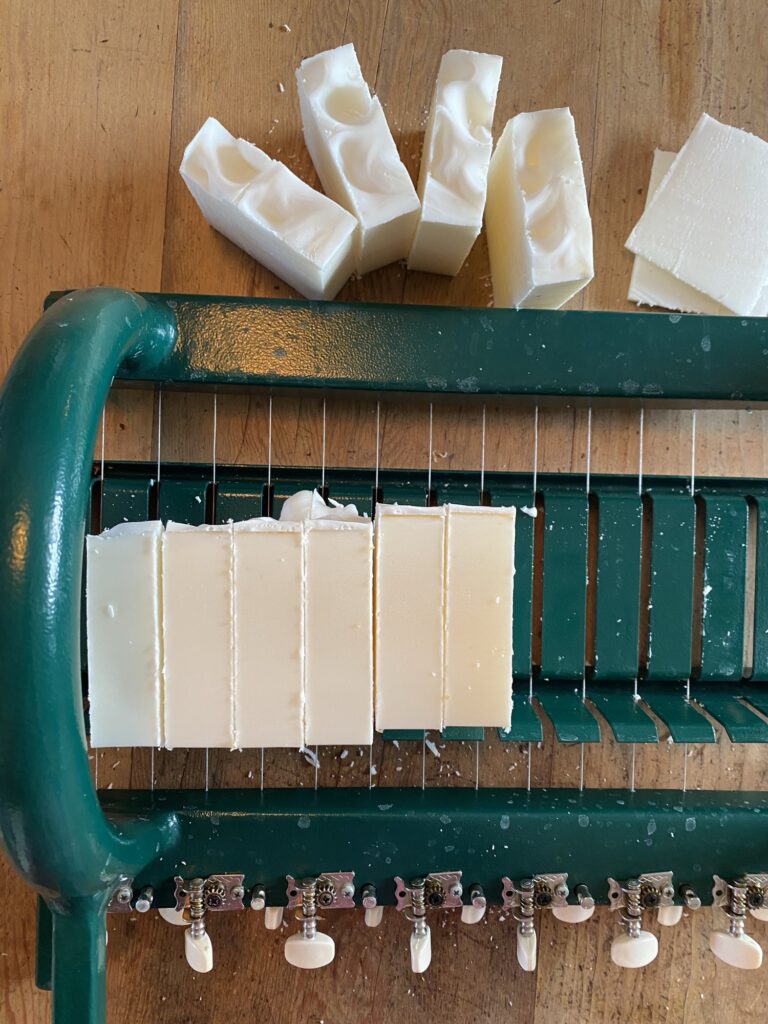
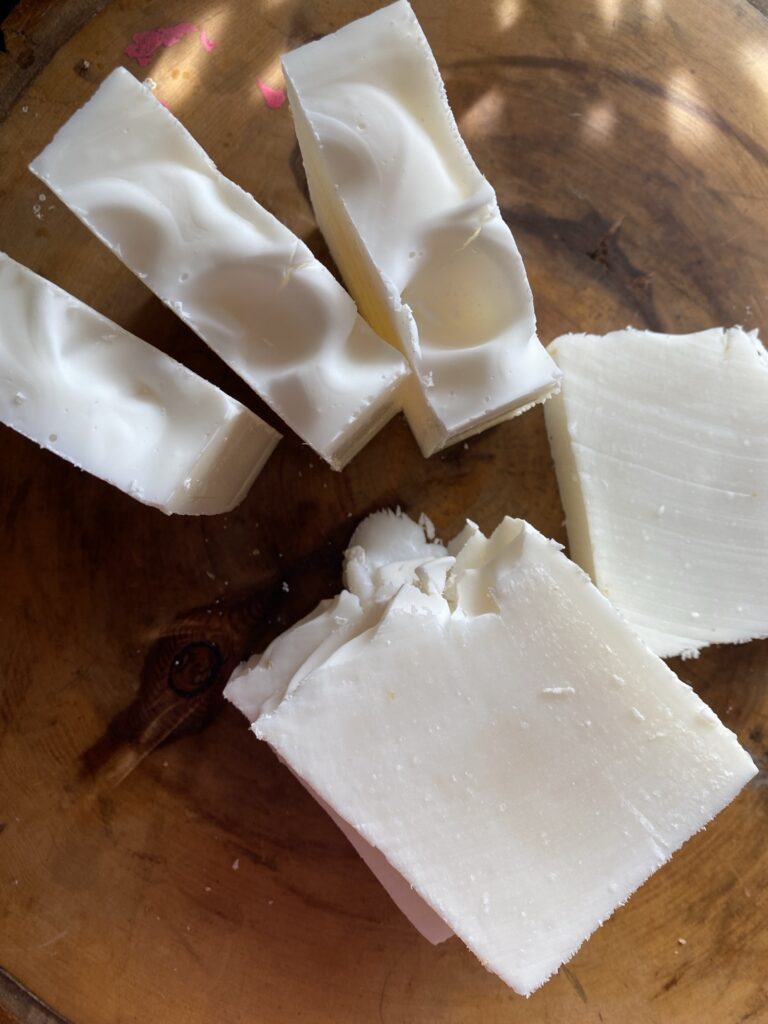
The edges are pretty raw so I like to bevel them with a veggie peeler just to create a nice smooth edge.
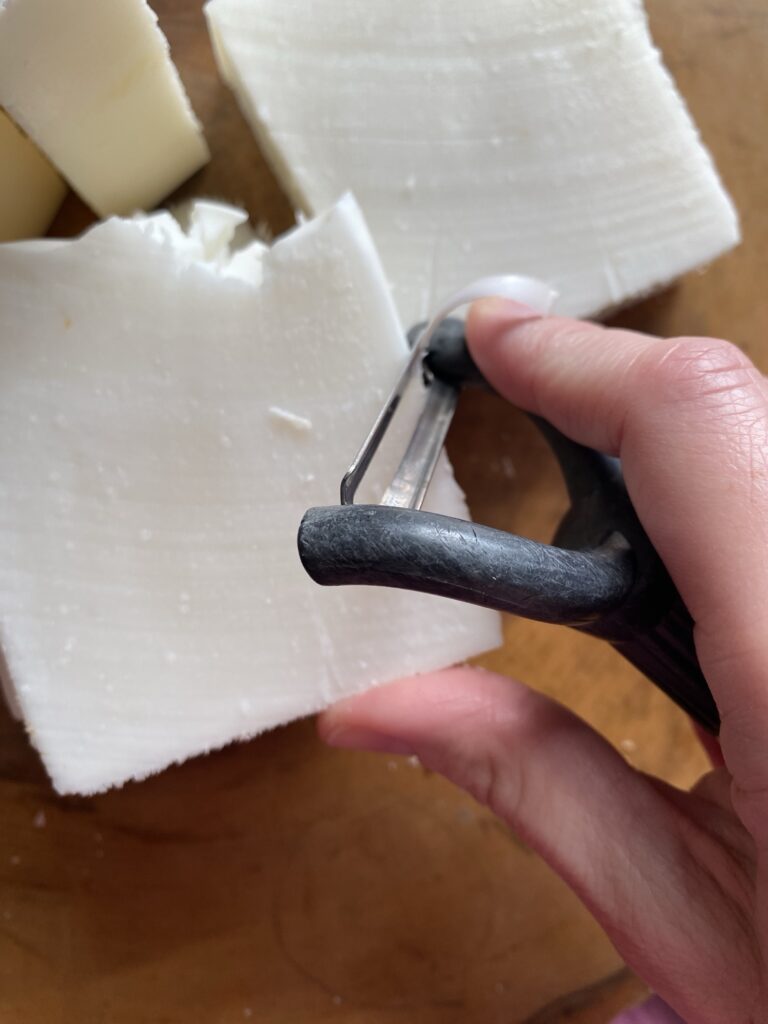
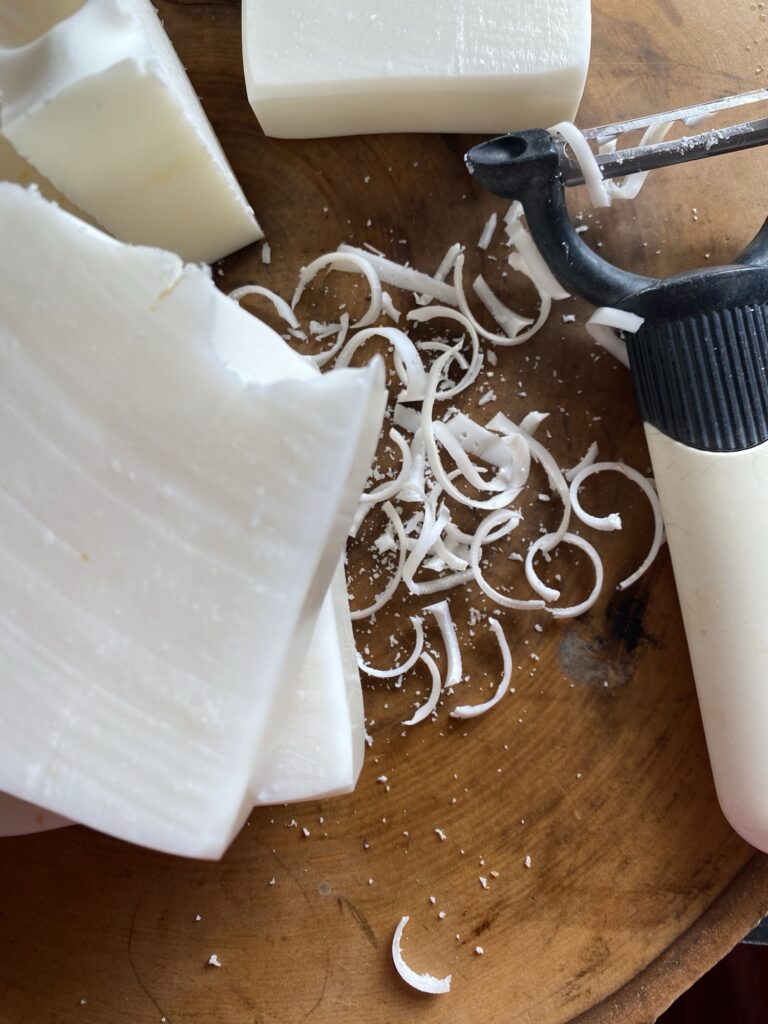
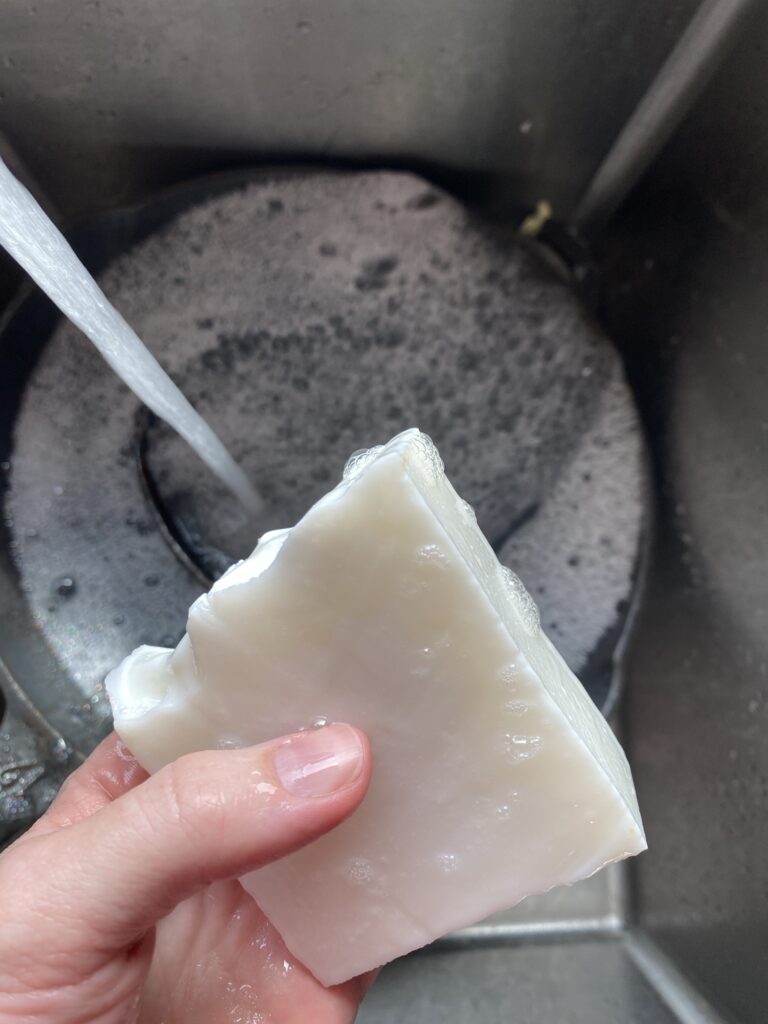
Once cut and beveled, store in a cool dry place with good air circulation and cure for a minimum of four weeks.
This recipe makes a beautiful nourishing sudsy bar. The perfect handmade gift for any cast iron lover or make it regularly for your own use or even label and sell it!
Warmest Blessings,
Ashley