*this post contains an affiliate product.
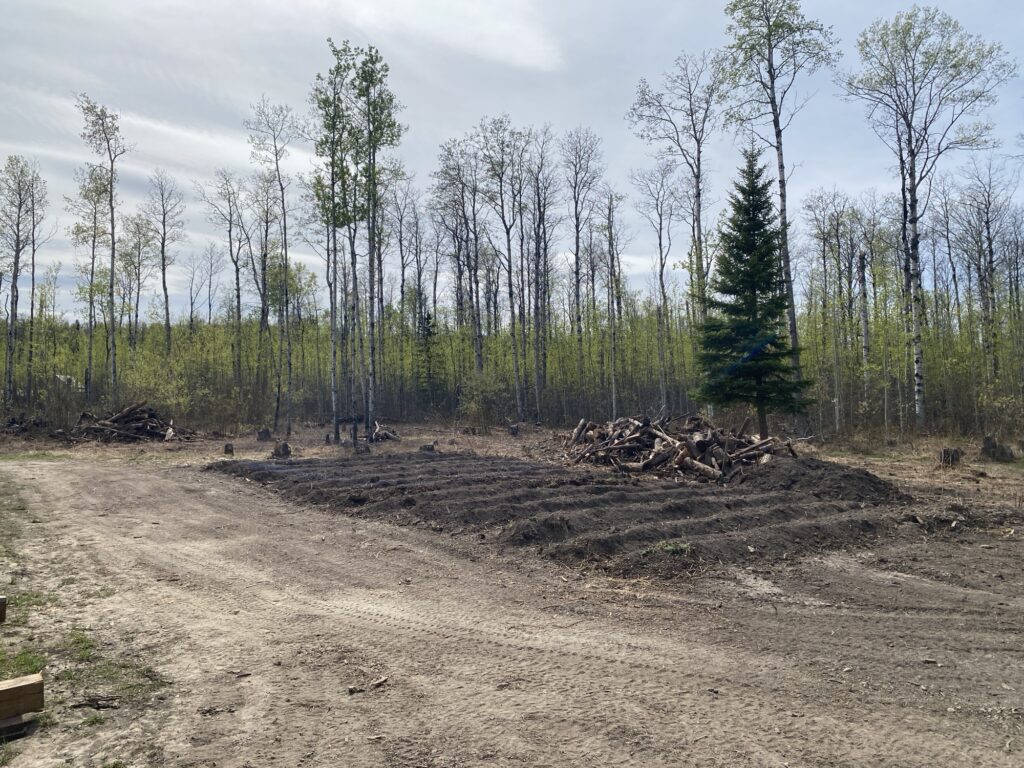
Trying to grow food in northern Alberta has been a pretty big challenge. After 10 years, I’m finally getting gardens in and using methods that are giving us better soil and growth.
Challenges we face here:
Heavy clay.
Harsh, dry long winters.
Poor soil due to hot summer sun and arid climate.
High sodium well water; very little natural rain. We have to reverse osmosis our water and the cartridges can get expensive. In the future, we plan to dig a dug out as a water source.
In short, to grow food here one needs to build a microclimate to produce conducive conditions.
If you live in a harsh climate or just struggle to grow, I think the methods and lessons I’ve learned could benefit just about anyone.
We decided to build a year round greenhouse. This is perhaps not possible for a lot of people so I’m just going to briefly share what I’ve learned about gardening in a greenhouse compared to outdoors because the two are different.
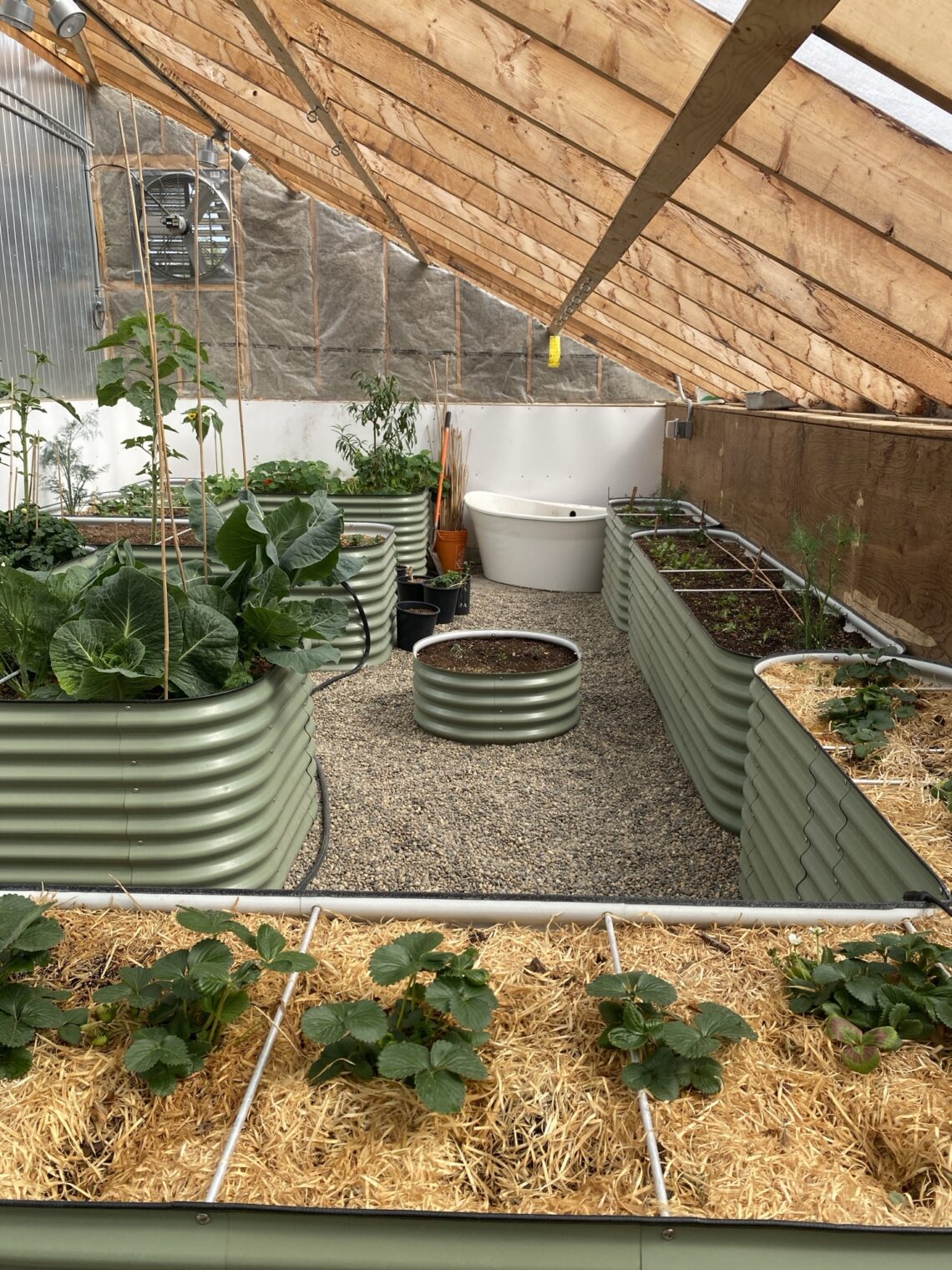
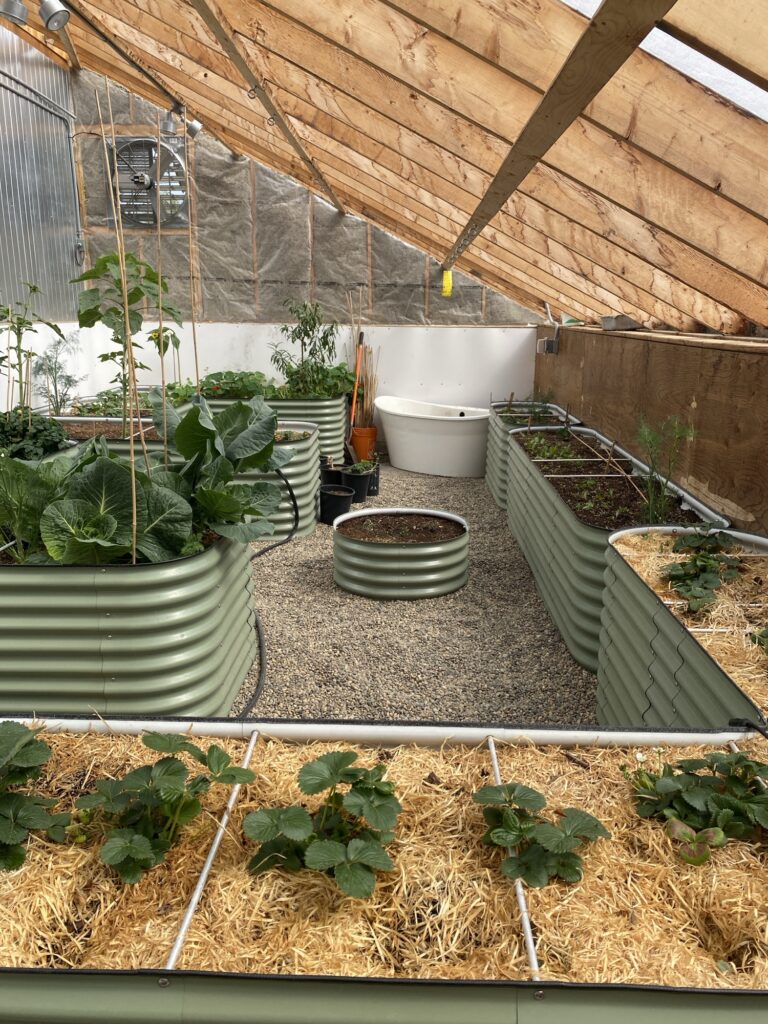
I’m also going to share these beautiful raised beds from Sprout Box. After a few years of use, we are now affiliated with them because we love them so much. They’re beautiful, come in a variety of colors, heights and shapes. They’re easy to have shipped and assembled. They’re also extremely light so if you set one up, change your mind, you could even have your kids help pick them up. They’re less expensive than cedar and last longer. While I love the look of cedar, the beds are heavy, and don’t last as long. Sprout Box beds are also made from non toxic materials giving you a beautiful healthy growing space. I’m going to share how we use these indoors and outdoors in our harsh northern climate.
You can find their products here: Sprout Box.
Use our code: WILDWOODS10 for 10% off your order.
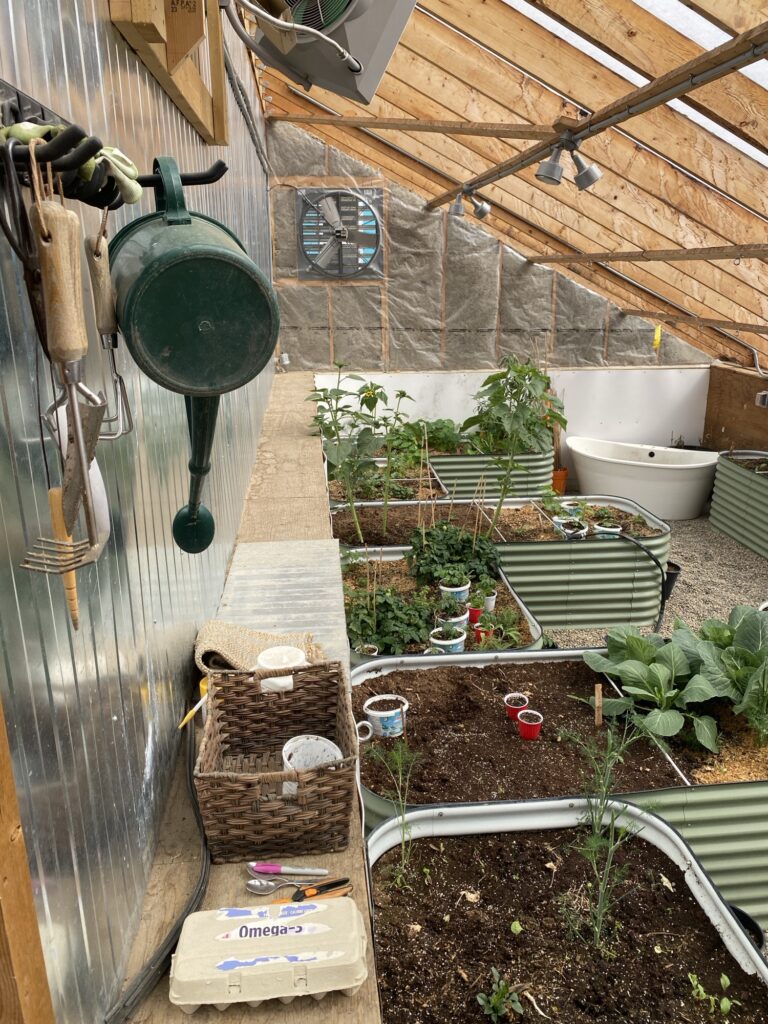
The Greenhouse
Growing indoors I find I have to be careful how I add to the soil. Whereas with my outdoor gardens, I’m constantly adding to the gardens. Not fertilizers as these, even organic, can imbalance soil bacteria and weaken plants.
Rather, I add in:
Chop N Drop my weeds, which returns the mined nutrients to the top soil.
Add wood chips as I get them. Each year we clear more of our land and sometimes mulching down stumps gets me chips, or renting a wood chipper for our slash piles from building our house. I toss these around my garden beds and in the walk ways to suppress weeds, hold moisture and continue nourishing the soil life.
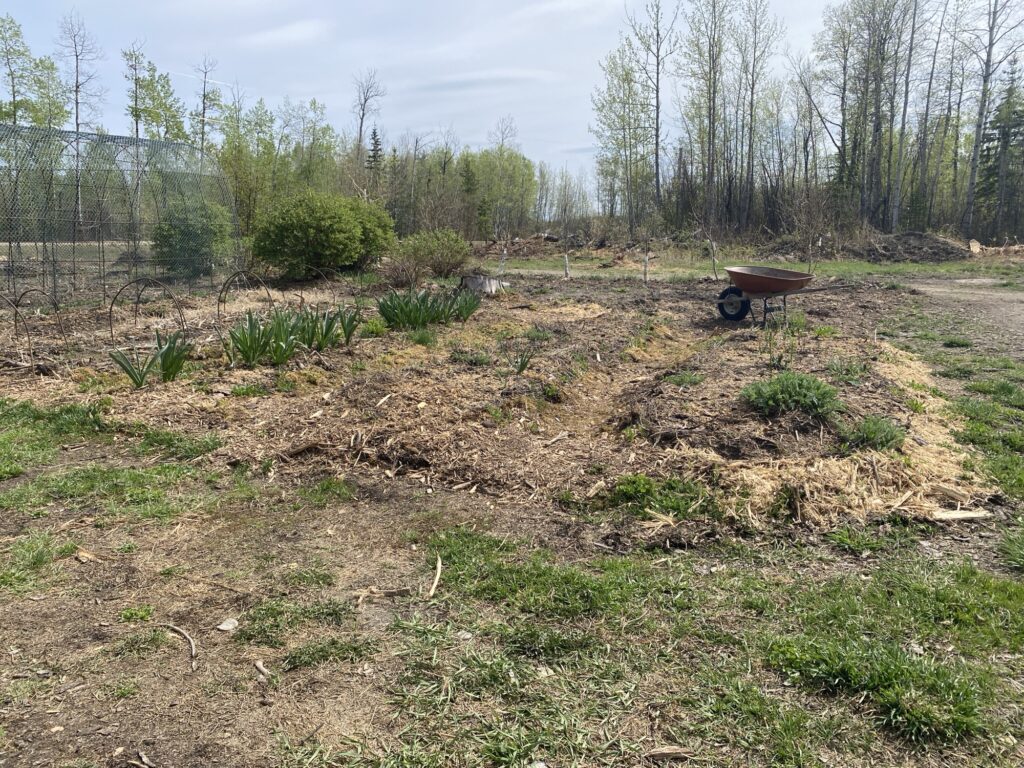
Add moss in the walkways from our Boreal forest. This is simply me using the resources I have at hand as I can’t afford to bring in mulch, manure or any amendments at all really. I have to use what I can procure from nature and moss works beautifully to cover garden walkways, suppress weeds, hold moisture and introduce health fungal networks for good soil.
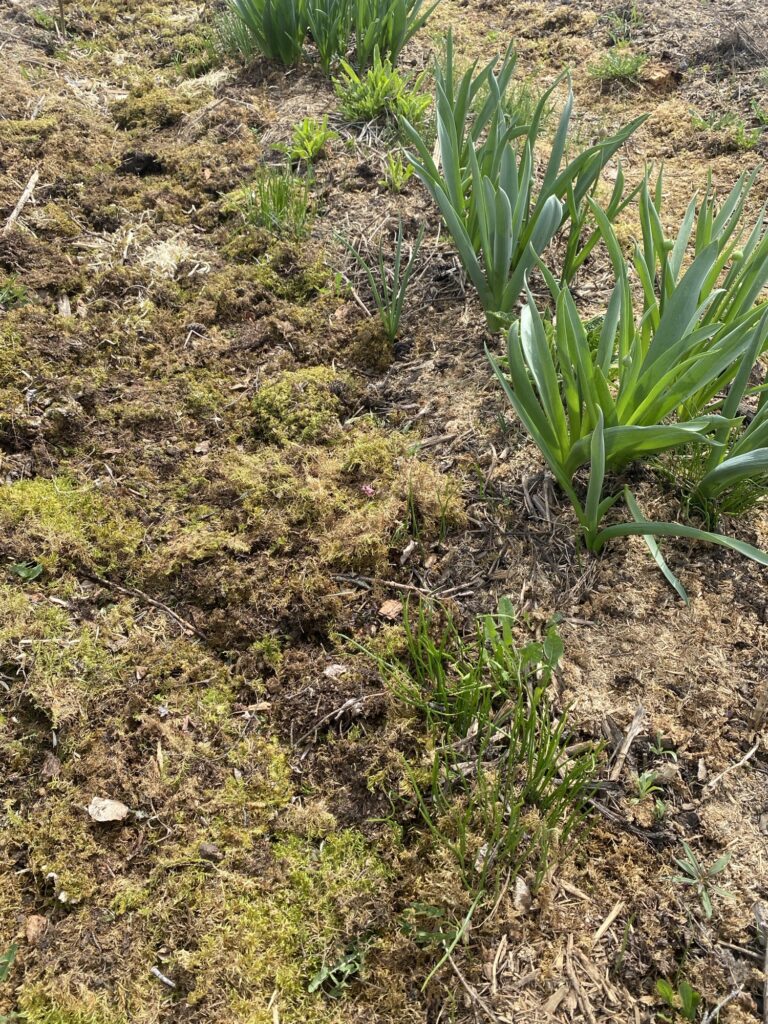
It’s taken several years but I’m finally getting nice dark nourished beds. I also focus on what grows well here and fills bellies. Onions, garlic, potatoes, squash, carrots, beets, beans, strawberries and rhubarb.
We did build a little orchard by creating reverse hugelkulture mounds: digging trenches and filling with rotting logs and manure from our cows. So far our apple, apricot, and haskaps are doing well!
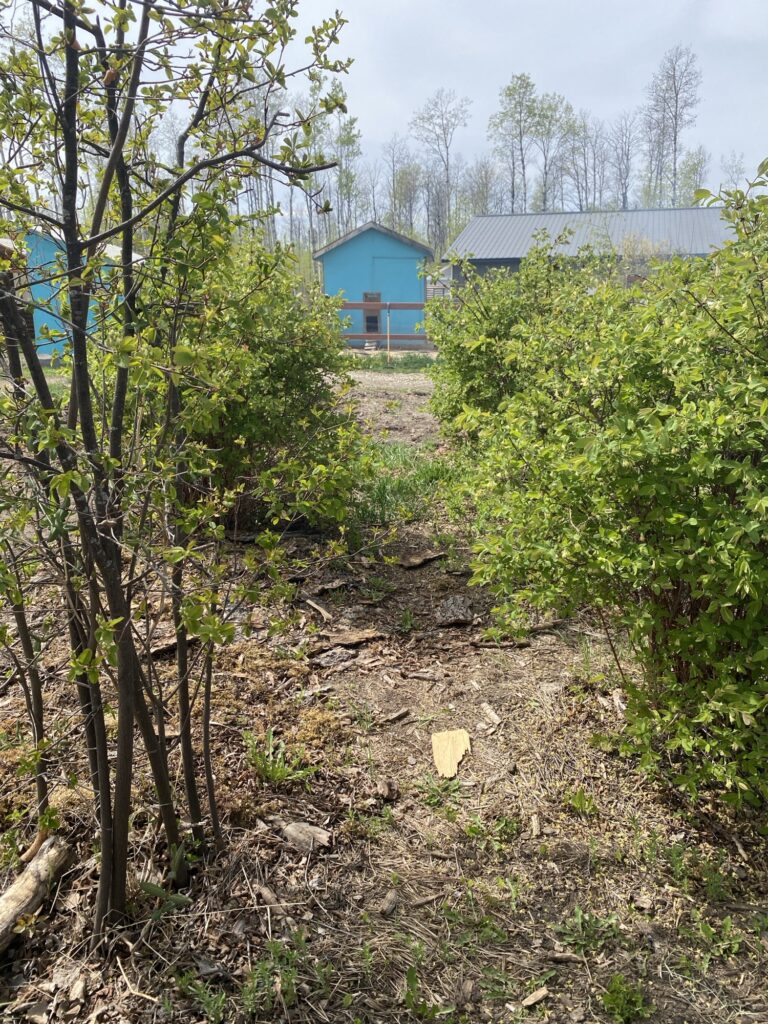
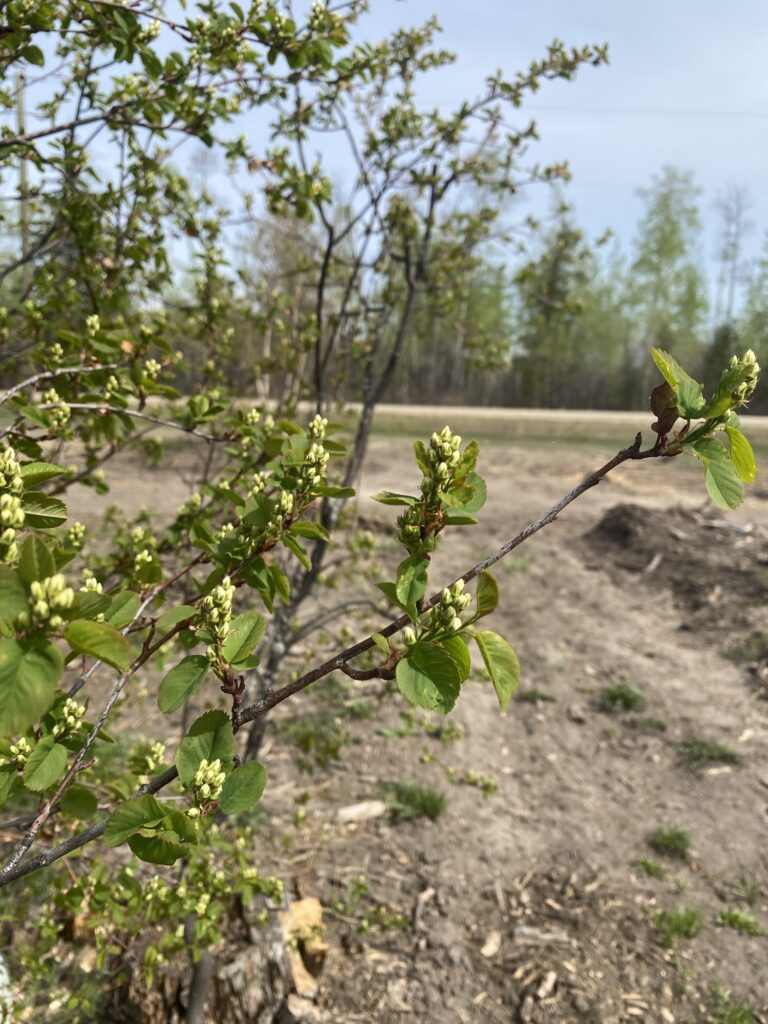
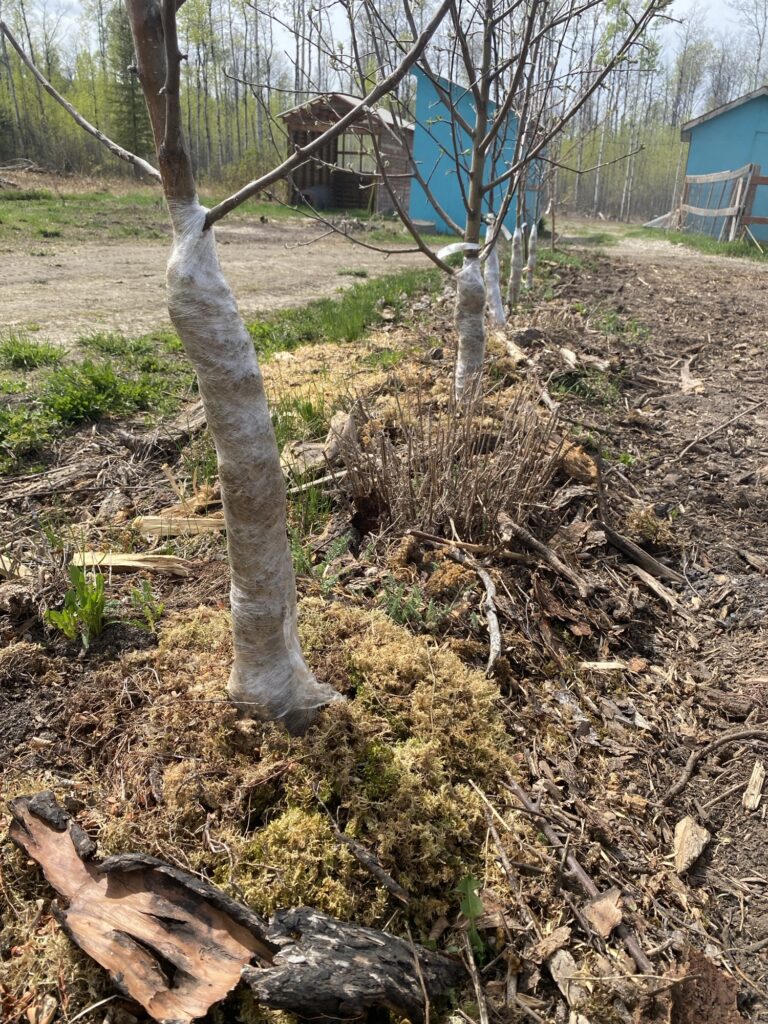
It’s been a pretty wild experience growing here:) However, ask anyone in our area and they’ll let you know very quickly the challenges we face gardening up here ha ha!
This is where our greenhouse comes in and a few ways I have to garden differently.
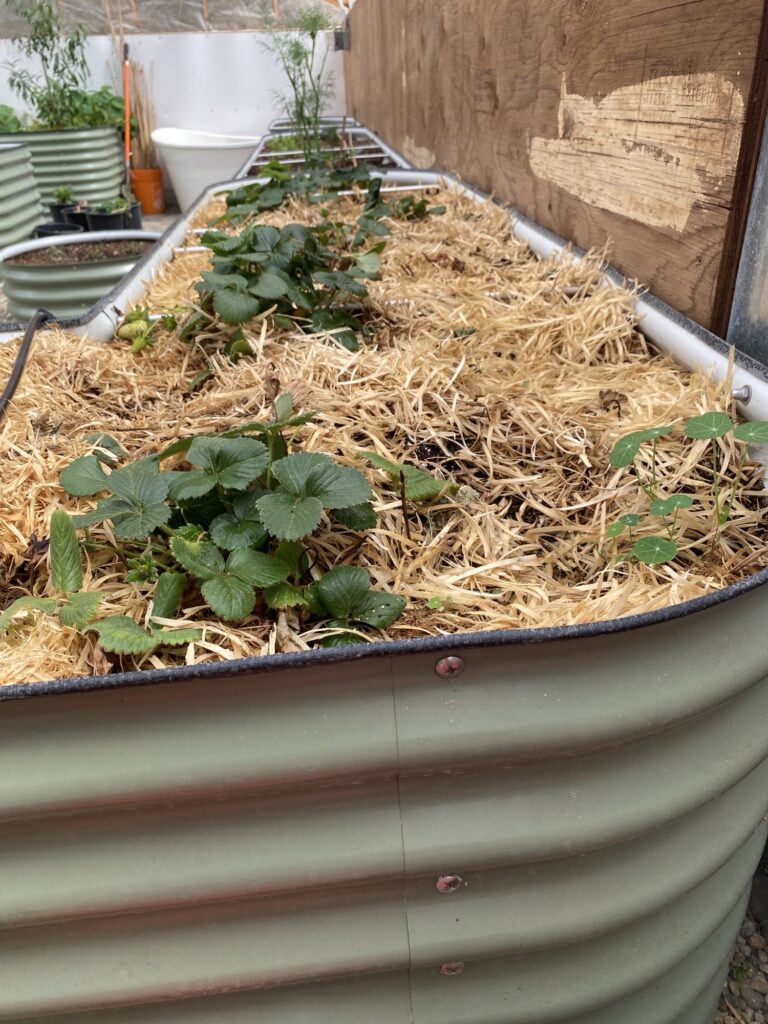
I can’t chop and drop things that are done growing otherwise I get bug infestations. Other than my strawberries that I cover with wood shavings from my husband’s chainsaw milling. This just keep the berries up off the soil and from rotting.
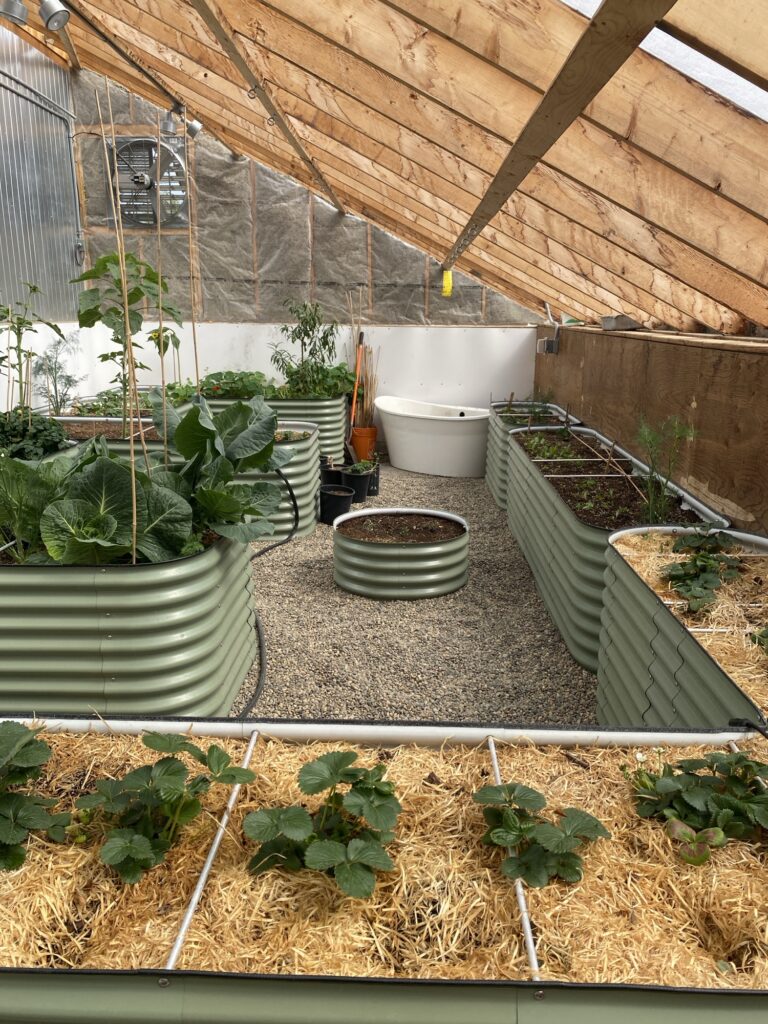
Instead, when a plant like watermelon or cucumbers are done, I cut it up and put it into my worm farm (old bathtub in the corner there). I try to keep my soil clean so the sun light can reach it. I find this helps mitigate bug infestations and mold.
To aerate my soil, I just occasionally add worms from my worm farm to it.
For watering, I water from the sump pump. We dug drainage pipes to keep the floor from flooding and it goes to a sump pump in the corner. I can either pump it out of the greenhouse if there’s too much water or turn on a second pump to go through a hose and water my beds. For fertilizer, I often pour nettle or willow teas I make down into the sump pump so that it mixes with the water before I water my beds; and this is where I do purchase a fertilizer of sorts. I buy this probiotic cleaner, adding a few ml to my sump pump to keep it clean and add healthy bacteria to my greenhouse soil which helps utilize my natural tea fertilizers. I learned years ago that plants can’t consume the nutrients we put in the soil unless there’s healthy soil bacteria to consume the nutrients and turn it out into plant food.
Back to those lovely Sprout Box beds. I love how well they’ve held up. They’ve dealt with negative 40 winters all the way 154F heat before we got our fan system up in the greenhouse. They hold up well to constant humidity and aren’t brittle in cold dry temps.
This year we put a large L shape bed outside and I’m happy to experiment out there to see how much I can grow in that bed. my hope is that the depth of soil will retain more moisture which will be more conducive to healthy soil life which will in turn provide better nutrients to my plants.
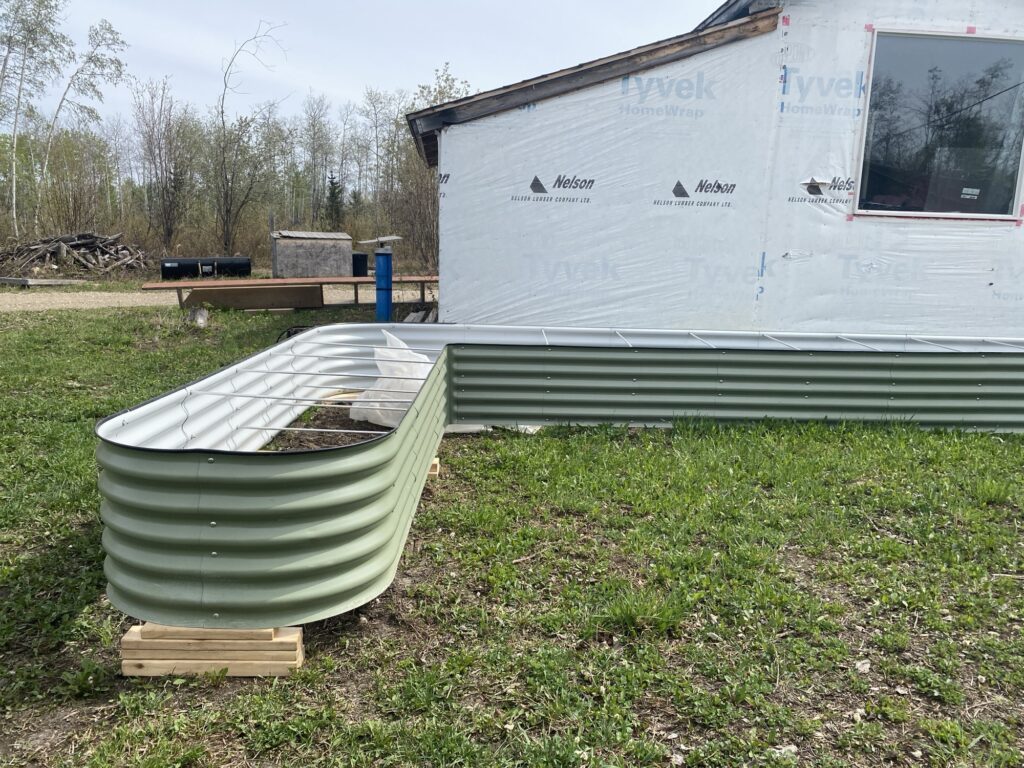
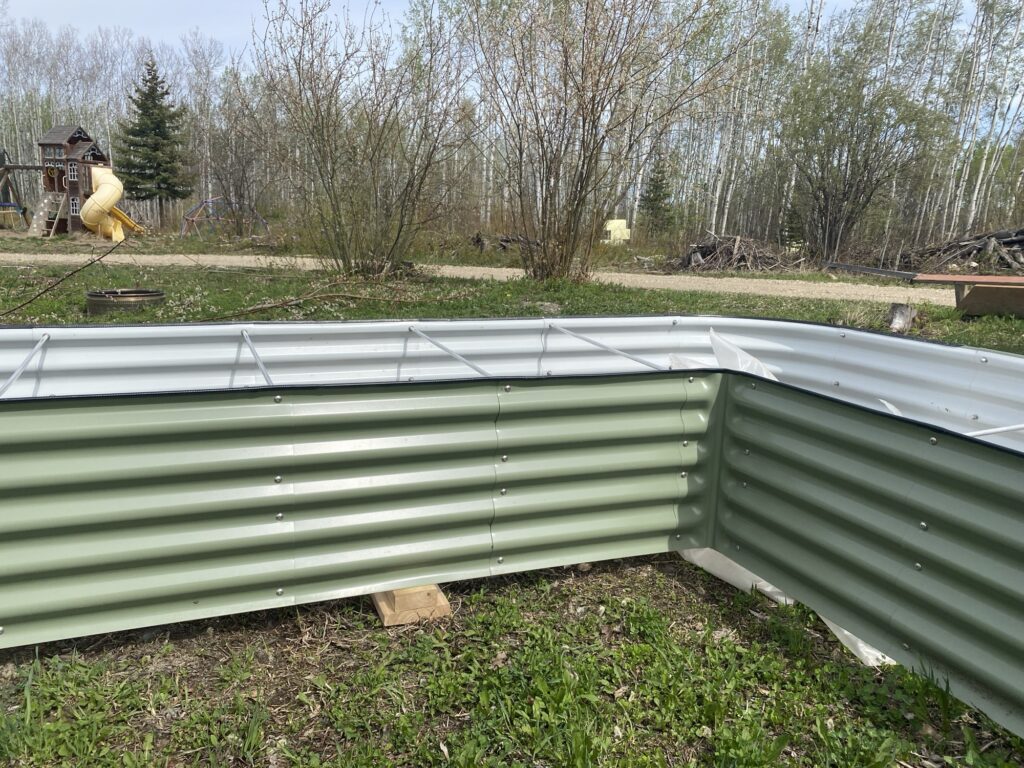
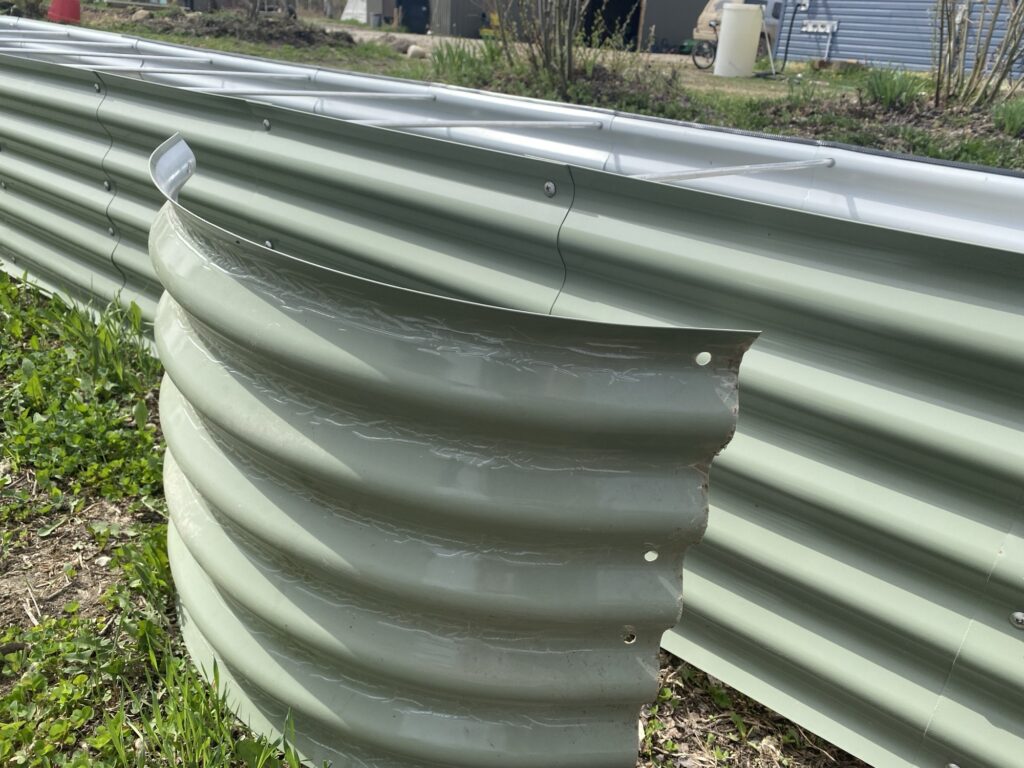
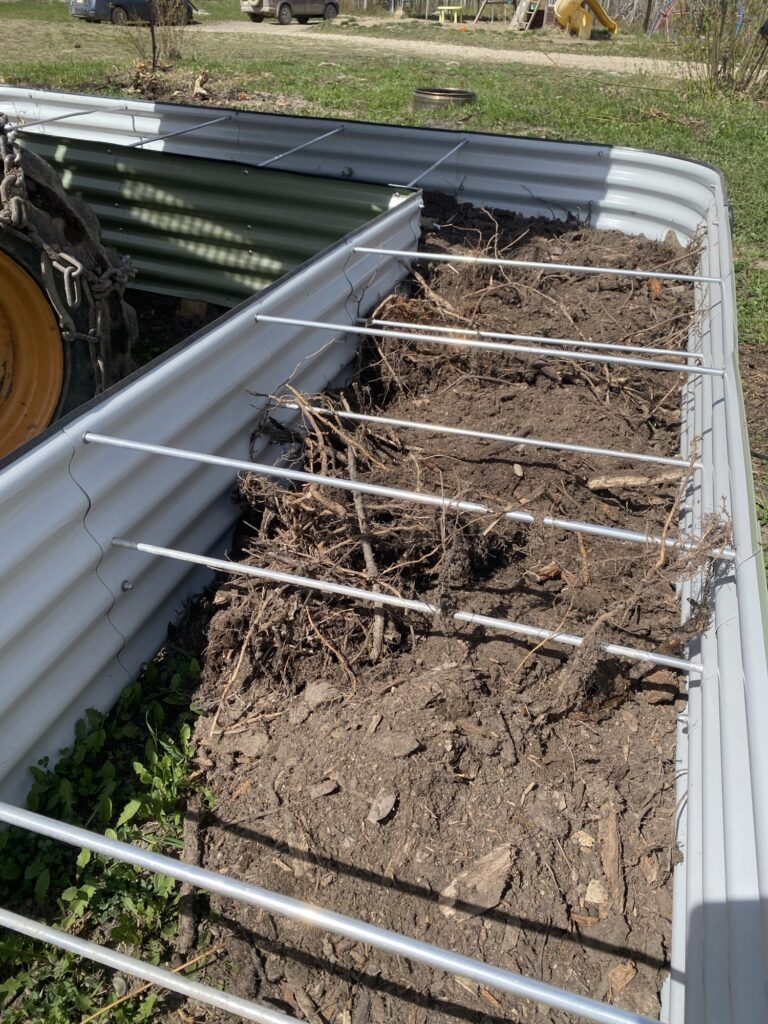
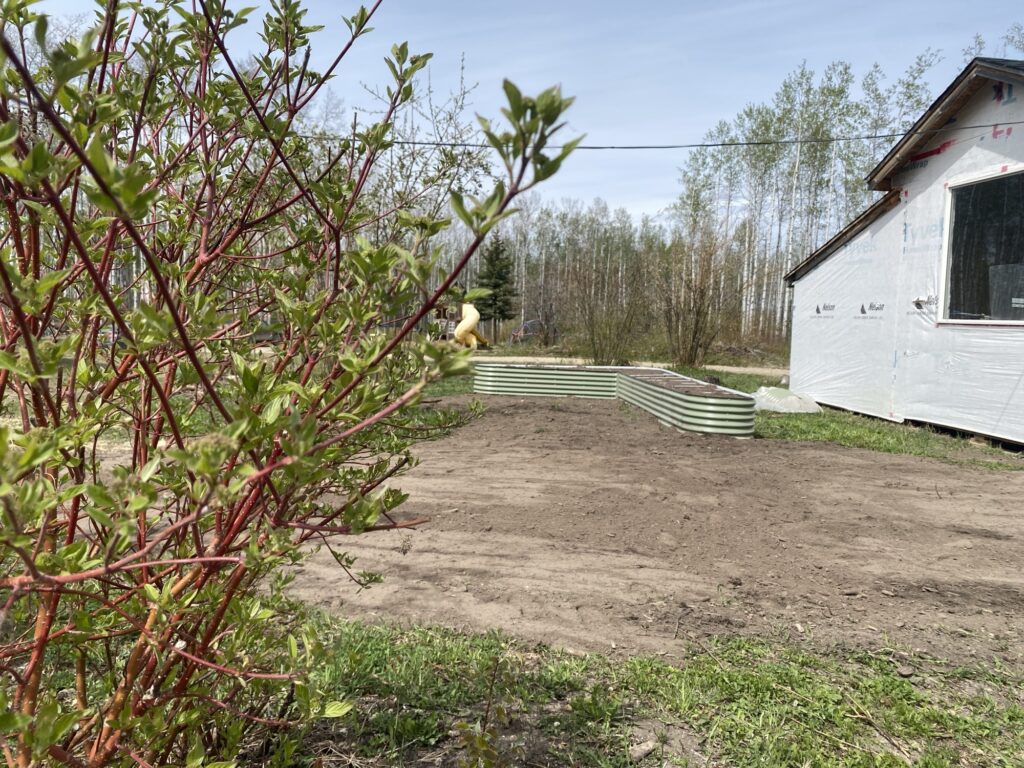
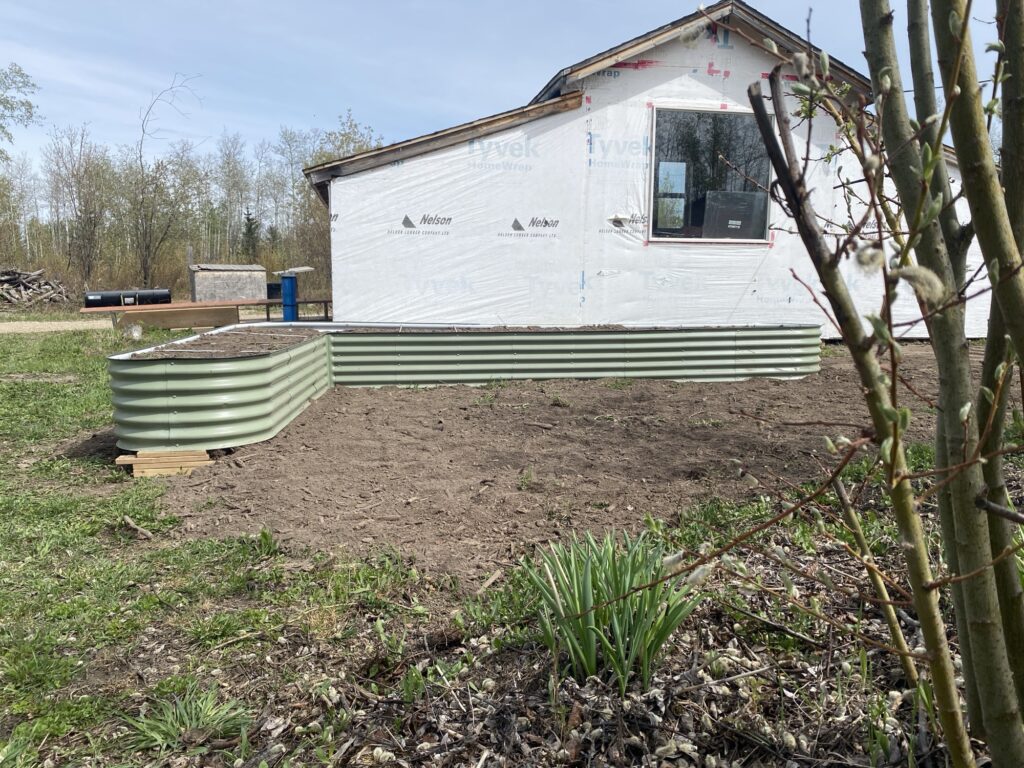
I think these beds look so pretty; whether you’re living in a wild place like we are, or a neat and tidy suburb. They come in a variety of shapes, sizes and colors to fit your personal style and get you growing some lovely veggies or flowers no matter where you are.
I plan to share what I grow in this bed later this year!
Happy growing!
Ashley