Leaf lard is the soft white fat around the pig’s kidneys and loins. It has a softer “runnier” consistency than beef tallow or most other animals fats. It’s whiter and has less odor, and works beautifully as a replacement for butter or Crisco in pastries and baked goods.
Being a softer fat, leaf lard also works beautifully on its own to season cast iron cookware. Whereas with other harder animal fats I find they don’t season cast iron very well on their own and need to be mixed with butters and fats as in my cast iron lotion bar recipe. Which is a ratio of harder beef tallow, cocoa butter and beeswax for a better “polymerized” non stick finish.
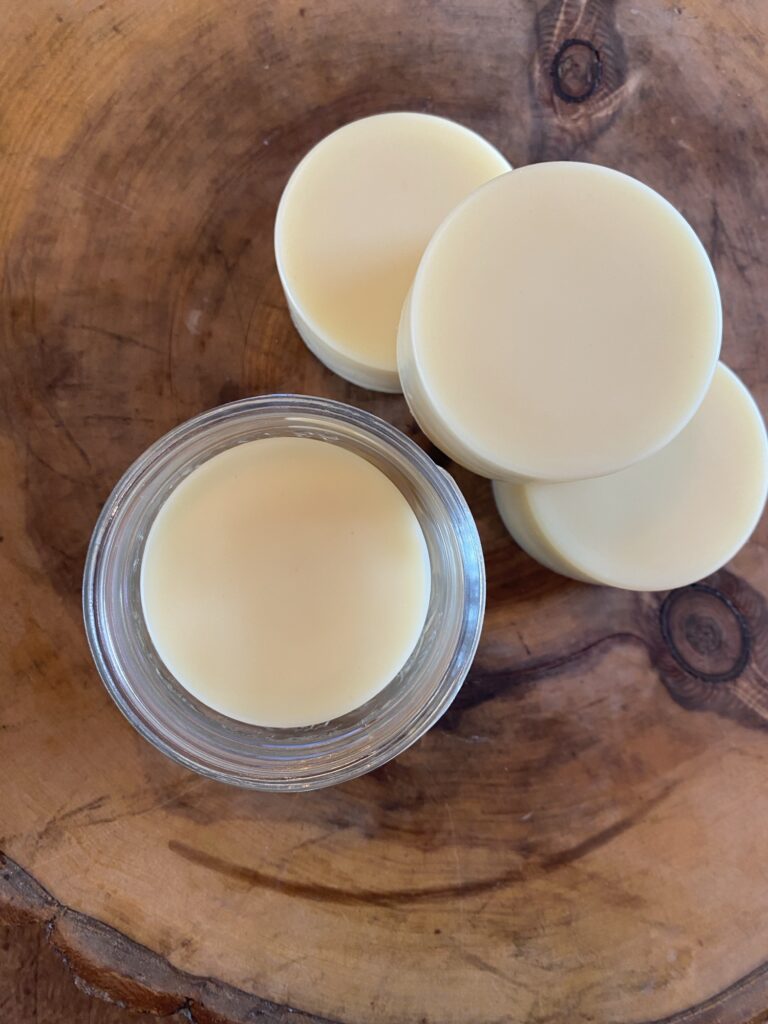
Leaf lard is a beautifully soft fat that cools into a white creamy product perfect or frying, baking and even skincare.
Animal fat is full of bioavalable vitamins as the animal can absorb nutrients from vegetation and grains better than we can. Higher fat diets have become pretty popular lately for good reason! From my own experience, I feel so much better eliminating seed/vegetable fats and oils and strictly eating animal fats and butter. Im not a doctor and here is a great podcast if you want to listen to medical professionals far smarter than me discussing the topic of higher animal fat diets and even predominantly meat/keto or carnivore diets for healing diseases: The Primal Podcast.
Rendering leaf lard is very easy to do in a cast iron Dutch oven or skillet. As you render it, it also seasons your cast iron.
Leaf lard can be found at a butcher’s shop, it’s a higher quality fat so many butchers may charge for it. However, some butchers just want to get rid of it and will give it away. My local butcher gave me a huge box of it that I’m working through. If you have a butcher you buy meat from, inquire about getting your fats from them.
This is a great winter project as it does take a few hours. It would be a task better suited for a cold winter day inside, warming the house with cooking and baking. Typically I save this chore for our long northern winters however, I need to clean out my freezer for another season of harvesting and hunting; so spring rendering it is!
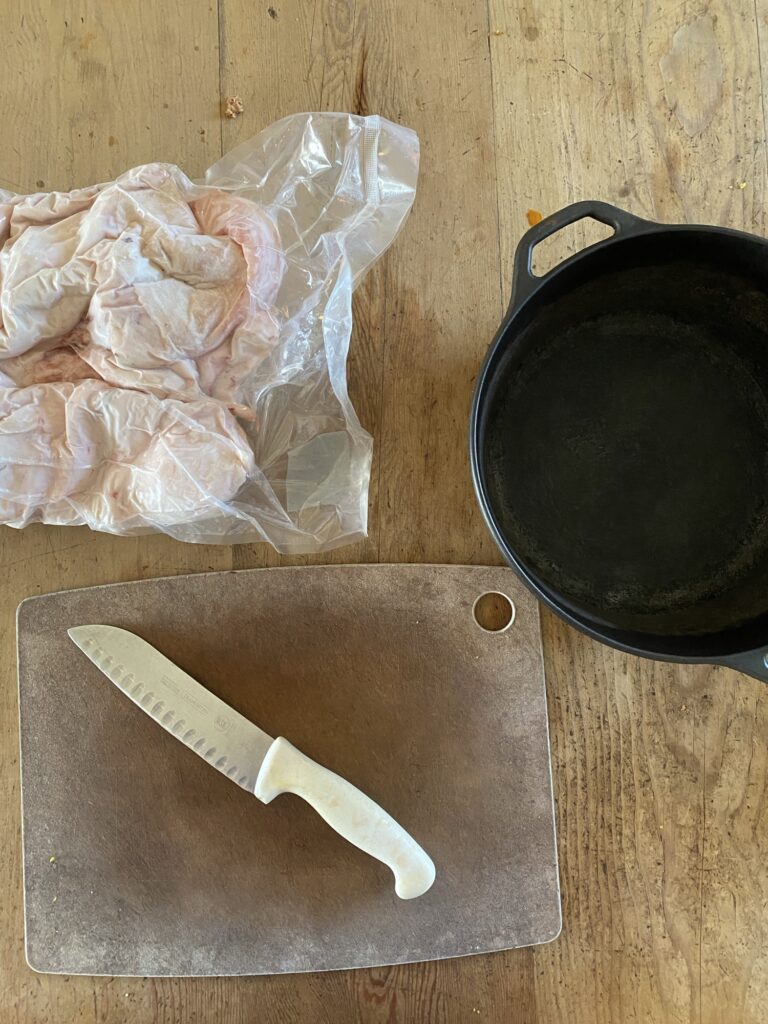
All you need to render is: leaf lard, sharp knife, cutting board and a cast iron skillet or Dutch oven is best.
There are two ways to render fat: wet and dry. I render mine “dry” because rendering with water always gives me mold.
When I first learned to render animal fat I used the crockpot method with a little water at the bottom. For some reason it just seemed like a longer, messier process.
That was over 12 years ago so maybe I’ve just become more efficient and confident in these kind of tasks; accepting the involvement. I’ve also read conflicting things about crockpot’s glaze being full of lead. Regardless, mine broke and I prefer cast iron anyway.
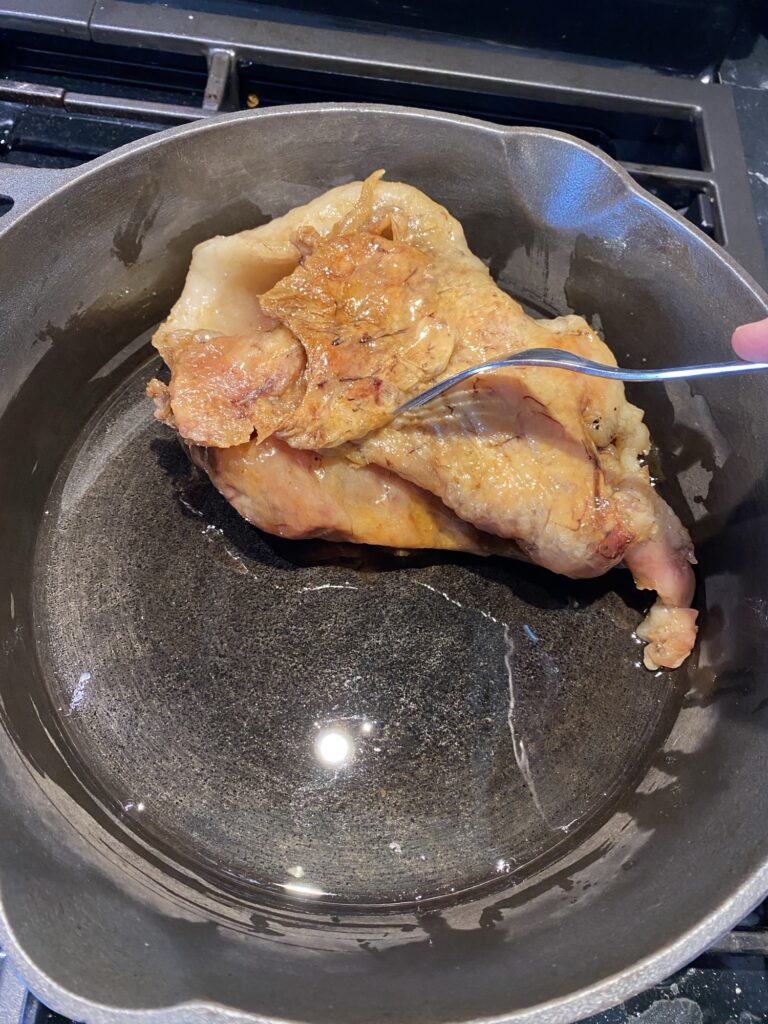
I’m going to share how I render without water which gives a better stable product since there’s no risk of bacteria and mold from the addition of water.
I store my rendered leaf lard in my fridge and the longest I’ve had it has been about three months because that’s about how long it takes for us to use up the batch quantity I make at a time.
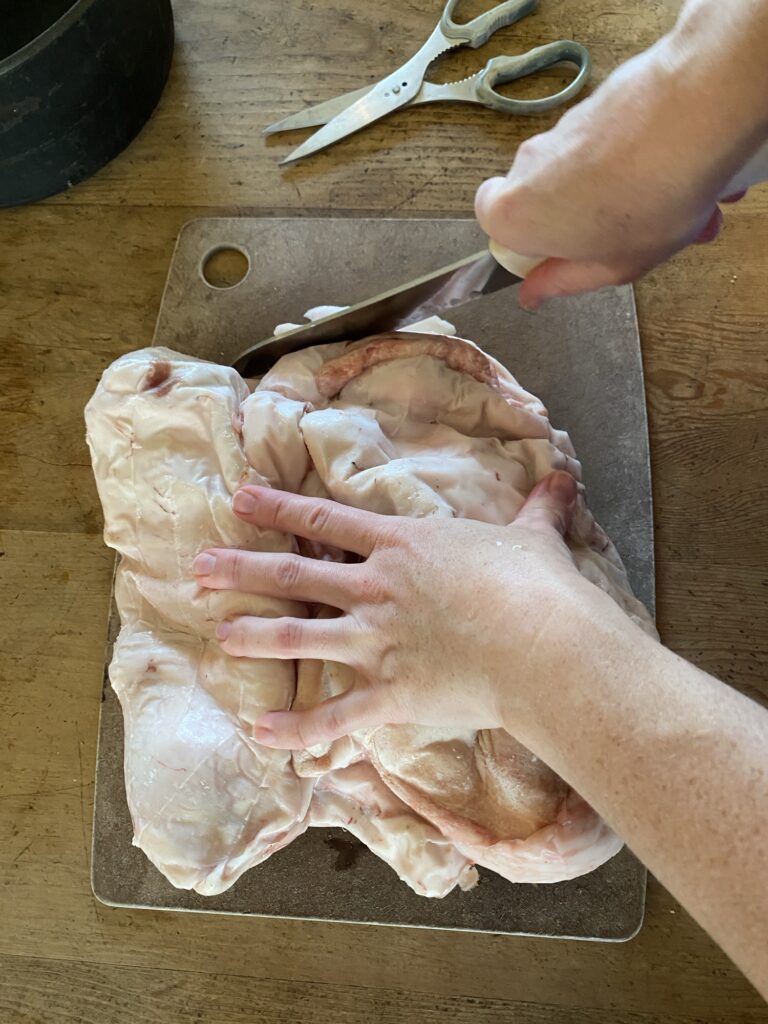
I find it easier to cut lard thats still a little frozen. I try to cut it all into smaller chunks for faster rendering. However, often I will just cut it down to the size I can fit it into my skillet. The smaller your chunks though, the quicker it will render.
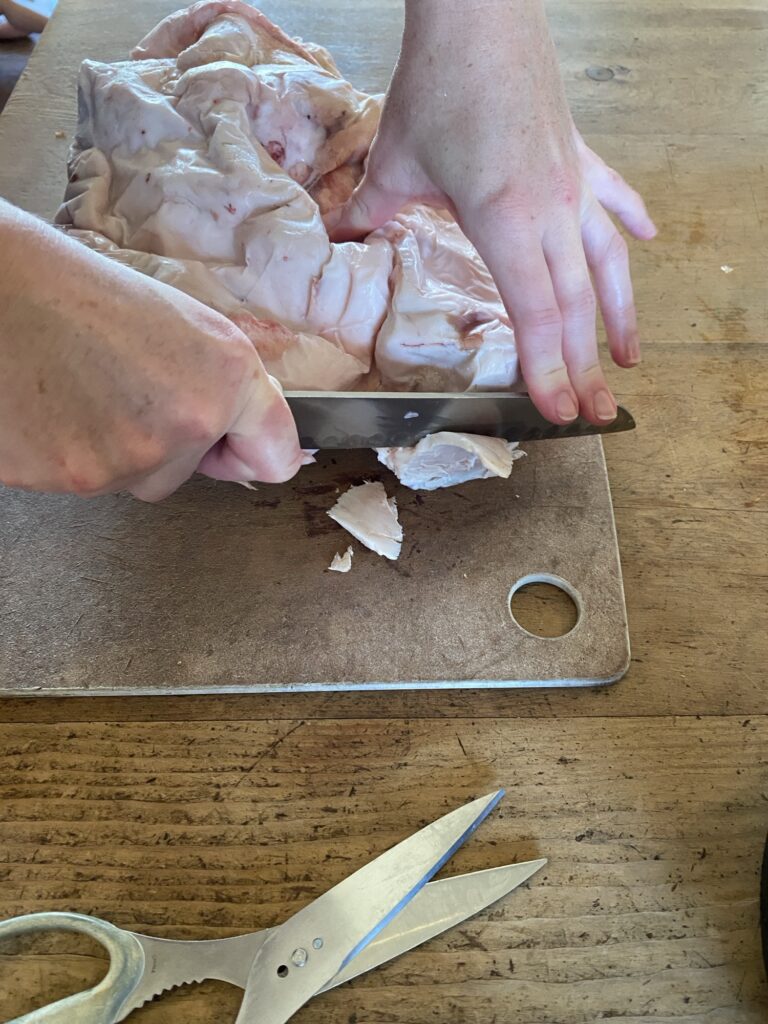
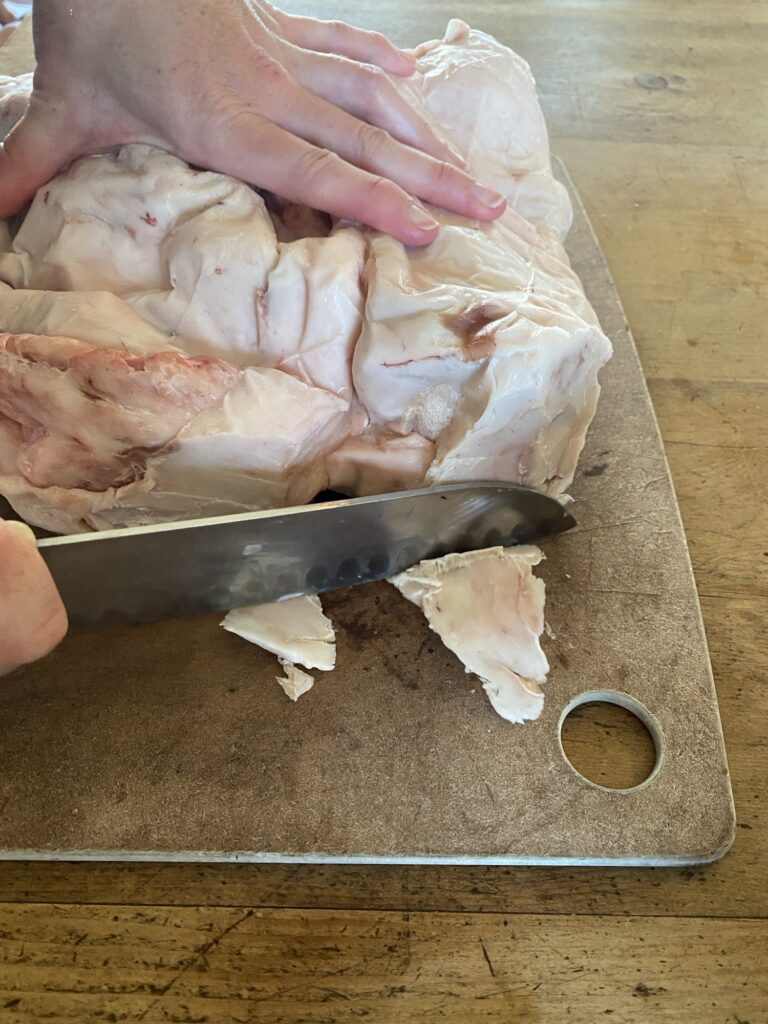
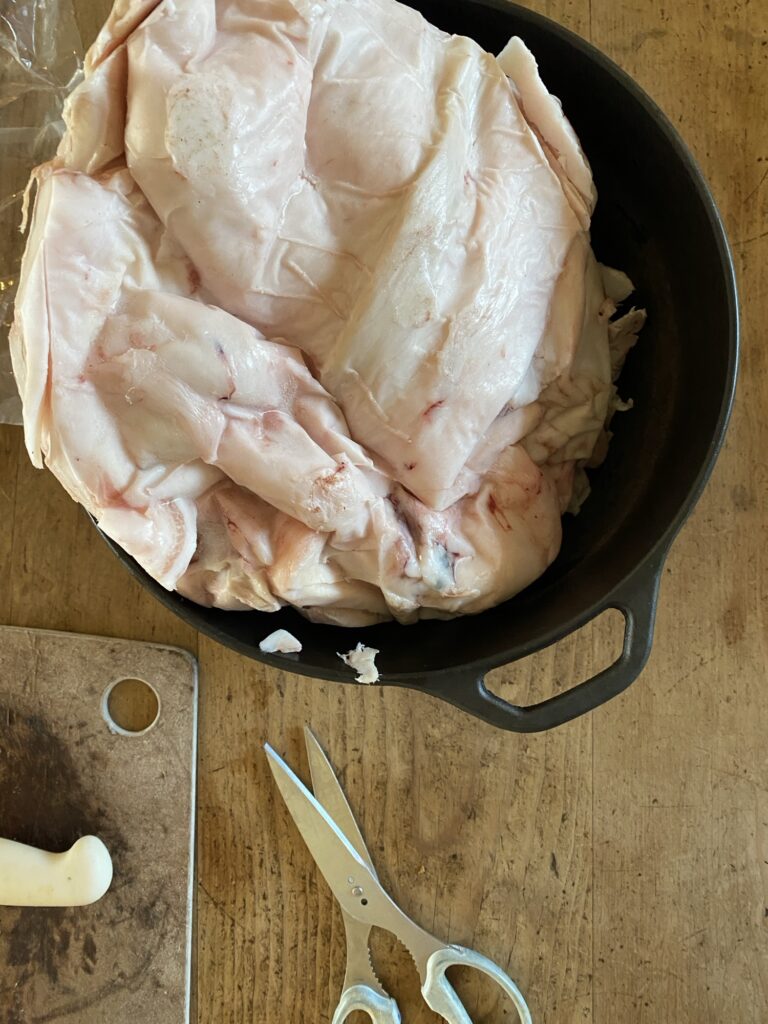
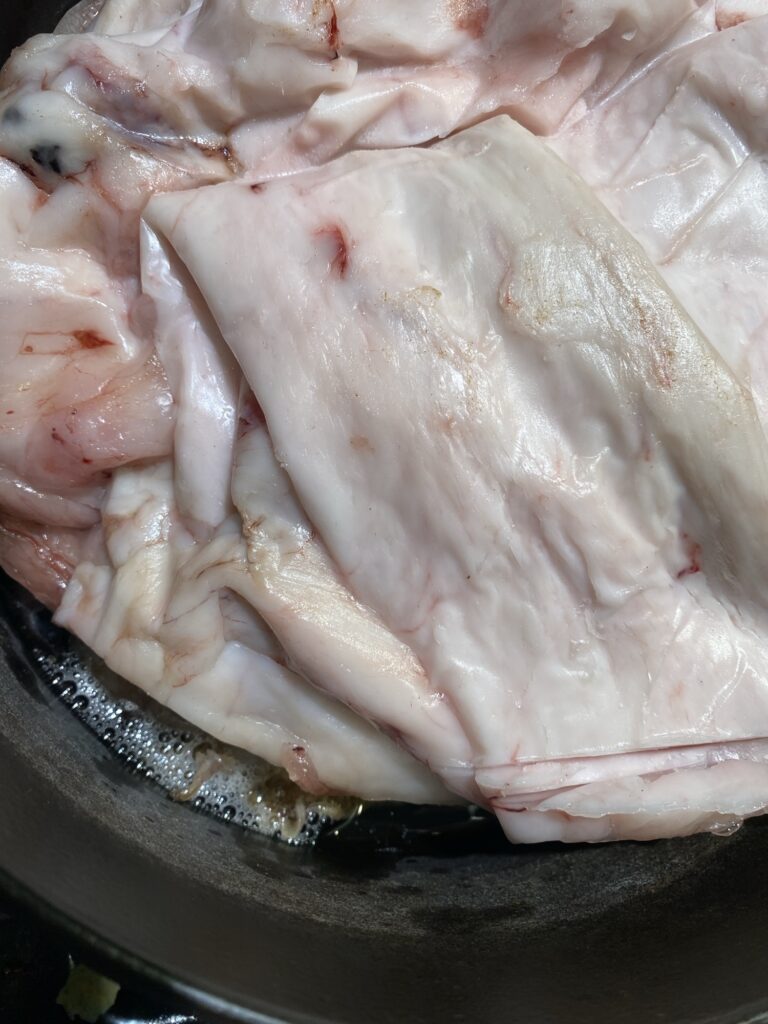
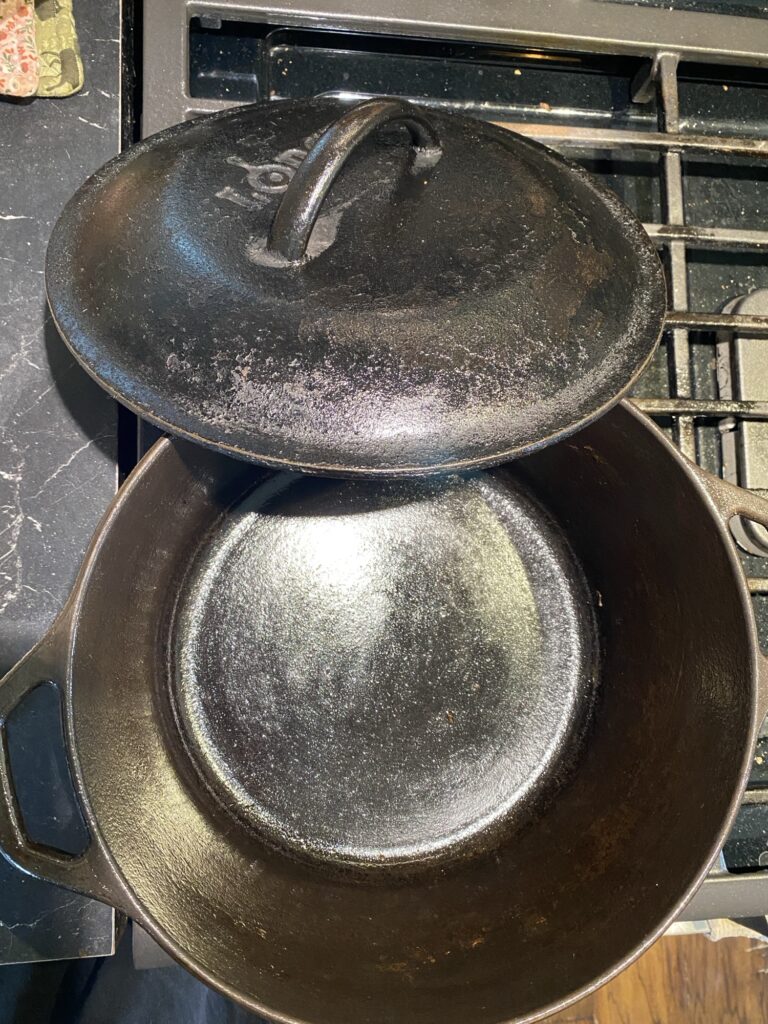
Once the leaf lard is in the pot, I start it on low. Keep it very low otherwise it will heat up quickly and begin frying the product to the pan. We want a slow render, no water, as the fat slowly begins to melt it will coat the cast iron and become non stick. You can see the bit of melted fat there at the bottom.
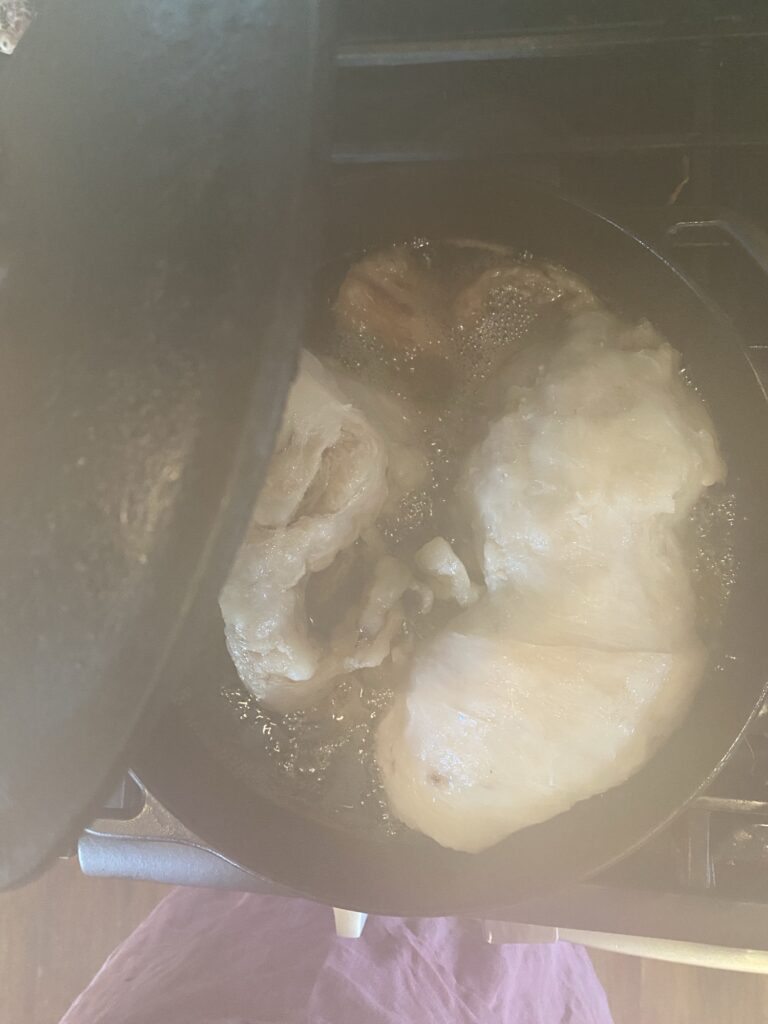
After a while the fat begins melting into the pot and I put a lid on it. If I’m rendering in a skillet I don’t bother putting a lid on. I will just let it render on low as I go about my day.
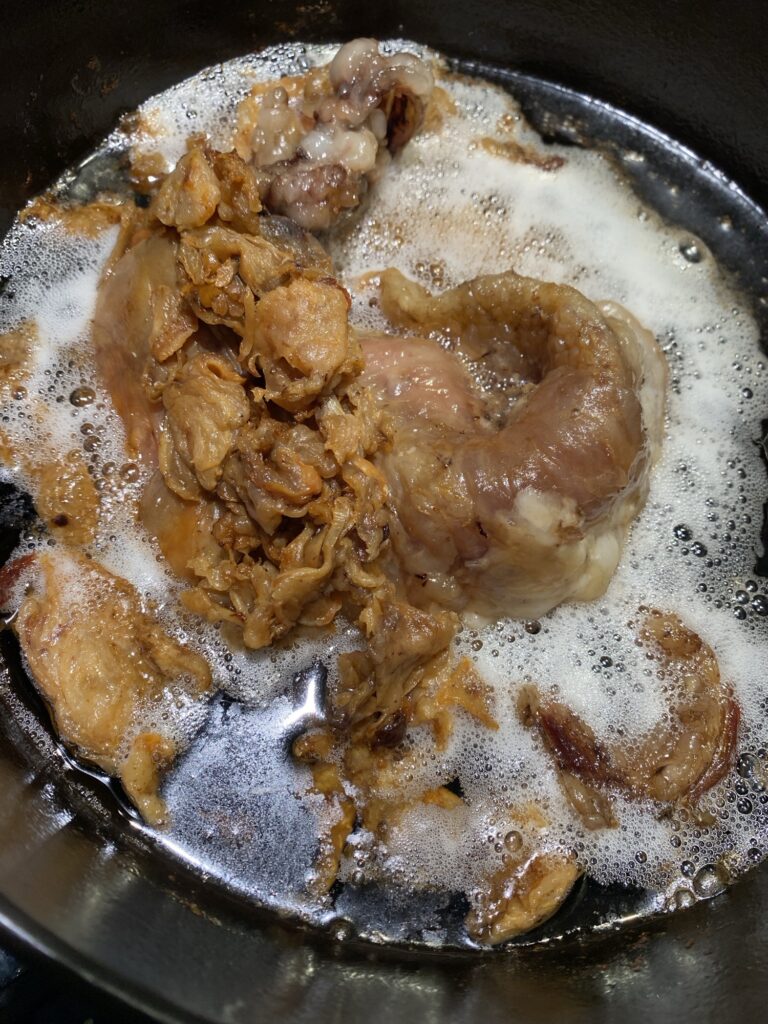
After a few hours the fat has melted and you get these delicious golden buttery cracklings. I will go through and pick out the best pieces, salt them and give them to my kids to snack on. My little kids and toddlers love them!
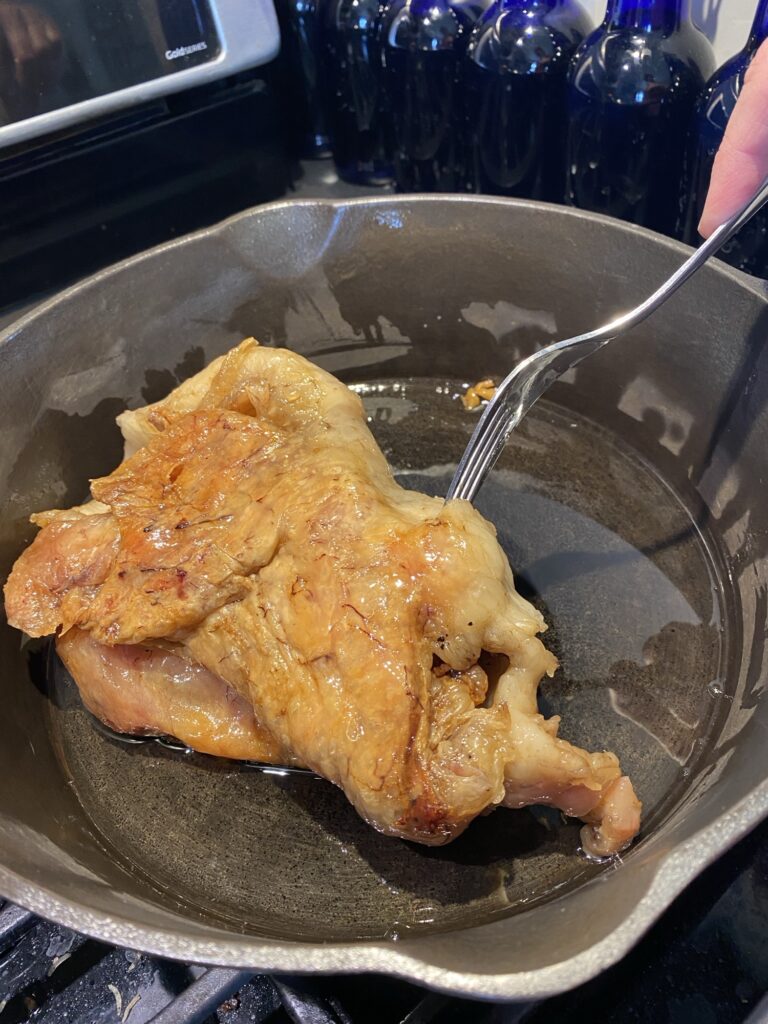
Here’s part of the fat, I moved it to another skillet because my fat would have overflowed from the dutchoven. This also gave me the ability to season another skillet.
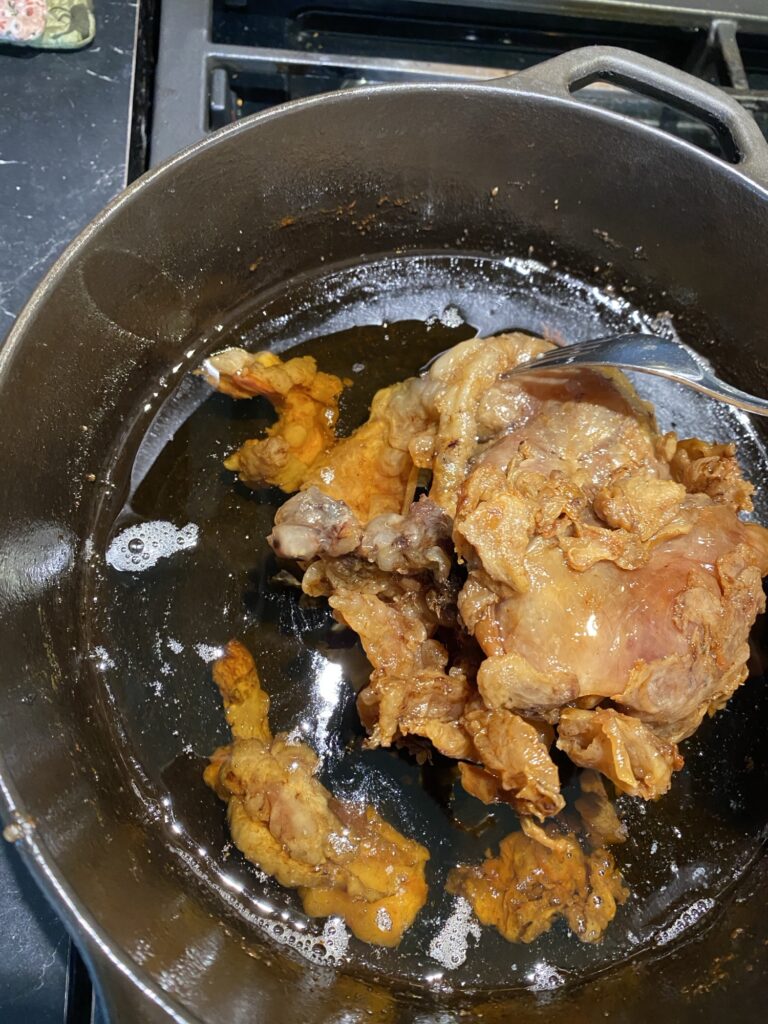
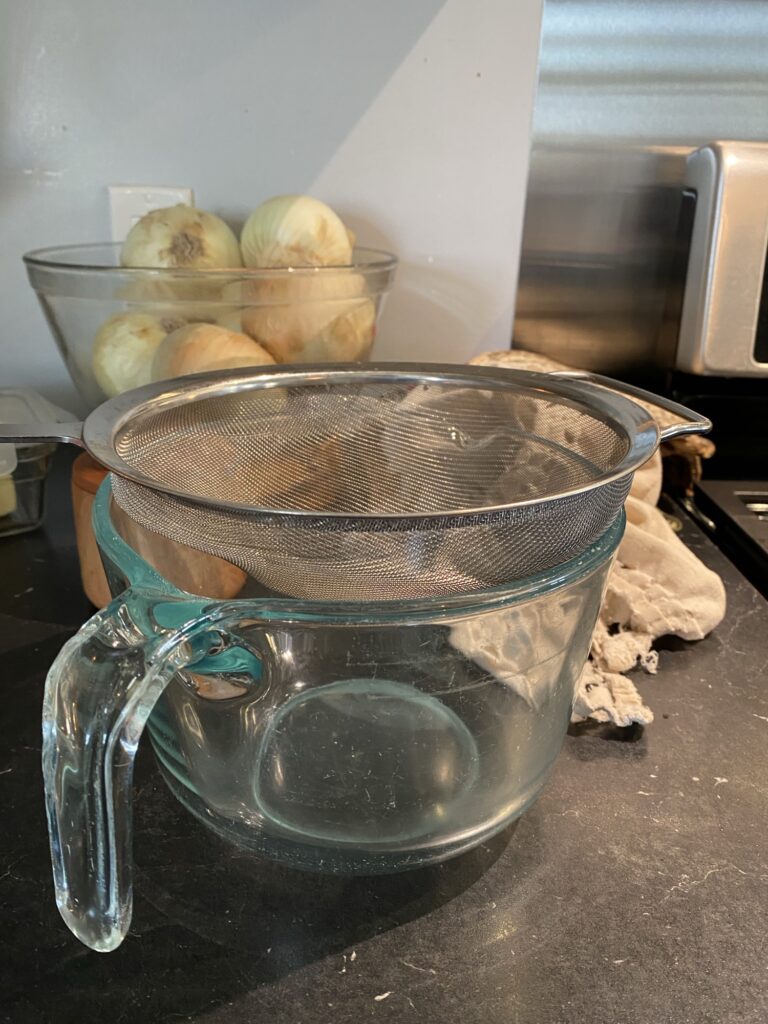
Once the fat has cooked down and you’re left with cracklings, it’s time to strain. First I use a slotted spoon to dish out all the cracklings. Then I put together a fine mesh strainer over a two quart Pyrex measuring cup.
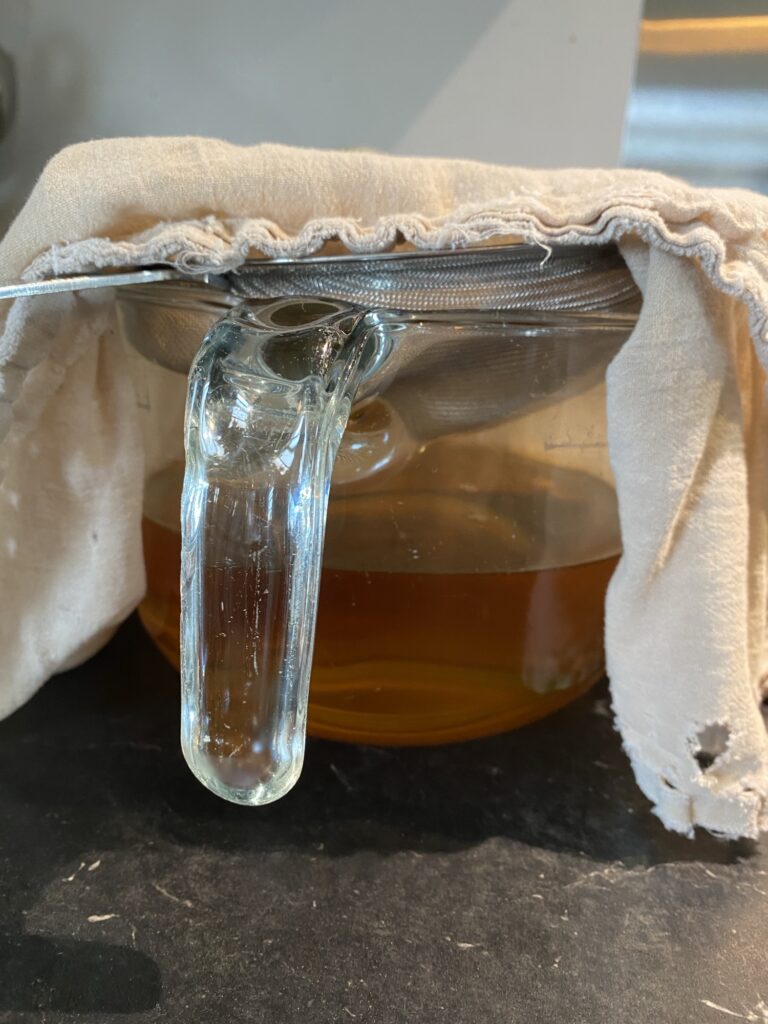
I then use a clean old cotton bar mop cloth that I’m going to throw away. You can use paper towel or cheese cloth.
I used to take the time to boil the cheese cloth and clean it for another use but that became a task I let go of with the more children I had. I found it tedious as I had to pour the boiled fat/water outside so as not to clog my drain and often I had to repeat the process several times to get all the fat out so as to be sure not to be pouring fat in my household plumbing.
I also found it hard to efficiently get this done since I needed to repeat pour boiling fat water off the porch in negative 40 weather. I decided to just use cloth I planned to throw away and use for this one last use.
I buy large cotton bar mop cloths in bulk each year and we use them a lot as I try not to use paper towel. By the end of the year most of them are ready to be tossed and replaced so straining lard or broth is the perfect final use.
You could save old cotton tshirts for this task too!
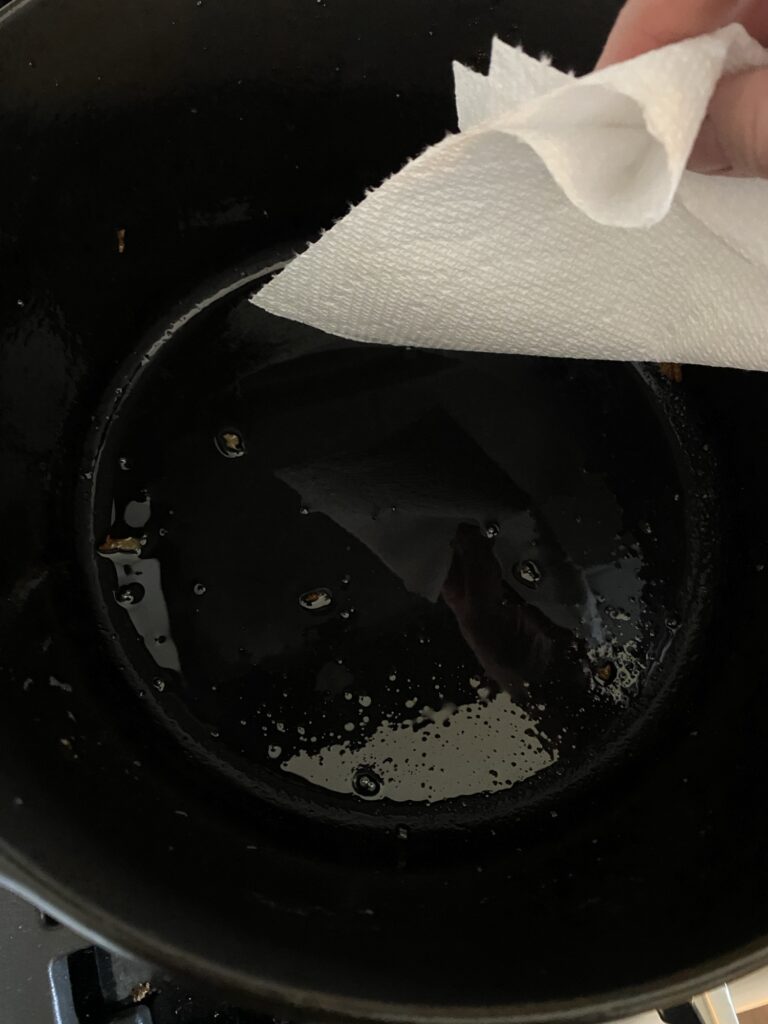
This is where I use a paper towel, unless I have another throw away cotton towel. I take a piece of paper towel and wipe out the residual cracklings. Then take another clean cloth or paper towel and rub the fat into my skillet and use on other cast iron skilled if you have them too.
You could plan this for winter too: heat your home, use up throw away cotton cloths and shirts and season all your cast iron really well all at once.
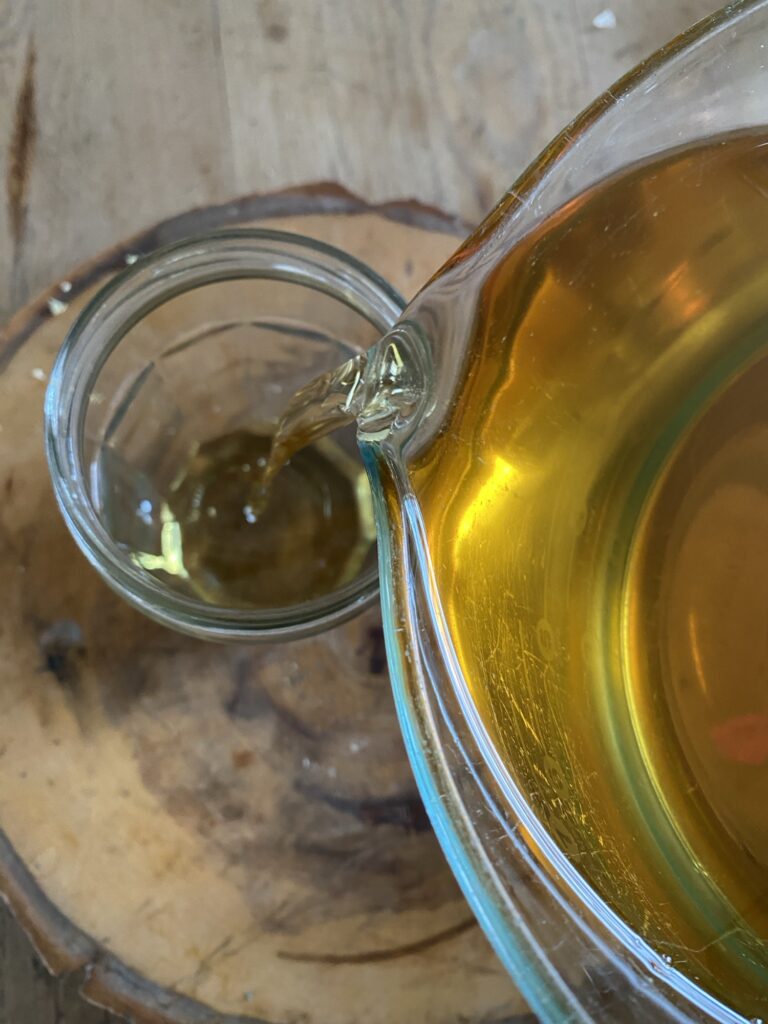
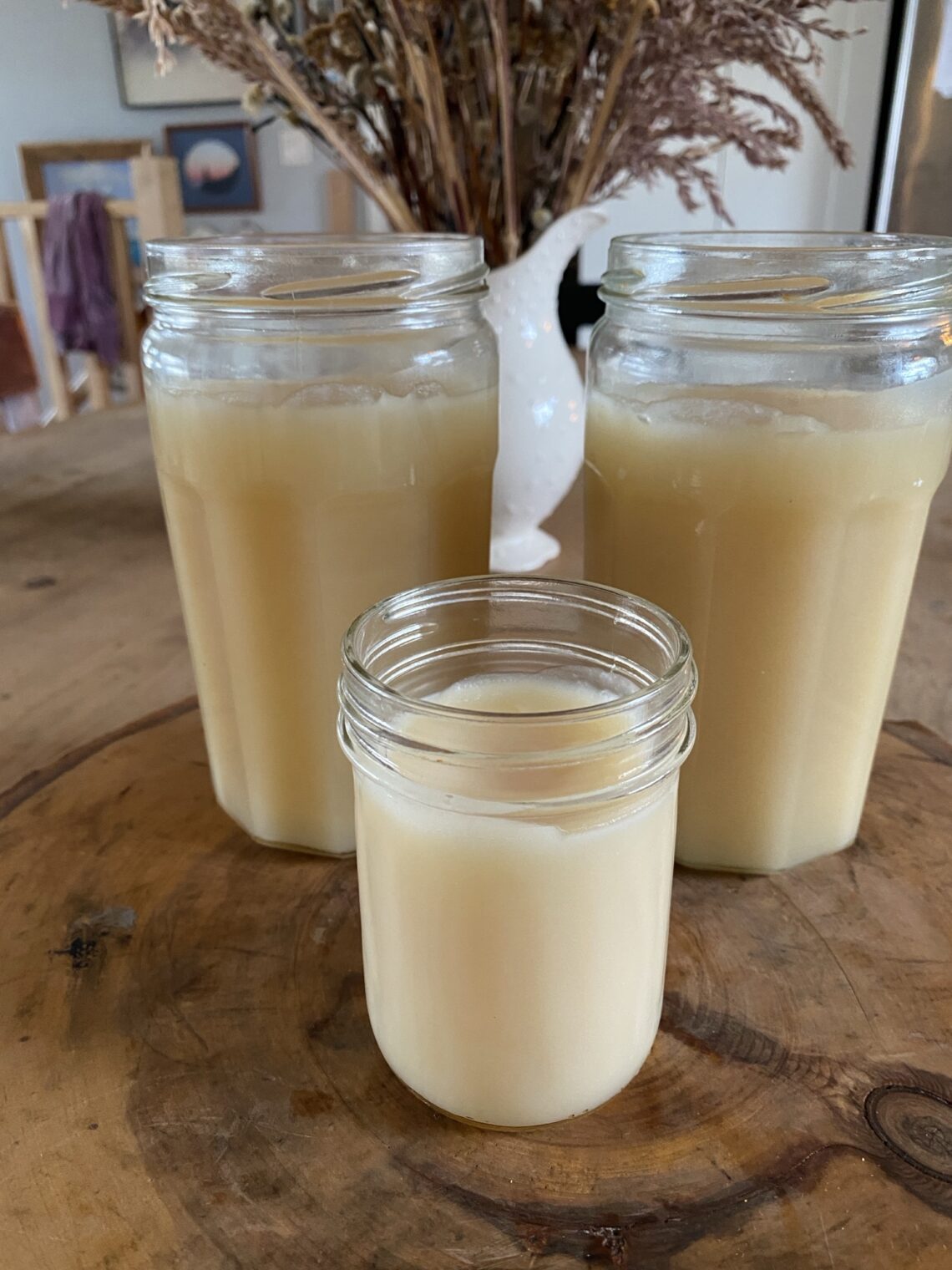
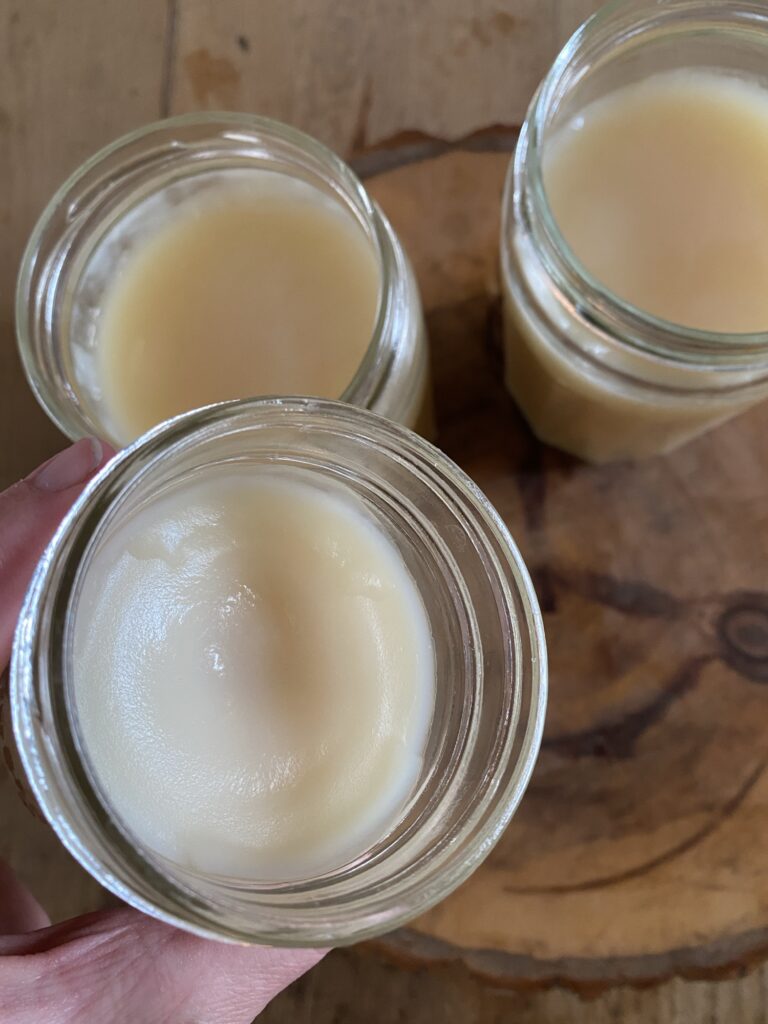
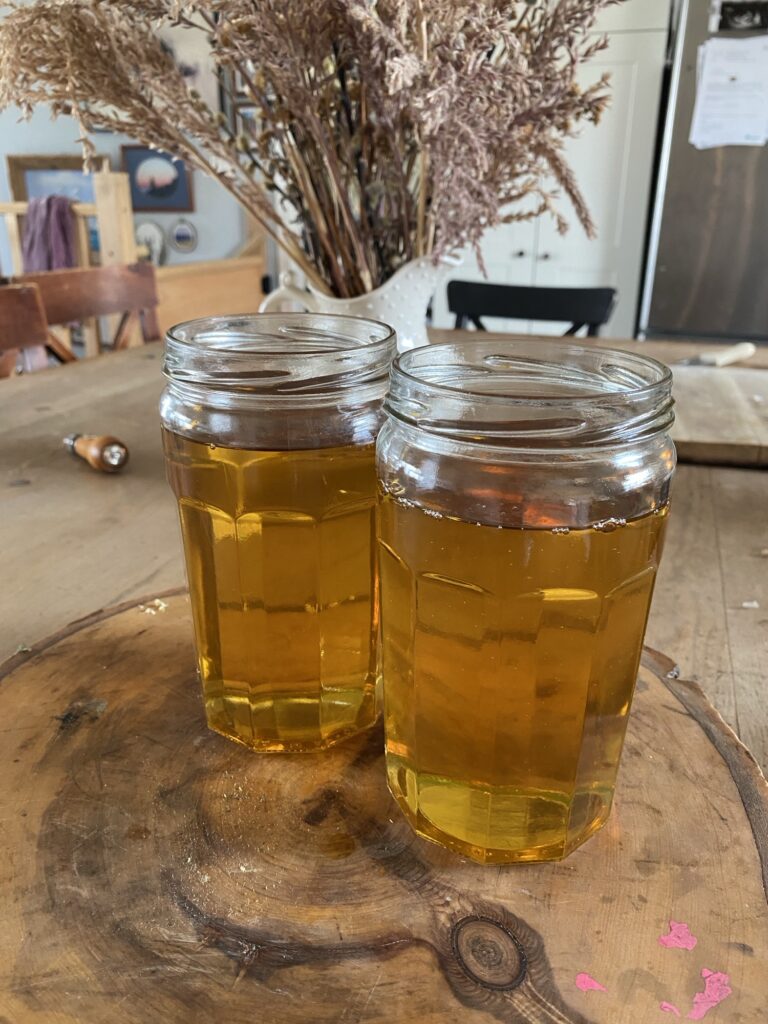
Once you strain your hot lard, pour it into clean glass jars and allow to cool and set up at room temperature.
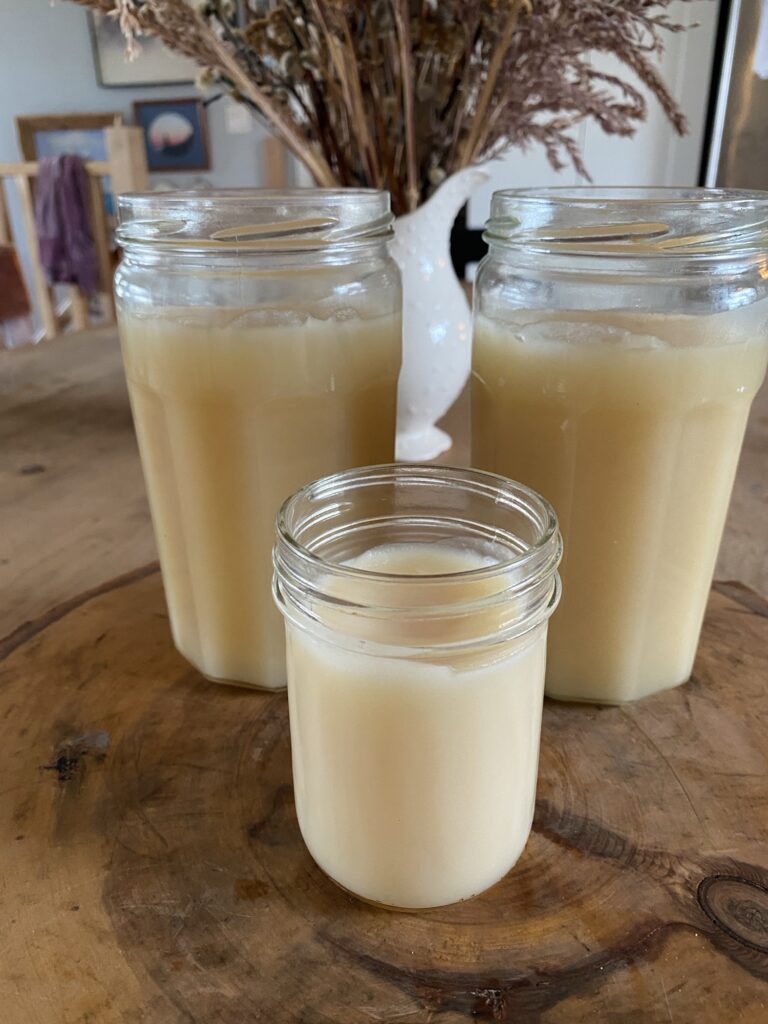
I store mine in the fridge and as it cools further it gets whiter making it perfect for use in pie crust, biscuits, or even whip it into a lotion or balm.
Enjoy!
Warmest Blessings,
Ashley