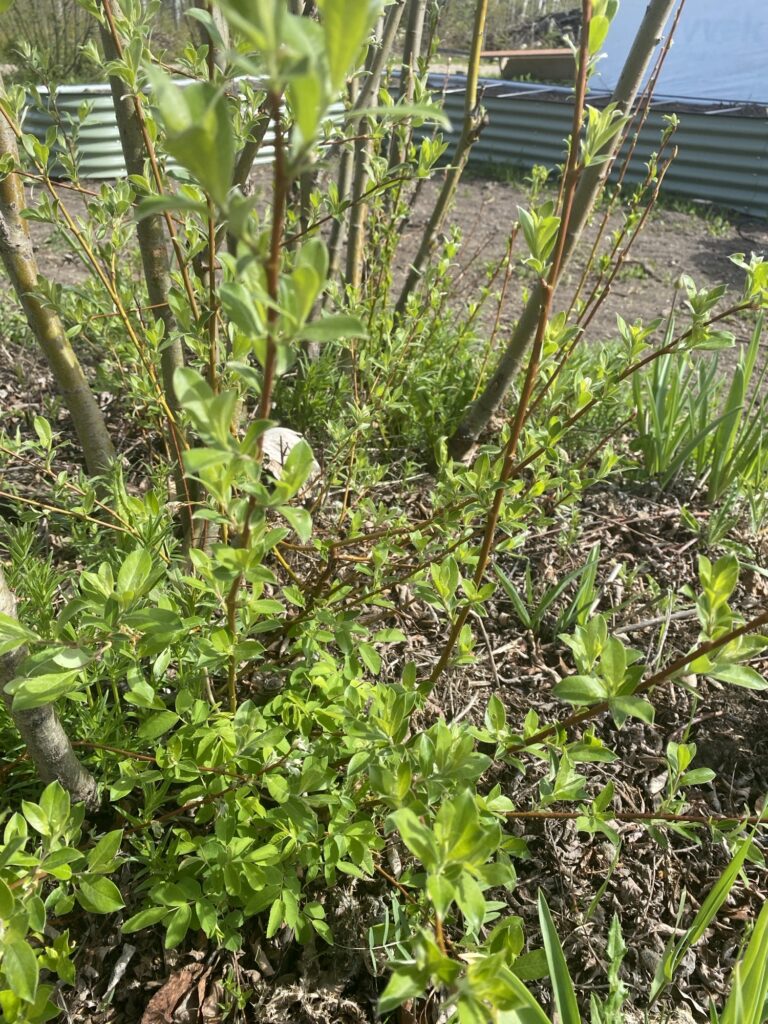
This year I’m experimenting with fertilizer teas using whats available to me on my acreage. We have willow everywhere and it’s so invasive, grows crazy fast and gets in the way of everything.
This is the year I’ve decided to stop trying to garden the way I was shown growing up in the lower 48.
Growing food in northern Alberta has been a different beast entirely. Most of what thrives here has to be hardy to harsh winters, have quick growing, rather shallow root systems for traveling between top soil and clay, withstand long periods of drought like conditions and deal with fluctuating temperatures even midsummer.
Harvesting firewood in the boreal forest has been the biggest lesson for me regarding gardening. When my husband is splitting logs I wander around the forest to observe how things grow. On hot summer days, beneath the canopy of tall spruce, the forest floor is cool and covered in ferns, moss, mulch, and berry trees. I always dig around in the deep leaf mulch and for some reason I’m always pleasantly surprised at the seemingly manicured nature of the soil beneath it. No human touched it. Just God’s design of trees dropping leaves and the canopy providing breaks and water retention from the sun, fungal networks communicating and carrying nourishment across the forest floor, soil bacteria producing quickly and being aerated by fast growing roots that till the soil. Deep leaf mulch that conditions, softens and breaks down the clay so the largest trees and shrubs can take deeper root and grow to gigantic proportions. Even in negative 40 winters these conditions are still thriving deep beneath the soil due to everything insulating the ground.
I love to read, but it always astounds me that I learned the above through simple focused observation. Something I think our society misses out on through our fast paced technologically “advanced” era. Education isn’t complicated, we’ve simply made it so through the vast introduction of electronics and the 8 hour indoor classroom.
In short; this is how I’m gardening. I’m using whats available to me, I’m copying what I see in the forest and it looks nothing like the neatly tilled and manicured gardens of Ohio where I lived before moving here.
Some resources I bring into my garden from the forest: leaf mulch, thick moss, low growing edible shrubs, Saskatoon berry trees, raspberries and more.
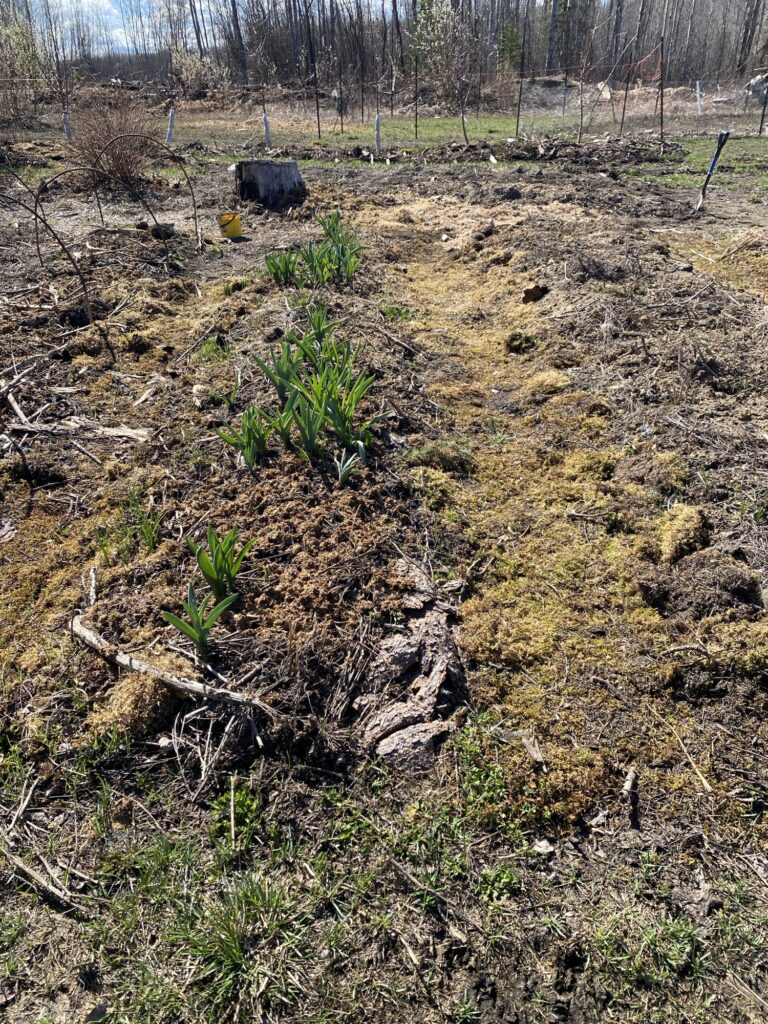
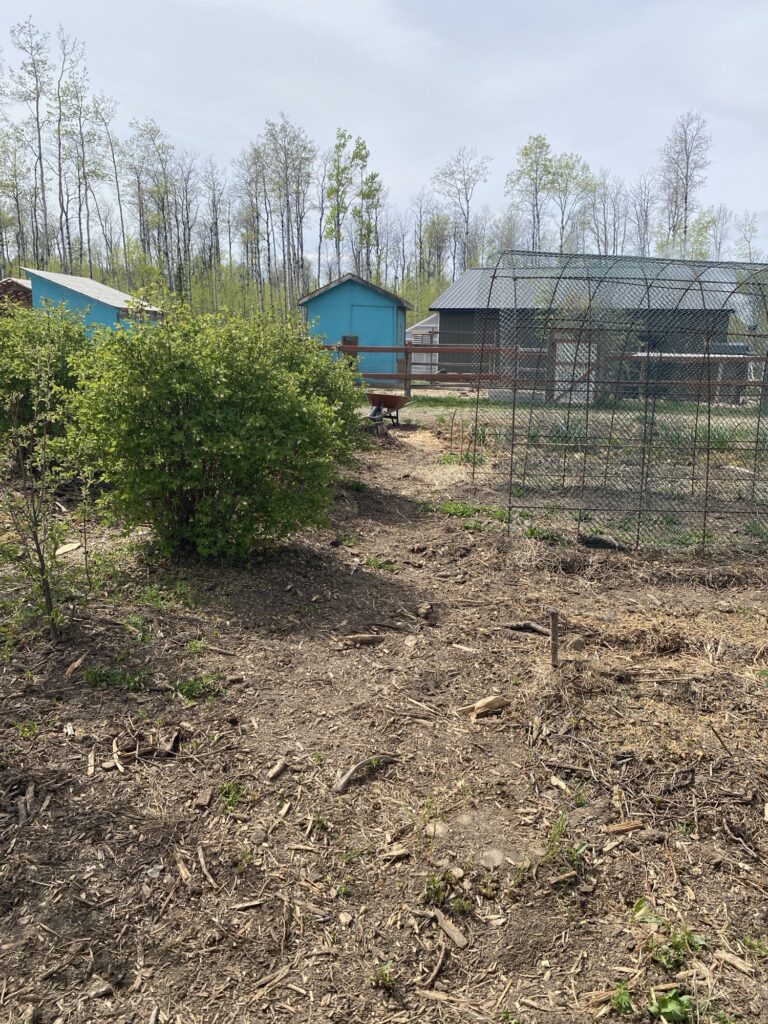
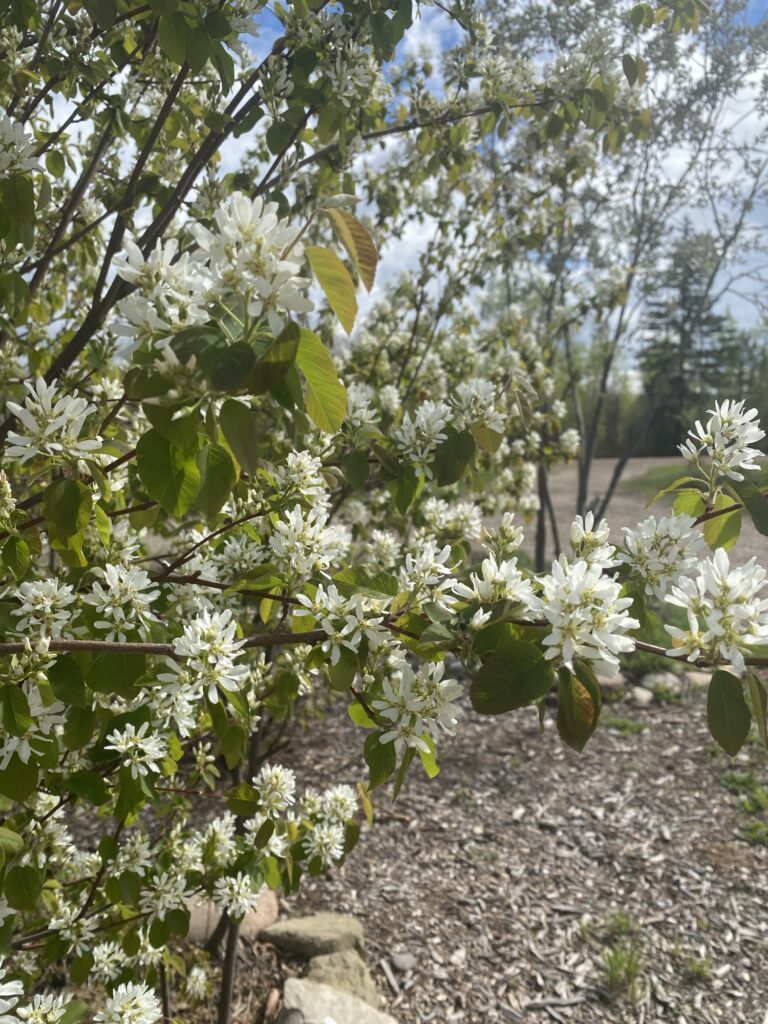
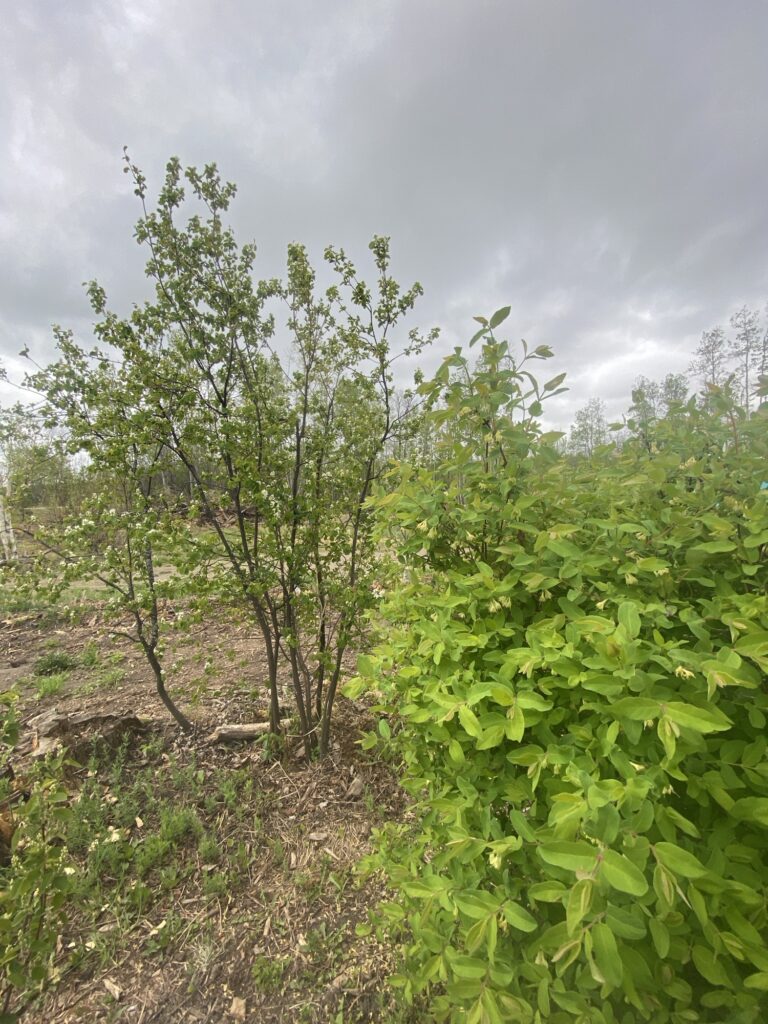
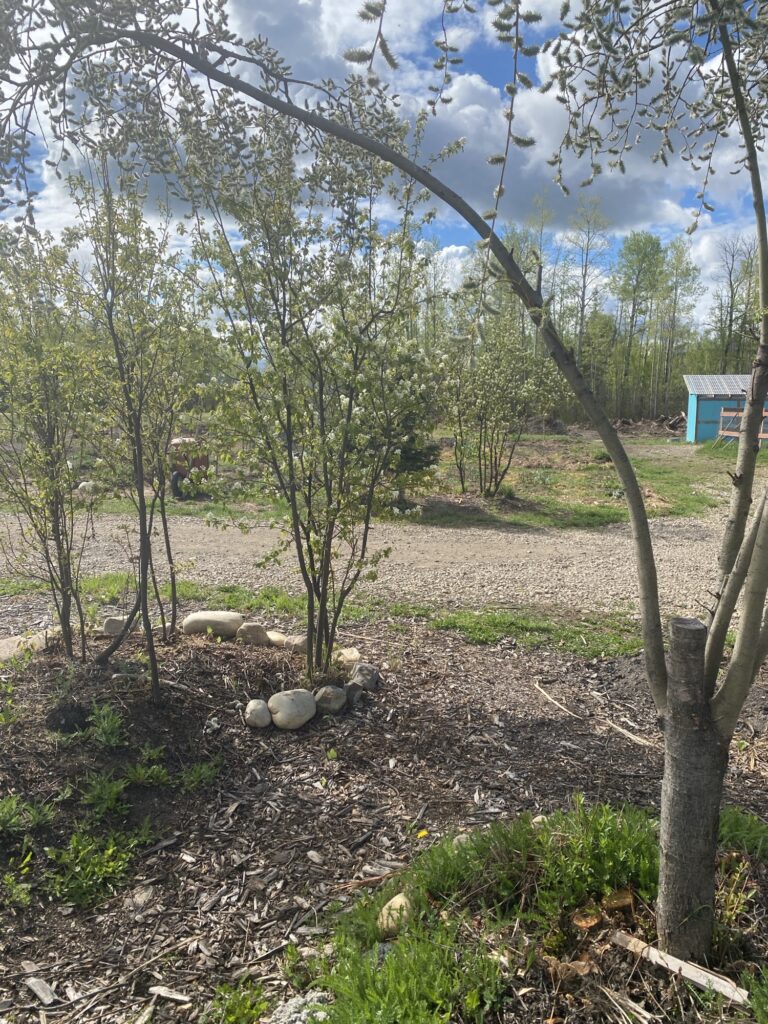
Willow is a resource too for many uses: cutting it back and allowing a quick growing canopy of it to shade part of my garden, simple structures for beans and climbing things, my daughter’s and I enjoy making wreaths with the pliable branches, I plan to learn to make baskets with it, and it makes an easy free rooting hormone for plants.
Willow grows extremely fast and according to Deep Green Permaculture there are, “two substances that can be found within the Salix(Willow) genus, namely, indolebutyric acid (IBA)and salicylic acid (SA). Indolebutyric acid (IBA) is a plant hormone that stimulates root growth. It is present in high concentrations in the growing tips of willow branches. By using the actively growing parts of a willow branch, cutting them, and soaking them in water, we can get significant quantities of IBA to leach out into the water.”
Not only does willow contain a plant hormone that stimulates growth, it mitigates fungal and bacterial issues too.
According to Deep Green Permaculture, fungal and bacterial issues are the biggest threats when it comes to plant propagation.
Here’s how willow helps:
“Salicylic acid (SA), which is a chemical similar to the headache medicine Aspirin, is a plant hormone which is involved in signalling a plant’s defences, it is involved in the process of systemic acquired resistance (SAR) – where an attack on one part of the plant induces a resistance response to pathogens (triggers the plant’s internal defences) in other parts of the plant. It can also trigger a defence response in nearby plants by converting the salicylic acid into a volatile chemical form. When we make willow water, both salicylic acid and IBA leach into the water, and both have a beneficial effect when used for the propagation of cuttings.”
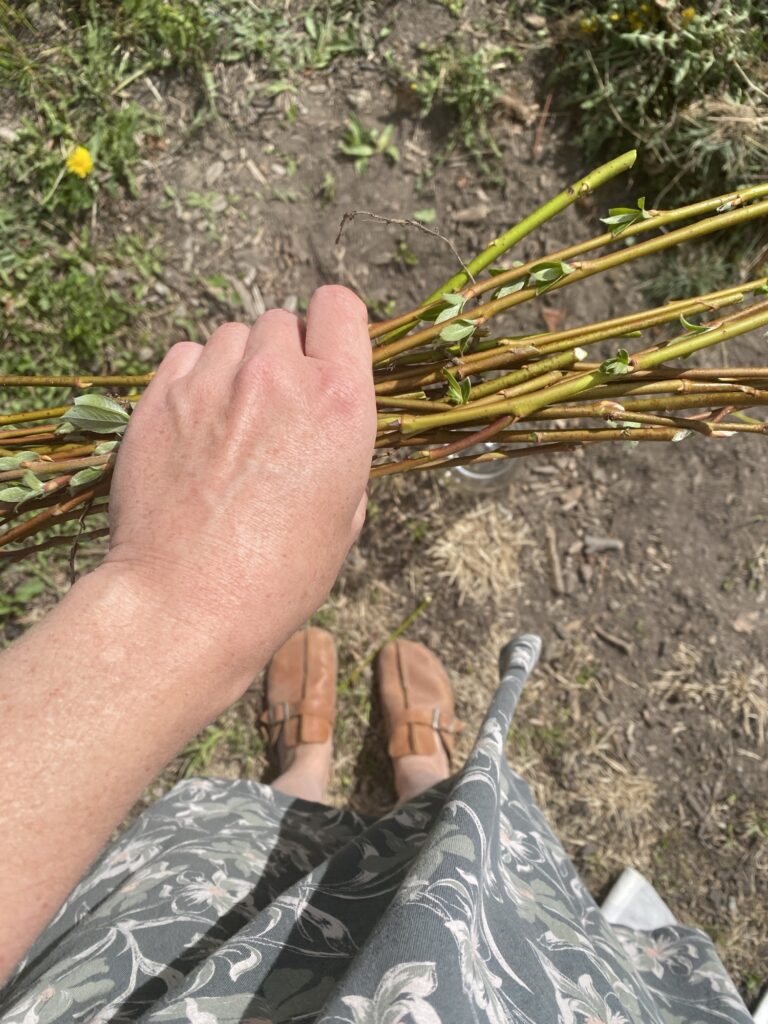
Using willow water in the garden:
I like to grow things that aren’t native here and need some “artificial” help. Zinnias, beans, cucumbers, tomatoes… these transplant seedling need a little extra help to get through the transplant shock. I also love to propagate things like cut flowers, fruit trees, roses, and even indoor air purifying house plants. Watering with a rooting hormone makes all the difference.
Here’s how I make and use it.
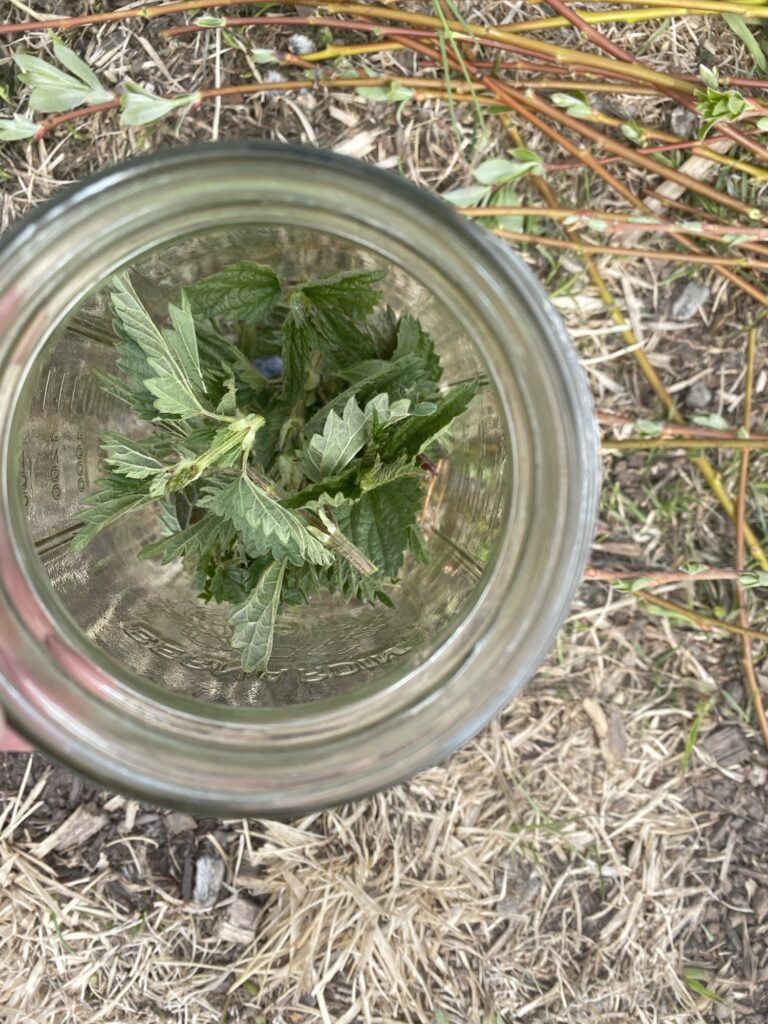
In a large jar, I cut in some nettle since nettle is full of nutrients it makes a wonderful fertilizer tea with a complex nutritional profile.
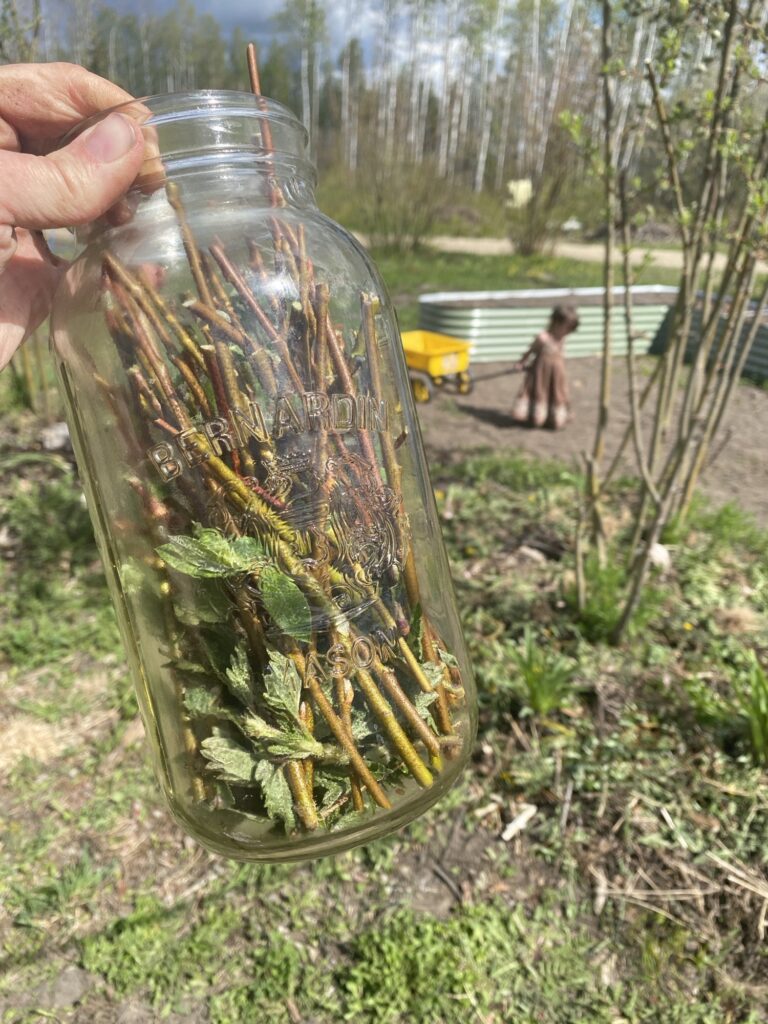
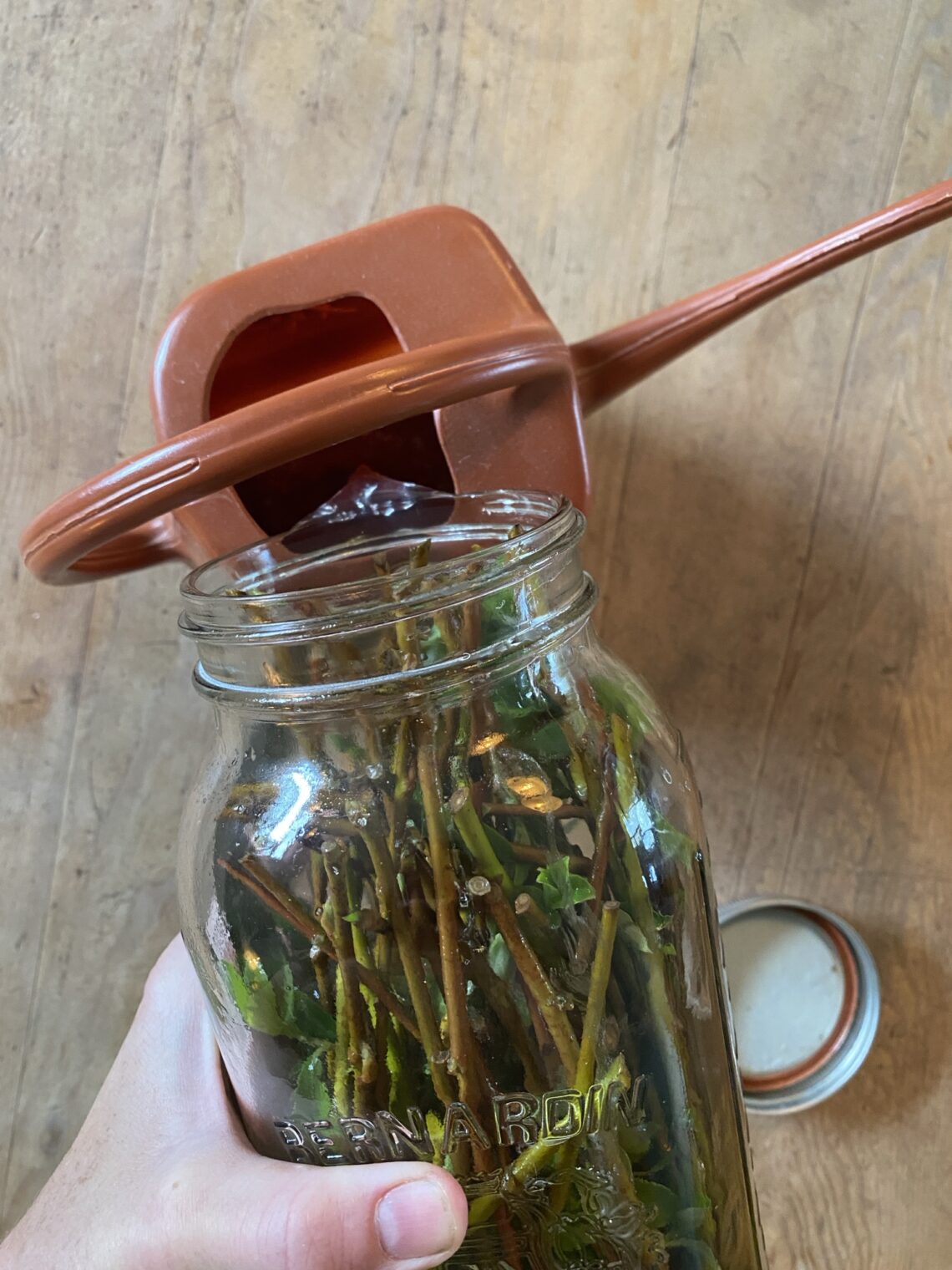
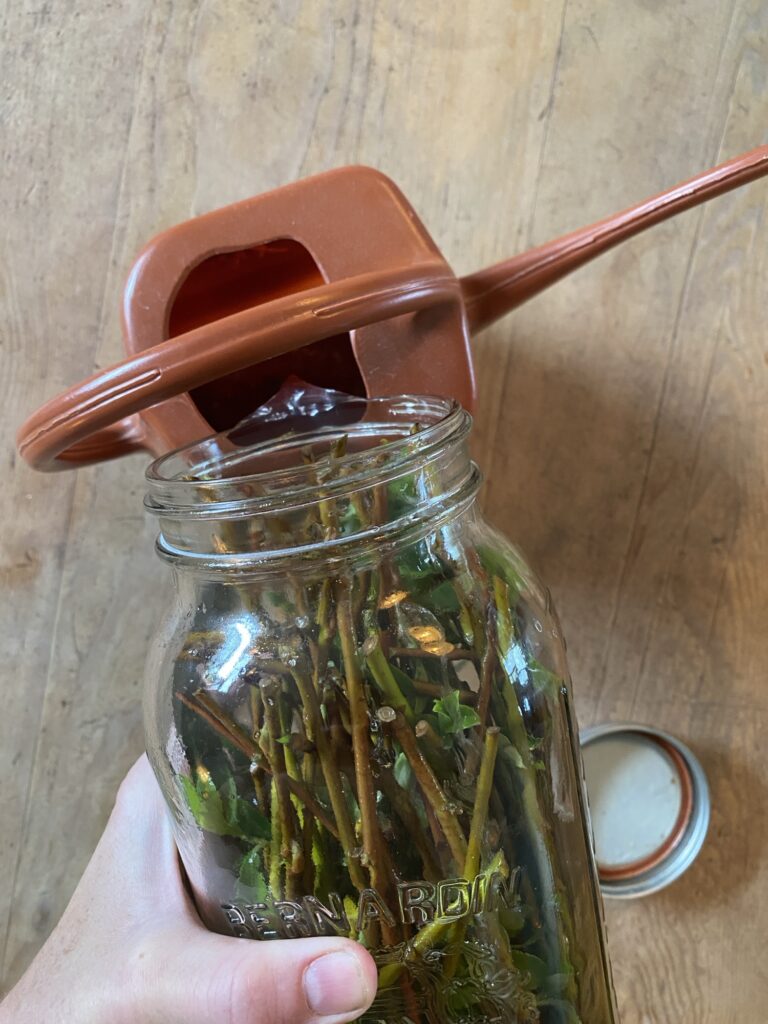
Next, I find some new spring growth at the base of a willow. Cut the young pliable sticks, strip off the leaves then cut the sticks down and shove as many as I can in my jar.
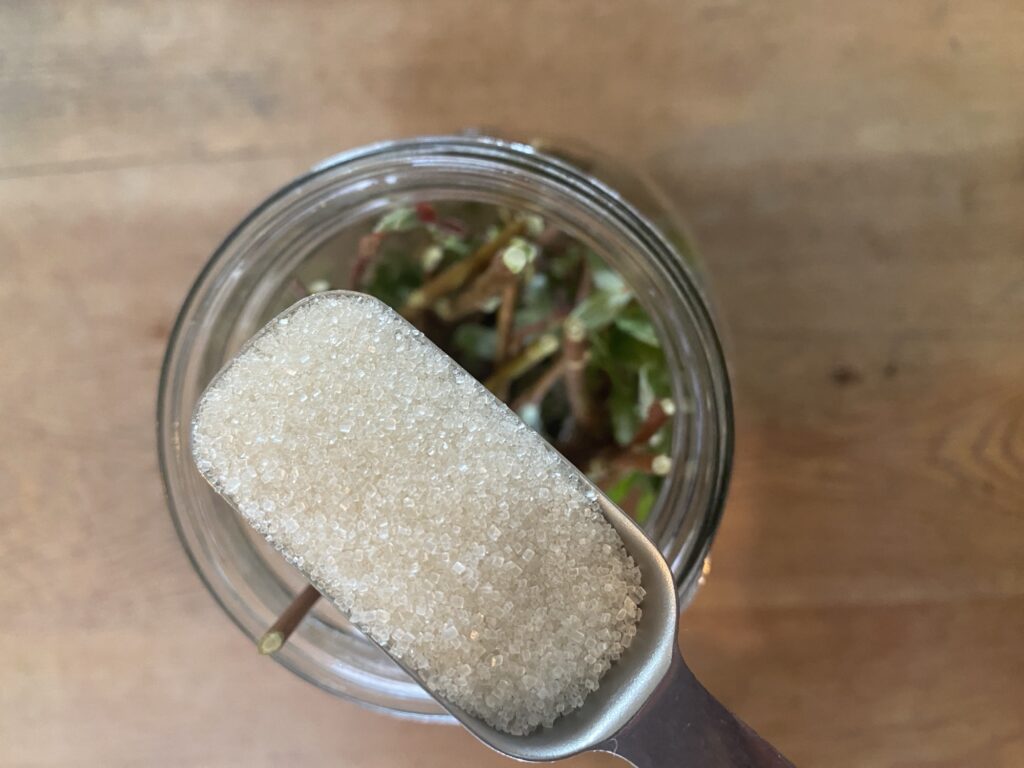
I’m using a half gallon jar here and to my nettle and willow branches I add about one tbsp of organic sugar and one tbsp of plain yogurt/whey. This is going to produce a probiotic rich tea that the plants can uptake the nutrients from more optimally. Then fill the jar with water, I have to use reverse osmosis water as our well is high in sodium. We RO our well water for drinking and watering gardens otherwise the high sodium content kills everything and gives me migraines and heart palpitations.
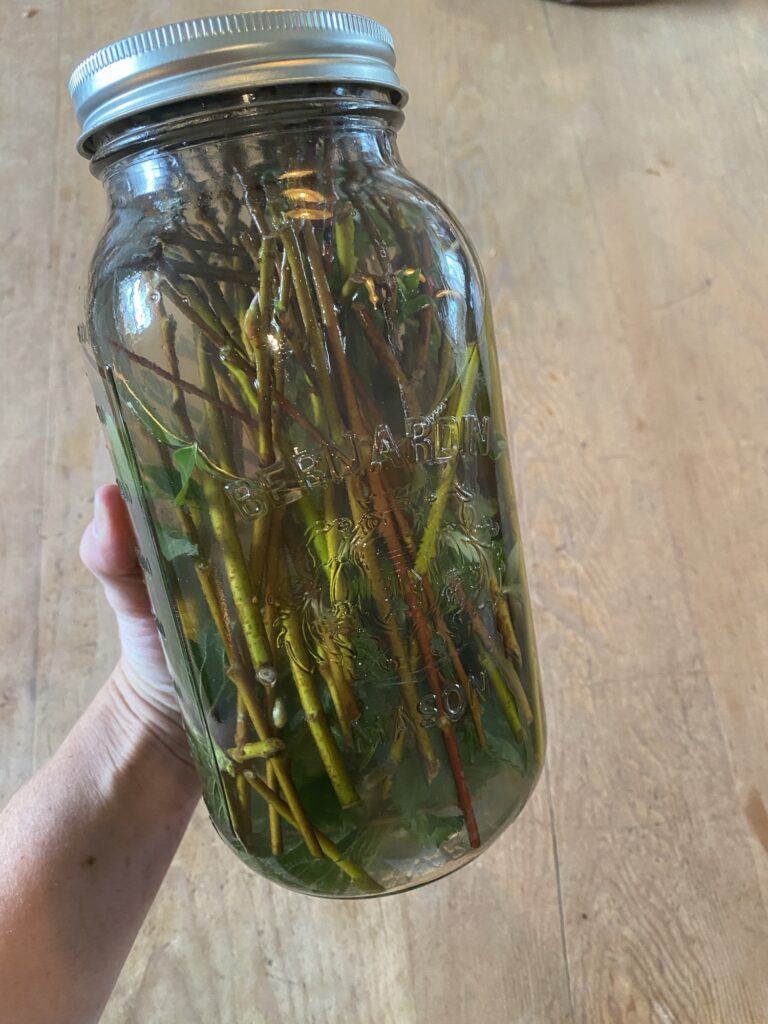
Place it outside in the sun to steep for a week, although the longer the better.
I use this three different ways.
One: if I’m doing a general water of my gardens, I strain the tea and pour it into a large rain barrel of reverse osmosis water we have for watering outdoor gardens.
Two: if I’m watering my greenhouse, I pour the gallon of tea in the greenhouse sump pump which I then use another pump to pump through a hose and water the beds in there.
Three: for seedlings before I harden them off and plant them outside.
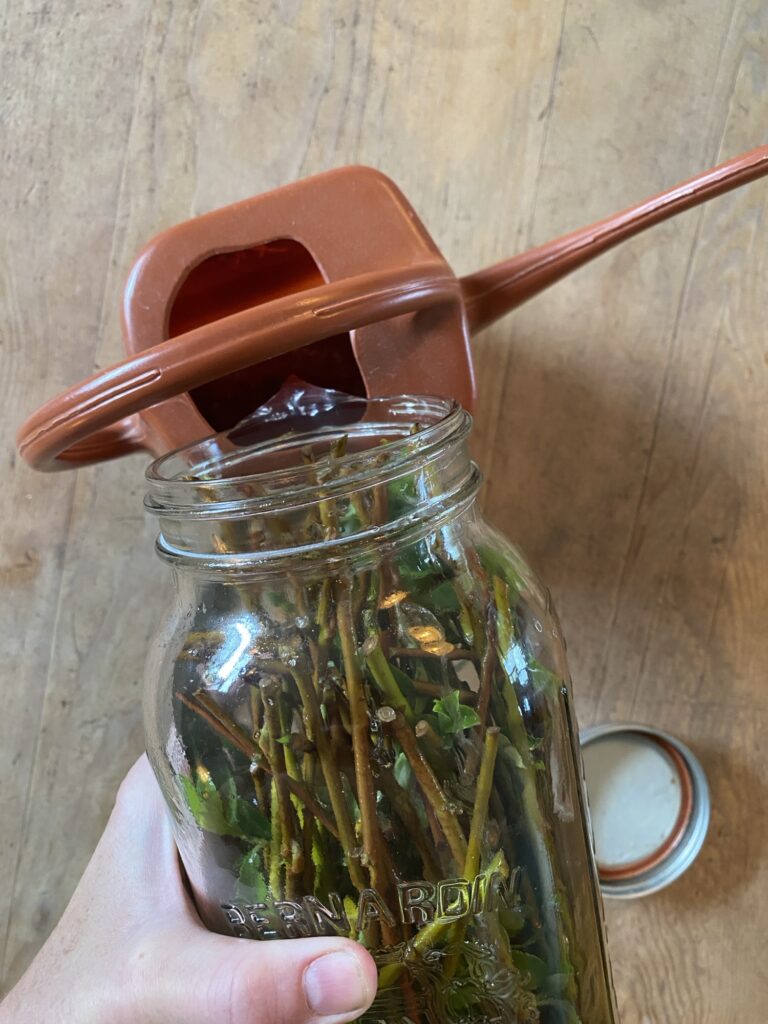
In the case of seedlings I want a stronger watering so I just use a half and half ratio.
One part rooting hormone tea: one part water.
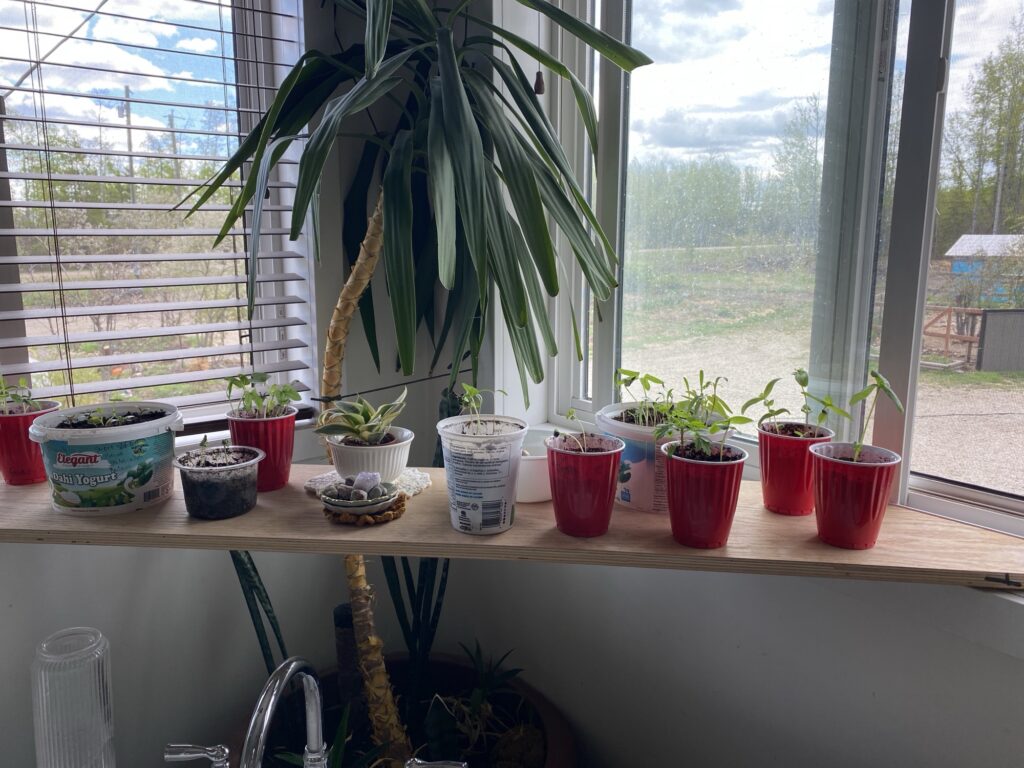
I keep my seedlings on a board between two windows in my bathroom. This way I can open the windows as the weather warms and simultaneously harden them off without needing to daily bring them outside and back in for a week. The seedlings grow and get acclimated to outdoor temps even through the night. A few days before transplanting, I saturate them with the hormone rooting fertilizer and when I transplant them I sometimes water them again as I want them going into the ground with lots of moisture.
Rooting Hormone Fertilizer:
One gallon jar
Stuff with several inches of fresh nettle, or a liberal amount of dried nettle
Fill with young cut willow branches
About one to two Tbsps of organic sugar (to feed the bacteria)
About one to two tbsp of whey/plain yogurt
Filtered water/mineral rich well water
Warmest Blessings,
Ashley