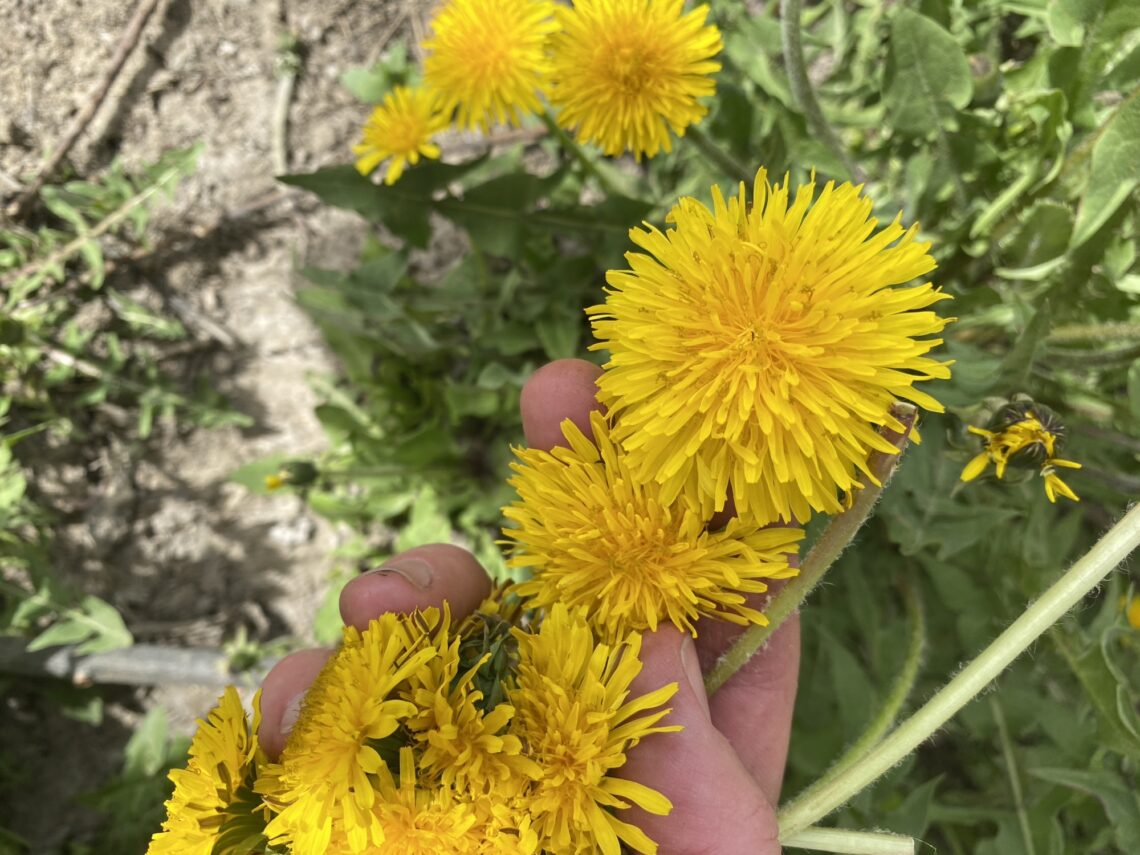
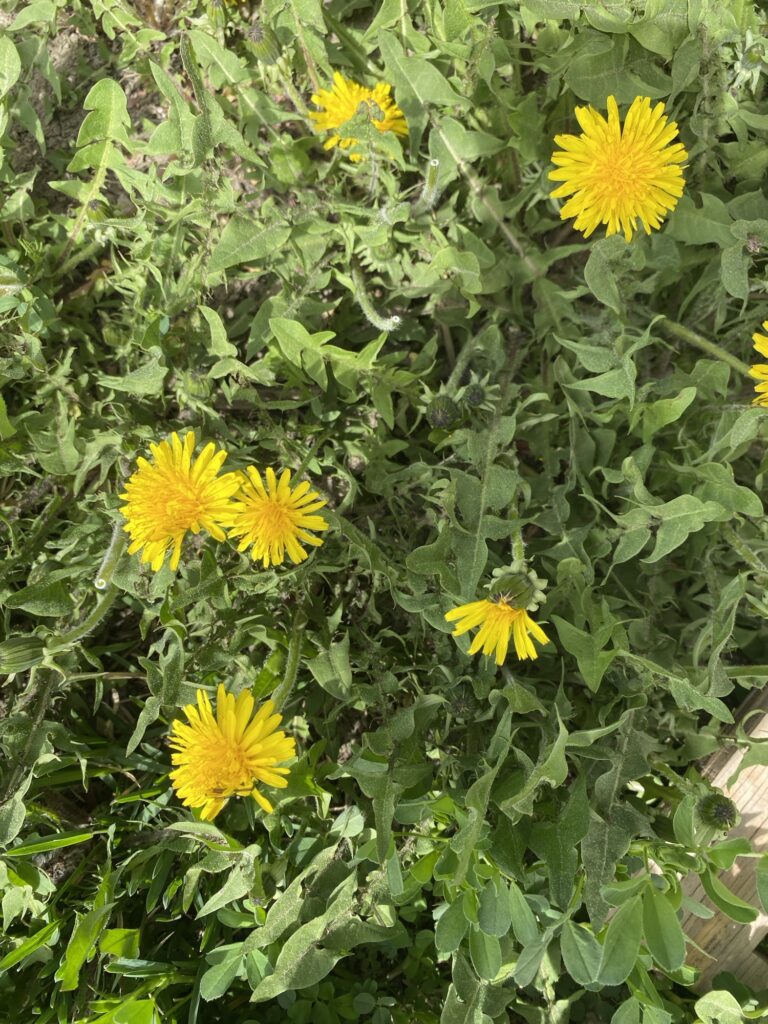
Summer has such a lovely feel. Especially after a long Alberta winter. I want to utilize every bit of sunshine, grounding and nutrition it has to offer. One being, the dandelion.
The entire dandelion plant is edible and each part serves a different purpose. I love the book The Boreal Herbal, by Beverley Gray. According to her research and research she quotes, dandelion blossoms are high in vitamin D, making them a wonderful spring resource to harvest and freeze for winter teas.
The leaves are best harvested in spring when they’re still small and tender. They are high in calcium and vitamin C. The roots and leaves are, “abundant in rich amounts of usable minerals such as calcium, iron, copper, magnesium, manganese, phosphorus, potassium, selenium, silicon, and zinc. They are also an excellent source of vitamin A, the B complex vitamins, C, and D.” The Boreal Herbal pg. 80.
The roots are wonderful to heal digestive and liver issues, helping to release stomach bile and cure constipation too. The roots are an especially high source of potassium and inulin which may help to feed healthy bacteria in the gut. A
ccording to, The Botanical Pharmacy by Heather Boon and Micheal Smith, the dandelion roots are, “considered to be both a cholerectic, promoting the production of bile, and a cholagogue, causing contraction of the bile duct initiating the flow of stored bile. Studies show that administration of dandelion root increases bile flow in dogs and rats and aided in the management of a variety of gall bladder conditions.”
In the garden, “dandelions actually restore minerals and other nutrient rich ingredients to the soil, help to create drainage channels in compacted soils, and are an important early blooming bee plant.” The Boreal Herbal.
I have spent years building up nourishing no till gardens and even if I wanted to till and weed I could never conquer all the weeds without spraying, something I would never do! We could never afford a tiller either so I fell into a no dig organic method ten years ago.
In short, we live in a harsh climate and we couldn’t directly till into the clay soil anyway. Regardless, I want natural, healthy bacteria rich and nourishing soil. So one big method I learned was to appreciate the dandelions.
Instead of getting irritated at them for popping through my deep mulch, I began to view them as food, and a tilling source of fertilizer; mining deep in the earth’s crust for the missing nutrients in my top soil.
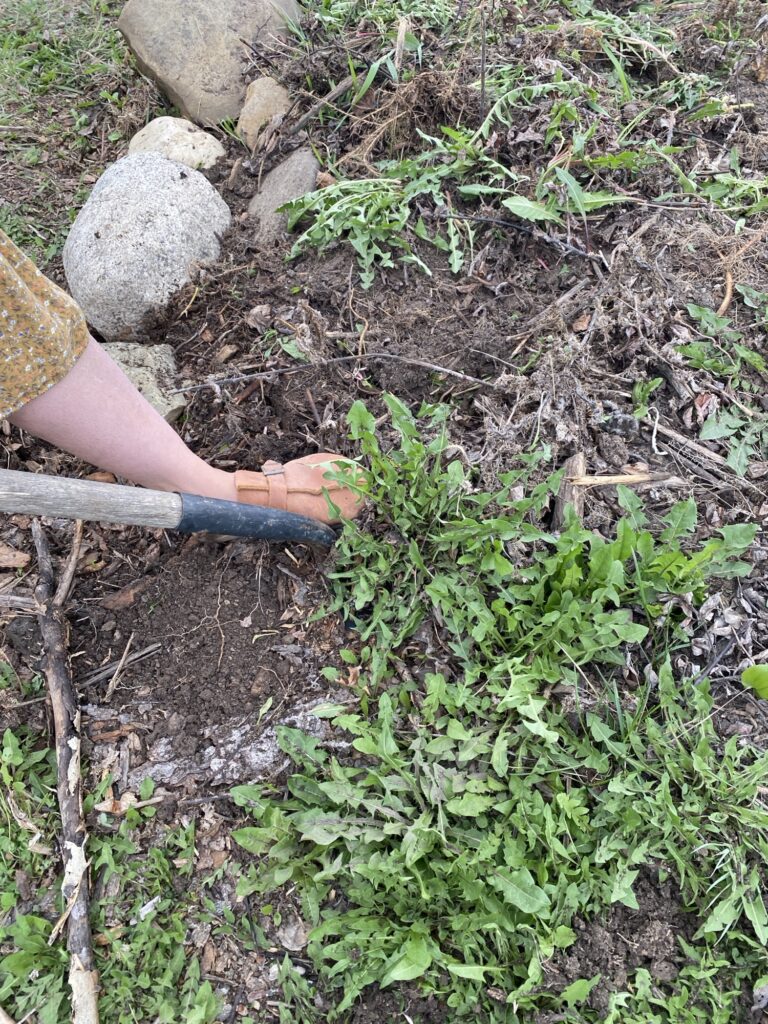
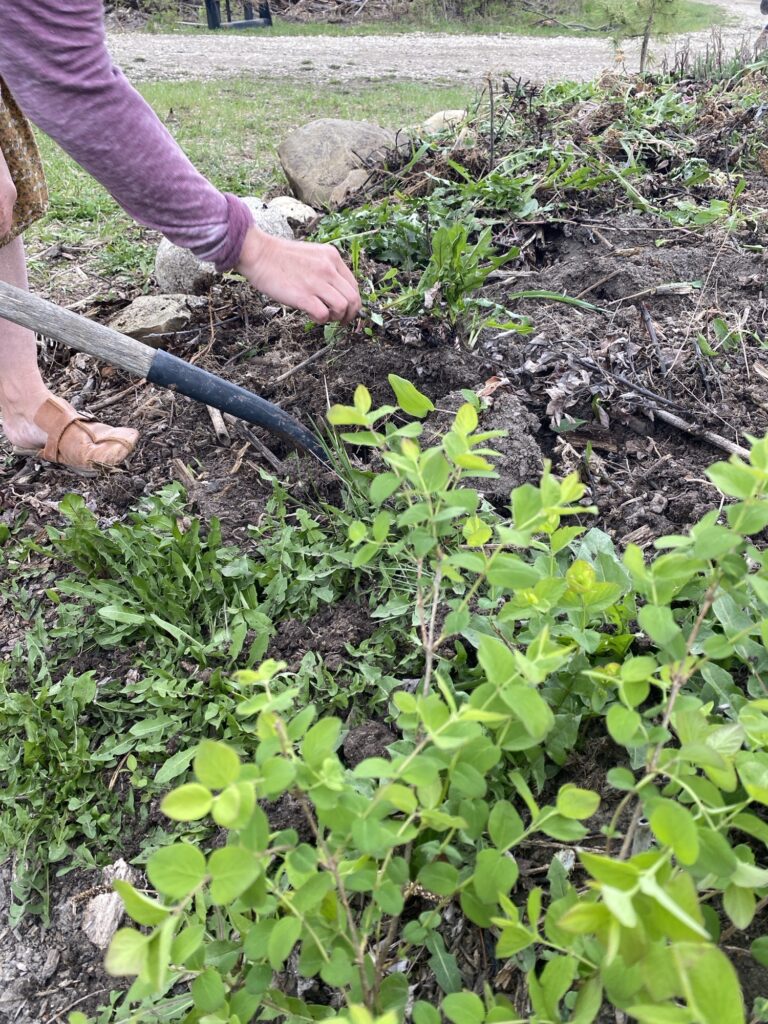
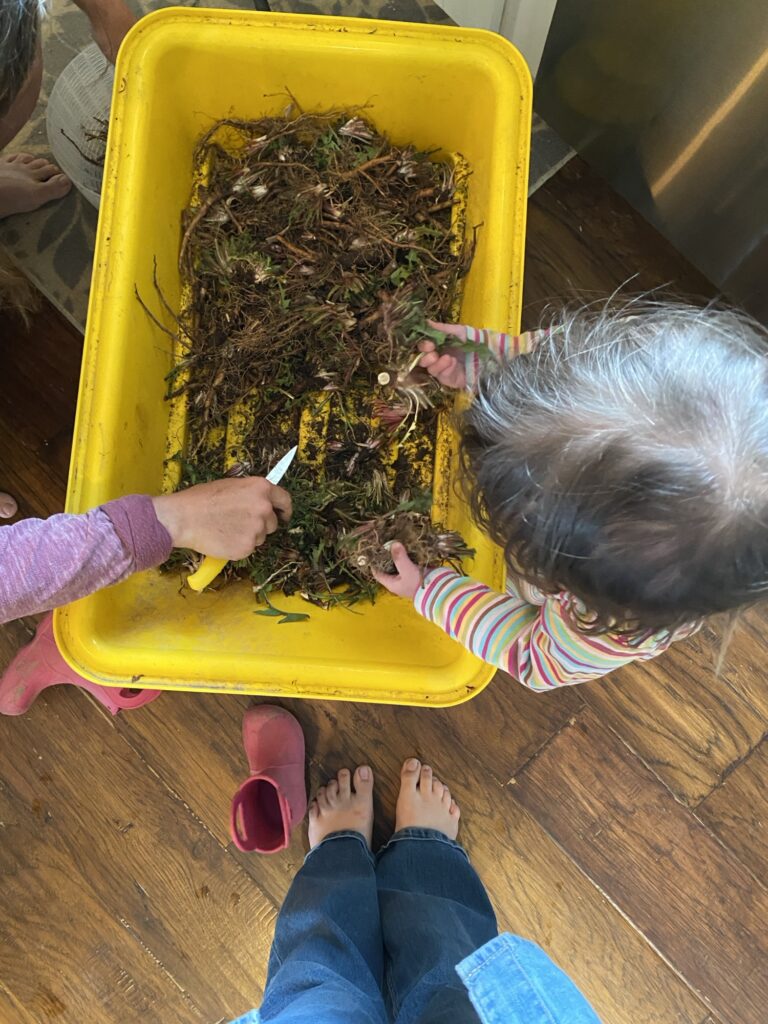
Every year my soil becomes richer and loomier with less weeds. My method is; if I have an afternoon or Saturday morning, I plan one garden to gently lift out dandelions from the edges, save the prettiest leaves to dry for soups and dust off the roots to clean, dry and roast for dandelion coffee. It’s a meditative chore and I enjoy the grounding and sunshine I so miss during our long winters too.
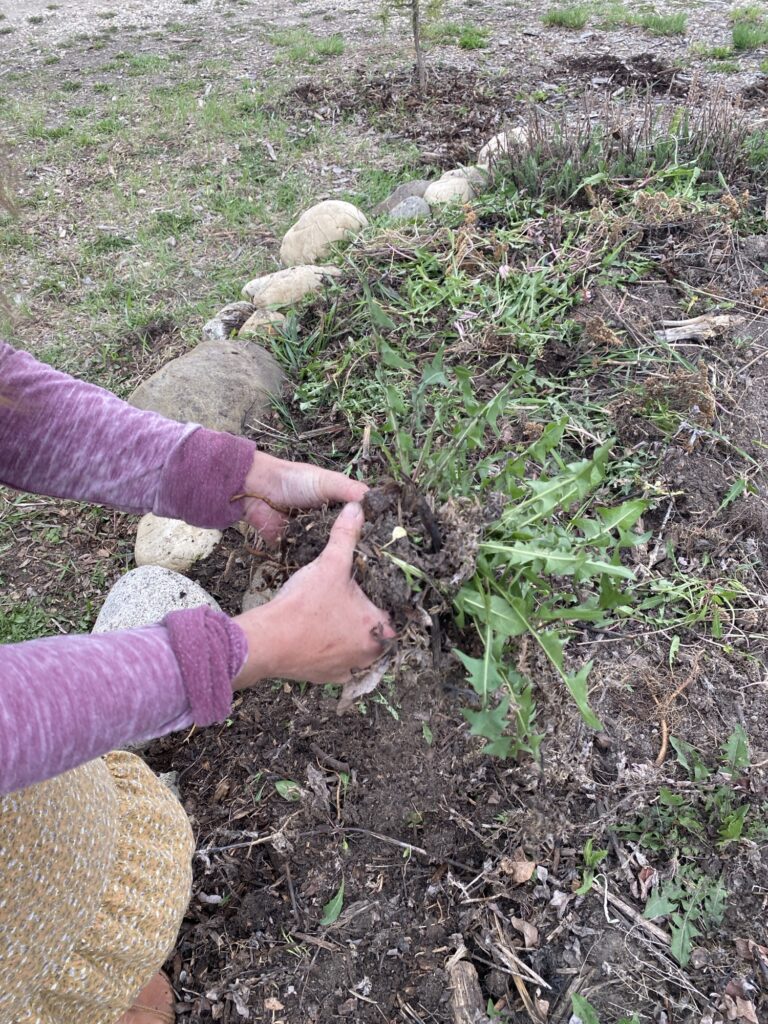
Any dandelion leaves I don’t keep for drying, I rip up and sprinkle on my garden beds as a nutrient rich mulch.
Once I gather my roots and desired leaves for drying I bring them inside to process.
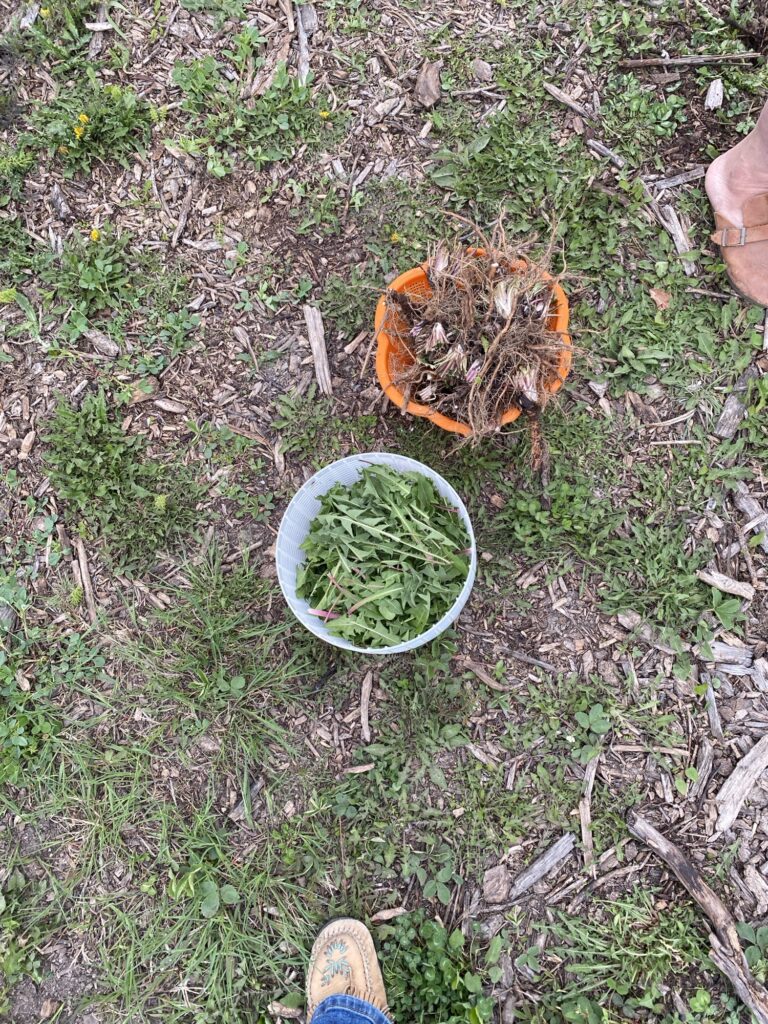
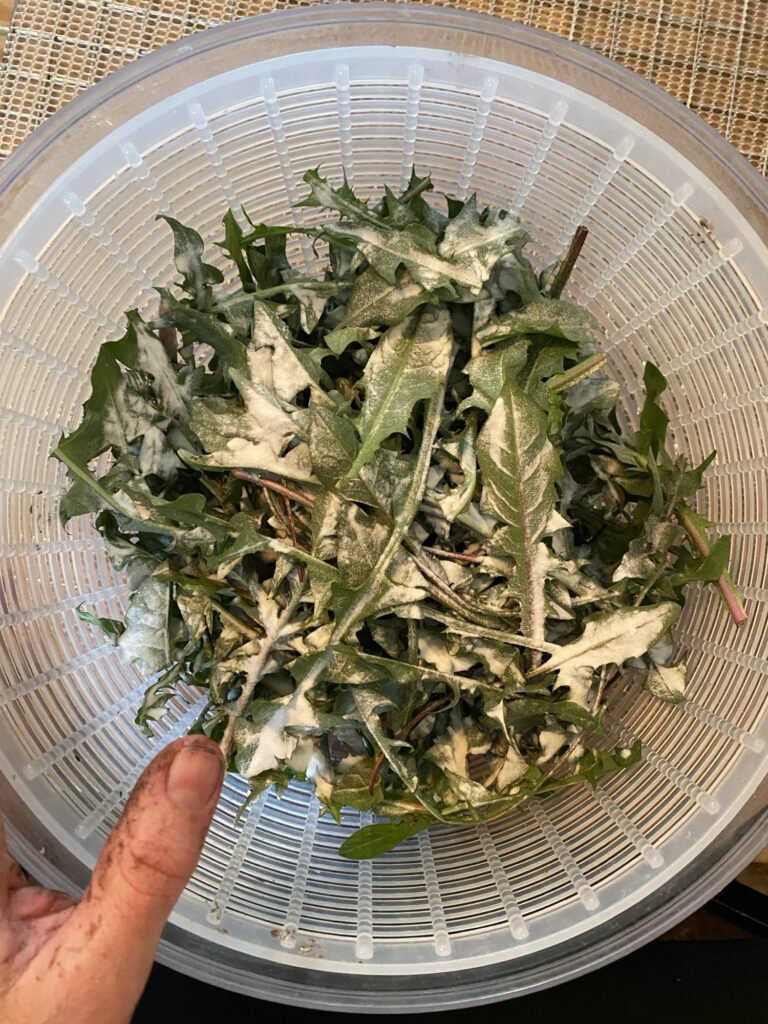
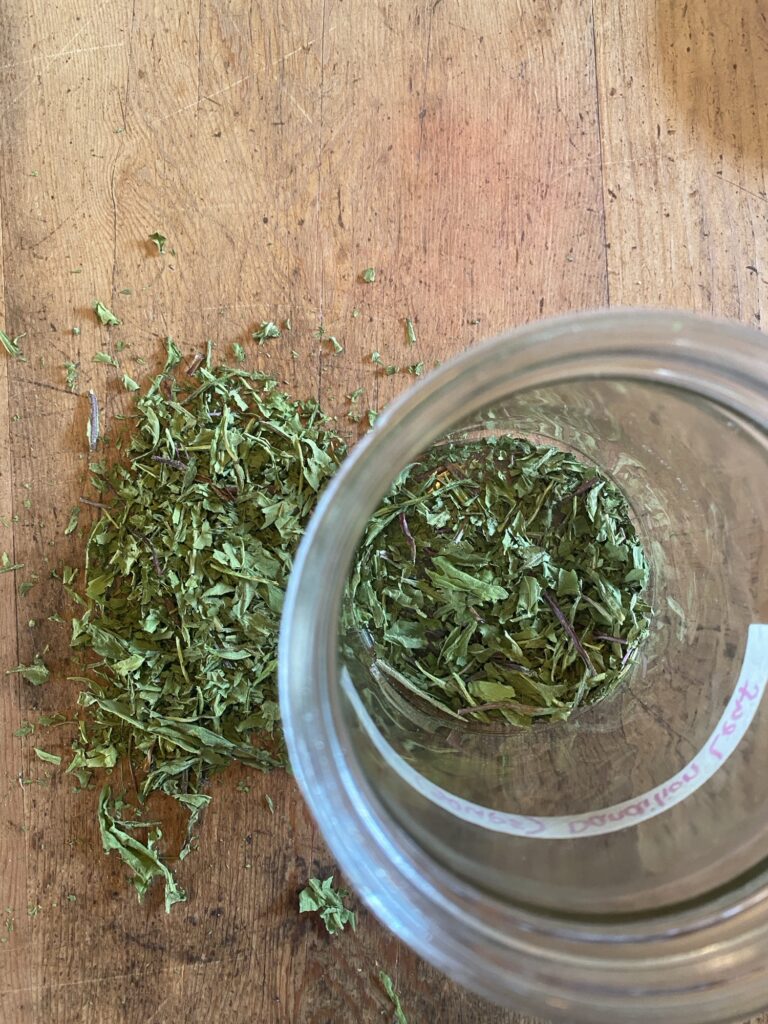
For the leaves I choose the tender pretty ones as I wash, dehydrate them and crumble them to add color and nutrition to winter stews and soups.
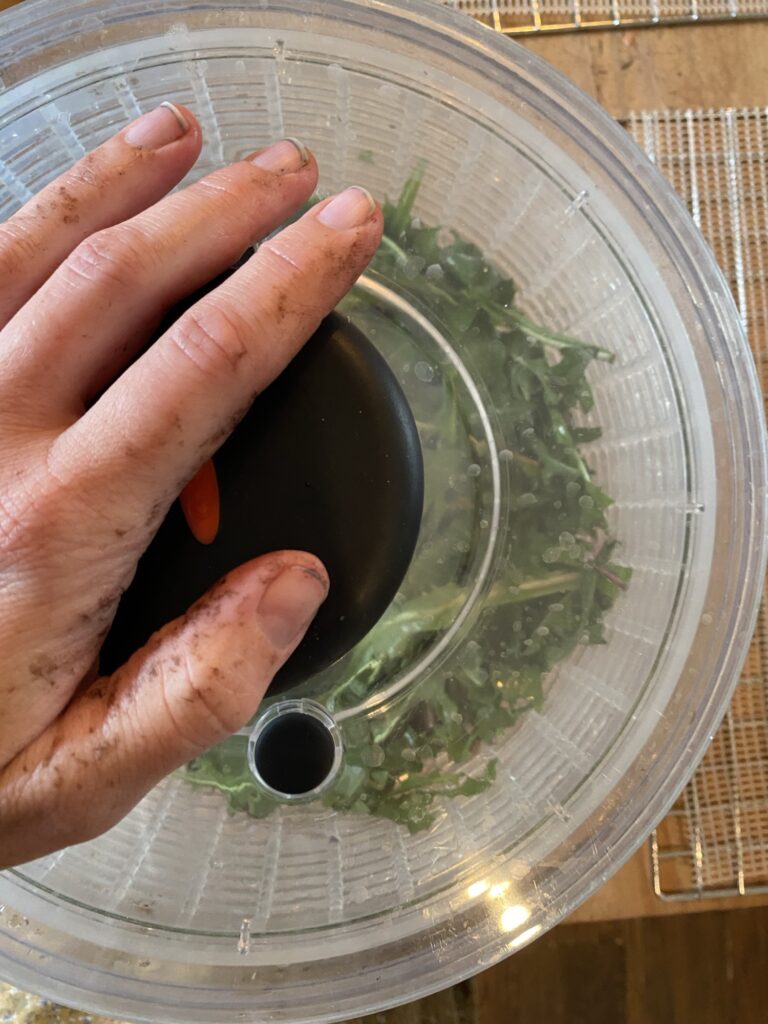
I wash the leaves with a little baking soda then spin them dry. I dry them in my dehydrator at about 95-100 degrees until they’re totally dry and can be crumbled to store away in clean dry jars for winter use.
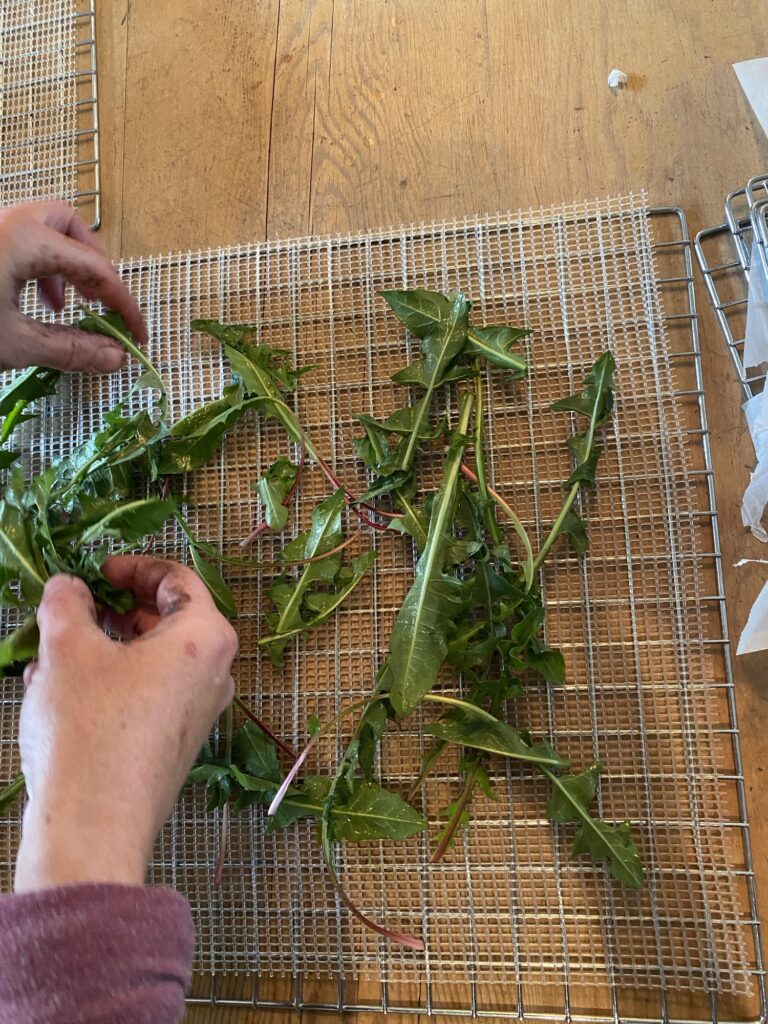
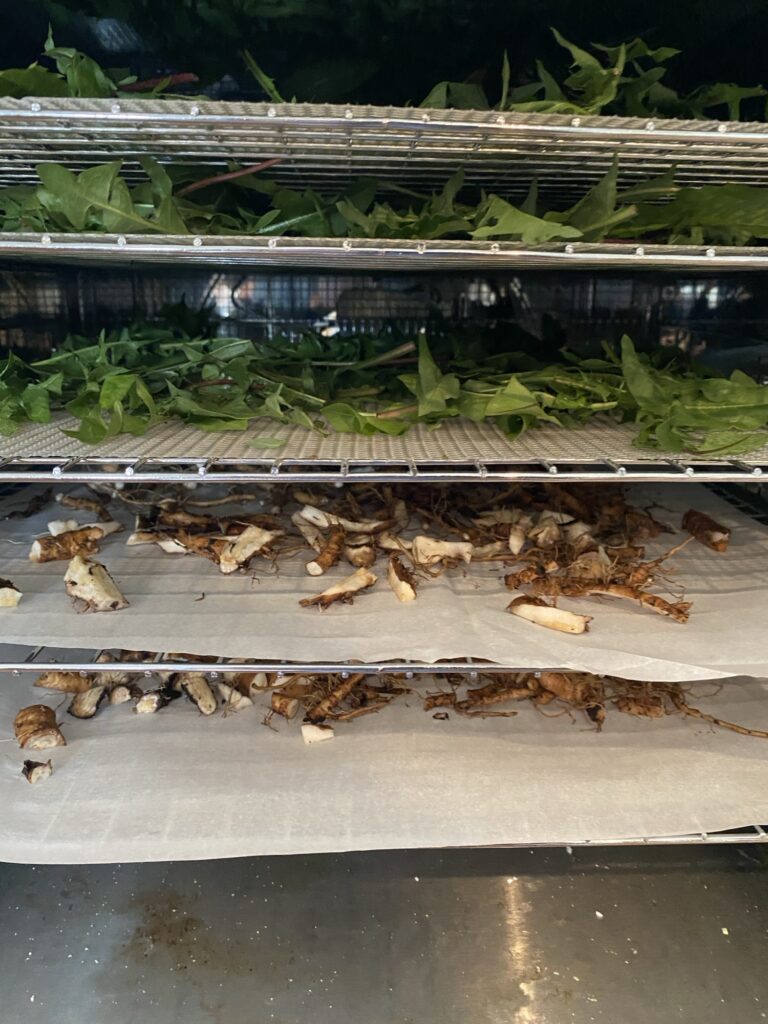
For the roots, these take a bit longer to clean. I clean them in baking soda a few times, fully rinsing them before cleaning in vinegar then finally fresh water. I don’t bother scrubbing them, just lots of filling, swishing around and rinsing before cutting them up and placing them in my dehydrator with the leaves.
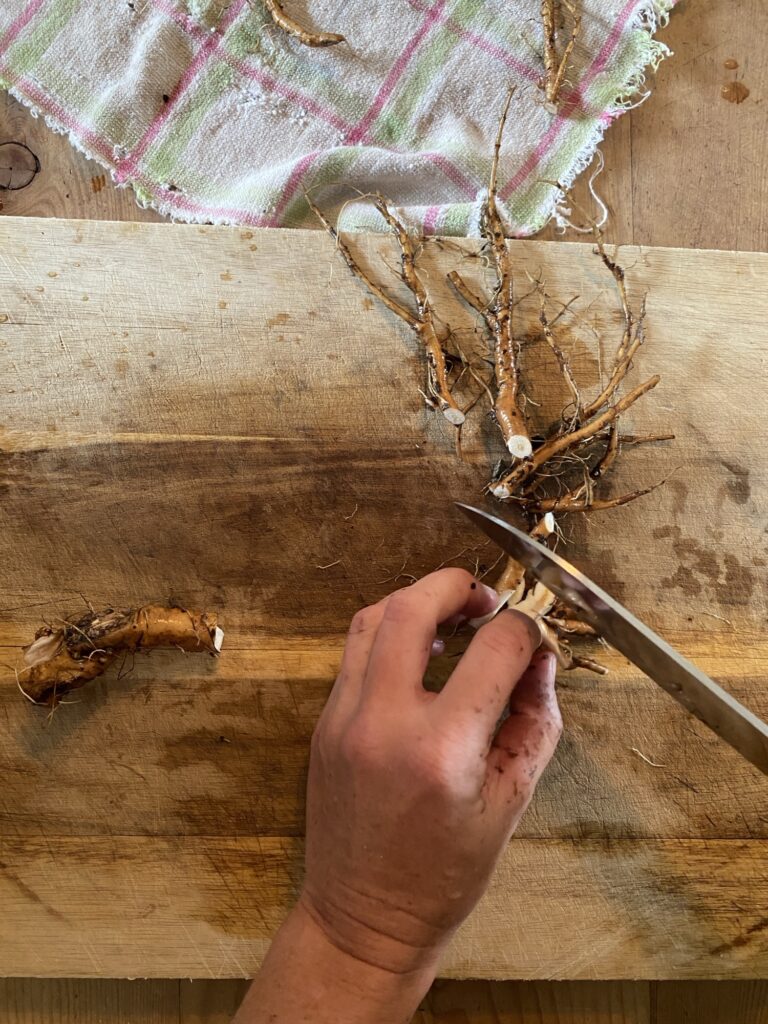
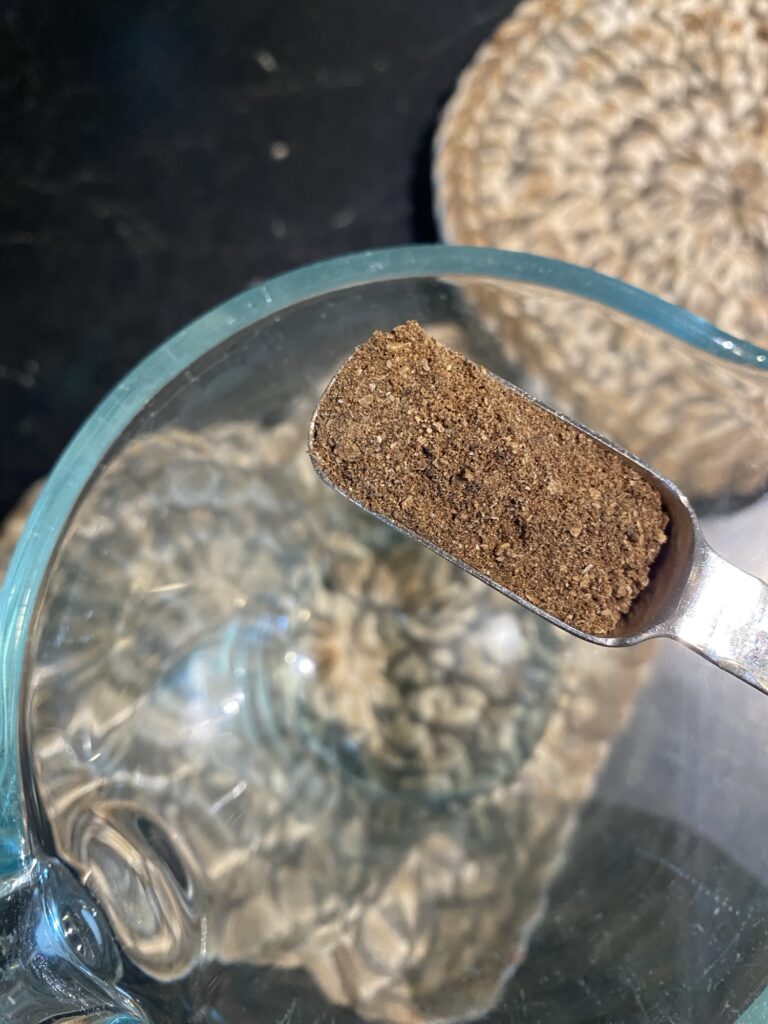
Once everything is nice and dry, I take my roots out and roast them. This just ensures they’re completely dry before grinding. Roasting also add a lovely deep coffee like flavor.
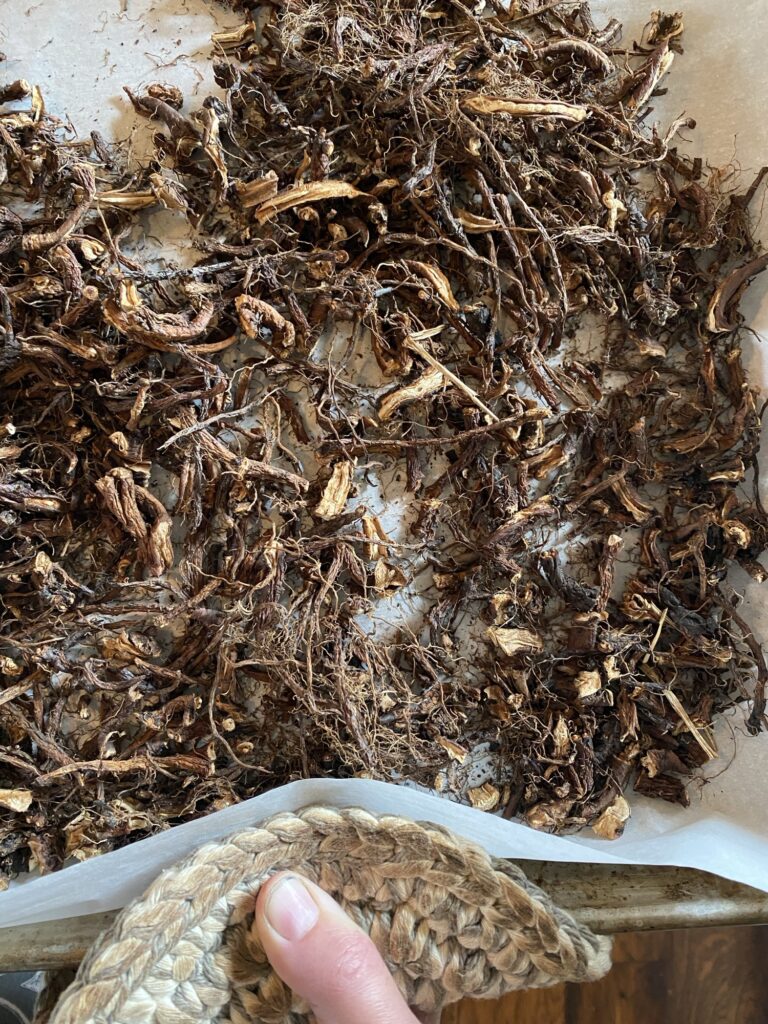
I roast mine at 300F and start with ten minutes at a time, checking and stirring and setting my timer for another 5-10 minutes. They can burn quickly so this it’s important. You also want them dry to the point the pieces will snap, you don’t want any soft pieces otherwise they’ll grow mold in storage. Once they’re dry, roasted and cooled; grind them to a course-ish powder.
I love making a Dandelion Coffee Latte.
Here’s how I do it.
Brew a few tsps of dandelion root in about one cup hot water. Stir and let steep about 5 minutes.
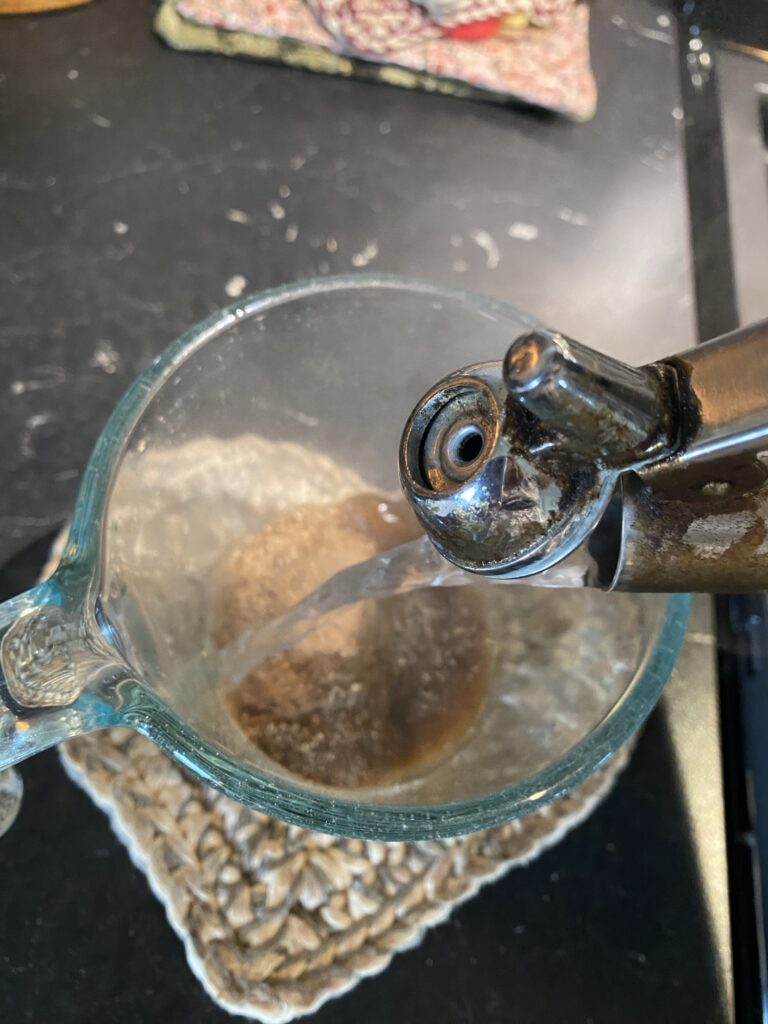
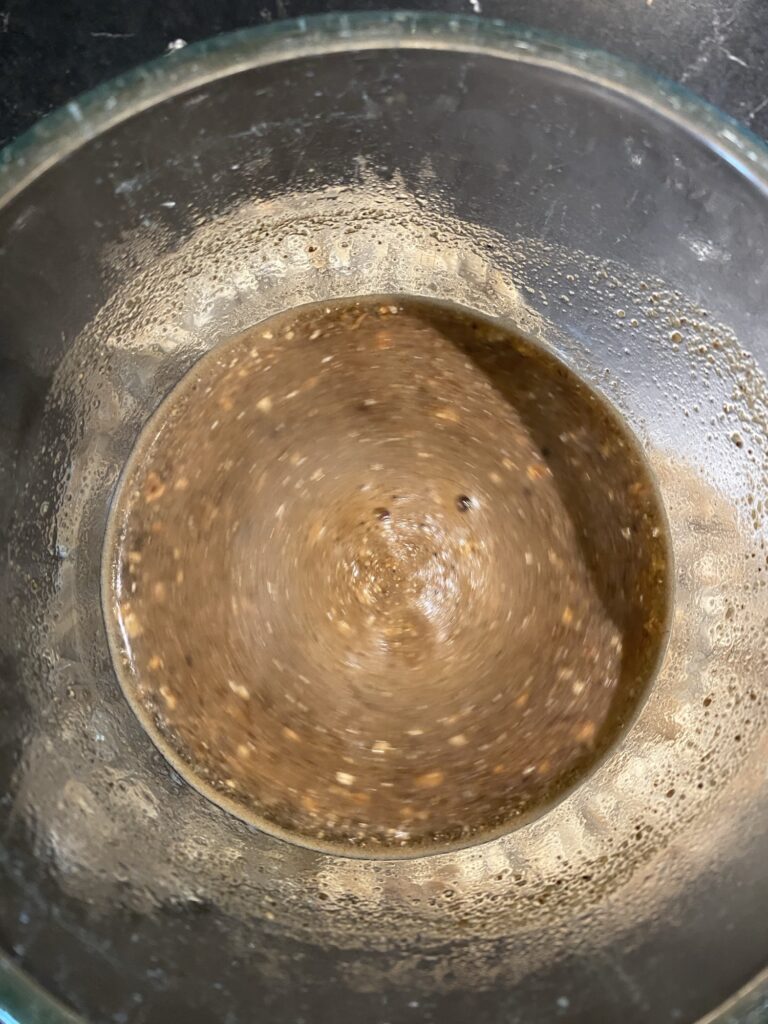
I like to add a little honey at this point to dissolve.
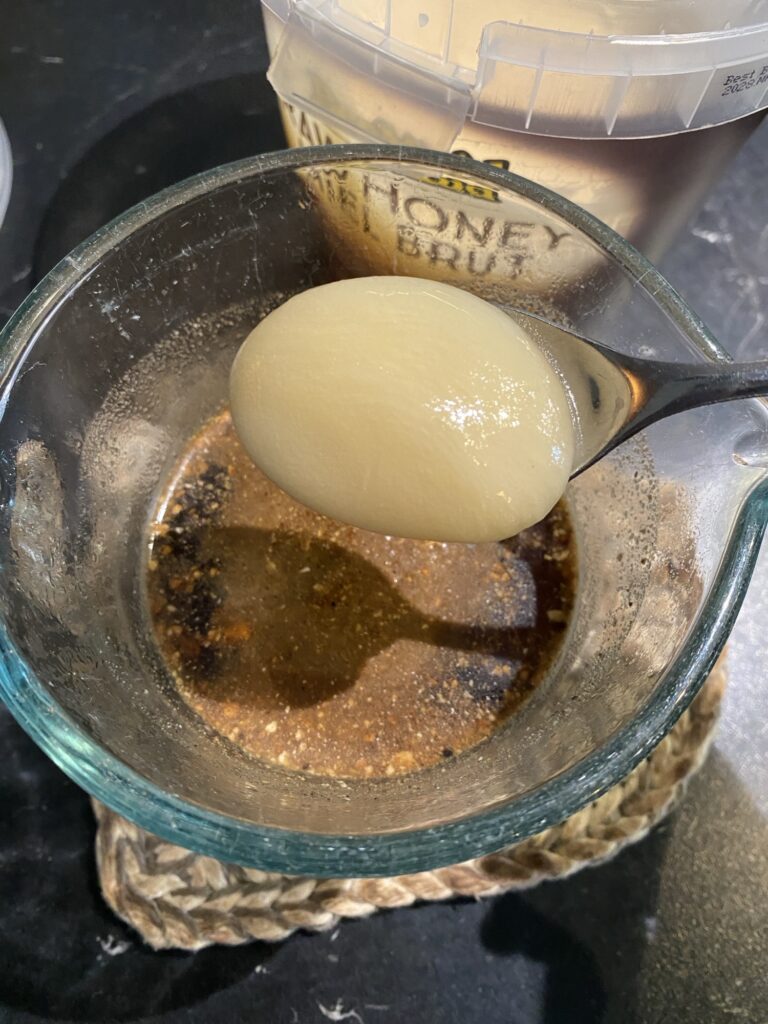
In a blender I add a little butter and milk before straining my dandelion root coffee into the blender too. I have a soup setting on my blender and I use that to blend, reheat and froth up my latte.
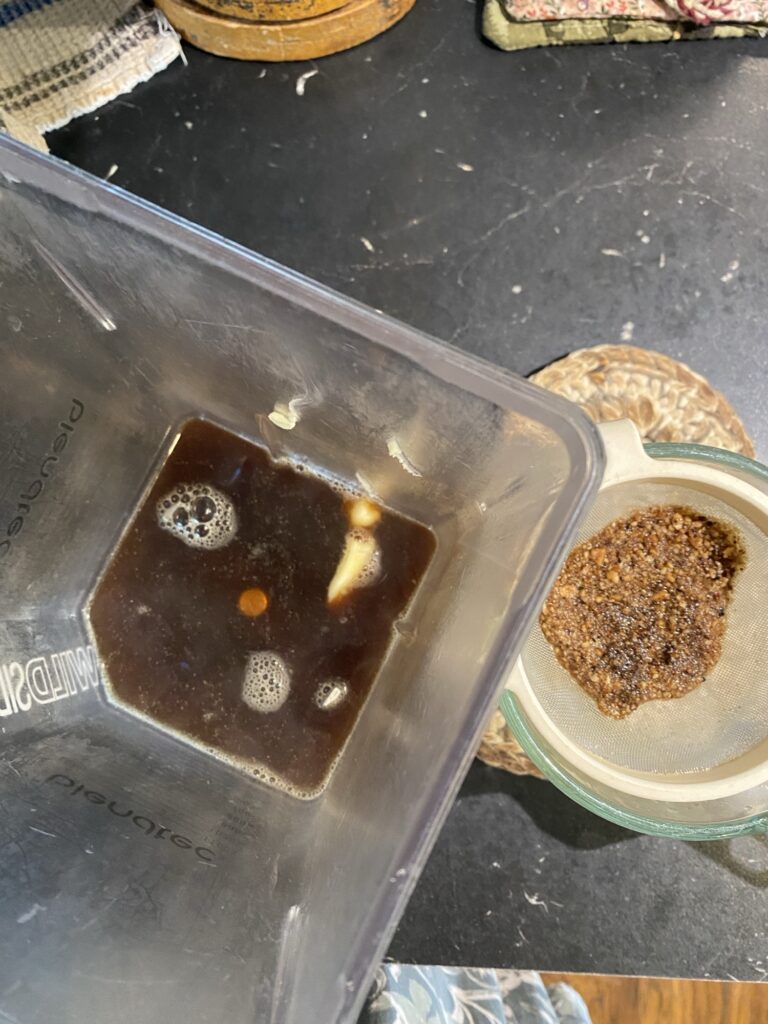
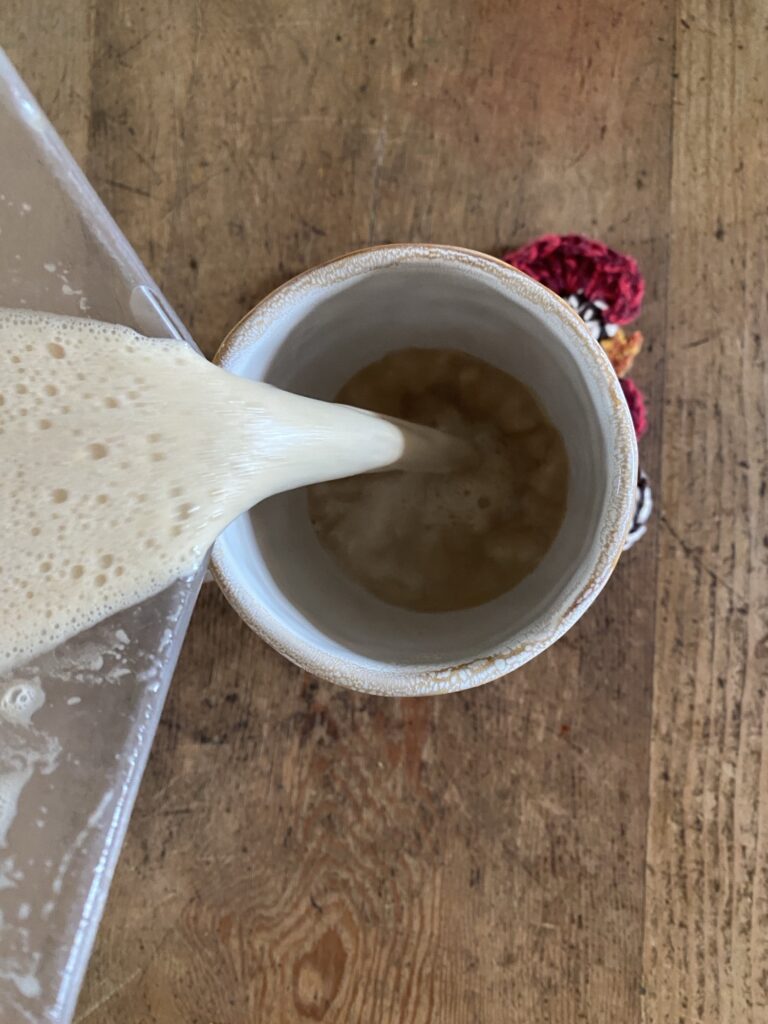
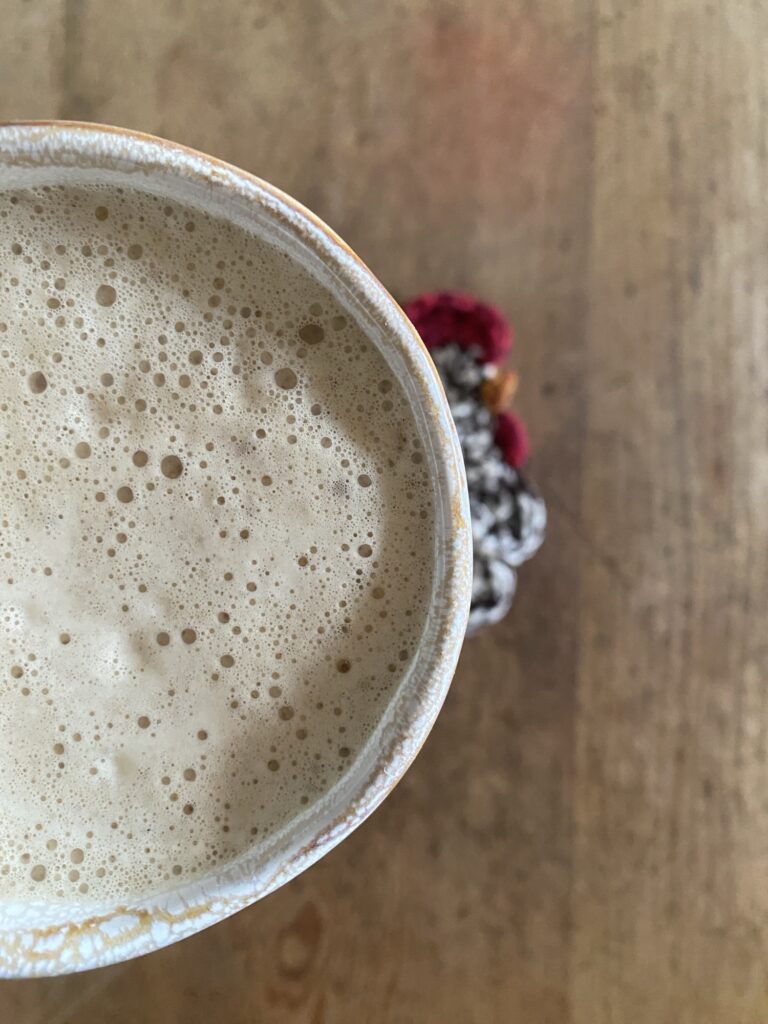
Dandelion Coffee Latte has a deep nutty herbal flavor. It’s almost better than coffee;)
Dandelion Blossom Infused Vinegar
Since my children were young I brought them along with me on my foraging adventures. They’ve become interested in making things too. My son had been looking up the benefits of dandelion and decided to make a dandelion infused vinegar for dressings, electrolyte drinks, or marinating meat.
Here’s what he did:
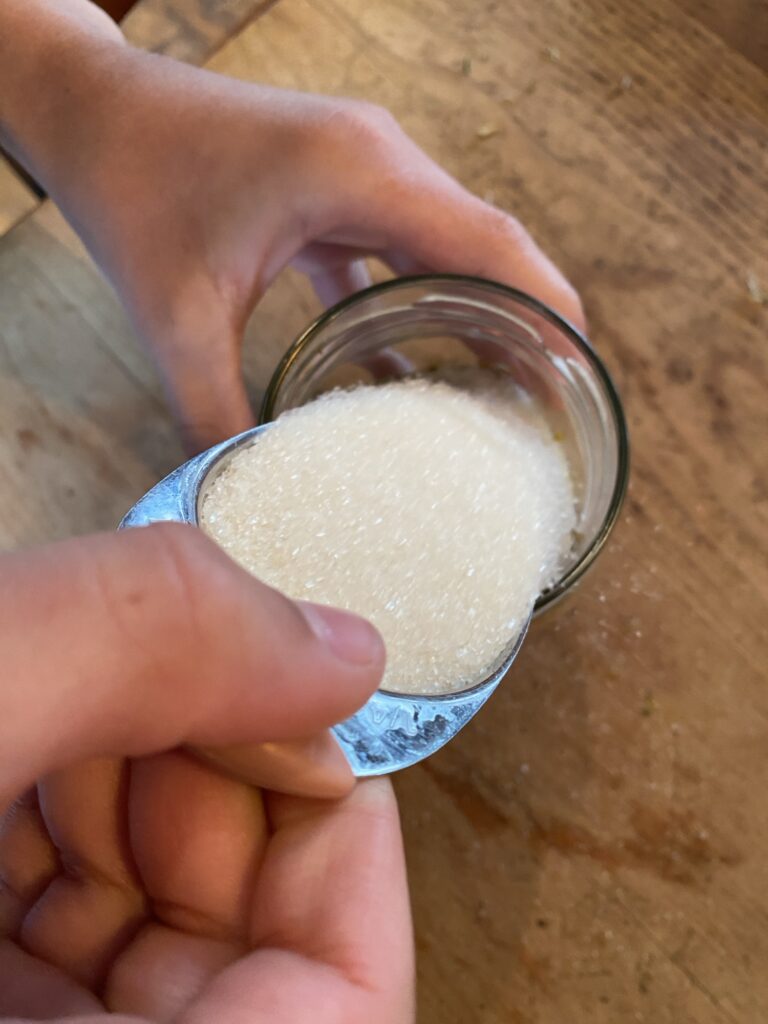
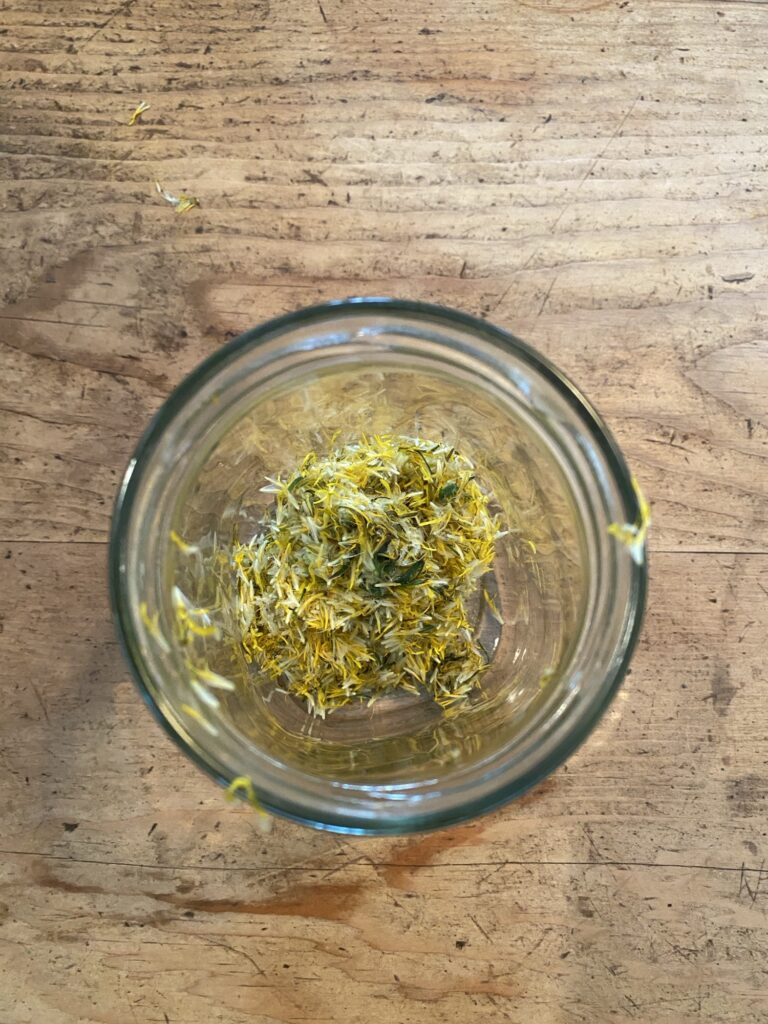
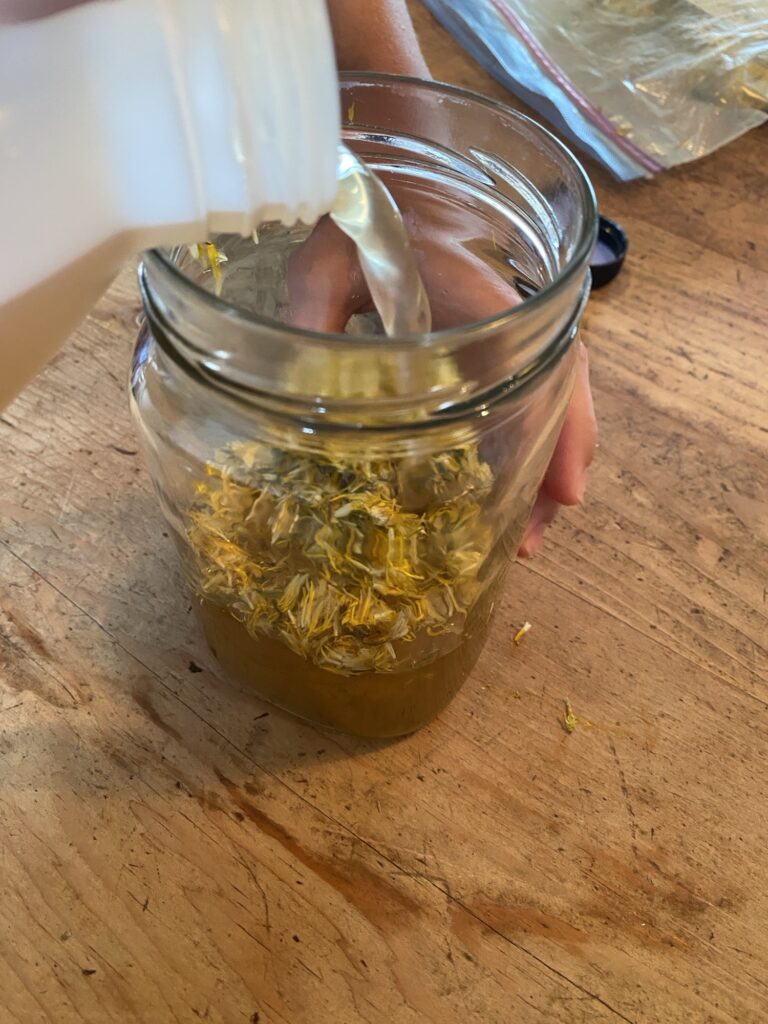
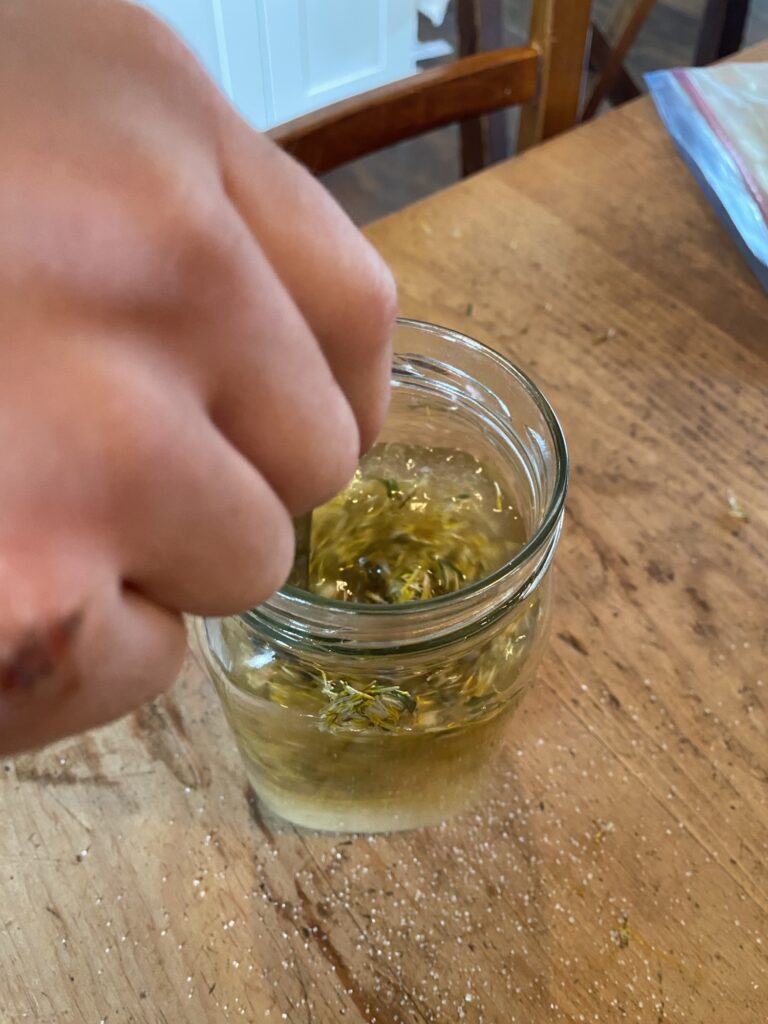
Adding about a quarter cup of dandelion blossoms, about a quarter cup of sugar to a two cup jar, and filling the jar the rest of the way with apple cider vinegar; he stirred it and put in the pantry to infuse for a week.
I’ve never added sugar to an acv infusion so my guess is some of the sugar will be consumed by the bacteria and extract the nutrients from the dandelion flowers.
My son (11), told me he read this drink is full of potassium and adding about a tsp to a cup of water is a nourishing tonic for indigestion, nausea, heart burn and a few other things.
You can create dandelion infused oils for salad dressings and body care too.
About one part dandelion blossoms to two parts oil, set out and allow to infuse before using.
Oils to use: olive, castor, pumpkin seed, jojoba to name a few…
According to Sat Dhuraram Kaur, N.D. dandelion oil works, “well for relaxing tense back and neck muscles and is great for use in deep tissue work, as it helps release stored tension and toxins. Dandelion oil can also be used to reduce breast cysts.”
Wow! Dandelion is such a miracle plant! We should encourage its growth in our healthy organic gardens and view it as food and medicine instead of spraying it and willing it away.
I hope you find some fun ways to use dandelion in your home!
Warmest Blessings,
Ashley