A northern treat! One of the few fruits that grows with ease and in abundance in our harsh northern climate. For reference we are zone 3, although I’ve also seen our area labeled as zone 2b. We are pretty far northwest with long cold winters, dry air, drought like summers and clay soil. Haskaps were the first perennial we planted on our acreage as we built our house and now 7 years later they are really taking off.
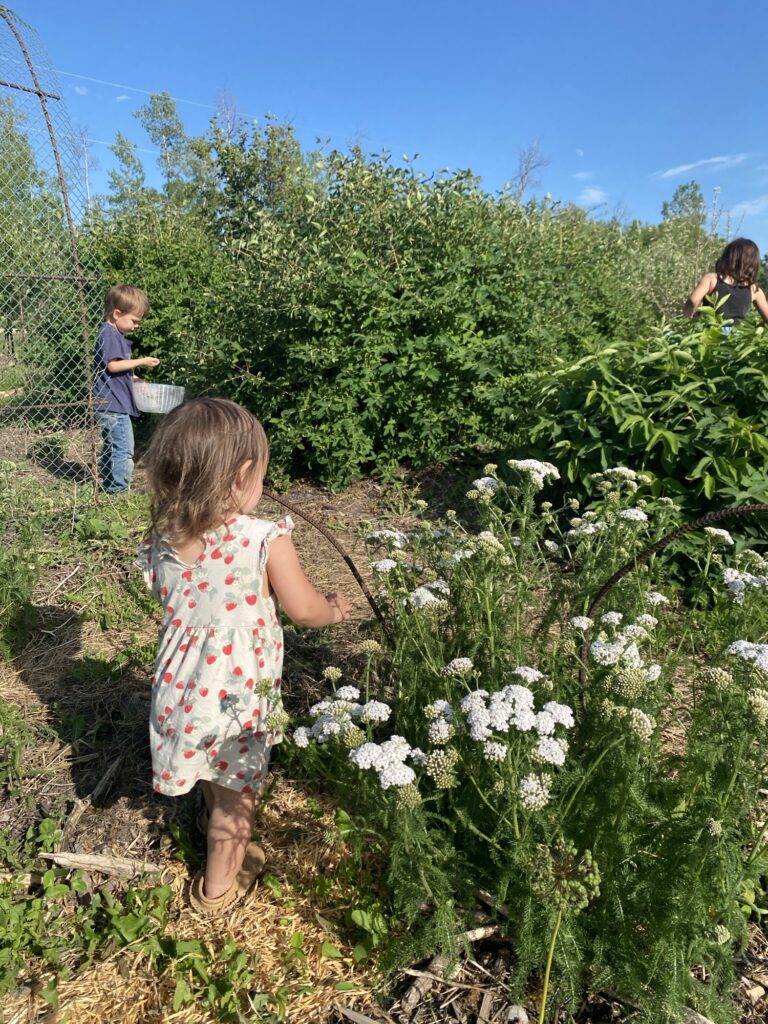
Haskaps are similar to a blueberry but with a tart aftertaste. Im not sure how much of this is due to our soil or perhaps variety because I’ve read other people say they’re as sweet as blueberries but ours certainly have a sour aftertaste. Not unpleasant but definitely in need of sweetener when jamming the berries.
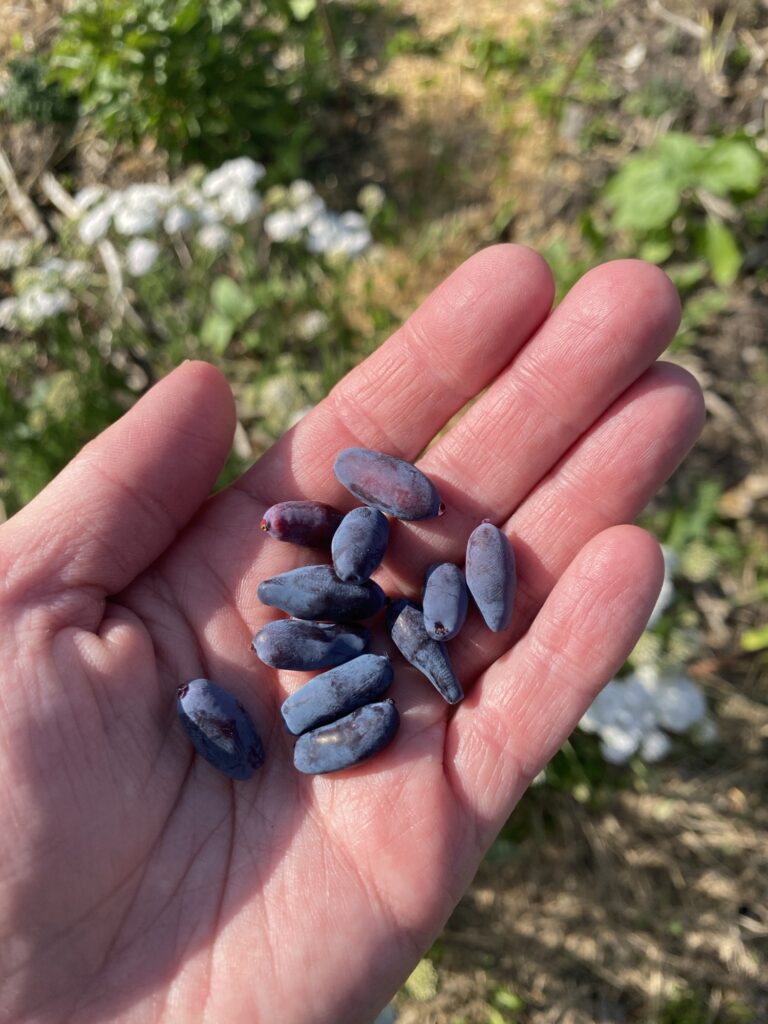
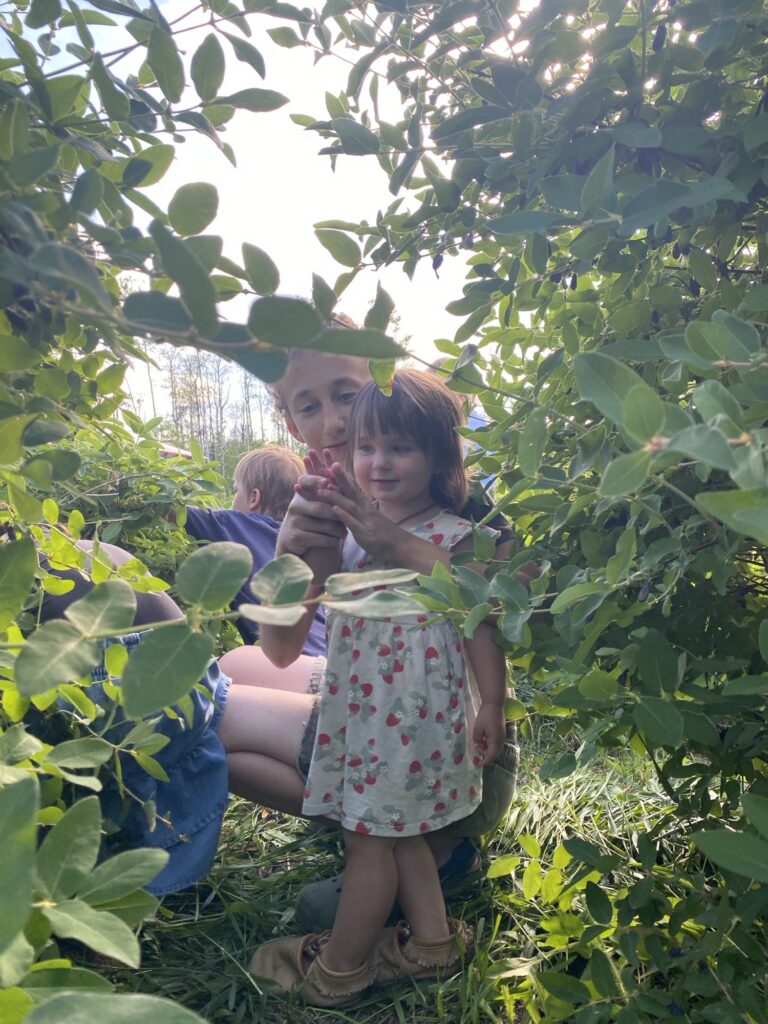
Haskaps ripen around the end of June and ripen in waves for several weeks. When I can’t find my toddler she’s usually crouched down beneath the haskap bushes eating berries ha ha. My kids enjoy eating them right off the bush and they’re a perfect harvest chore for kids because they can squat down on the ground, lift the bushes and pick them right into the buckets.
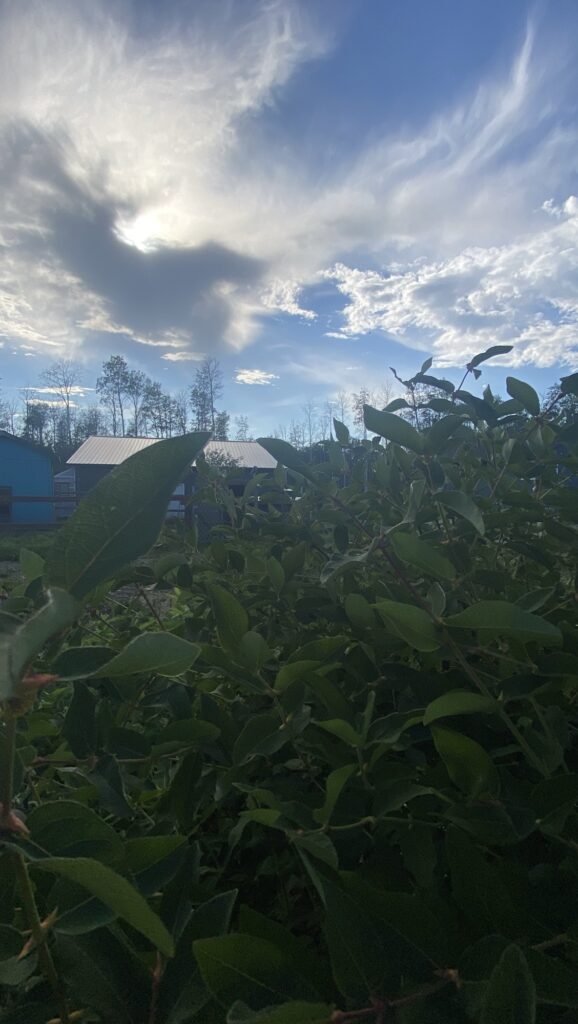
Today I’m going to share how I make and can jam with our haskaps.
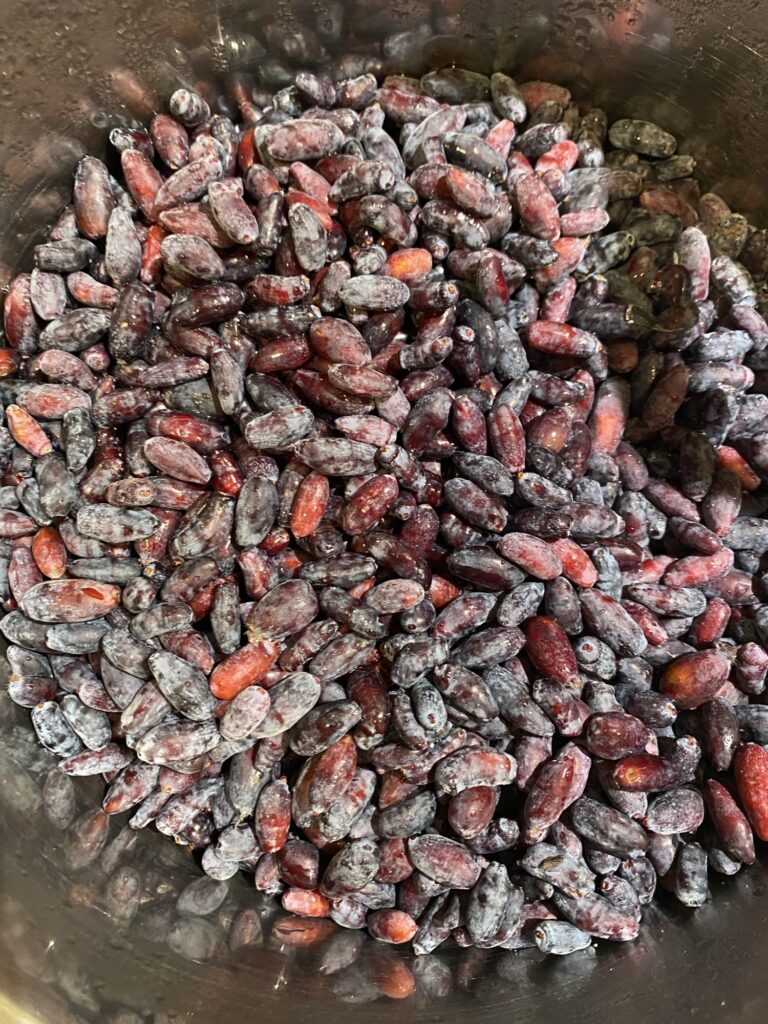
As we pick berries through out the week, I wash them and add them to an old instant pot bucket with a plate as a lid in my fridge; storing them up until I have enough to make a few quarts of jam on the weekend.
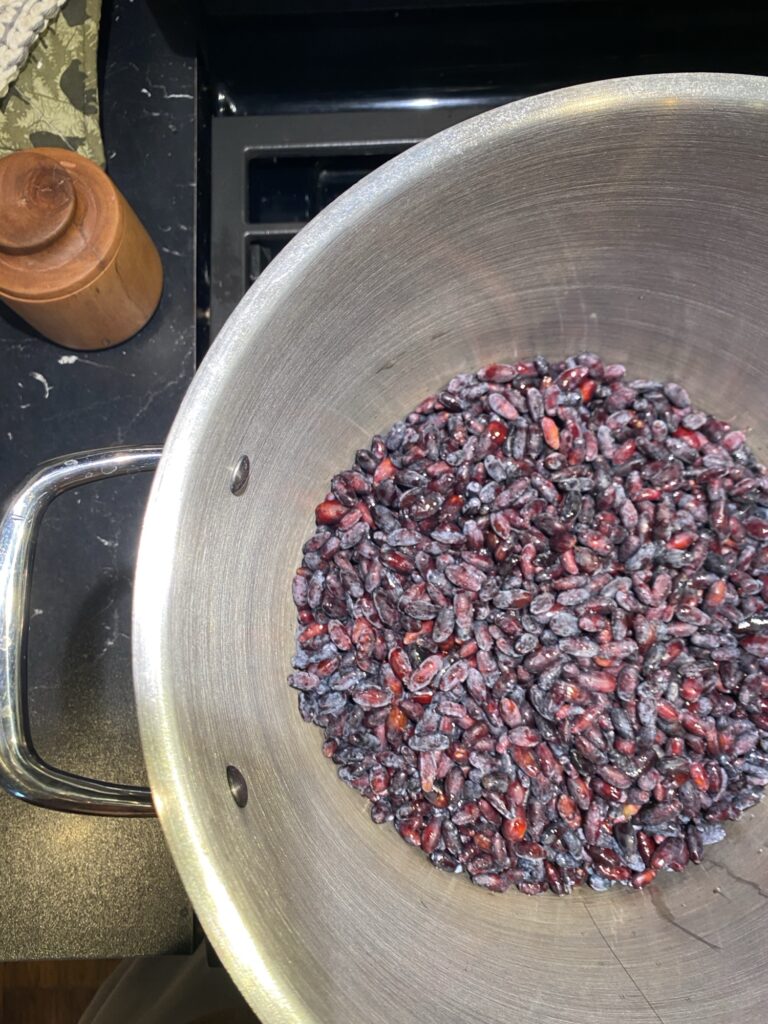
On jam day I pour them into a large stock pot and turn on the heat. Stirring and mashing the berries for several minutes until they cook into a nice liquidy sauce of sorts.
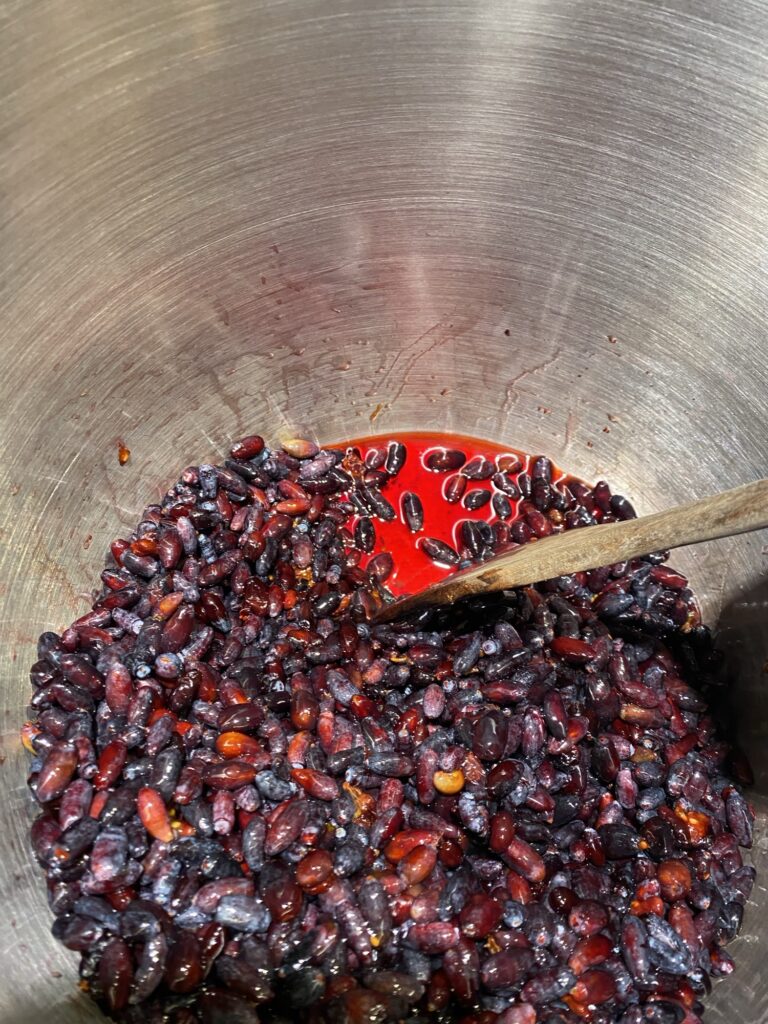
Haskaps are very juicy so there’s no need to add any water, just stir until the heat releases the natural juices of the berries.
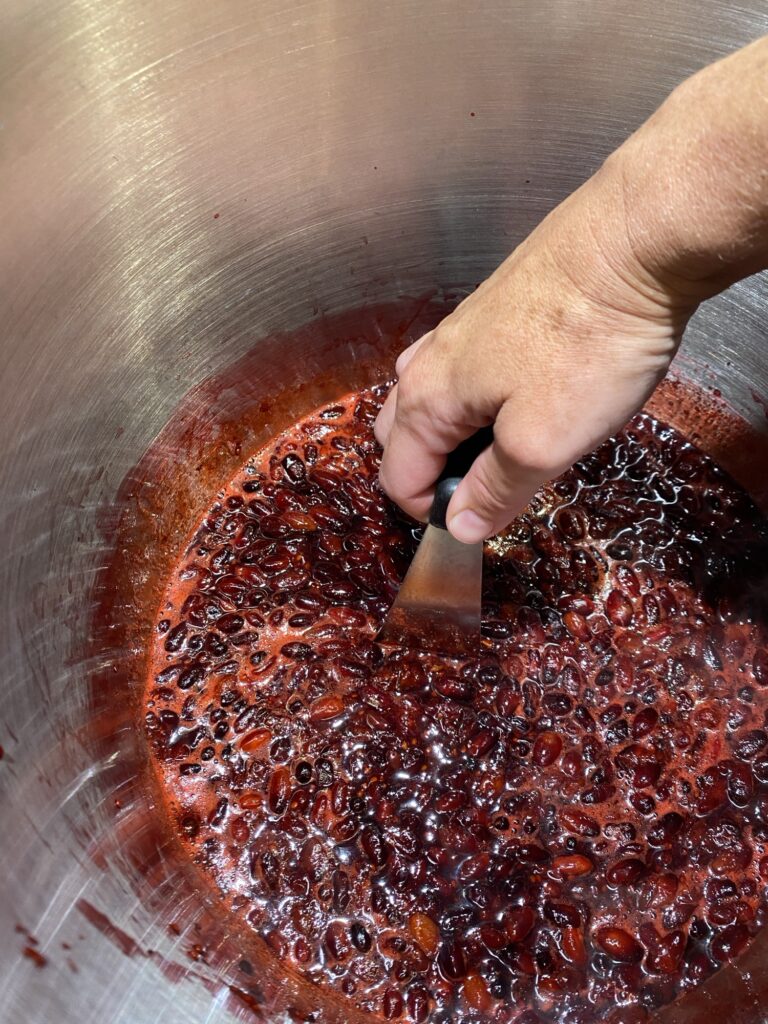
I keep mashing them down with a pastry cutter. You could also do a few pulses with an immersion blender.
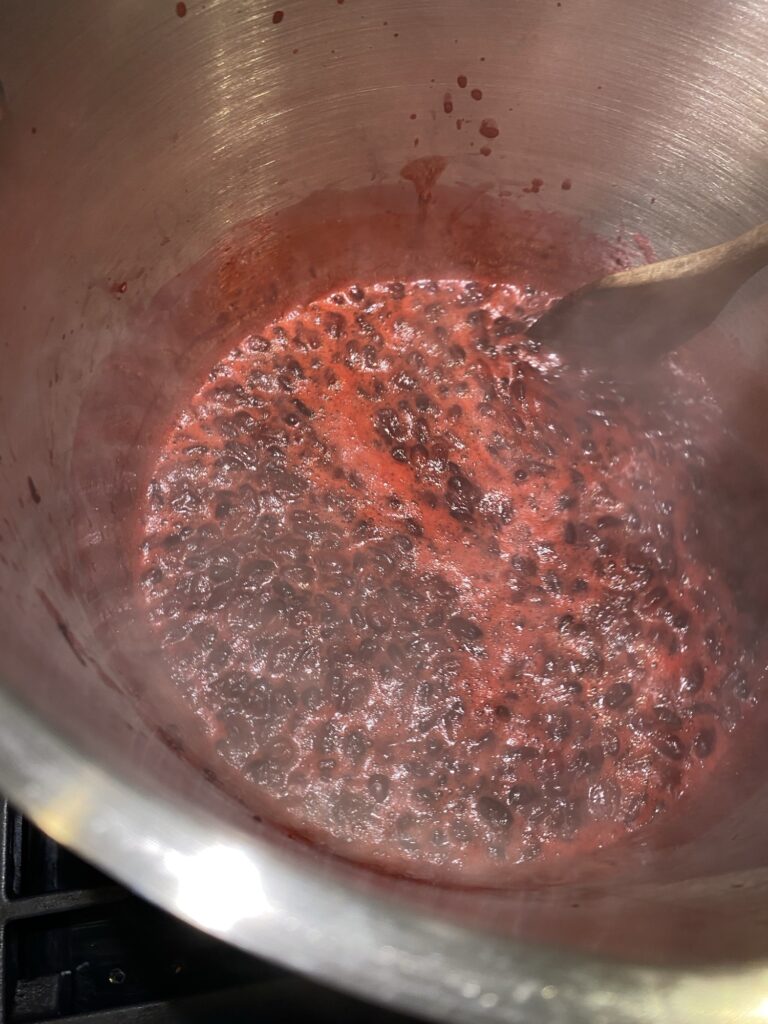
Once they’ve cooked a bit it’s time to measure how much liquid/berries you have. The beauty of this recipe is a one to one ration since we can’t always control how much we bring in from the garden, working with ratios is better for ever changing variables.
My pot has measurements on the side amd my contents measure to about two quarts. Which means, I added two quarts of sugar. Gasp.
I have tried this with less sugar, it’s rather tart and my family requested I use the proper one to one ratio. If you, like me, gasp when copious amounts of sugar are needed for a recipe, I’d like to share some thoughts I’ve been developing iver the past few years as I’ve learned to preserve the garden.
I use organic non bleached sugar, this means my sugar still contains the minerals and those aren’t destroyed by heat.
Sugar preserves the berries to keep me from needing an acid or pressure canner.
Jam is a treat. Not a main course. This is for adding some carbs and benefits from the homegrown berries to our winter menu: a dollop on yogurt, a spoonful on Pavlova meringues’s, a dollop next to morning bacon and protein rich carnivore pancakes, a spoonful stirred into hot tea on a cold afternoon, mixed into kombucha and rebottled for a tasty second ferment… these are the ways we use jam.
I was thinking too about pioneers putting away winter prep/resources. I wondered if making sweet jams was a way to not only preserve the summer bounty but to store their sugar in a way. Sugar is still a source of energy and it may have been helpful to put it into jams and jellies for winter teas and homemade bread as fast calorie vehicles after fighting intense winter wind and snow to water animals, feed animals, collect eggs, milk cows and clean up after all said animals to then battle the storm to check the homestead and finally battle to Home for a warm high calorie treat. I’ve read a lot of pioneer stories and haven’t heard any mention of this idea, but I thought I’d share it nonetheless.
Anyway. Back to the jam.
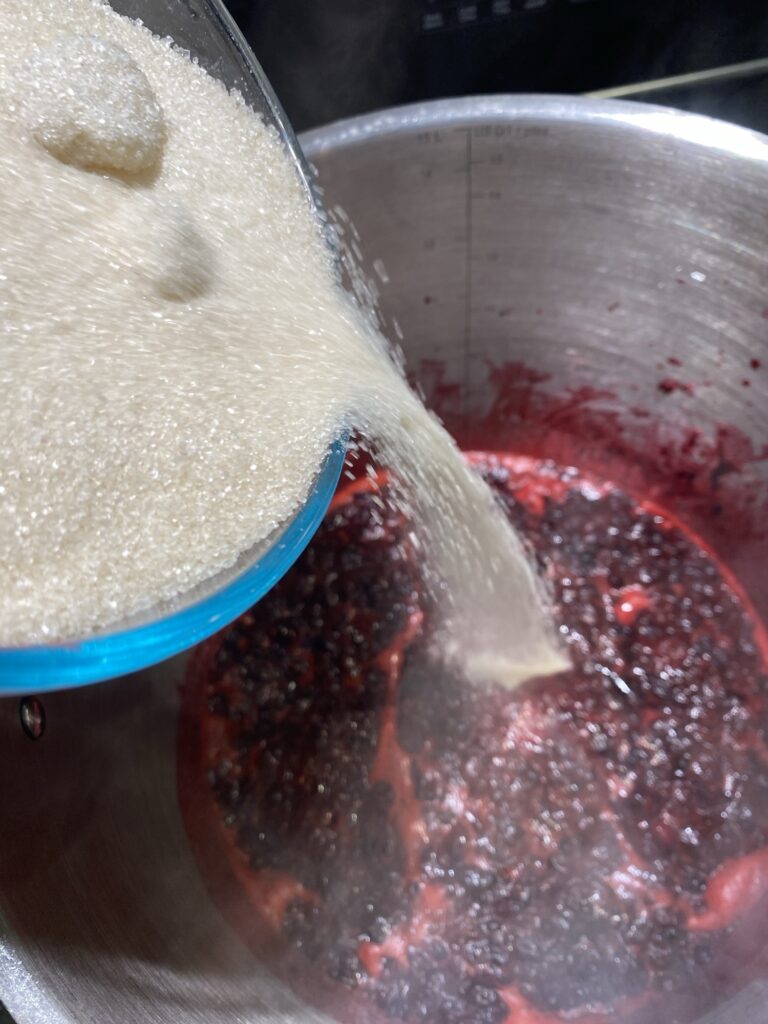
Once I know my measurements I add equal ratios of sugar. So this was two quarts of sugar or 8 cups to my two quarts of “sauce”.
Cook that for about 15 minutes before applying the jam test.
The jam test is simply scooping out a bit of hot liquid onto a plate, letting it cook then placing it in your fridge. Once totally cooled turn the plate sideways and if the jam stays in one place, it’s done. If it runs down the plate, it needs to cook a bit longer.
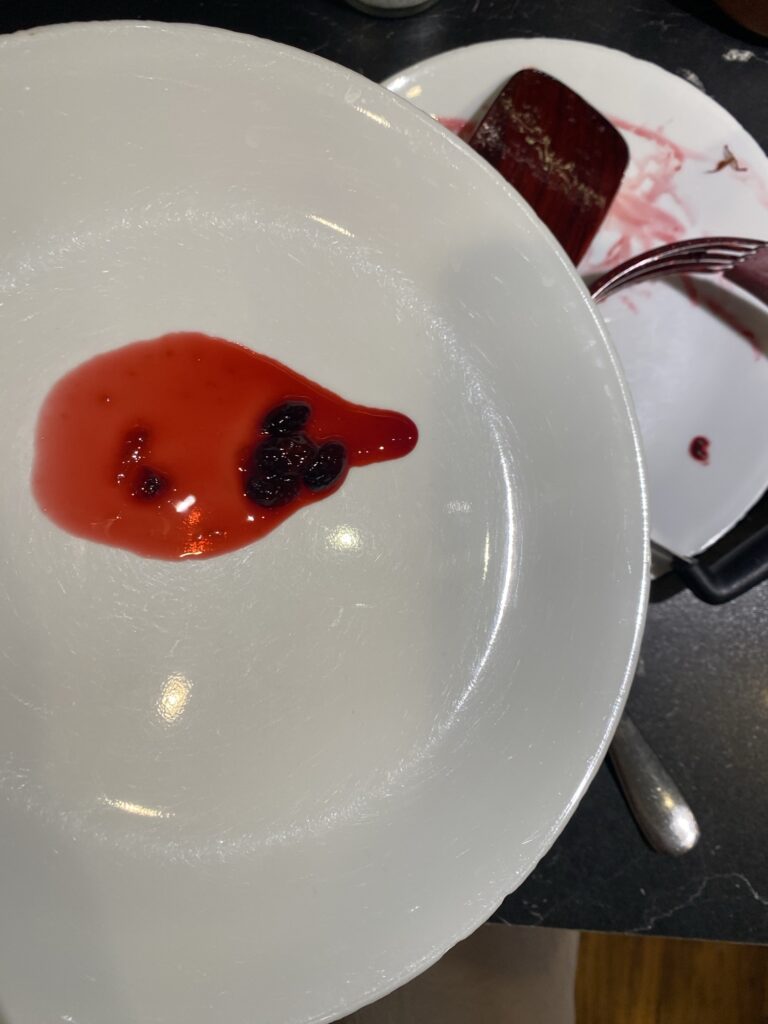
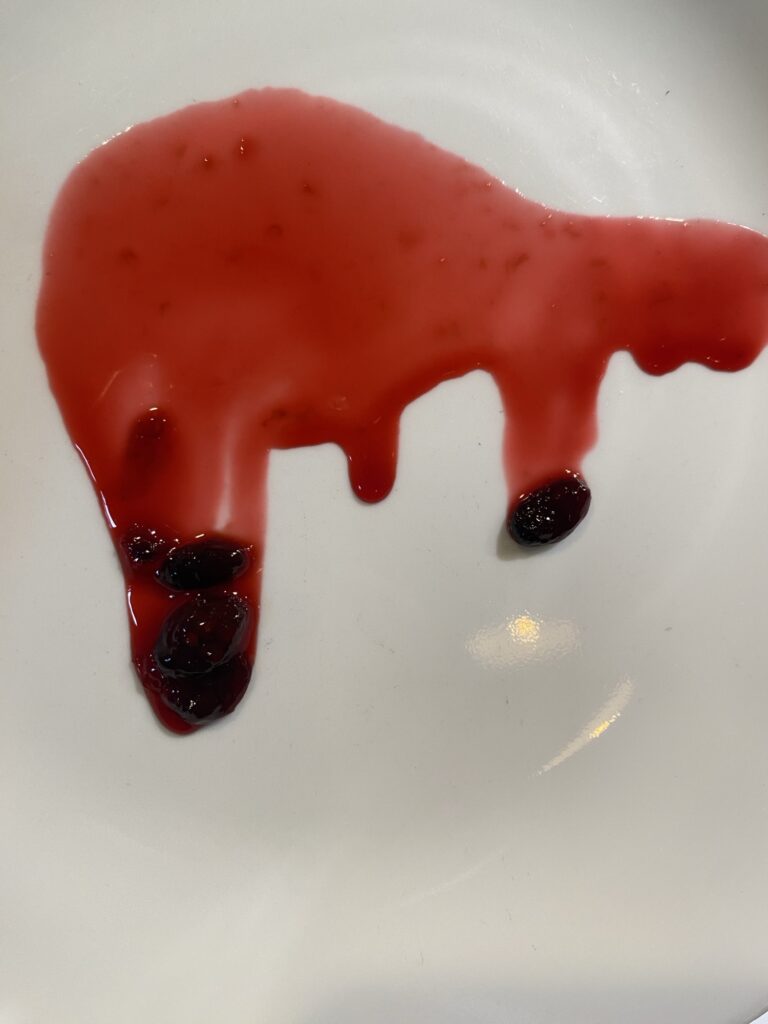
I cooked mine anoit five minutes longer since it was still runny.
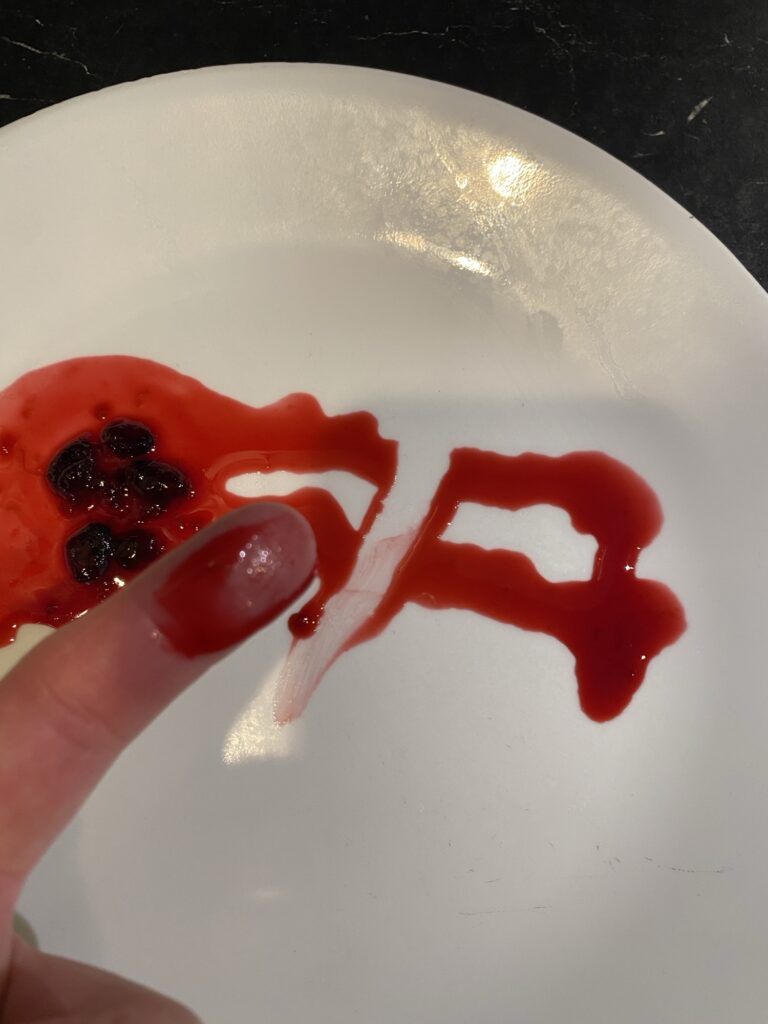
Now it’s setting up, I ran my finger through it and it stayed on my finger. Another test is just dipping a spoon in and letting it cool then running a finger through the jam on the spoon and seeing if it stays in place.
This is a very liquidy jam when cooking so don’t be fooled by that. Once cooked the high pectin content of haskaps will set a thick jam.
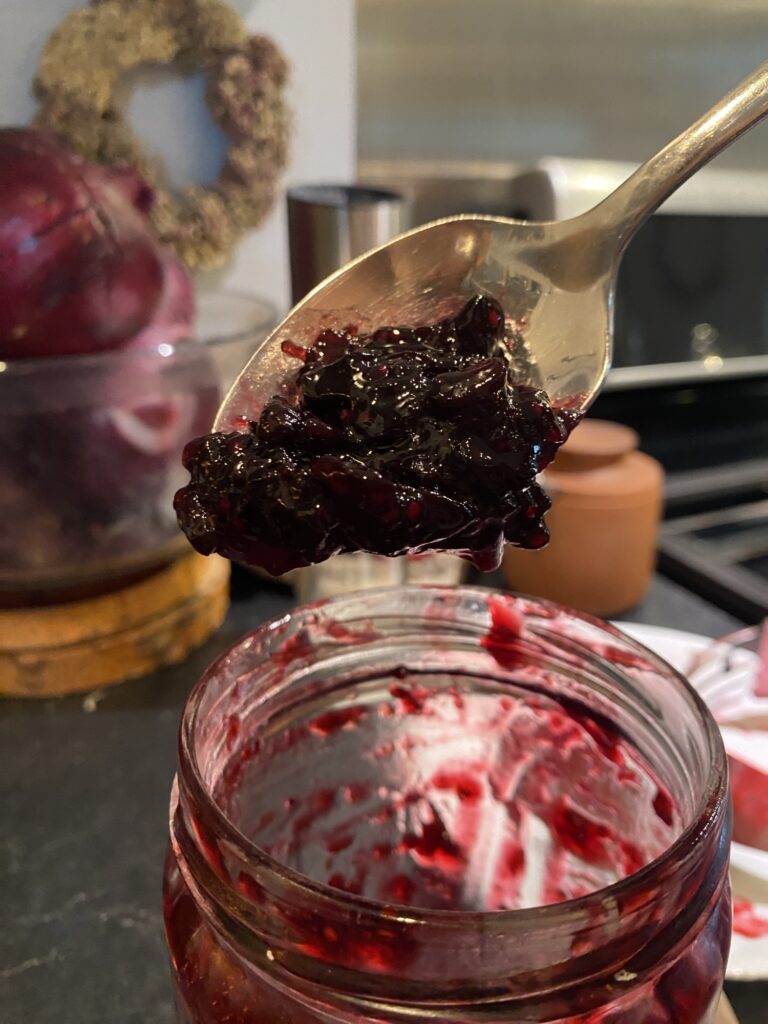
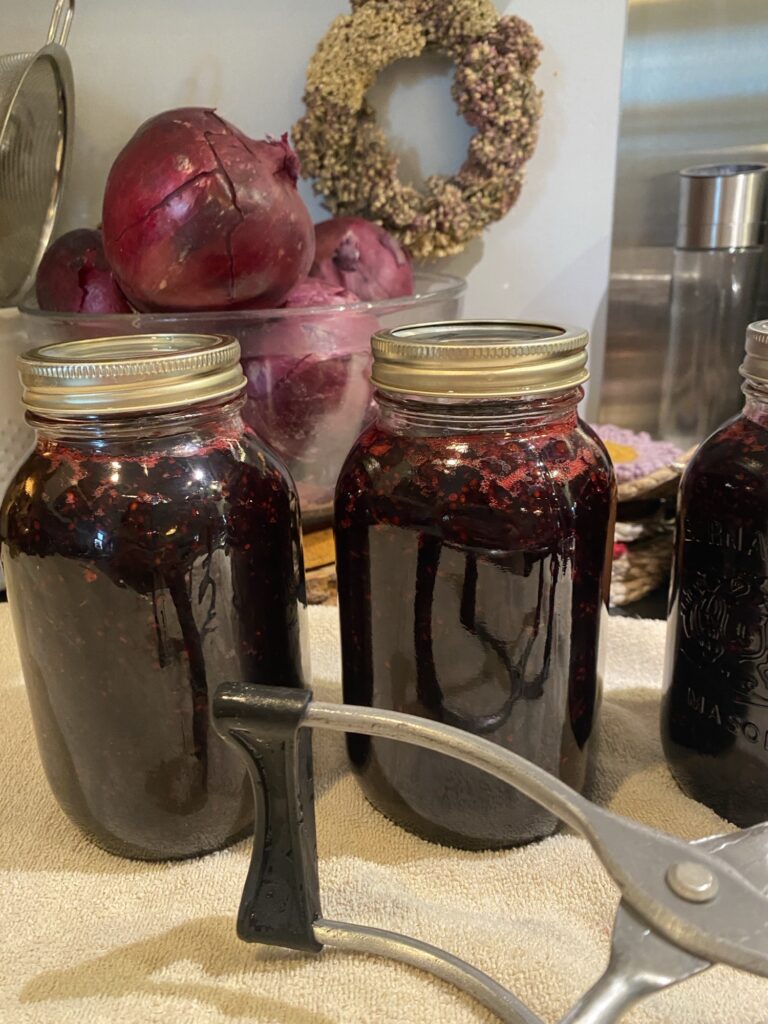
Here’s a batch I had in my fridge. It’s very thick.
You can bottle the jam, cool it to room temp then store in your fridge to eat right away. Or you can waterbath can it.
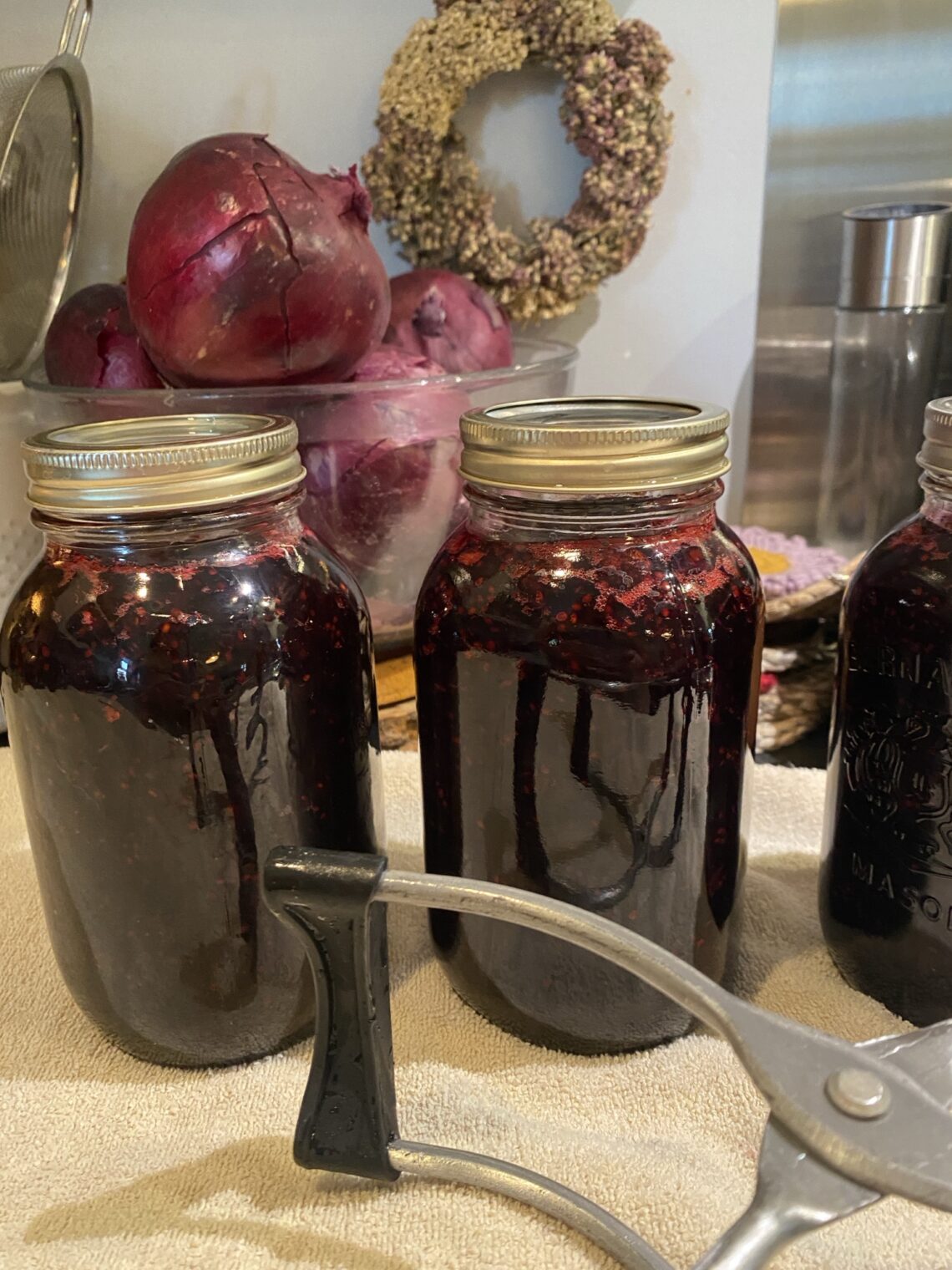
To water bath can, I always can in quart jars. Being a large family of 10, this is simply more efficient for me. I do pint jars for gifts, but today I’ll show how I can my quart jars.
I begin by washing my jars and lids in hot soap water. I used to go the whole way with running through the dishwasher and submerging in boiling water. However, as my family grew I sought simplicity and found that hot hand washing would suffice.
If you’re interested to learn how I make my own dish soap, you can find that tutorial here.
It is best to wash canning jars with simple natural soap. Not dishsoaps with fragrance.
Once washed, I leave my jars out to dry and put my lids into a bowl and cover with boiling water. This plumps the edges a bit for canning as I reuse my canning jar lids so long as they are fully intact without scratches, rust or the sealant part being scratched.
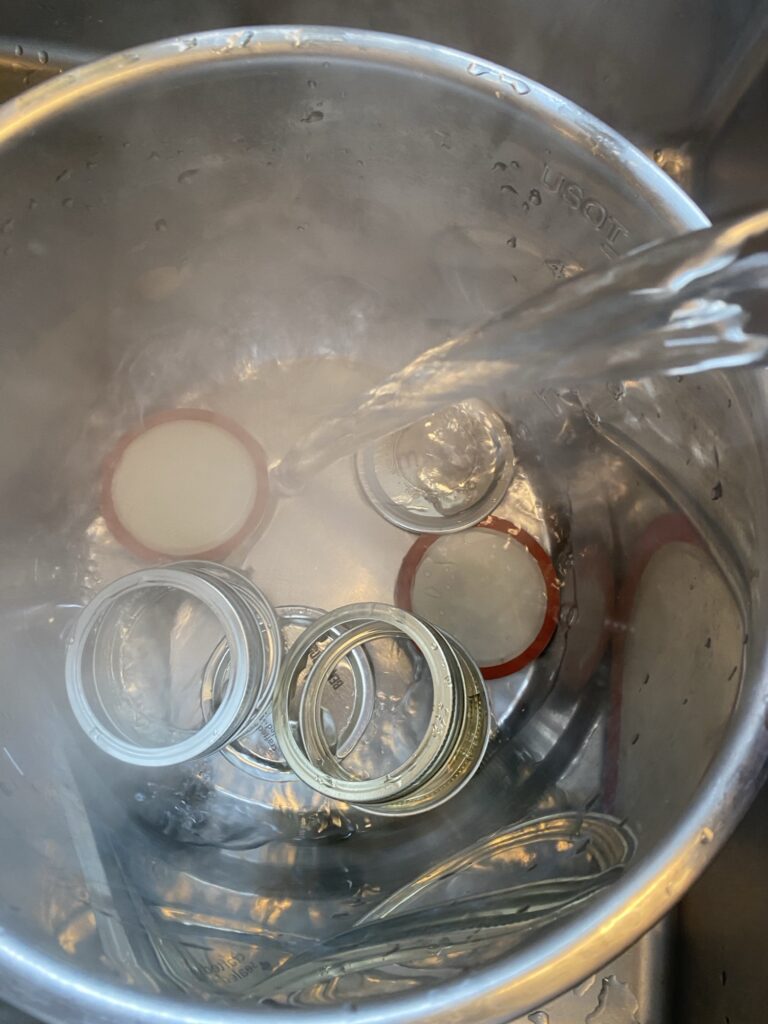
While those are soaking, I set up my canning space.
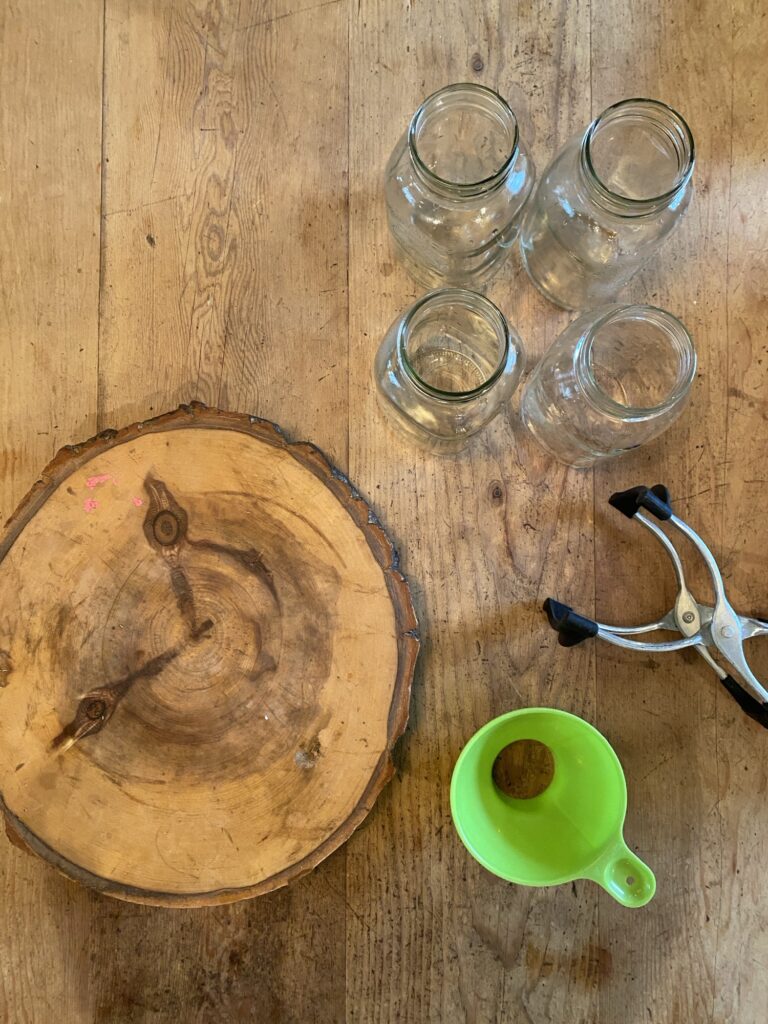
Bring my large stock pot full of hot jam over.
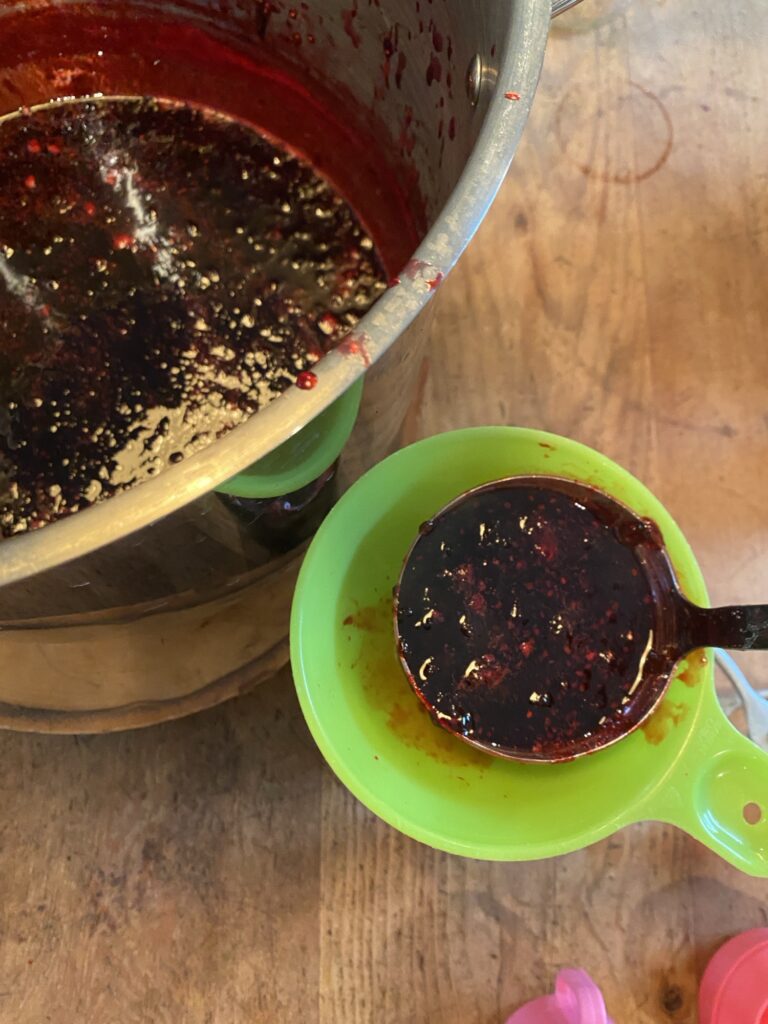
Now carefully ladel the hot syrupy jam into the clean jars.
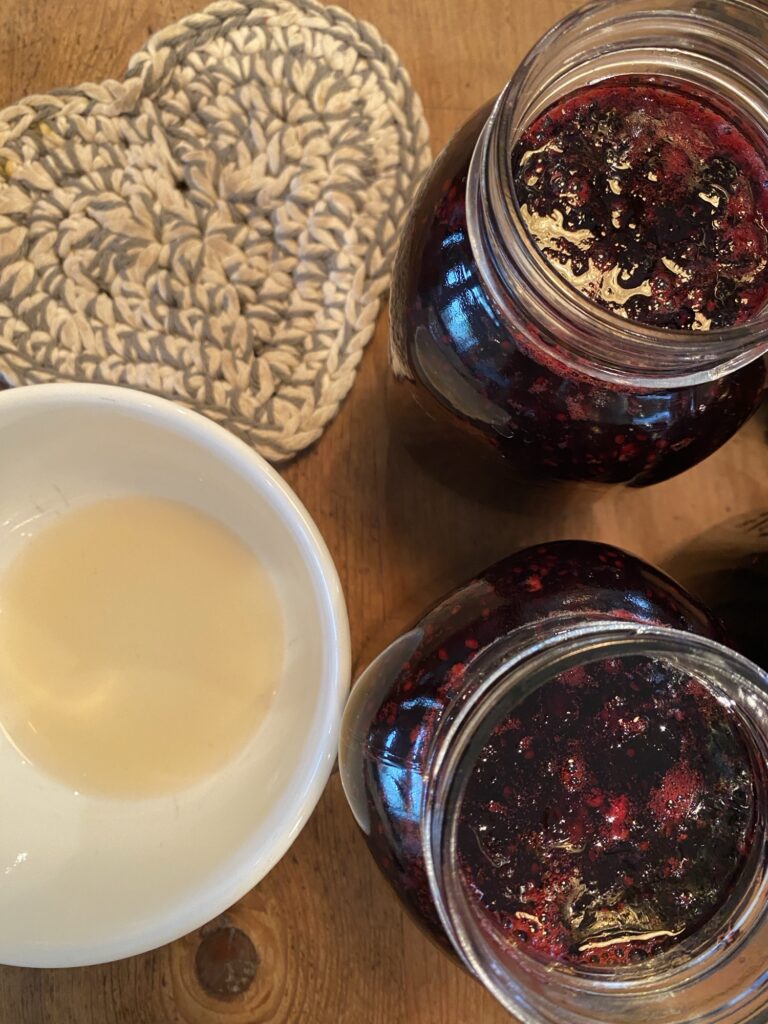
Leaving a one inch head space, I pour a little apple cider vinegar in a bowl. Dip a clean rag in and wipe the rims of my jars making sure there’s no sticky jam on them before placing the lids on.
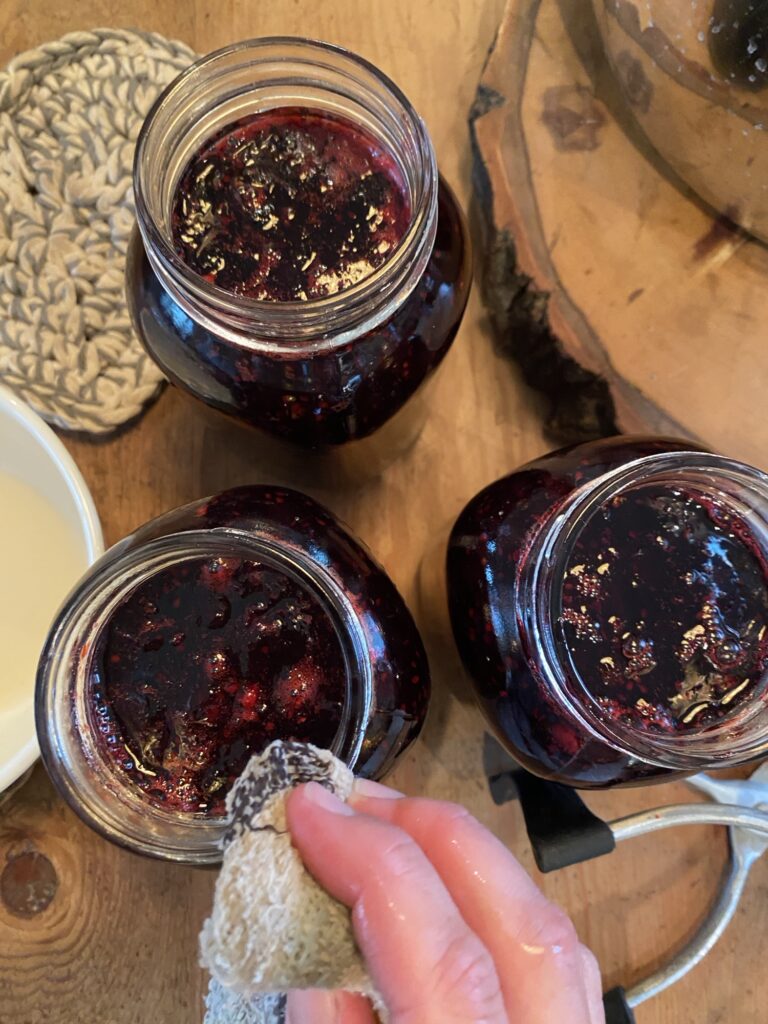
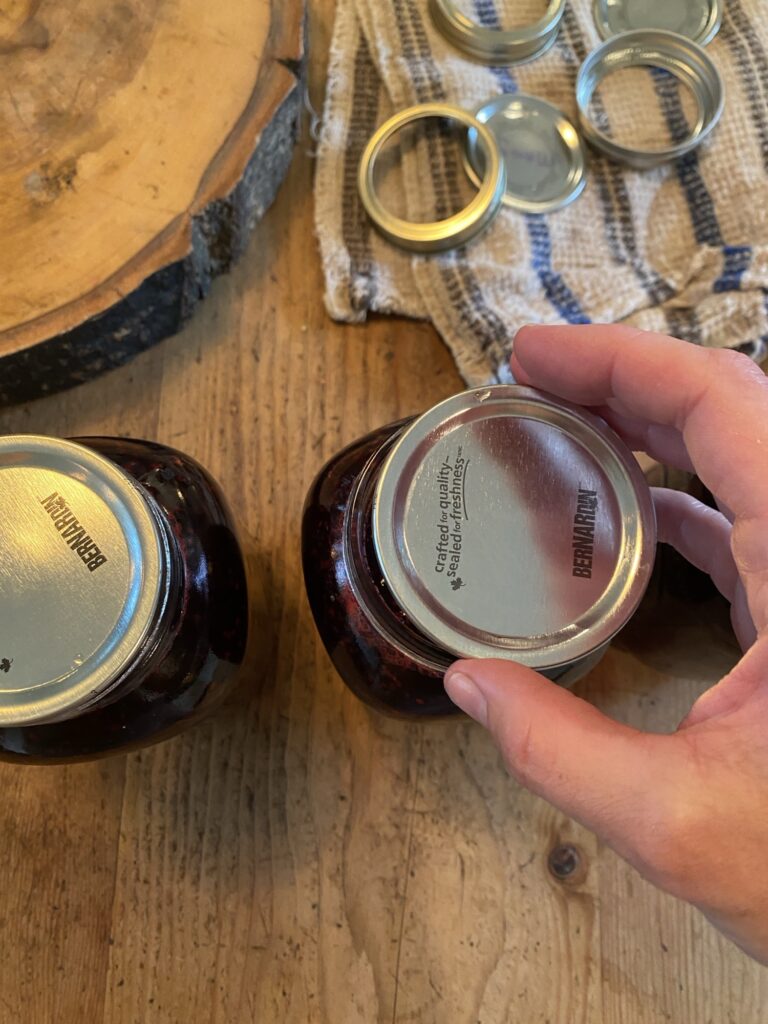
I use my stock pot I cooked my jam in to also can in. So once the jars are filled I wash my stock pot and refill with water. I don’t have a canning rack, although I intend to get one this season. In the meantime I just fold a clean hand town and place it at the bottom of my pot so my jars aren’t touching the bottom of the pot once I put them in.
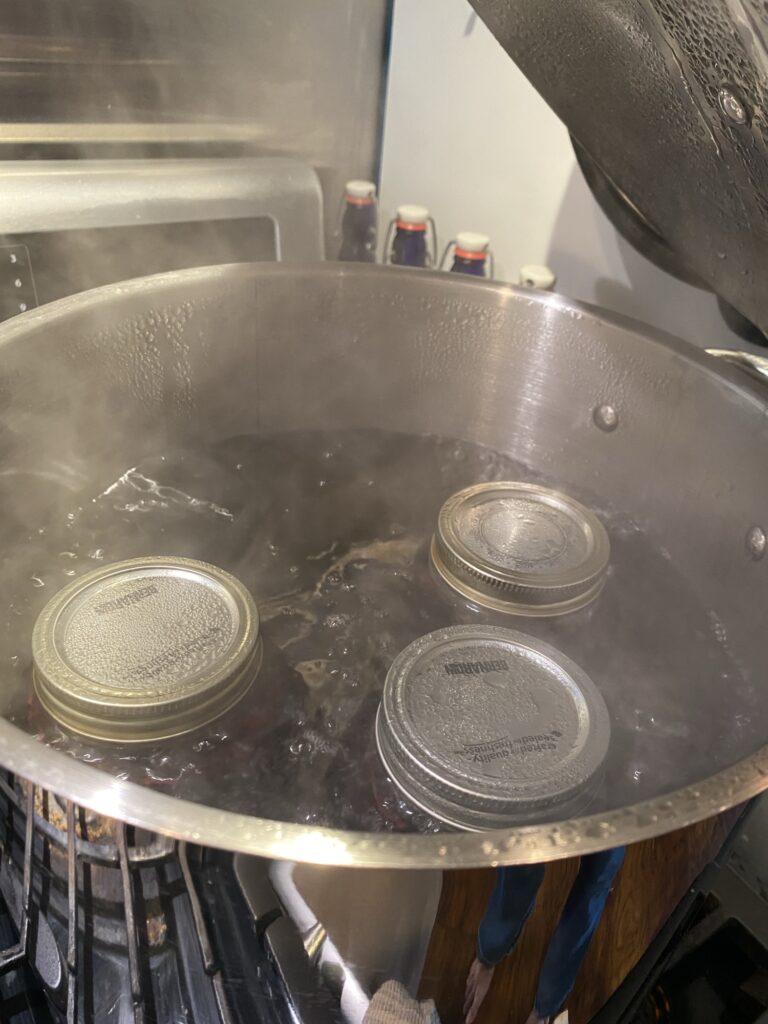
Bring the water to a boil then carefully place my jars in. Before placing I put the rings on gently, not a tight turn, just two finger strength turn so the boiling water can’t pop them off and ruin the contents.
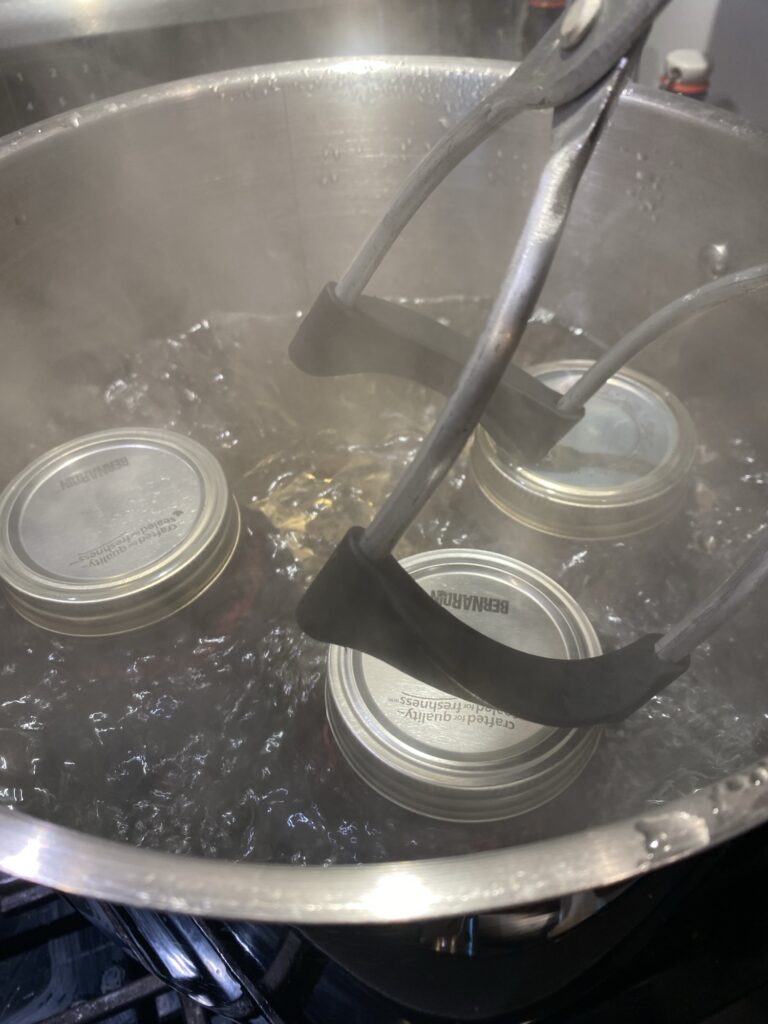
Now cover with the lid and I boil mine for 15 minutes.
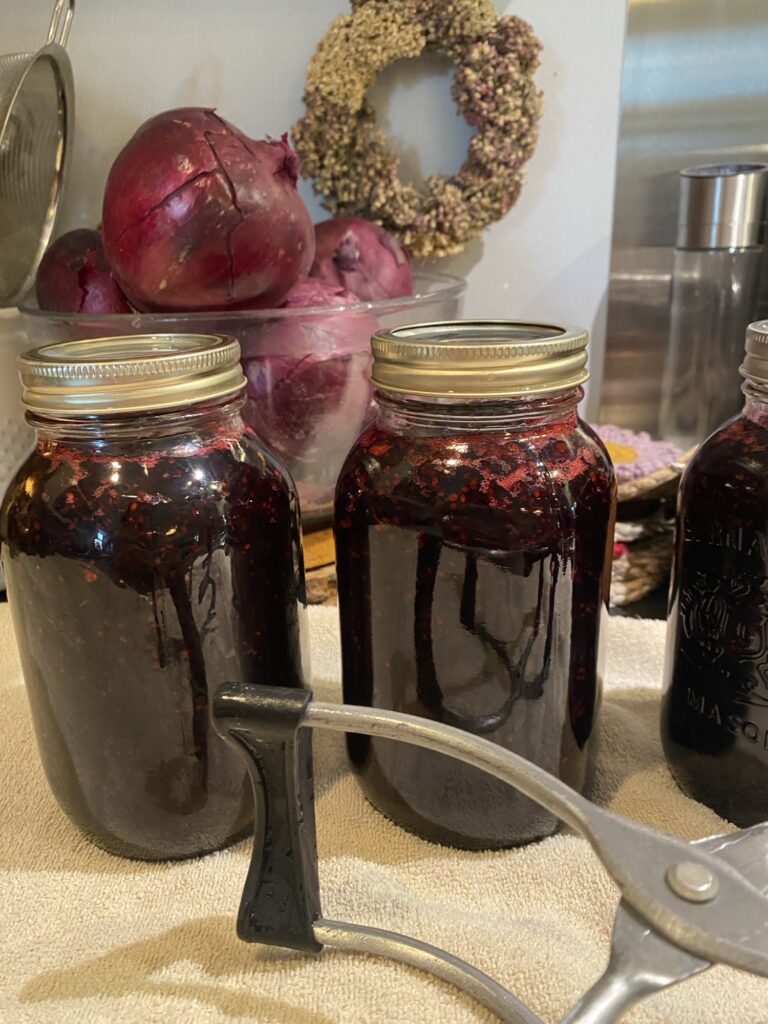
After 15 minutes carefully remove the jars. They might start popping if they haven’t already. If they don’t pop give them time and you’ll hear the pop as they suction closed from the change in temperature. Allow them to cool, then take the rings off and check the seal. I store my jars on top of my kitchen cabinets without the rings.
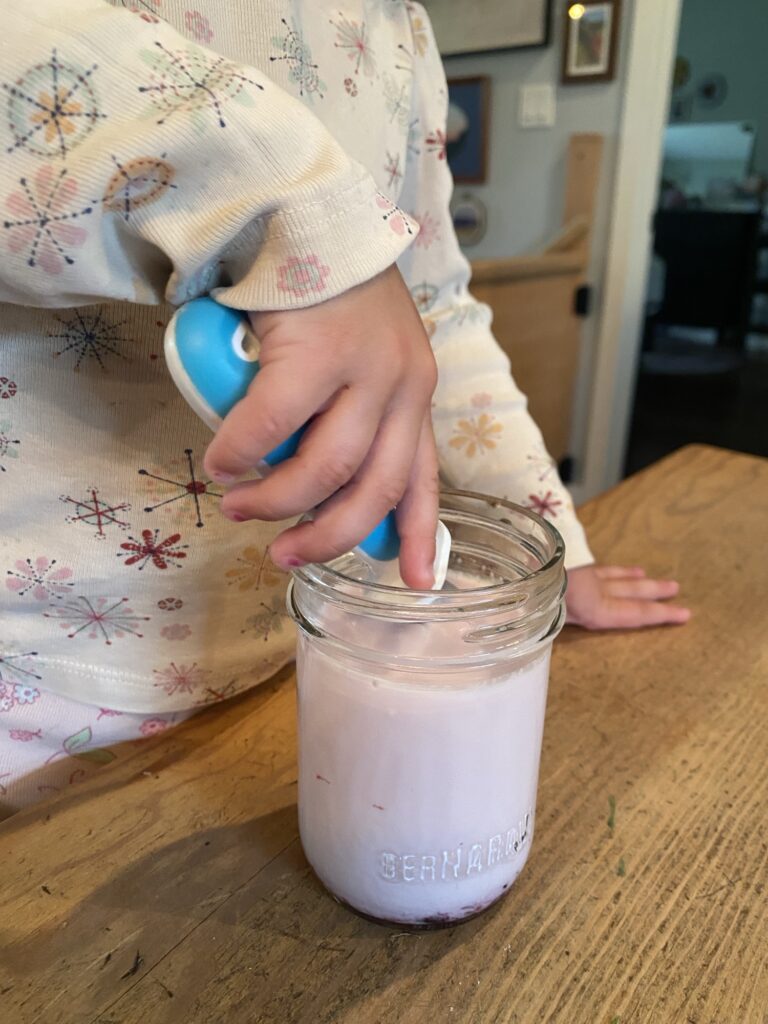
With my left over jam I let my kids stir a spoonful of it into milk sort of like that nesquick strawberry milk we grew up with the 90’s. Remember that? But this is actually healthy with real fresh mineral rich fruit and zero preservatives or food dyes ha ha;)
I hope you try haskaps amd maybe make some jam. It’s a worthwhile endeavor.
Warmest Blessings,
Ashley