The healthiest way to add probiotics to your family’s diet is with fermented foods. The beauty of fermenting is that just about any condiment or side dish can be fermented! Onions, beets, carrots, garlic, cabbage, cucumbers, salsa, tomatoes, peppers, ketchup, apples… you get the idea.
An easy place to start regarding fermenting is cabbage. It makes a delicious tangy bubbly addition to burgers, hot dogs, chicken and roast meals, breakfast with eggs and fried potatoes…
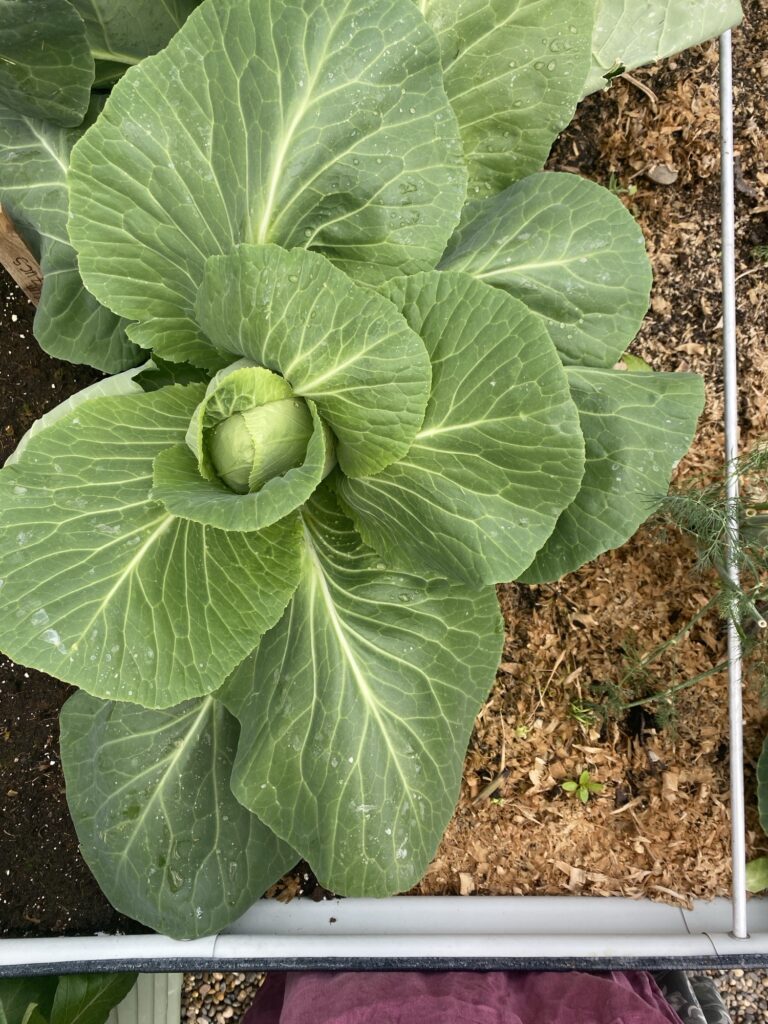
To take it a step further, this year I was able to grow cabbage in my greenhouse. I’ve never ever achieved this before. We live in zone 2b and between bugs that love them, a dry climate, poor soil, short summers; I’ve just never been able to grow them. It’s taken years to create a microclimate and good soil, and in the meantime we built a year round greenhouse off of my husband’s shop so I could start a garden early and grow throughout the year.
I have to say; homegrown cabbage made into sauerkraut is one of the best things in life! It fermented beautifully and tasted so flavorful compared to store bought cabbage.
Red and green cabbage both work great for this dish. You can add onion, garlic, carrots and even beets to this depending on what you have and what your preference might be.
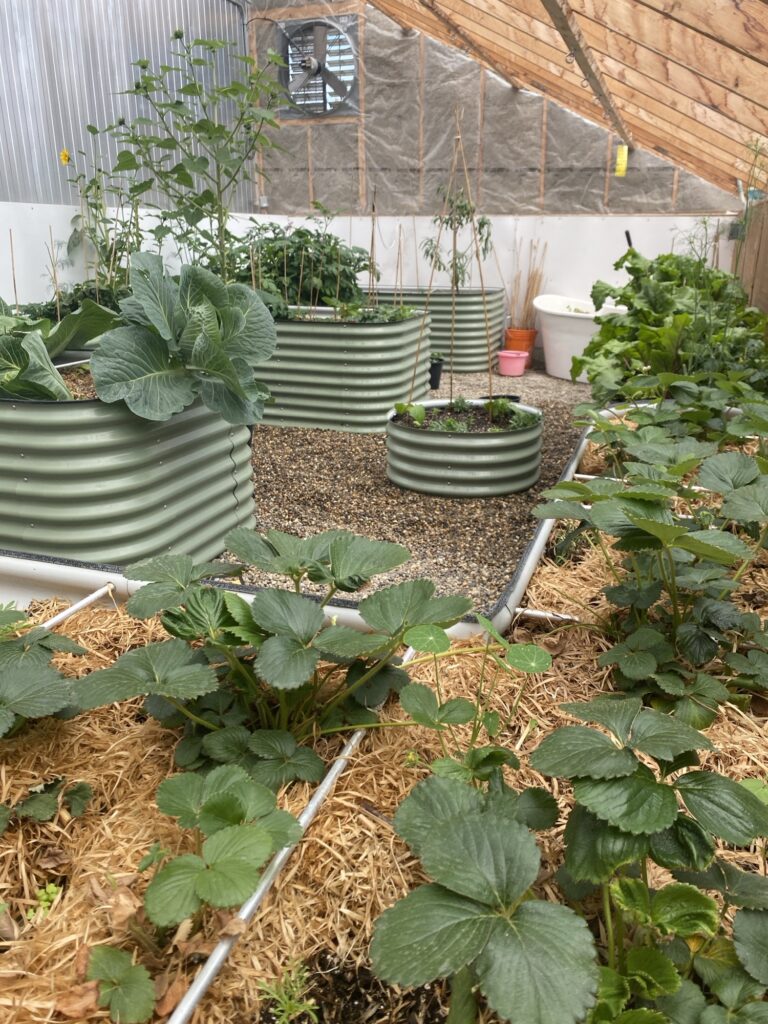
By the way, if you’re interested in the beds we used in my green house, we purchased them from a company called Sprout Box. After using them for a few years we became affiliates. I love these beds for the greenhouse, they’re not only beautful but they’re non toxic. They’re less expensive than cedar beds, they’re easy to assemble and move and so far, look like they’ll last for many garden years to come.
If you’re interested to check out the company:
Use our code: WILDWOODS10 for 10% off your order.
I digress. Let me share how I make fermented sauerkraut.
The beauty of fermenting vegetables is you can make up your own recipes on the fly, using up what you have on hand. So long as you have a proper salt to water brine ratio to create a healthy environment for good bacteria.
I use a 1tsp salt per 1 cup water.
It’s important to use sea salt or Redmond’s salt, pink Himalayan salt works well too, I’ve also used pickling salt. Just don’t use iodized salt or table salt as they won’t be good for the bacteria.
Water is important too. Non chlorinated and non fluorinated water works best. I use reverse osmosis water because it’s how we filter our high sodium well water. Filtered water, spring water, distilled… those work great too.
For this recipe I had: garlic, dill, cabbage, onion and beets.
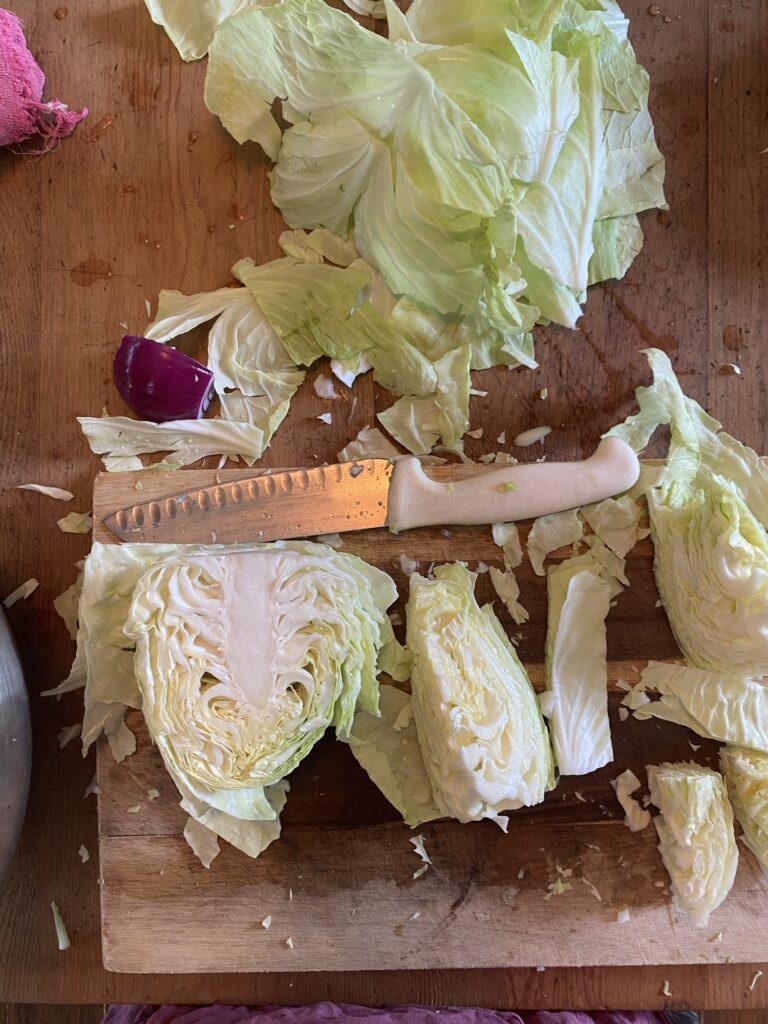
*just a note before chopping the cabbage. Save a few large outer leaves for pressing the top of the ferment down.
To begin, I wash my equipment in hot soapy water: knife, cutting board, jars… anything coming into contact with my product. I used to boil everything but I found this tedious, time consuming and ultimately unnecessary. Just go with soap and water, a non fragrance soap works best. If you’re interested, you can check out how I make my own Dish Soap Bars.
For washing my produce, I just spray some apple cider vinegar on my cabbage and rinse. I scrub my beets and peel them. If I had carrots I would do this too. I wash my fresh dill in acv water as well as my garlic and onion bulb.
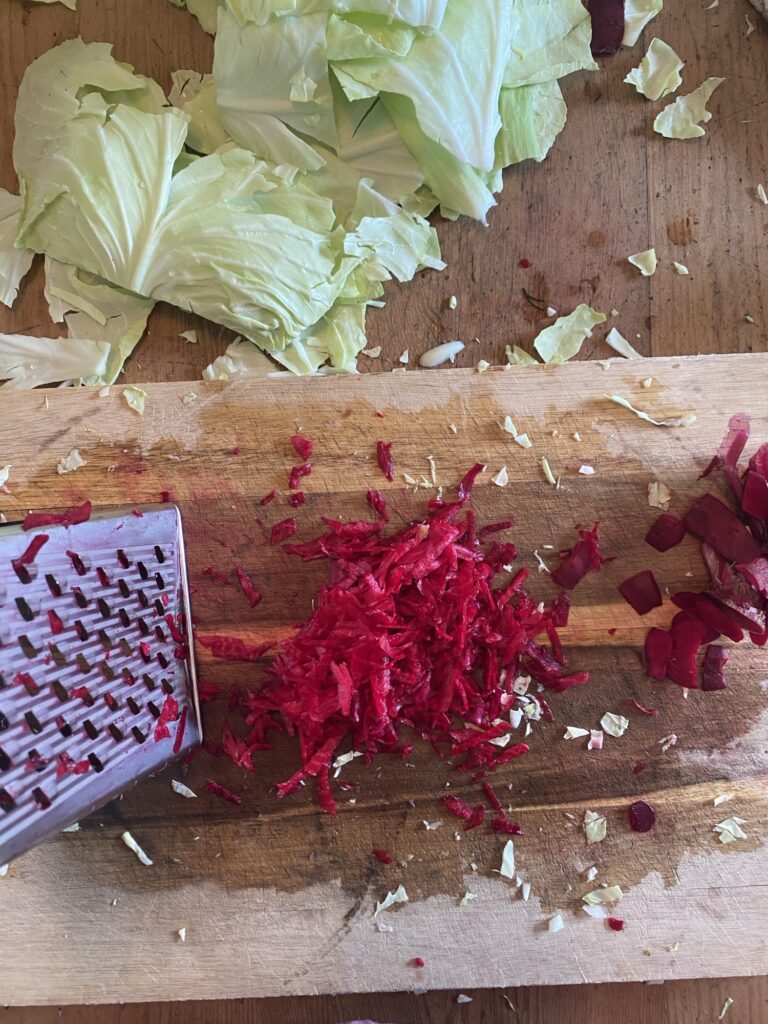
In a large bowl add shredded cabbage, several chopped garlic cloves, peeled and grated beets, chopped dill and chopped onion.
I never follow an exact recipe but for a ratio/recipe sake I do about:
2 cabbage heads, half an onion, full garlic bulb, hand full of dill, two or three beets.
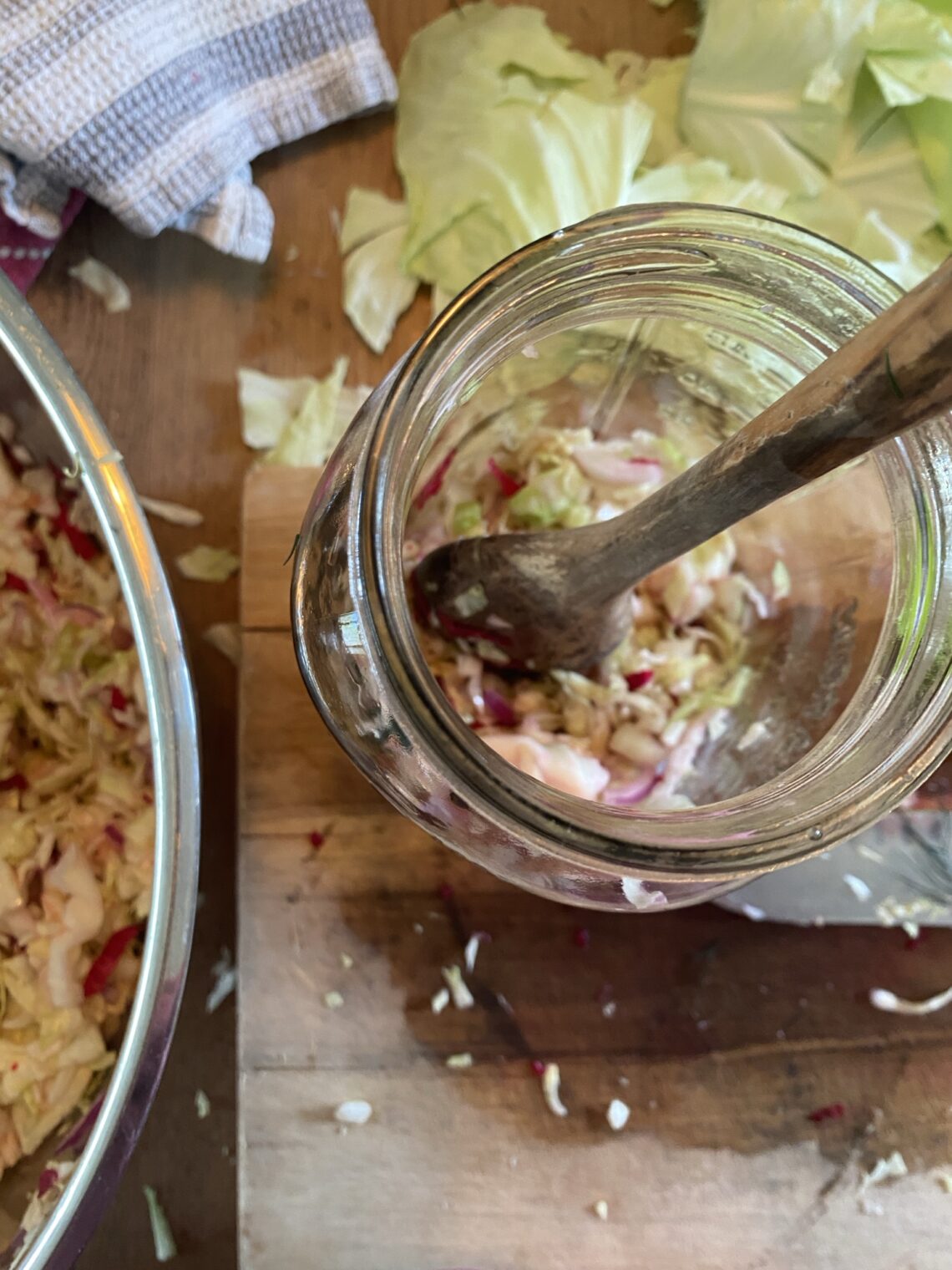
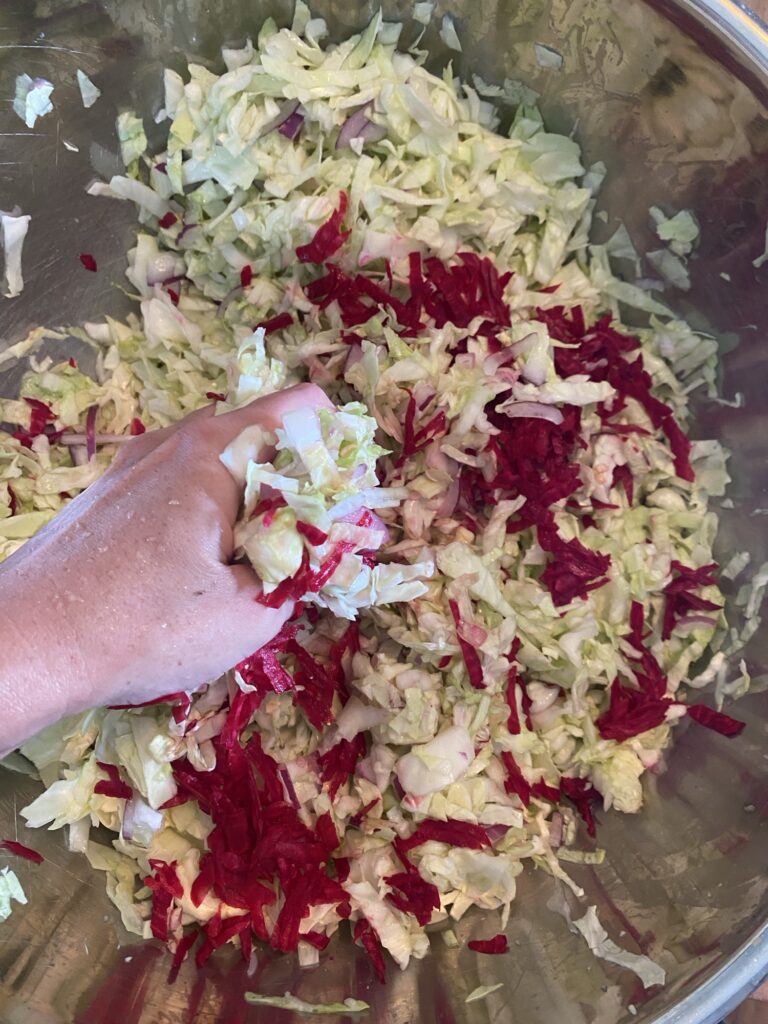
Sprinkle some salt on everything and begin mixing it by hand and squeezing the cabbage to get the juices out. You can pound it with a wood spoon too.
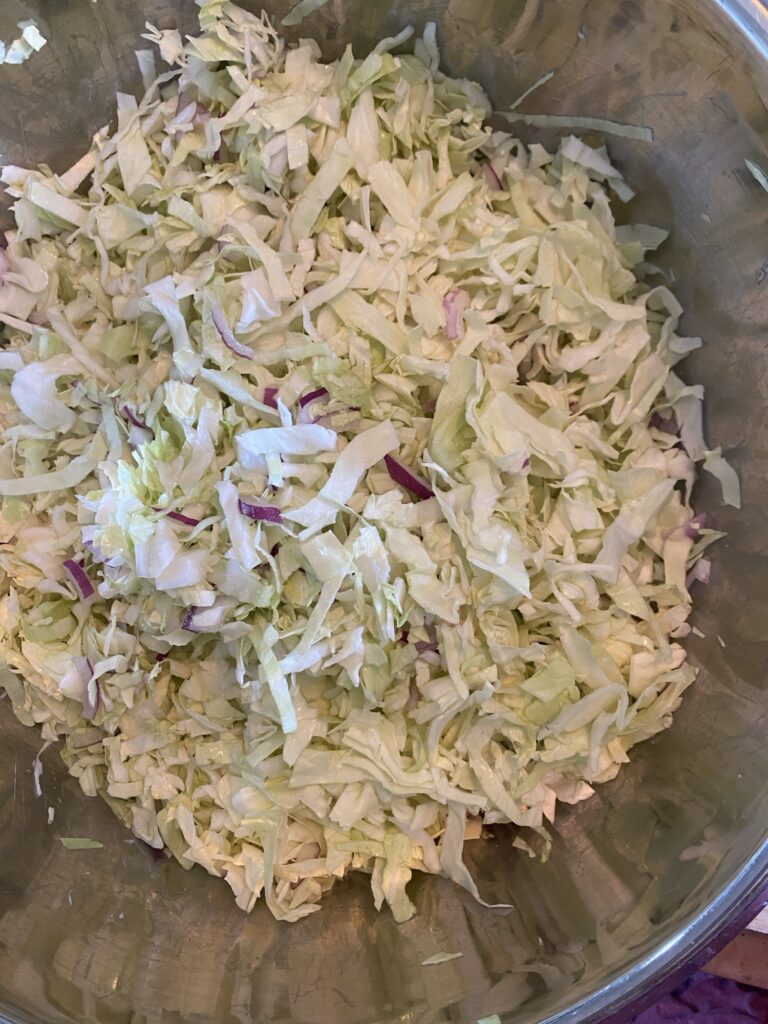
Let the mixture rest and mix the brine.
I typically mix two quarts water with 8 tsp salt. You can add more salt to taste. At this point you could add other spices like ginger or peppercorn too. I just like plain salty sauerkraut as it creates its own tangy vinegary flavor. You could also add a few tsps of acv or kombucha to jump start the ferment and add more flavor. I do this sometimes.
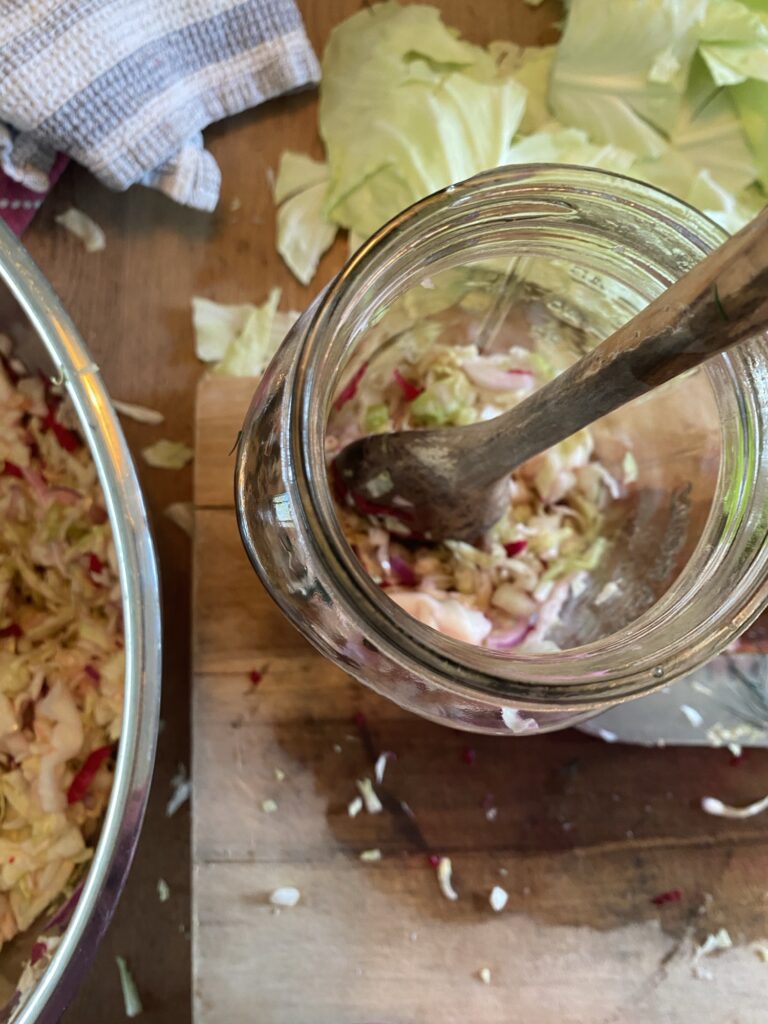
Once the salt has dissolved begin packing the mixture into clean glass jars. Pack it down with a wooden spoon to fill the spaces and continue to break down the cabbage.
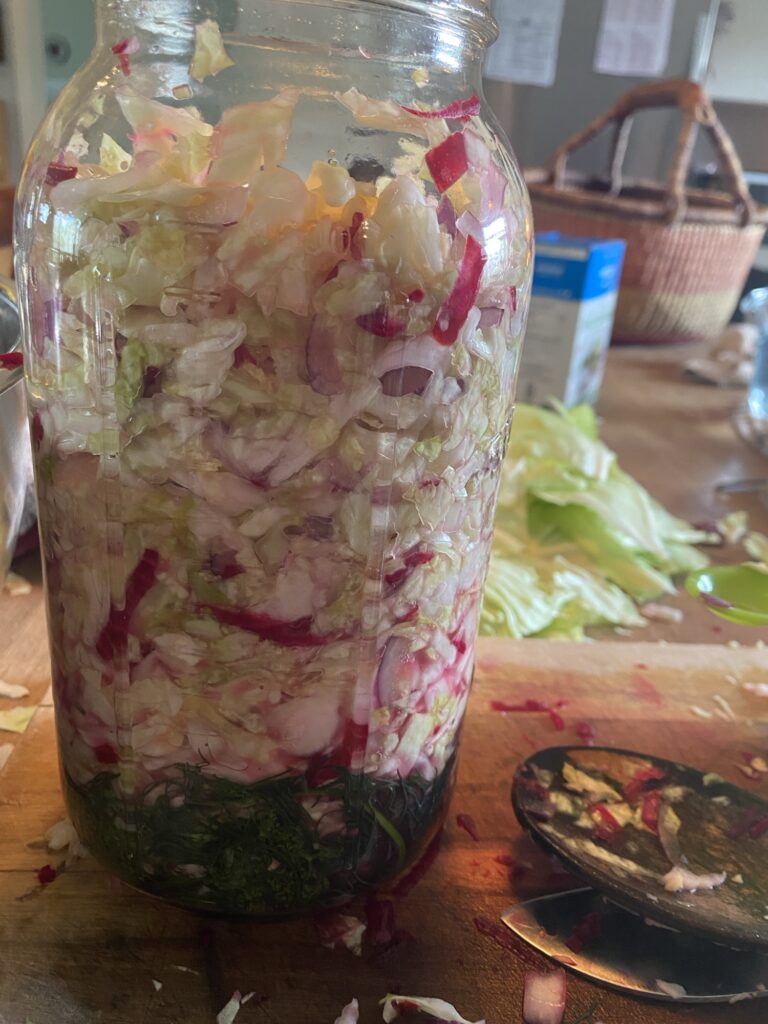
Once full with a bit of space left, I like to pack in more dill then fold my cabbage leaves and cover the top and pressed down.
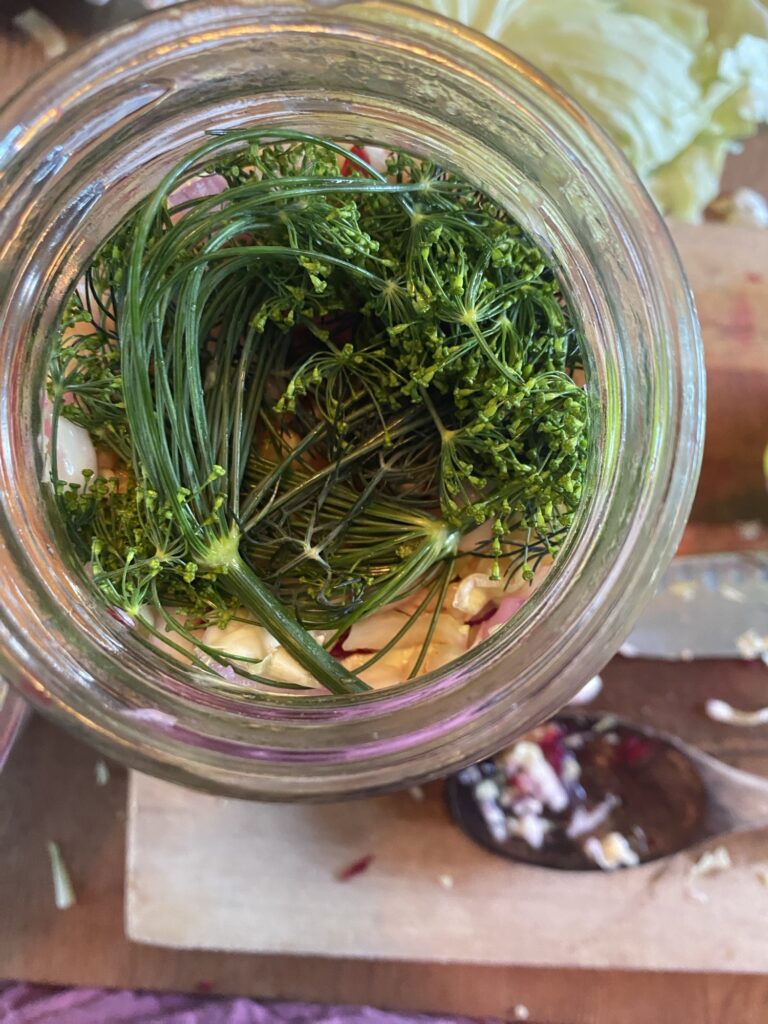
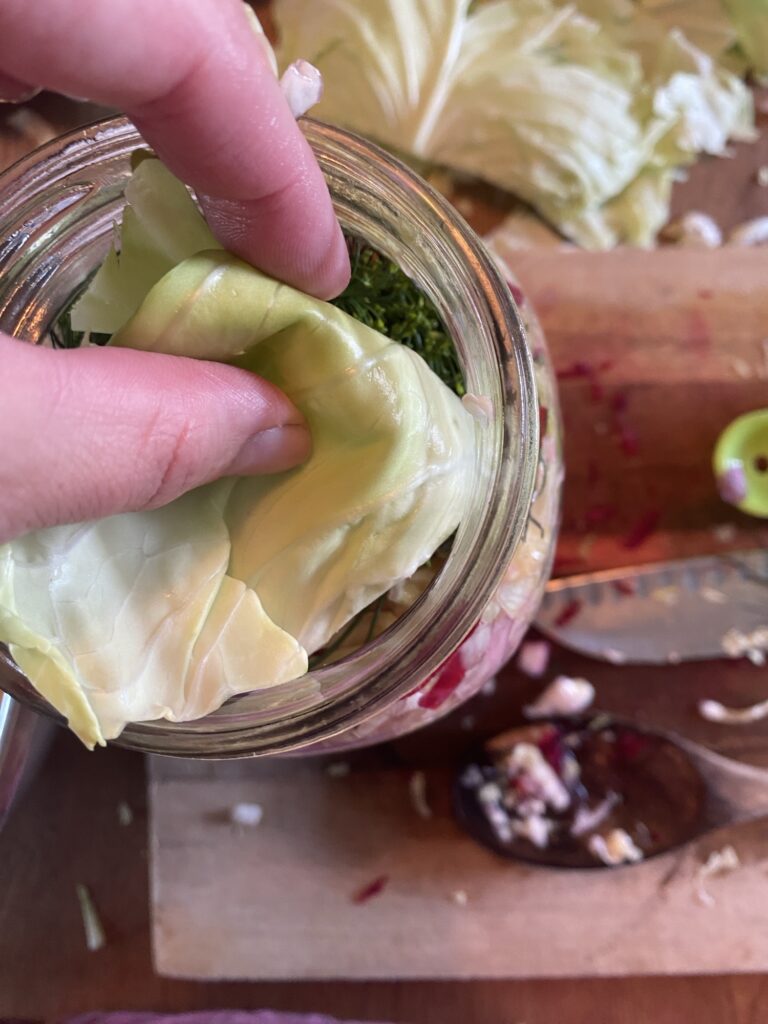
It’s important that everything stays below the brine so pack it down well. Fermenting weights or a clean rock helps too. You can find glass fermenting weights on Amazon.
Fill the jar with the brine so that everything is covered.
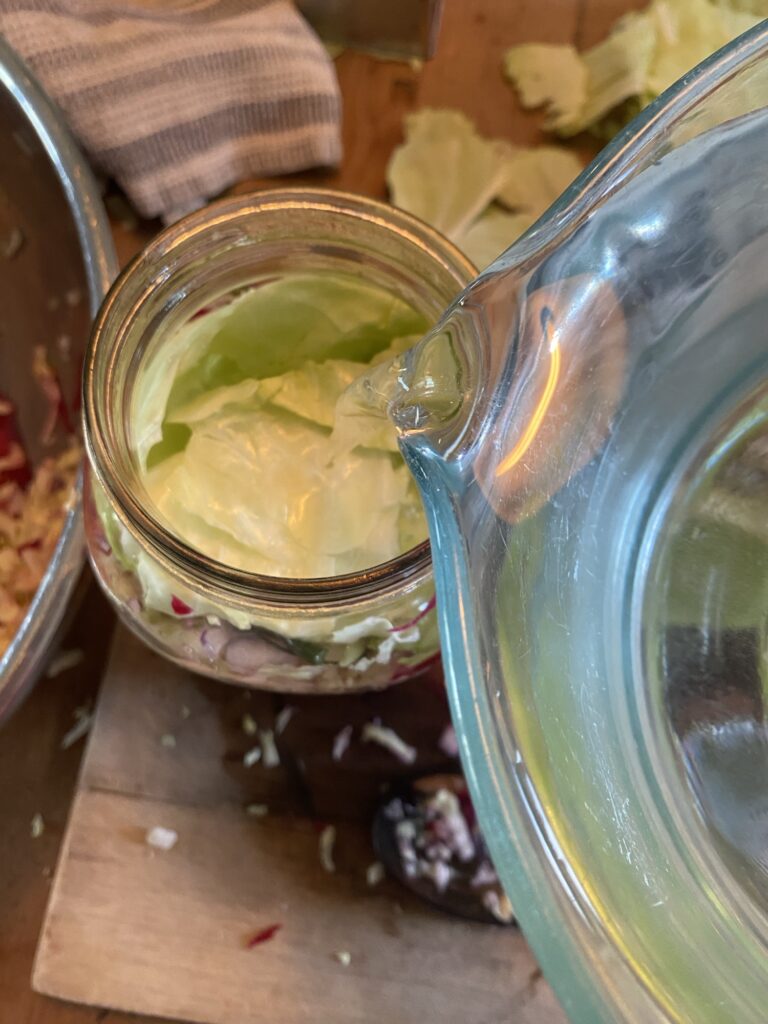
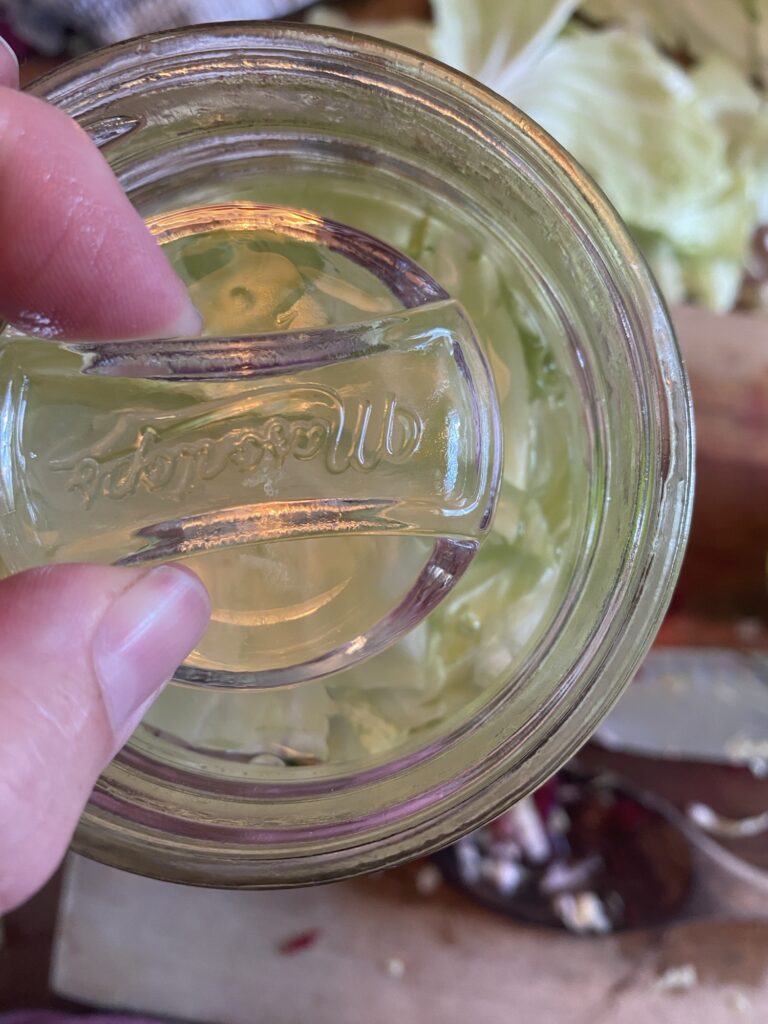
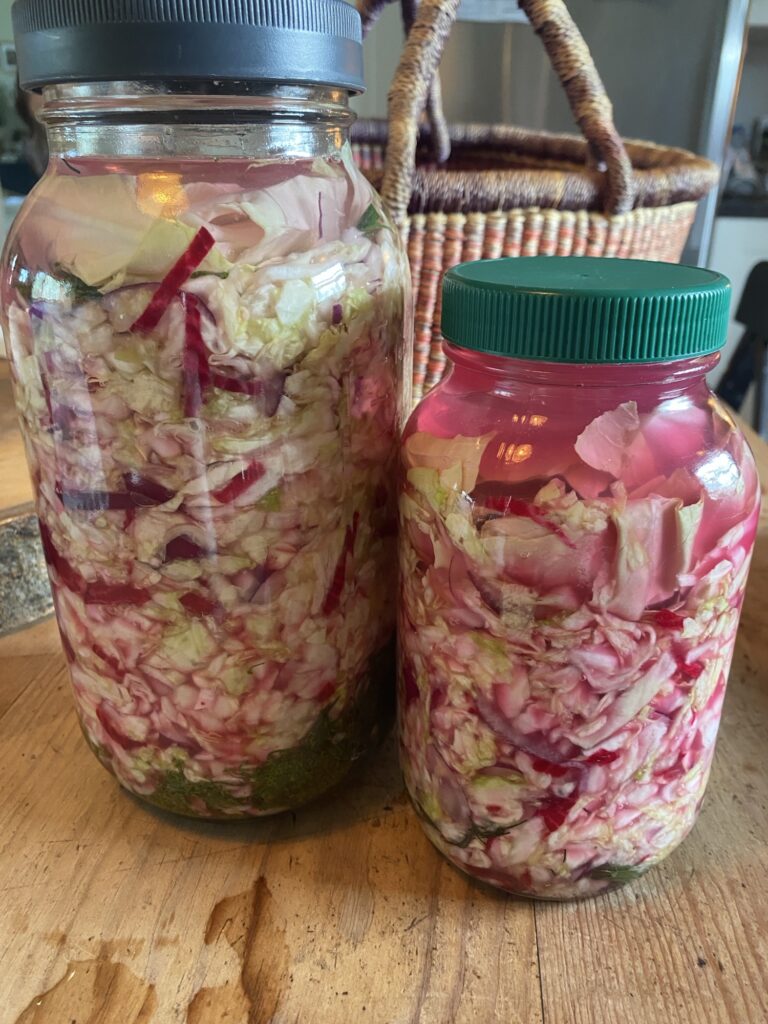
Loosely close with a lid, preferably a plastic lid otherwise metal will rust. You can find fermenting lids on Amazon too that release the gas build up. Place in a dish to catch any possible over flow of liquid from built up bubbling. Check daily. Depending on how warm your kitchen is; ours is usually done within a week and a half. If there’s mold on it, unfortunately it must be tossed, composted preferably if you can. If there’s a white film, don’t toss, this is simply kahm yeast and can be scraped off.
Enjoy making your own unique fermented sauerkraut, add shredded carrots, cucumbers, and spices for a variety of flavors and nutritional profiles.
Blessings,
Ashley