Raising a family of, now 11 with our newest addition, I like to keep a tidy home. It’s not always tidy, but I have found over the years that it’s SO much easier to keep a house clean when you’re very mindful about what you fill it with. This is probably an obvious statement, but with a modest sized space and so many people, I am regularly assessing what we own. Do we use it daily, weekly, monthly or yearly? I have some things that I don’t use yearly but they’re special to me and or my children , even then I try to limit what we choose as I want to help my children learn how not to be over run with “stuff”.
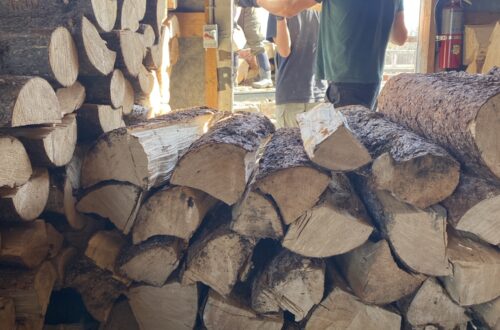
Something I definitely don’t have storage for is seasonal decor. Other than a couple of totes for Christmas, and each year we hike out to the Alberta bush and cut a tree for Christmas. I have one multi seasonal tote with a few special items I bring out for summer, spring, winter and fall. Thats it, they take up one shelf my husband built for the purpose in our modest mechanical room. The rest of the space needs to be used for our hot water heater, off grid wood burning set up and children’s clothing I use space saver bags for to save lots and lots of money on kids’ clothing:)
In many ways, having a modest sized home and a lot of kids has taught me how to be better organized, make better decisions and not just cling to “stuff”. I used to struggle so much regarding getting rid of things, things, things. I would allow too much accumulation and then be stuck in analysis paralysis with it all. I love a cozy well decorated home, but I prefer people in my home, not things. Fortunately I feel I’ve settled on a balance of the best of both worlds. What that looks like for each person will be vastly different though!
For me, I have become inspired with what I see out my living room window each day. In the summer the tall poplar trees swaying against a deep blue sky with their deep green leaves and stark white thin trunks. In fall the leaves light up like gold with the rising and setting sun. The sky turns a softer gray and winter brings heavy drifts of snow and purple shadows. I am often so inspired by nature, I will just go out into the woods or garden and just think, “now how can I bring this inside.” Not only that, but can I make a natural non plastic wreath? Christmas ornaments? How about real pumpkins from my gardens for fall and dried florals?
Last year was an especially hard winter as I broke my leg in the fall so I couldn’t get to all the fall garden tasks I wanted to. Further, I couldn’t get outside and soak in every last bit of green grass, colorful sunflowers, bright orange leaves, gentle last warm breezes… that I could. A few months later I found out I was pregnant, which was a blessing, but the morning sickness this time was pretty rough. It was just a rough loooong drawn out winter. By spring my leg was fully healed and my morning sickness had calmed down and I decided to just exhaust myself with summer sun, bare feet, lots of gardening, daily bouquets, and whatever else I could before another winter. That carried over into this fall, as I waited for baby to arrive. Each day I found ways to bring in “summer” and I’m going to share what I did.
Before I get into what I saved this year I know as busy moms it’s hard enough some days just keeping our family fed and watered ha ha. I used Three Rivers Homestead’s Every Bit Counts Challenge to put garden produce, seeds and flowers away. The idea is to preserve or put away one small thing a day. Even if it’s just a handful of herbs, bucket of berries, or a few canned jars of something.
If there’s a day you can do more, like canning several quarts of apples for example, do that. But putting away the harvest doesn’t have to be a huge daily/seasonal task. A little here, a little there and by the end you’ll be pleasantly surprised at what you have. That’s how it worked for me this year and I love the result’s of my home. As I incorporated this challenge this year I often thought about Little House in the Big Woods by Laura Ingalls Wilder. As a kid I was captivated by Laura’s description of her Ma hanging strings of apple slices in the attic for winter pies, and bright orange pumpkins stored in the corner, wheels of cheese, fragrant bundles of herbs, onions and garlic hanging from the beams.
“The little house was fairly bursting with good food stored away for the long winter. The pantry and the shed and the cellar were full, and so was the attic.” With these images in mind, I decided to use the Every Bit Counts Challenge and fill my home with all the good things in a tasteful, cozy, delicious way. Like a cozy Hobbit hole or a cabin in the Big Woods of Illinois ready for a long winter.
Here’s what I put away and simultaneously it works out to be a beautiful cozy decor piece for fall. As we need the items, we use them from where I store them; on shelves, hanging from the window molding or even from hooks hanging on the wall in my living room.
Yarrow
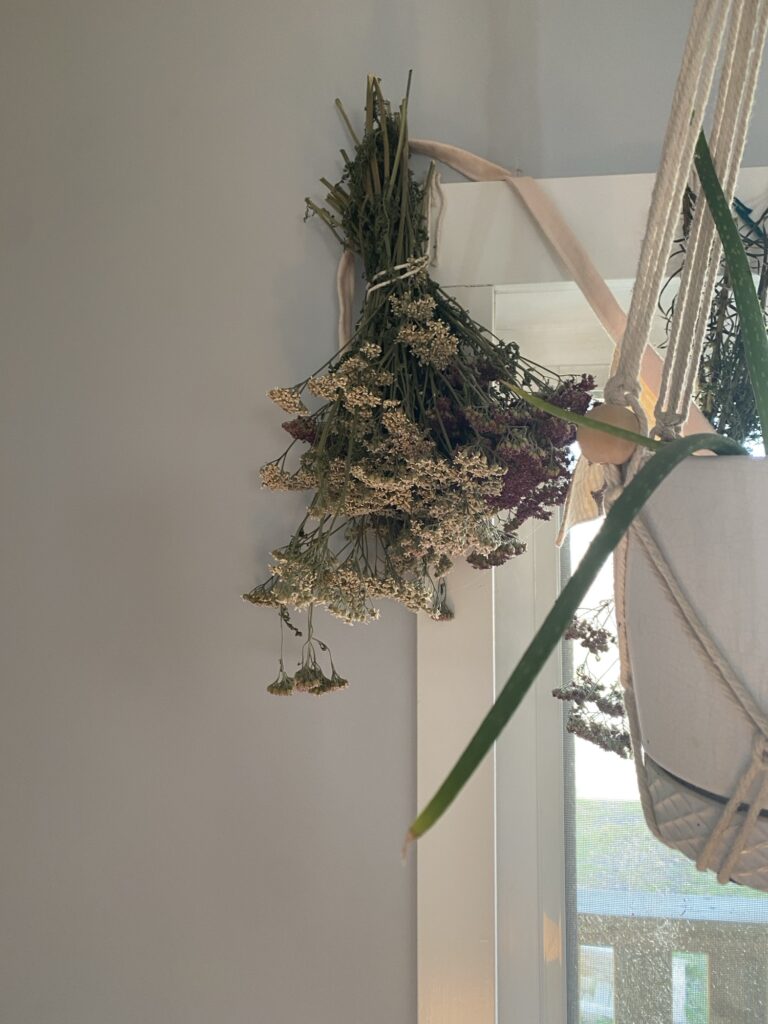
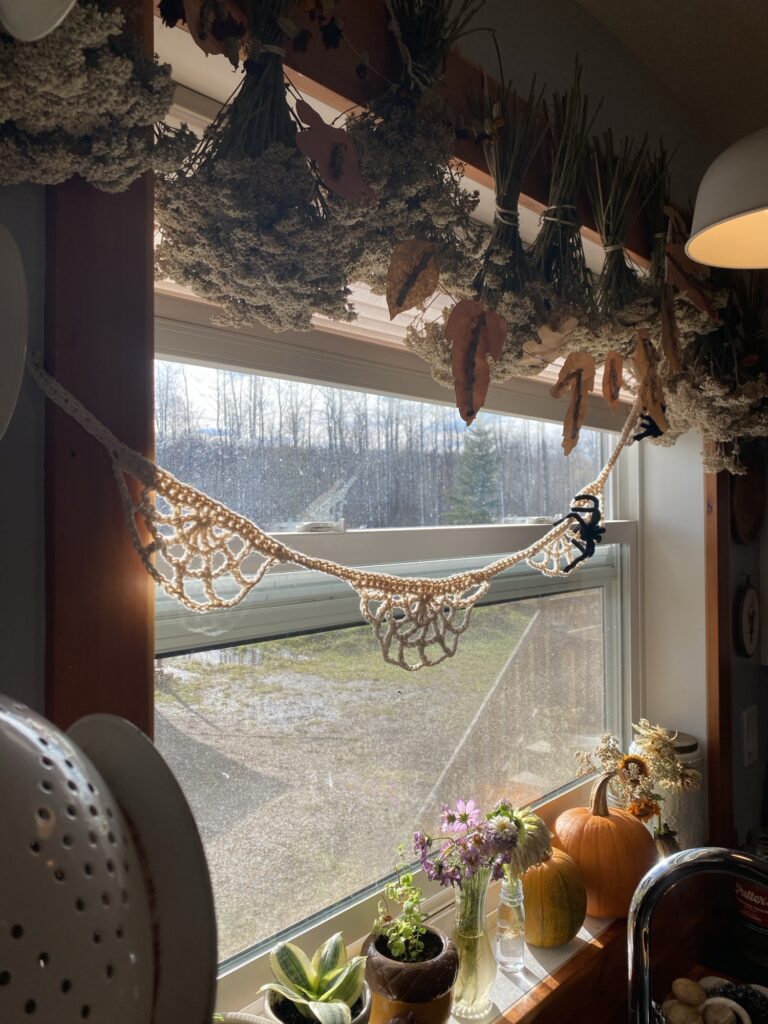
I love yarrow. The white variety is what I use medicinally and while my dehydrator was full of herbs and teas drying for winter, I decided this year to create bouquets of yarrow and hang them along my kitchen window. Yarrow can be made into a tea and it helps with bleeding, bruising and over all pain. We use yarrow as a tea and use it as an eye wash when my son gets eye styes. We have two very active little boys who get into all sorts of bumps and bruises. Just recently my four year old crashed his trike and it hit him in the side of his head. The injury bled and swelled quickly. I dabbed yarrow tea on it throughout the day and by days end you could only see the red mark where it bled. Yarrow works great as a soothing addition to a bath for muscle pain or soothing baby diaper rashes. I infuse oils and make soap or skin balms with it. My daughter uses yarrow tea to spray on her skin to calm acne or puffiness. It’s a miracle flower!
Here are a few yarrow recipes:
I grow lots of varieties of yarrow and I saved a few bundles of colorful yarrow to make winter crafts with too.
Flowers
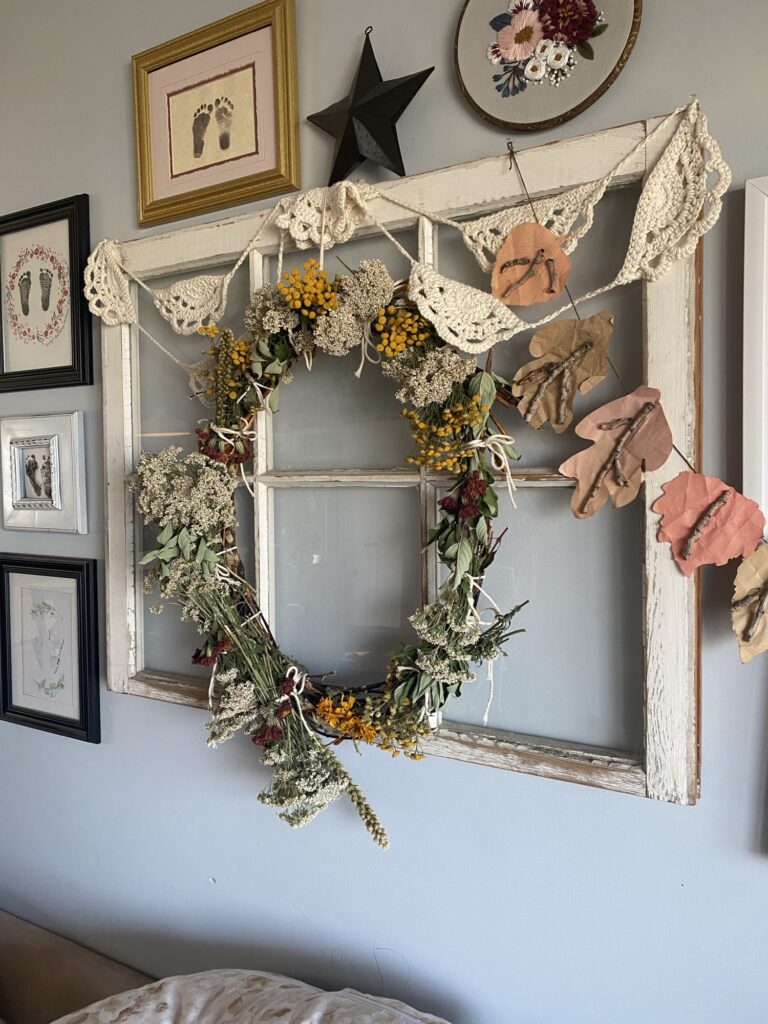
This year I saved purple and white Liatris flowers. These are long stalky flowers with thousands of tiny flowers running down the stalk. They dry beautifully and have zero food benefit. I dried them because I try to plan winter crafts my kids can do. My daughter enjoys making dried flower ornaments for our Christmas tree and we will add them to gifts as a gift tag and ornament. These beautful liatris add texture and color to these projects. We mix them with the yarrow mentioned above.
If you’re not familiar with liatris, it’s a hardy cut flower that grows from a bulb. They grow from bulbs, multiply quickly and I have planted a few groupings in my garden that have spread over the years. They look stunning in my vegetable gardens and add interest to fresh bouquets. They’re easy to dig up if they’re growing in a place you don’t want them too.
Sunflowers
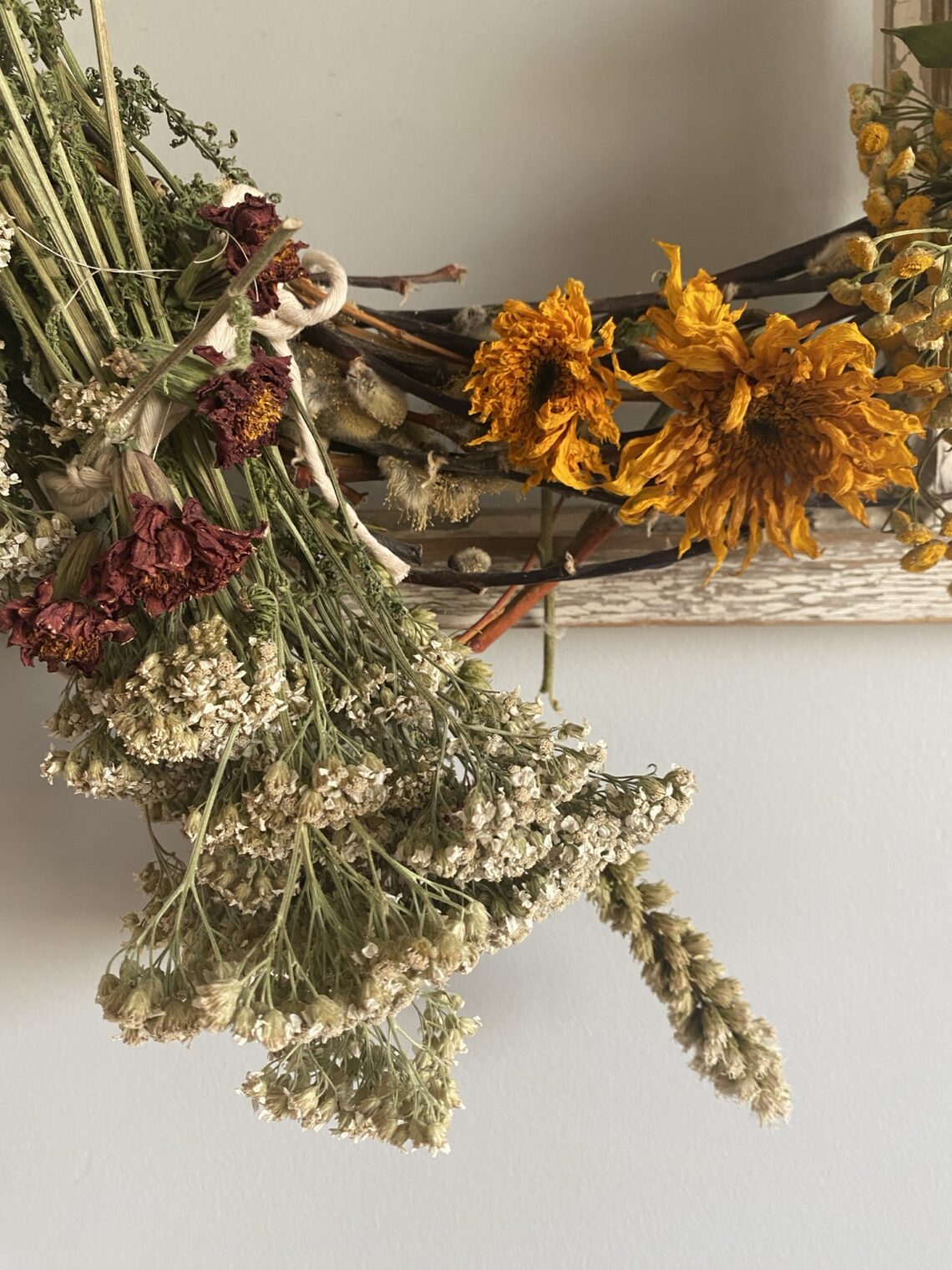
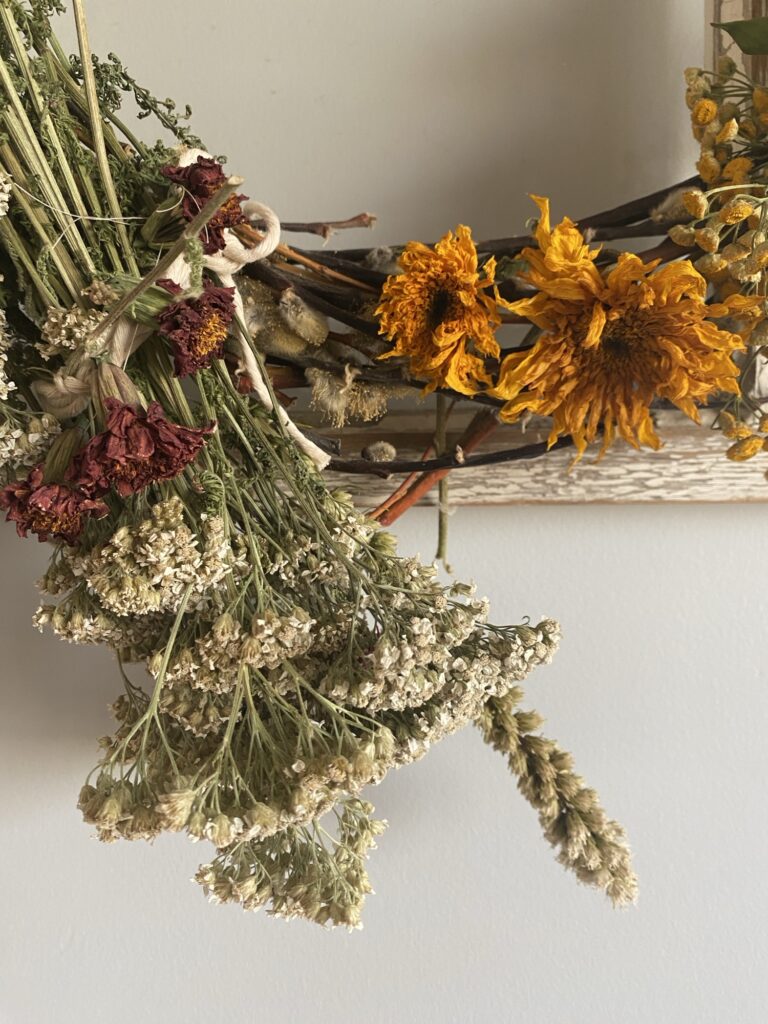
Surprisingly sunflowers dry pretty well amd keep their color. They look a bit shriveled and won’t dry looking like a full Sun flower, but certain varieties keep a stunning golden color that look beautful and perfect for fall on a wreath. I did this with a Starburst variety sunflower this year. Again, no food value but I’ll either compost them when I switch to my Christmas wreath or use them to make ornaments.
Sunflowers for Seed
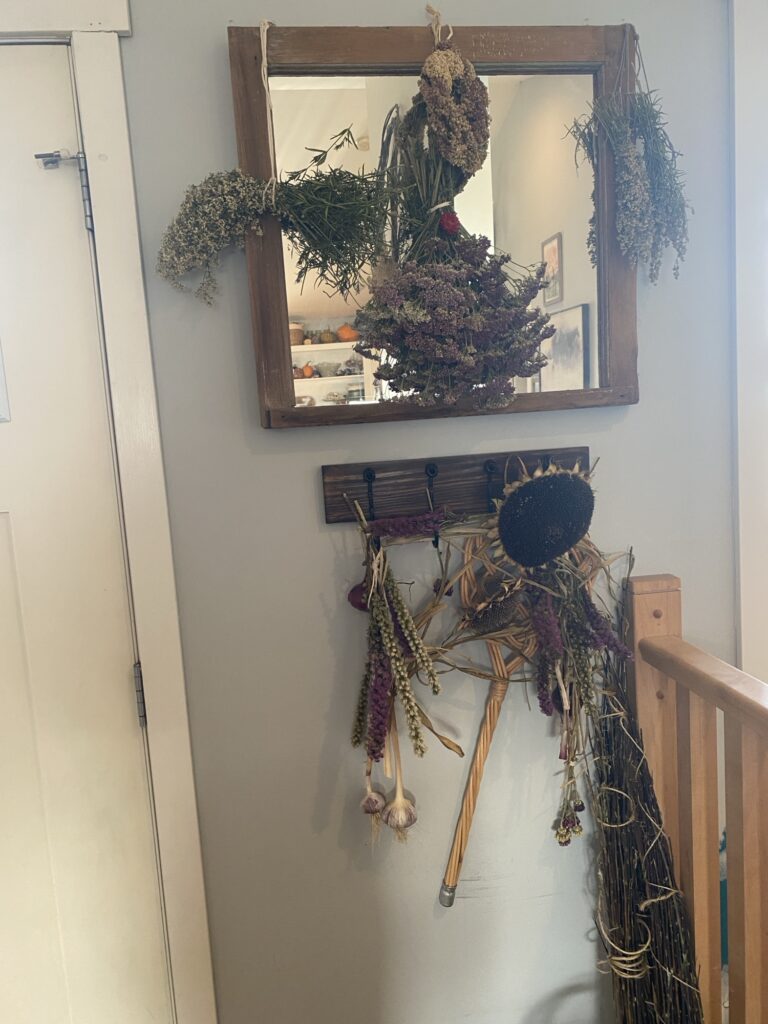
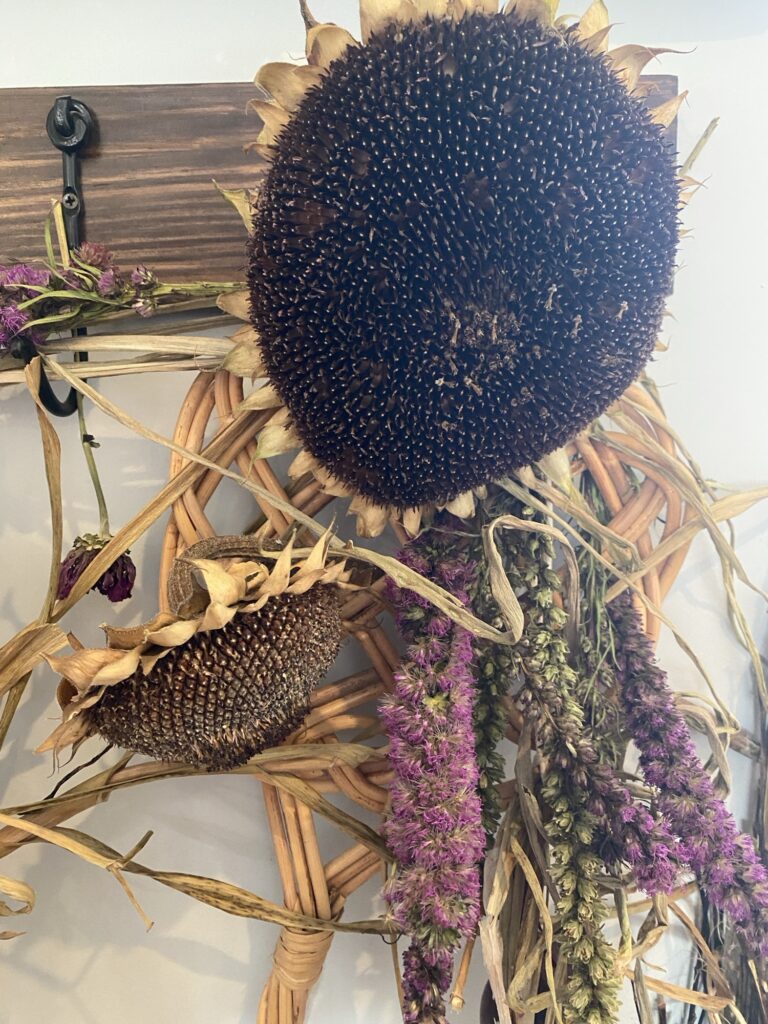
These look different as I wait until the seeds ripen before cutting the head off the plant and removing the petals. I hung some heads up to dry, others I dried on the lowest setting in my dehydrator and then rub all the seeds out of the head to store in glass jars for planting next year. If you store the whole head be sure to hang it in a well ventilated area as they can grow moldy. So far the ones I’ve hung look really neat in my living room and seem to be drying well enough with no mold issues. In years past I tossed them in an open box and placed on shelves in my basement and those grew mold so I’d definitely recommend hanging or drying and deseeding.
Flower Seeds
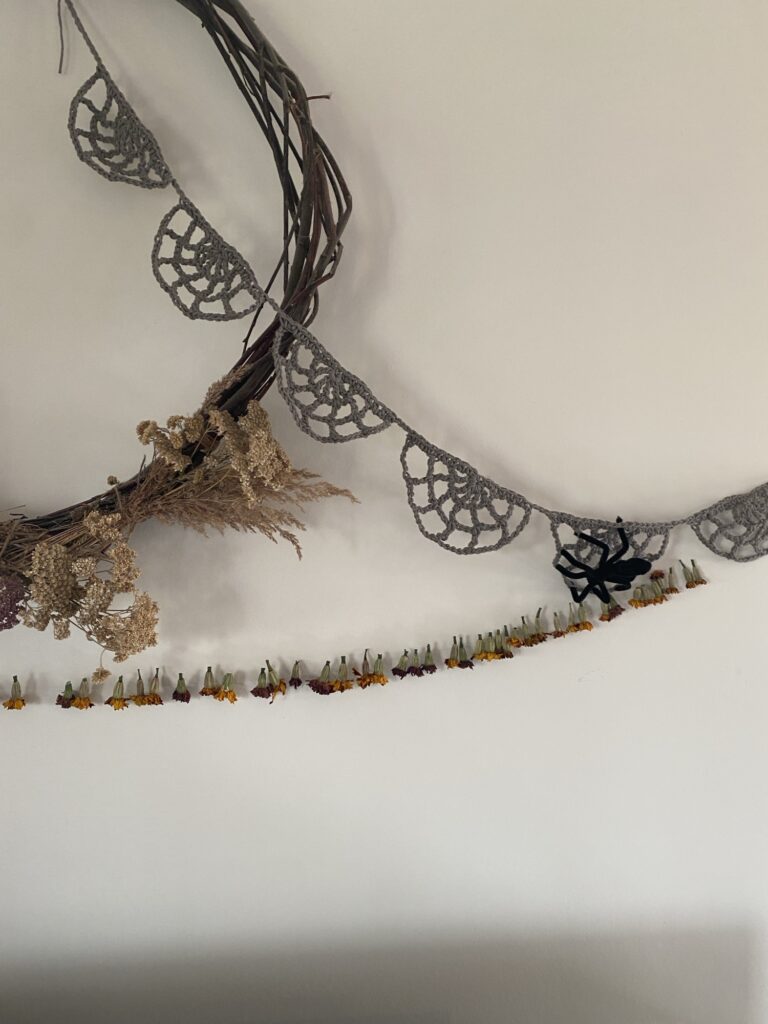
I’ve mentioned we live in a harsh climate and it’s taken me a good decade to learn how to grow here. A method I’ve been working on has been the Miyawaki Method. This is used for planting forests quickly but I’ve been incorporating it in my vegetable gardens by planting native trees, shrubs, fruit trees, flowers and more among moss and mulch from the forest around us. Within the native planting and building the soil I intersperse carrots, potatoes, garlic, onions, beets, and more. Most root veggies grow relatively well here but I’ve had to create microclimates to grow more. So far it’s a work in progress. Flowers that grow well here are root perinials like peonies and aliums but I seed save my annuals like zinnias, cosmos and marigolds. Each year my hope is the seeds and plants grow stronger from generations being grown in our climate. I seed save cosmos for bouquets, I hung zinnia heads for seeds, and as for marigold; my little kids strung them into garlands for seeds and plant saving and my oldest daughter likes to dry marigolds for winter tea.
Garlic and Onions
I have been growing my own variety of garlic for three years now. I’m still not getting large enough quantities to save for winter eating. Most of my garlic bulbs get pulled, separated, dried and replanted before the first snow as I work to build larger stock. This year I saved a few heads of garlic to braid and hang in my living room as an experiment and I’m looking forward to future years of braiding large bundles and hanging them for winter soups and meals.
I’m still learning to grow onions and my harvest was better this year but not great. I braided a few to hang just as I did my my garlic and again I’m looking forward to future bundles of copious onions hanging in my homestead kitchen and living room.
Pumpkins
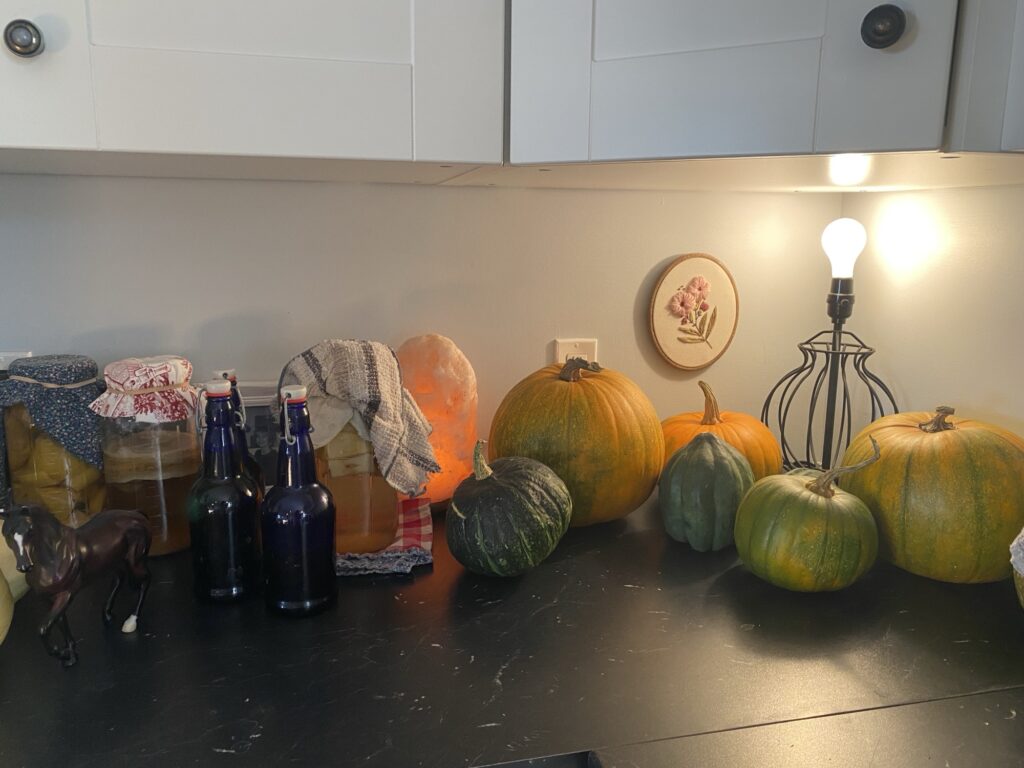
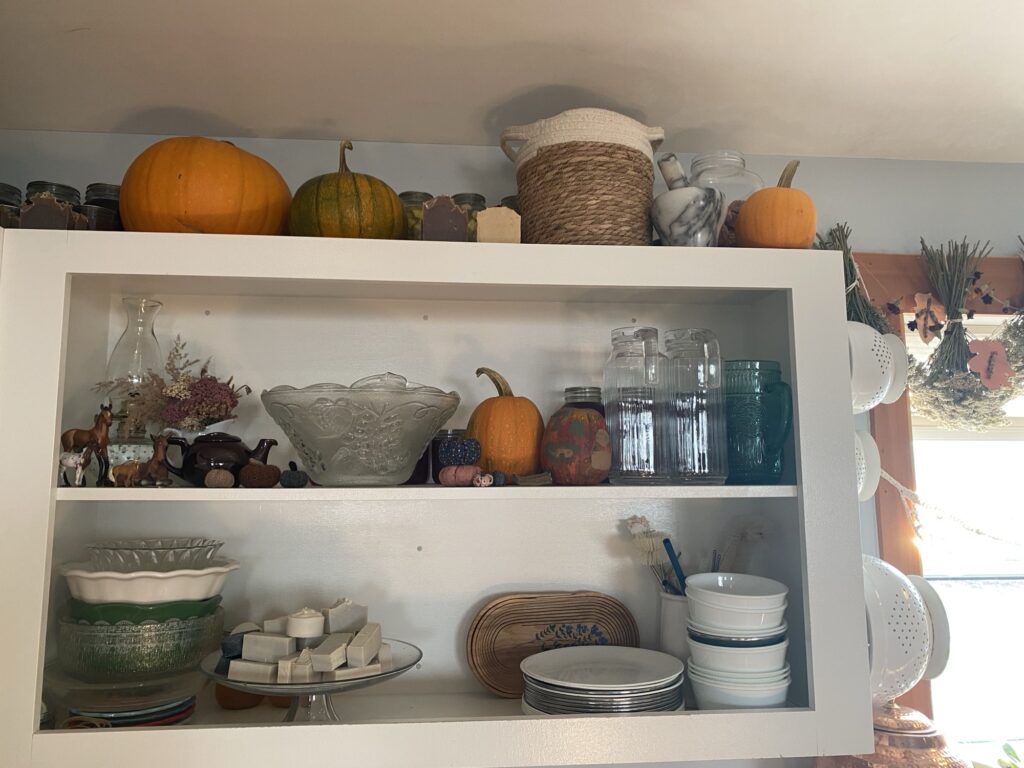
Obviously, pumpkins! One of the few things I can grow here with relative ease. We cut them with a long stem when they’re still green due to frost and approaching snow. I wipe them down with vinegar to mitigate spoilage and place them all over my house. On top of the kitchen cabinets, on the floor in the corners of the living room, the counters, as a table centerpiece. As they ripen they turn a cheerful orange and we use them in all sorts of meals: soups, stir fry, warm or cold pumpkin milk, pumpkin fudge, pumpkin pie and pumpkin pudding. Theres something about using fresh pumpkin throughout the fall that just makes it more cozy and “hobbity”.
Canning
I’m newish to canning. One day I will invest in a pressure canner so I can learn to can the low acid foods; potatoes, carrots, green beans and meat. For this fall, I ramped up my canning skills with all the waterbath canning I could. I just used my large stock pot with a towel at the bottom. I wanted low investment as I worked to learn if this is something I can incorporate in my seasonal schedule. I started canning jellies and jams in pint jars but with 9 kids I quickly found that quart jars for everything is the way to go. I still canned some smaller jars so I can add them to gifts this Christmas, but for our family I invested a few hundred dollars this year in quart canning jars. Canning jars are becoming a hot commodity in Canada, and I was astounded at the expense but chose to look at it as an investment.
When we began clearing our land to build our house I noticed wild Saskatoon berry trees everywhere. My husband selectively cleared a garden area for me, saving these beautful native trees throughout. Now my garden has them interspersed and they’re white and fluffy with blossoms in the spring and heavy laden with dark purple berries in late July. I learned to can with them since I had so many and this year I canned jelly, jam amd syrup. I make a thick sweet syrup to make second ferment kombucha. Something I plan to share on the blog soon.
Wild raspberries; these grow in abundance here so I canned jelly and syrup for kombucha.
This year we found wild blueberries and canned jam and put away a few quarts in the freezer to add to breakfast yogurt.
Apples; my friend has apples every two years and asks me to come pick them for our family. My girls and I picked two large totes and I almost didn’t can them as I was heavily pregnant. However, each morning seeing the totes sitting in my living room and I just couldn’t NOT do something with them; especially after my toddler ate too many and dealt with terrible diaper rashes for a week. Those apples needed to go somewhere so into jars they went. We canned grain free apple pie filling, apple sauce, chutney and juice/syrup. I use the juice/syrup to make a hot cider drink in the winter since fresh cider is too expensive.
Mustard pickles; I still have loads of cucumbers growing throughout my greenhouse so I canned several quarts of my husbands grandmothers mustard pickles.
Not having a pantry or cellar these canned goods are lined up behind the pumpkins on my kitchen cabinet tops. They’re not all visible but some are and it adds to a charm of a stocked fall kitchen ready for delicious cozy winter meals.
Tea
The main tea I put away each year is a blend of raspberry leaves and fireweed leaves.
Both leaves can be rolled and fermented then dried. The fermentation process brings out the flavor and nutrients. I put away literally gallons of this because it’s high in tannins and can be made into kombucha. I can’t tolerate regular black teas such as earl grey or oolong but I can tolerate this lovely herbal apple-y tea of raspberry leaf and fireweed.
When fireweed it rolled, fermented and dried it’s called Ivan Chai. You can read about how we use it and what the benefits are here.
These lovely jars of dried teas are just another pretty fall decor that serves a purpose for winter nourishment.
What really makes my home cozy are the people in it. It is so pleasant to fill it with things we grow and forage for to nourish my family. Living in the great white north I’ve had to learn how to work with winter. Enjoying summer and fall to the fullest and planning to set up my home for a pleasant tolerable long winter.
I hope you enjoyed reading how I did this this year as you create your own unique space for whatever your seasons look like.
Warmest blessings,
Ashley