I used to purchase several varieties of organic teas in bulk online until I read that all black and green tea, unless specifically sourced and labeled, contain high amounts of fluoride. With thyroid cancer and fluorosis I avoid fluoride; natural and synthetic.
When I sourced fluoride free tea, which I’m only aware of one company that produces it, it became too expensive for us to budget in regularly. We enjoy making hot chai tea in winter and kombucha all year round. That’s a lot of tea. We tried to go without it but we definitely missed our kombucha since it’s so bubbly, refreshing, full of probiotics and tastes better than soda. In our opinion.
This set me out to research what I could do to add healthy fluoride free kombucha back into our diet. We were already harvesting some wild edibles for teas, jams and syrups; but I wasn’t harvesting much as I didn’t fully understand what we were doing with these hard earned harvests. Being a working/developing homestead with a short summer we have to be discerning in what we choose to put our time and energy into each year. Since I didn’t know much about the benefits of our wild harvests I let them go; until I read that kombucha can be made from anything with tannins in it. Two wild teas we have growing in abundance here that contains tannins and can be used to make kombucha are: raspberry leaf and fireweed. I’ll share our raspberry leaf harvest and kombucha another day. For today I want to focus on fireweed tea, or rather fermented fireweed tea known as Ivan Chai.
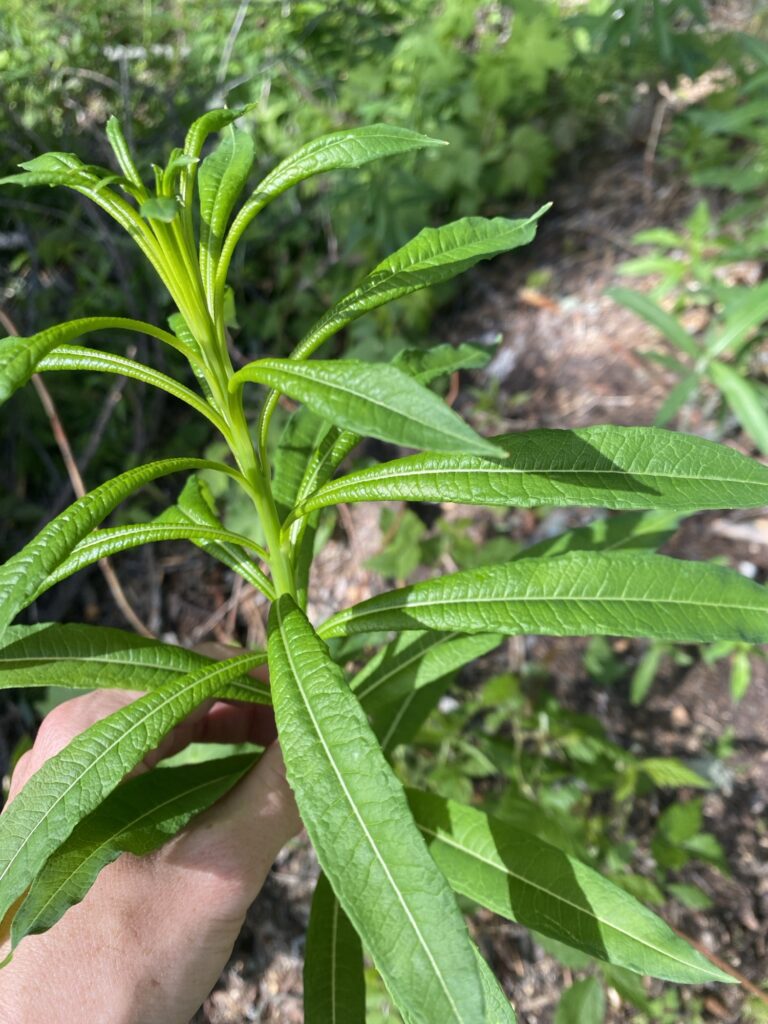
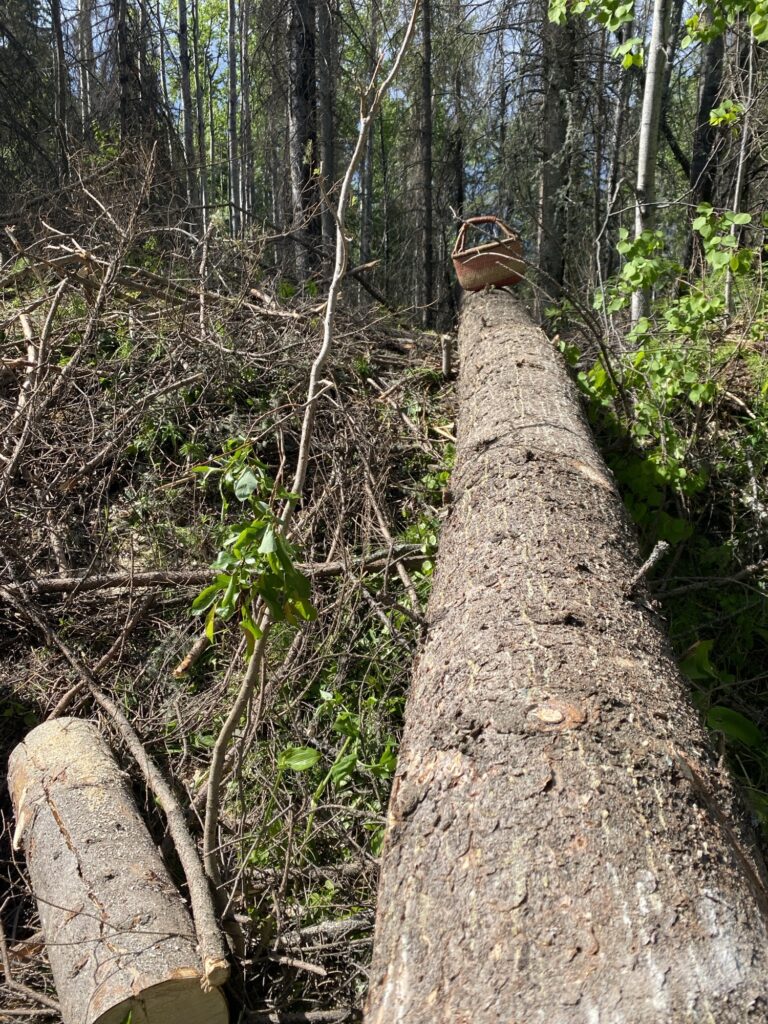
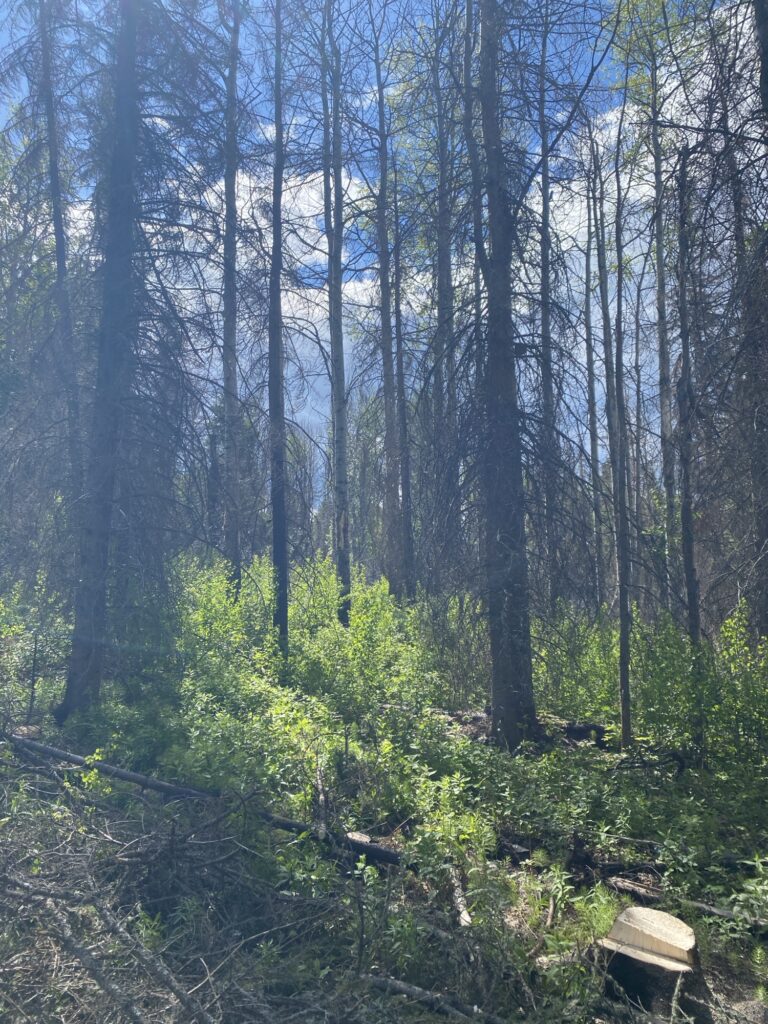
Fireweed grows in abundance here in the northwest. It grows in disturbed areas and more specifically in forests after a forest fire. We contend with fires each year, however three years ago we experienced the worst of it so far. We were surrounded by three large fires less than 10 miles away. That was the first time we found ourselves in such a dangerous path, and the better part of May we were cleaning up slash piles and working in dark orange choking smoke with our bags and anything of importance packed and ready to go. It was a stressful time and we heard of others’ losing their homes. At one point I resigned myself to accept that it might happen and just focus on getting our children out of the area. Blessedly the fires were contained and slowly put out and it began to rain. By June everything was “normal” again. Now those forests hold some useful resources for us. One being fire killed spruce, fir and pine for firewood and the other being fireweed.
Fireweed can be made into a tea or dried as is for future tea. Or it can be fermented for a healthier tea called Ivan chai.
History: Ivan Chai has a really interesting history. I’m not quoting any sources in this article today. Just sharing a tea we harvest and use for a plethora of things on our homestead. I’m not a doctor or historian, simply sharing what I’ve read and heard from others who make and use this tea.
Ivan Chai is from Russia, although I’ve read conflicting opinions on this. Supposedly it was made and given to the Red Army to create some strong resilient soldiers. Hitler apparently got wind of this super drink and hunted down the factory it was being made in so he could bomb it. Whether this is true or not, I’m not sure. It is an interesting story though and the tea contains a lot of benefits.
Benefits: Now I did find a few articles on Pub Med talking about the benefits and qualities of fireweed, but I couldn’t find anything regarding fermenting/oxidizing the leaves. Other resources say Ivan Chai is good for pretty much everything, including increasing a woman’s milk supply. I intend to try as I always struggle with milk supply.
Benefits of Ivan Chai or fermented fireweed tea:
High in vitamin C and minerals; iron, copper, manganese, potassium and calcium.
High in antioxidants.
Reduces stress and anxiety; has a calming effect on the body.
Improves quality of sleep.
Benefits the nervous system.
Anti inflammatory, destroys pathogenic bacteria.
Helps with gut dysbiosis.
Balances hormones in both men and women (this one I find interesting as often herbs that balance hormones work well for one gender and not the other, Ivan chai is unique in its ability to balance hormones in both genders.)
Improves blood circulation.
There are so many more benefits, or at least claims I’ve read from people drinking it for years. Much of its history and benefits seem to be passed down from generations and it would be really neat if more research could be done on this incredible tea.
Flavor and scent: as the tea ferments it gives off a fruity apply scent. I love reaching the drying stage because it fills our house with this lovely natural scent. The taste is fruity and floral but sorta like a lighter earl grey flavor as well.
We’ve been drinking it for several years now and I have noticed that I feel better drinking it in the winter. Our winters are long and harsh, often we are stuck inside after quickly taking care of the bare minimum outdoor chores and I always reach a point of just feeling tired, slow, and despondent. I have noticed the days I drink a hot cup of Ivan chai I feel some of my vitality return as I wait for summer with its sun and soil that always restores me. It could be placebo but I am rather skeptical so perhaps not.
I digress:) Here’s how we harvest and process fireweed into a delicious fruity earthy Ivan Chai tea.
How to make it: begin by harvesting fireweed. Not near roads or places that are sprayed. It’s best to find this in remote meadows and forests if possible.
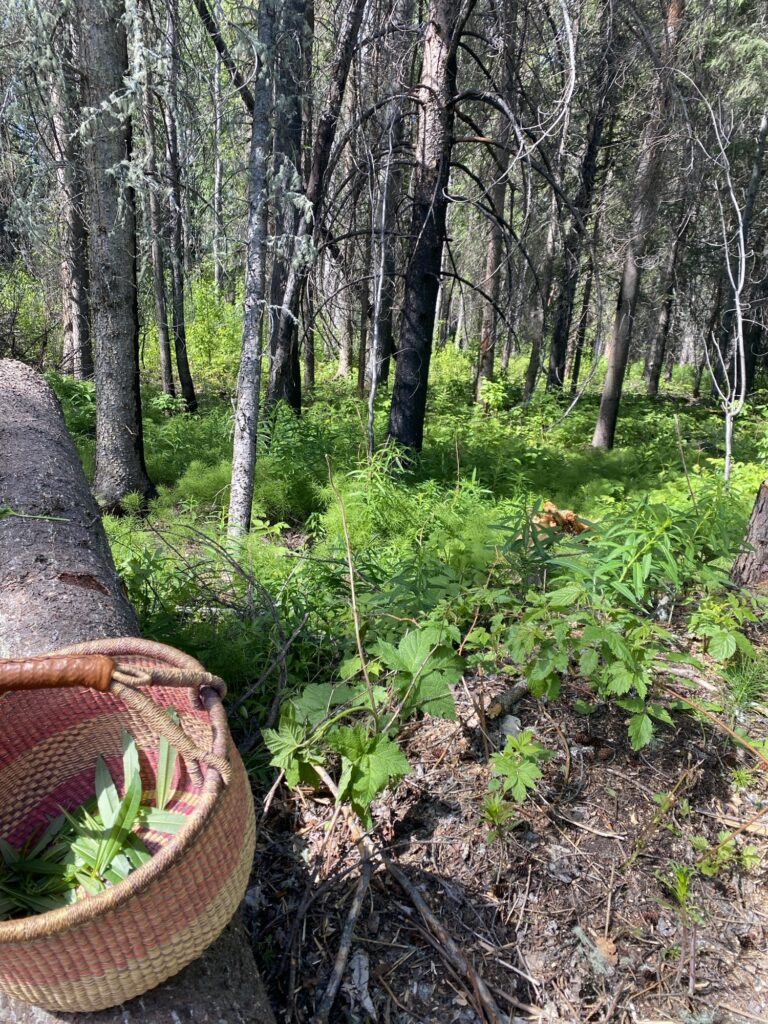
As I harvest the plant, I strip the leaves off the stem and into my basket.
When I researched how to make this tea no one mentioned washing the leaves. I decided to just wash them before proceeding. So I just dump them in my salad spinner and clean with vinegar. Spin the leaves dry then pour them out onto a large towel. Then I wrap the leaves up and leave them in a corner of my kitchen to wilt.
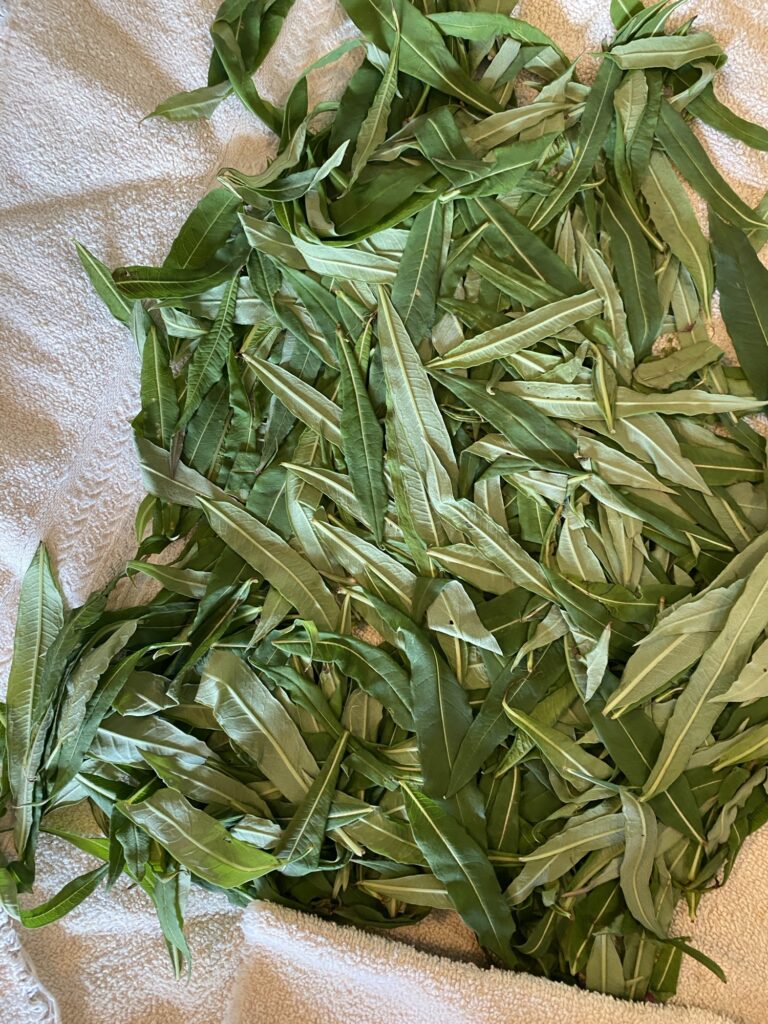
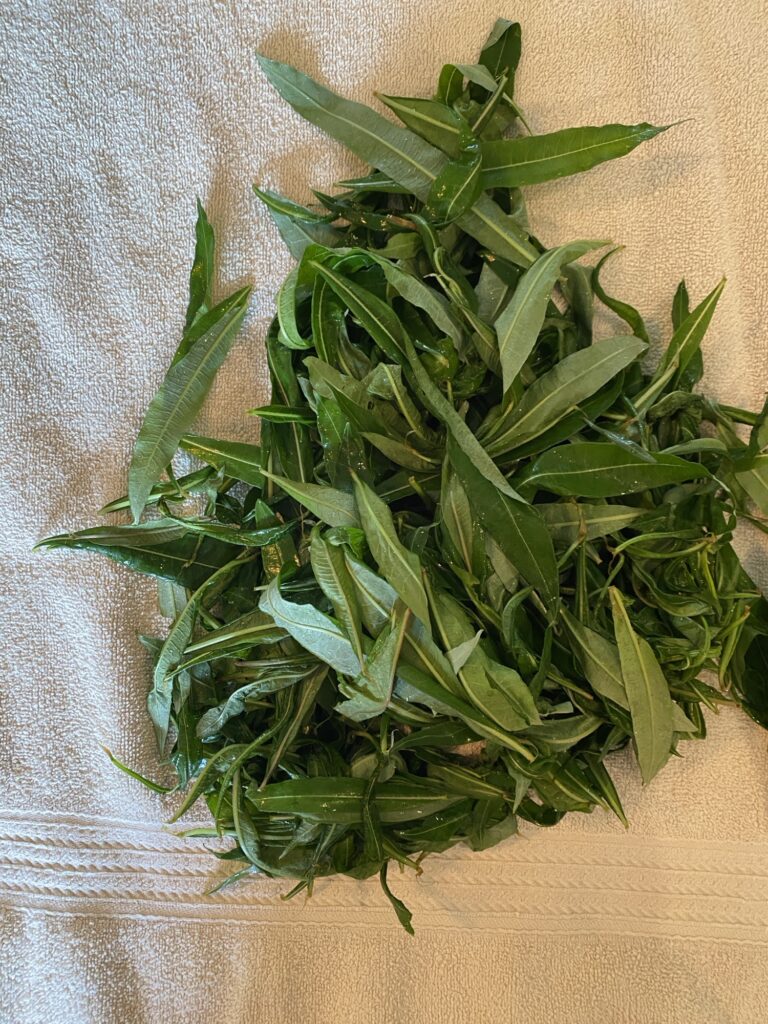
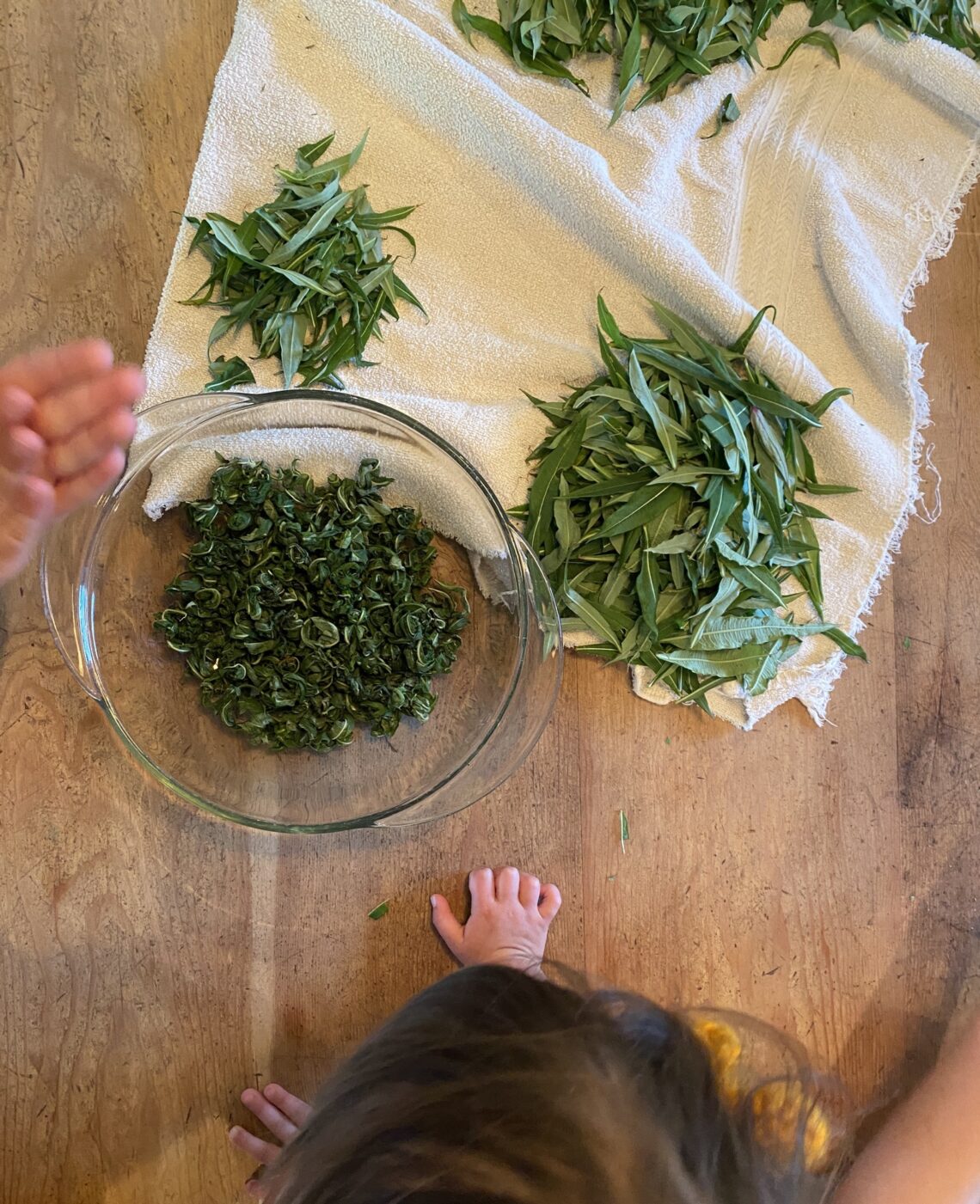
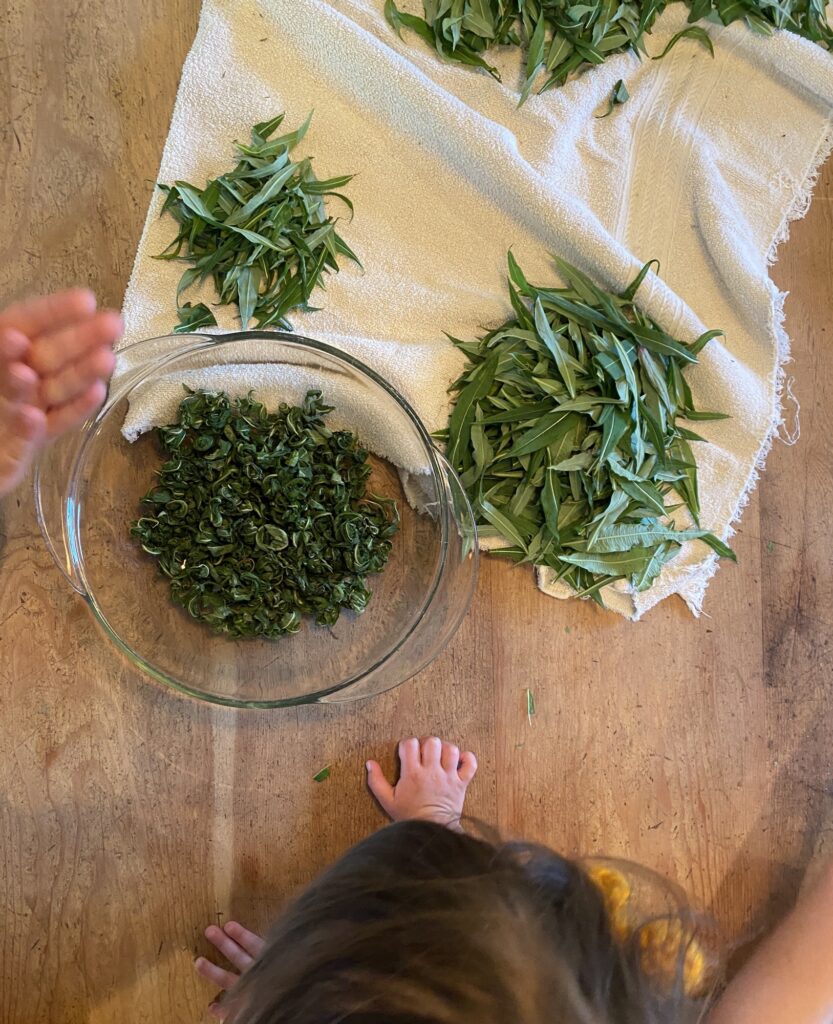
The next day they’re typically wilted and ready to be rolled. This is a great job for kids, I just make sure everyone’s washed their hands because it is a ferment.
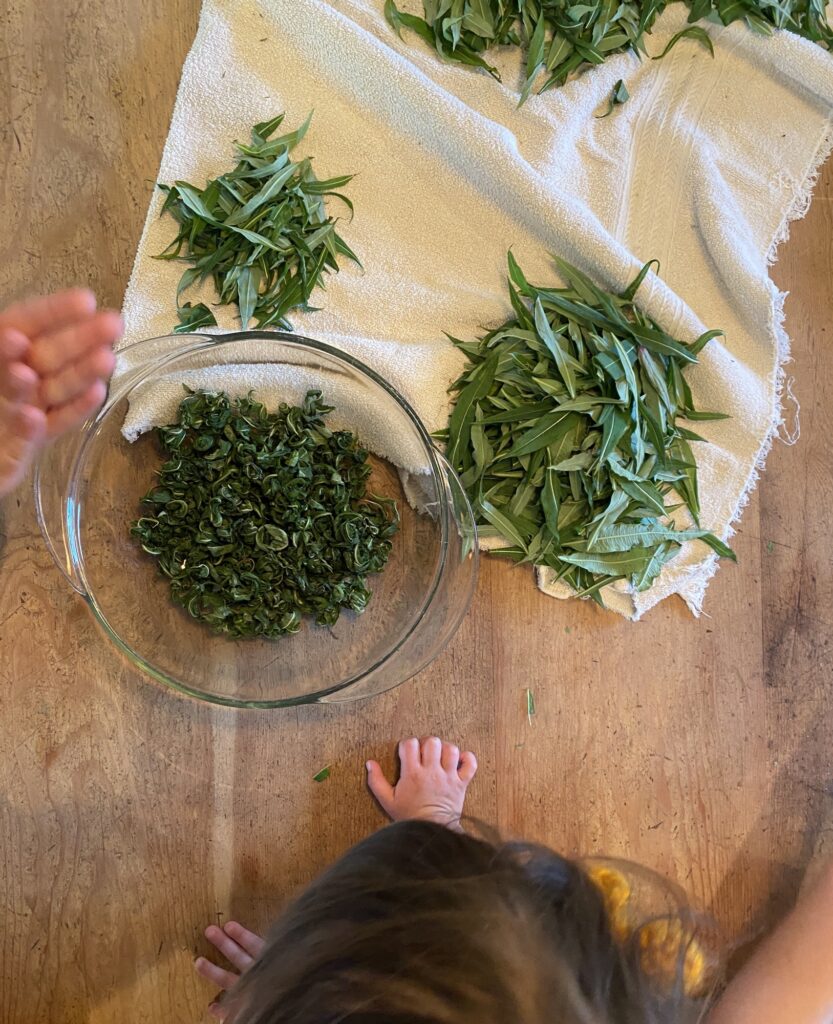
For rolling, I take two leaves at a time, roll them back and forth in my hand, then roll around into a tiny ball. The leaves need to be sort of pulverized to open up the pores so it can ferment. Sort of like kneading or pounding cabbage, if you’ve ever made sauerkraut.
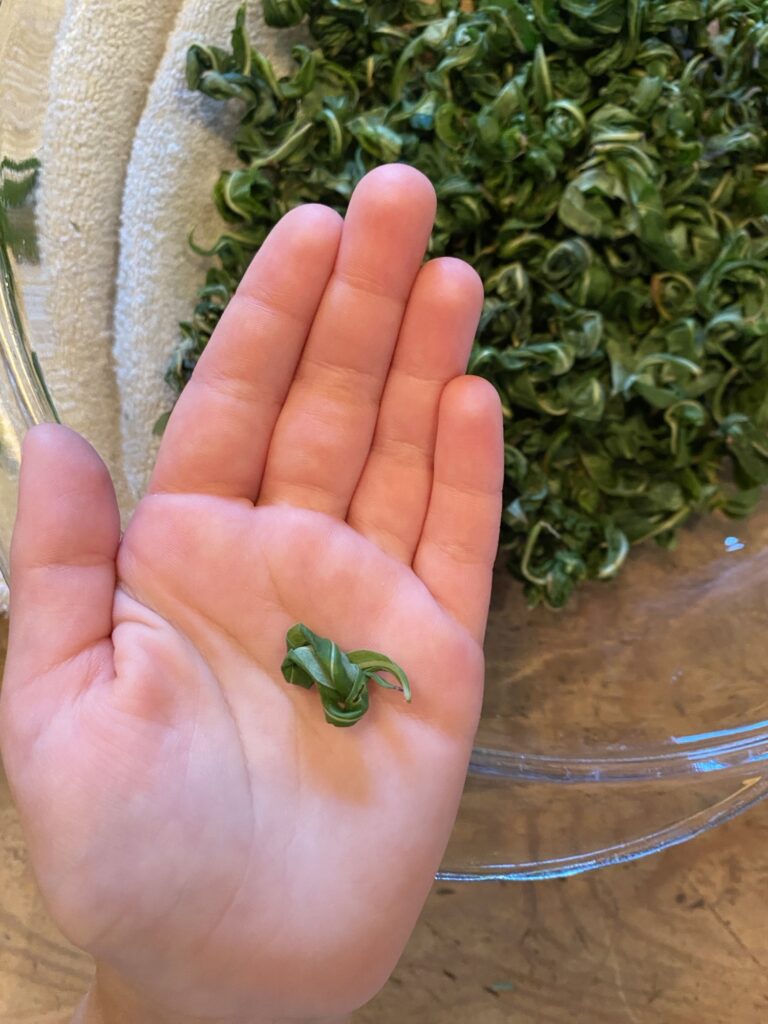
As we crush and roll, we toss them into a glass bowl with a lid. you can use a glass bowl and place a plate on top too. It doesn’t need to be air tight. Once every leaf is rolled, cover the bowl and set it aside to ferment. I allow mine to ferment for two to three days, leaving it on the counter to remind me to lift the lid and fluff or mix the Ivan chai a few times throughout the day. Watch it closely; depending on the warmth of your kitchen it will ferment faster or slower and can grow mold very quickly. If it grows mold, sadly, throw it away/compost it. I’ve thrown out so many batches of Ivan Chai but it’s helped me learn how long to leave it and how to treat the batch with several checks and “fluffs” a day.
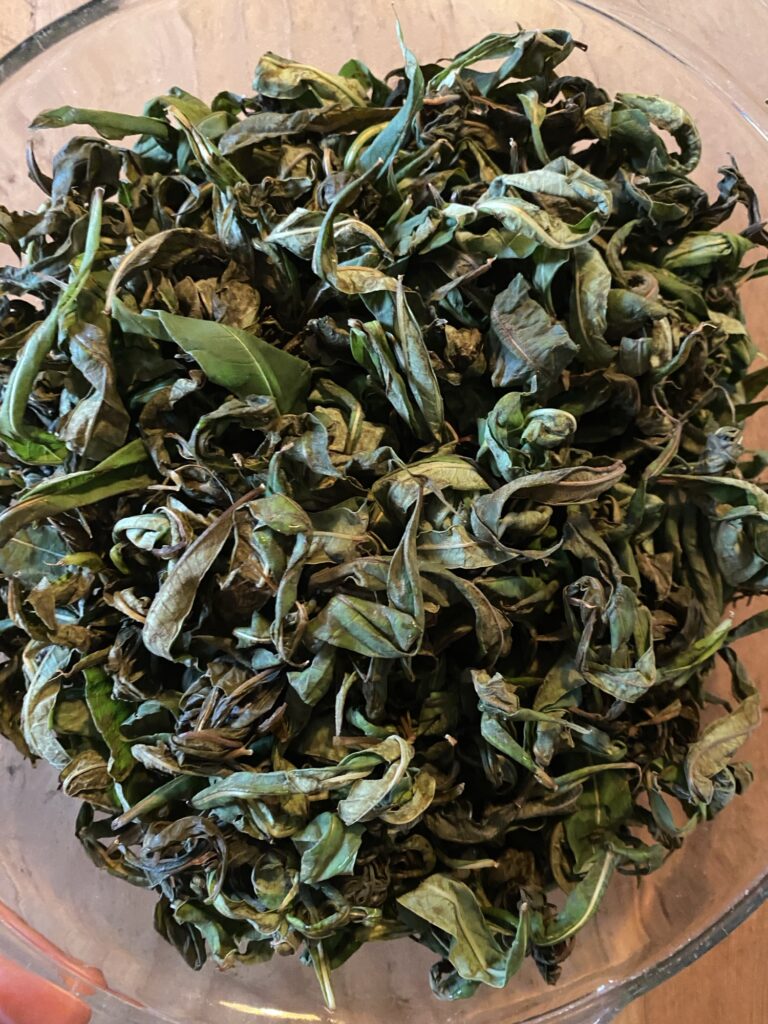
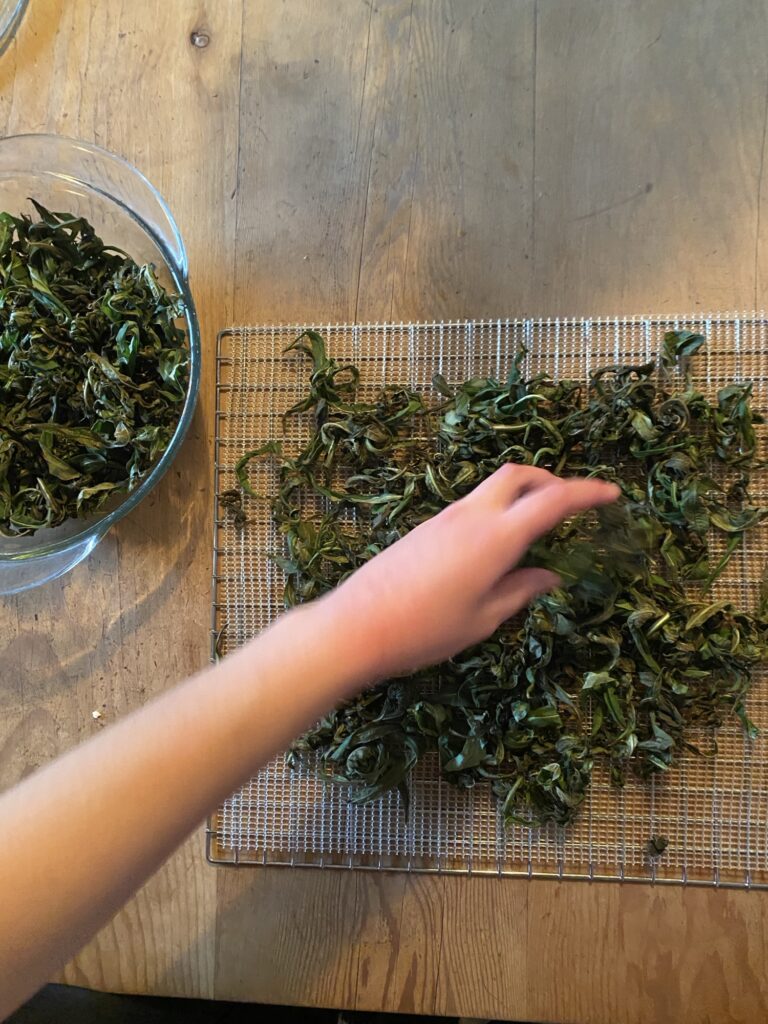
The leaves darken once they’re fermented. The tea should have a floral apple scent. Once it gets to this stage, I spread out on my dehydrator sheets and dehydrate at about 100F for 3 hours or until done. If you don’t have a dehydrator, just lay the tea out on a clean cloth or parchment paper and place in a cool dry place. I used to lay them out on my cupboard tops, checking them each day and fluffing them to be sure they were evenly drying. Once dry, store in a clean glass jar.
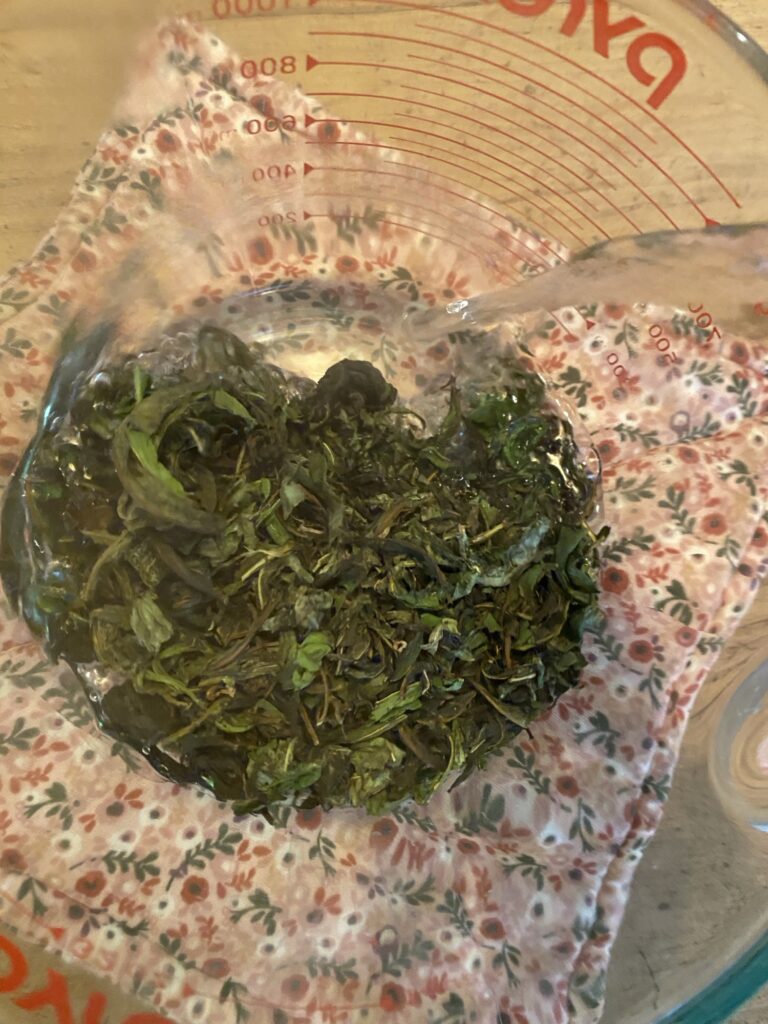
To brew, crumble a few tablespoon in a quart Pyrex measuring cup, fill with about two and a half cups boiling water and steep. Add some honey and pour through a small strainer into your mug. Adding milk tastes delicious too as this tea has a deep full bodied taste similar to earl grey and can handle the creaminess of the addition of milk.
To make kombucha:
35 grams Ivan Chai
1.25 cups sugar
1 gallon water
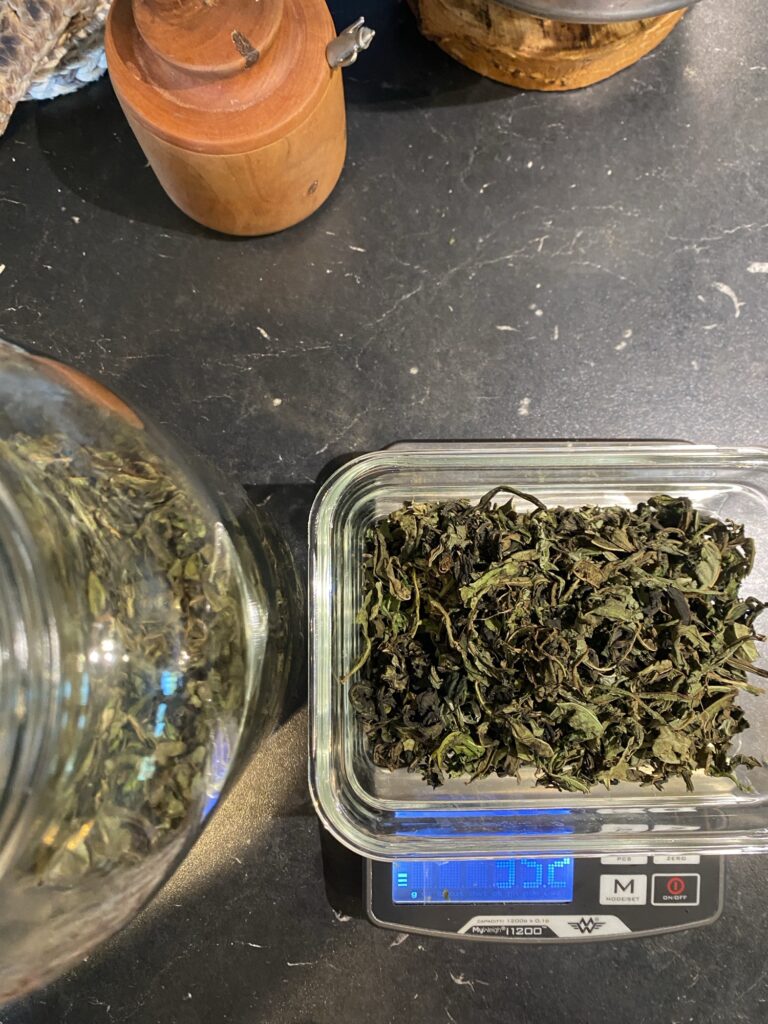
Begin by bringing one gallon of water to a boil in a pot. Preferably filtered water, I found when we lived in town regular tap water didn’t work well for this. We now have a well but it’s high sodium so we use reverse osmosis to filter it and it works great for ferments like kombucha.
While the water is coming to a boil, weigh out the Ivan Chai.
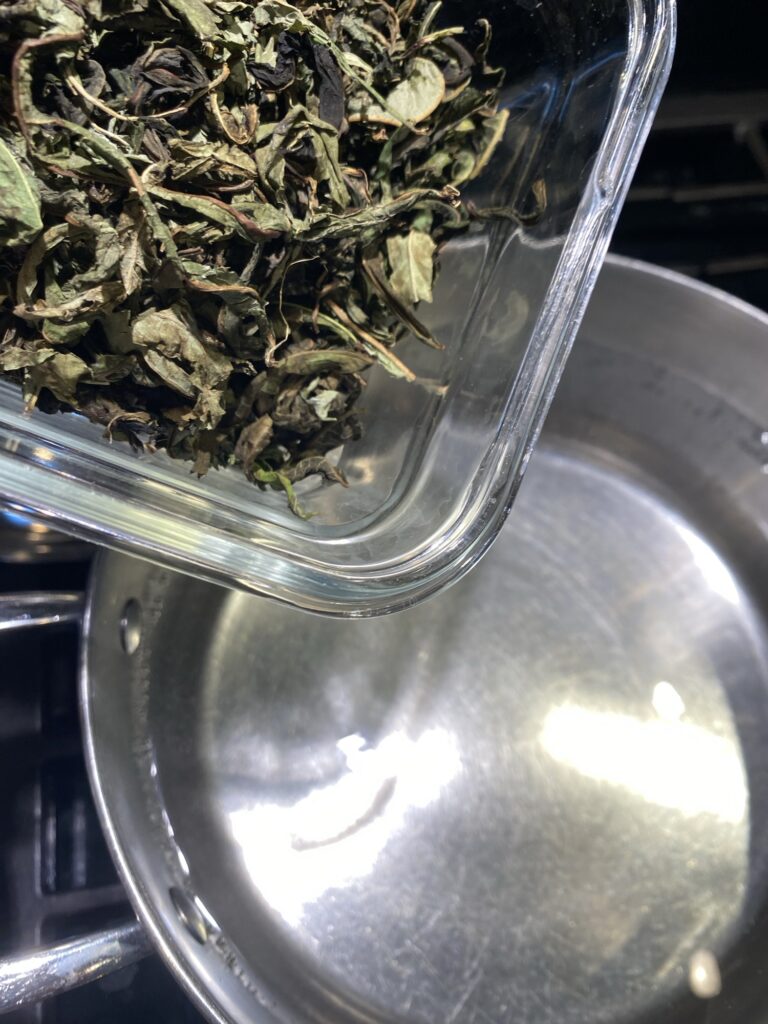
As the water comes to a simmer, add the Ivan Chai.
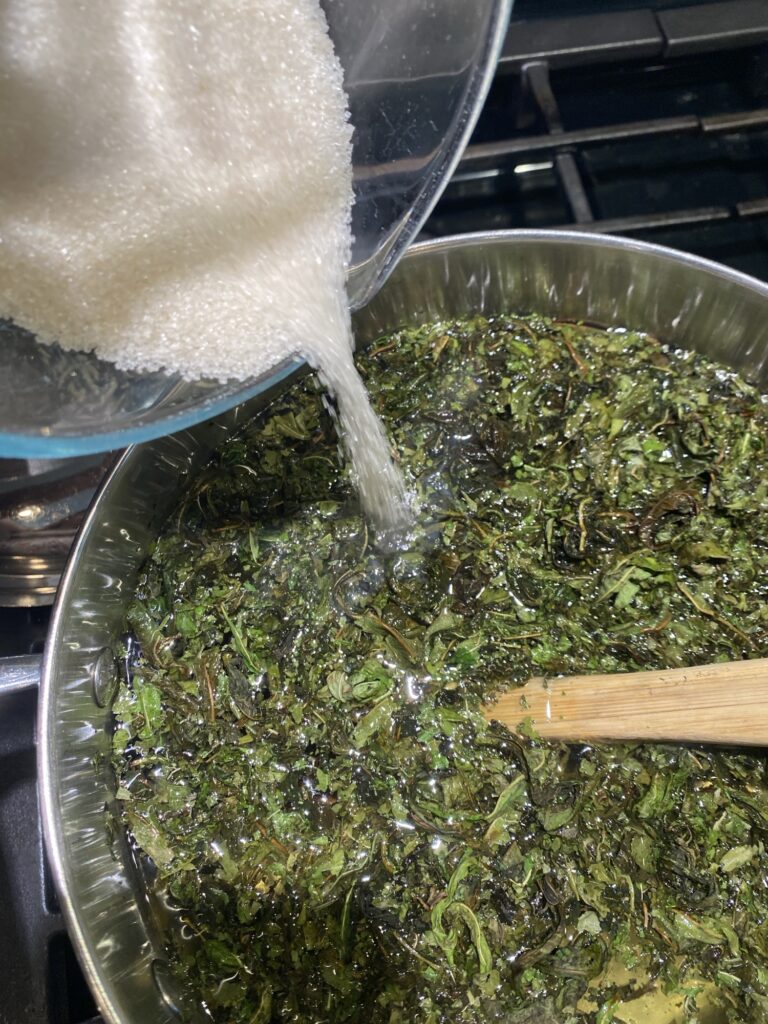
Now add the sugar and stir. I use organic sugar I buy in bulk at Costco.
Once everything is stirred in and the water is simmering, I place the lid on the pot and remove the pot from the heat, set it aside to cool.
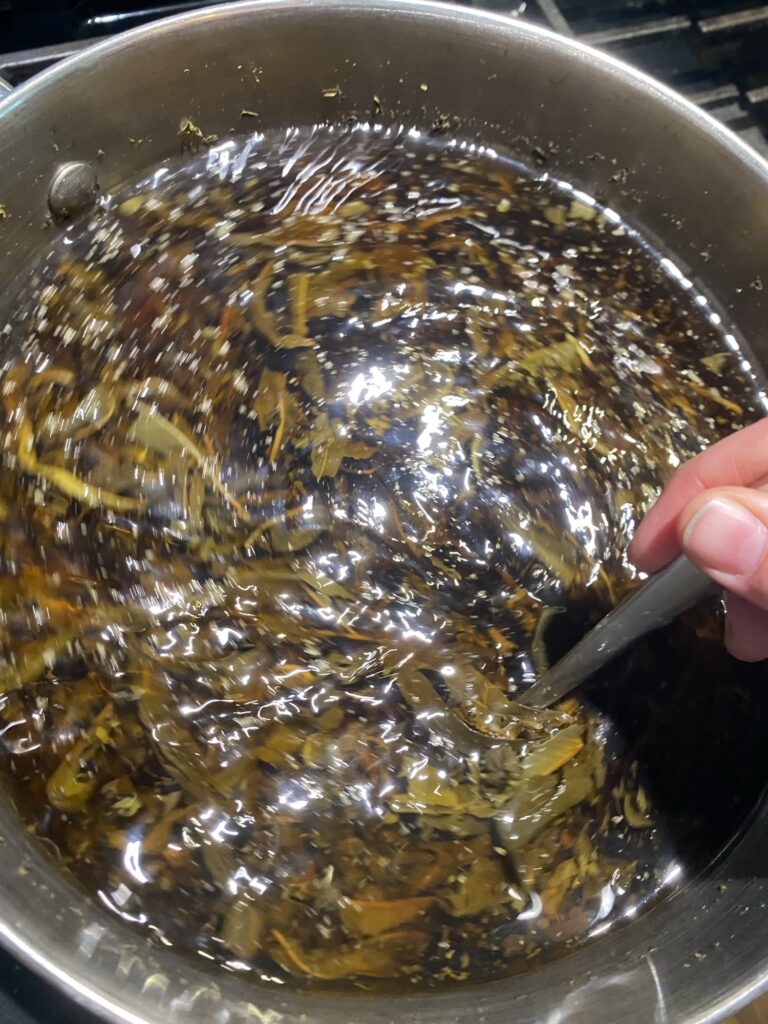
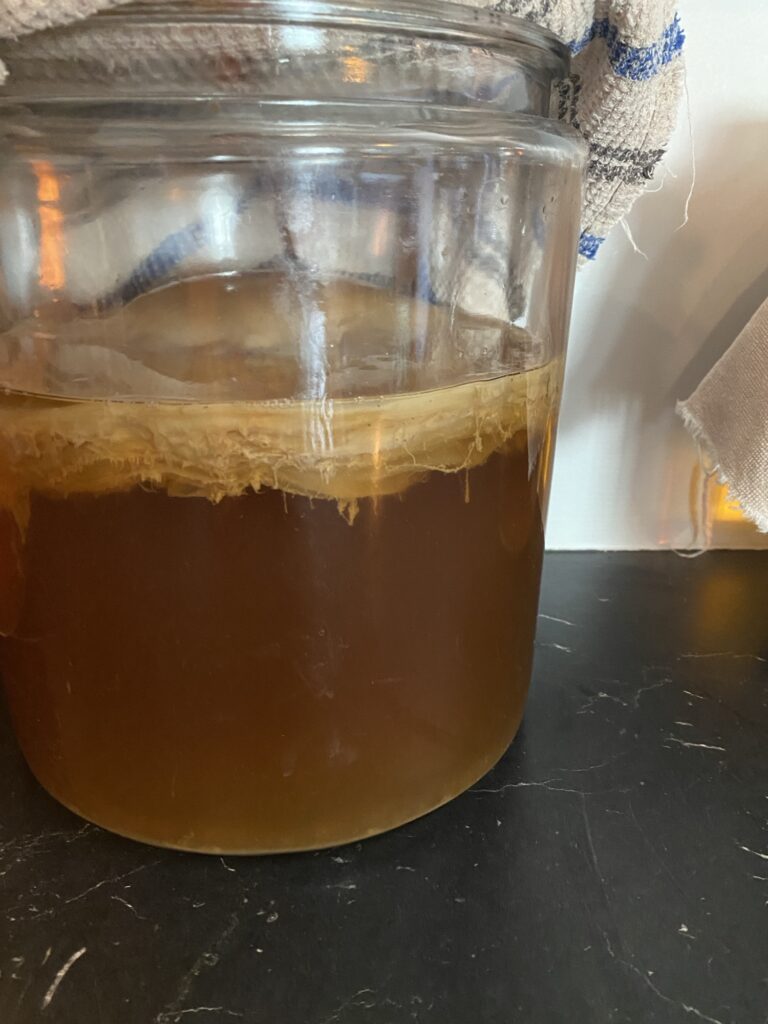
Make sure the sugar has dissolved. Once the tea is cool, strain it through a fine mesh strainer into your kombucha jar with its kombucha and tea.
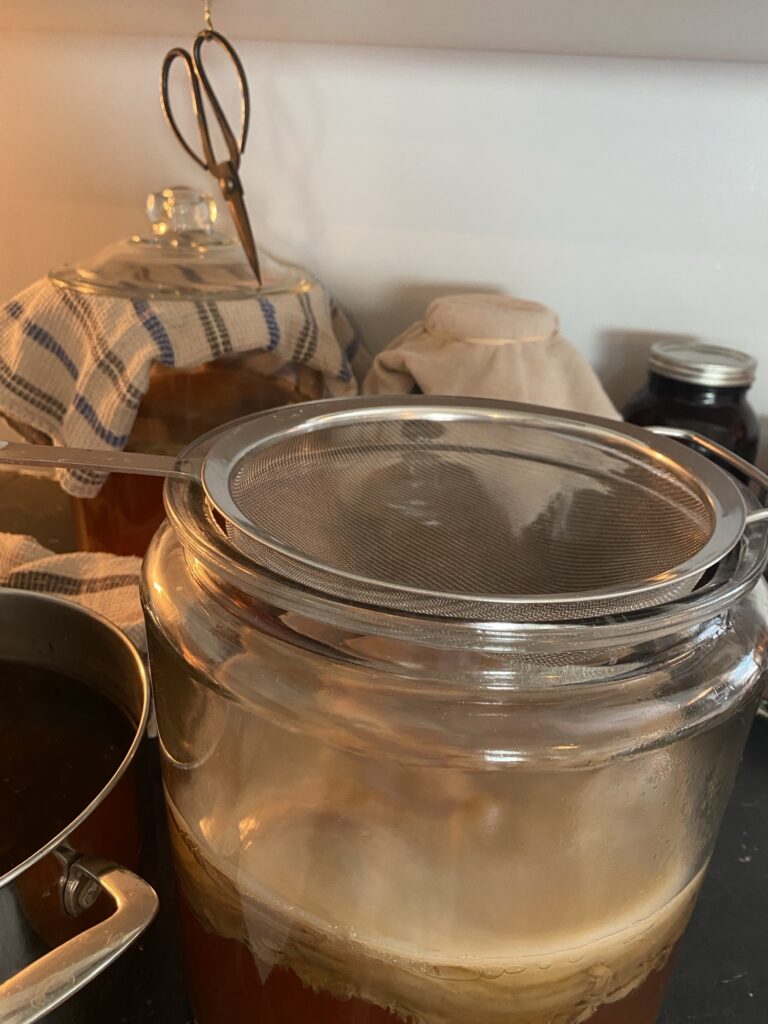
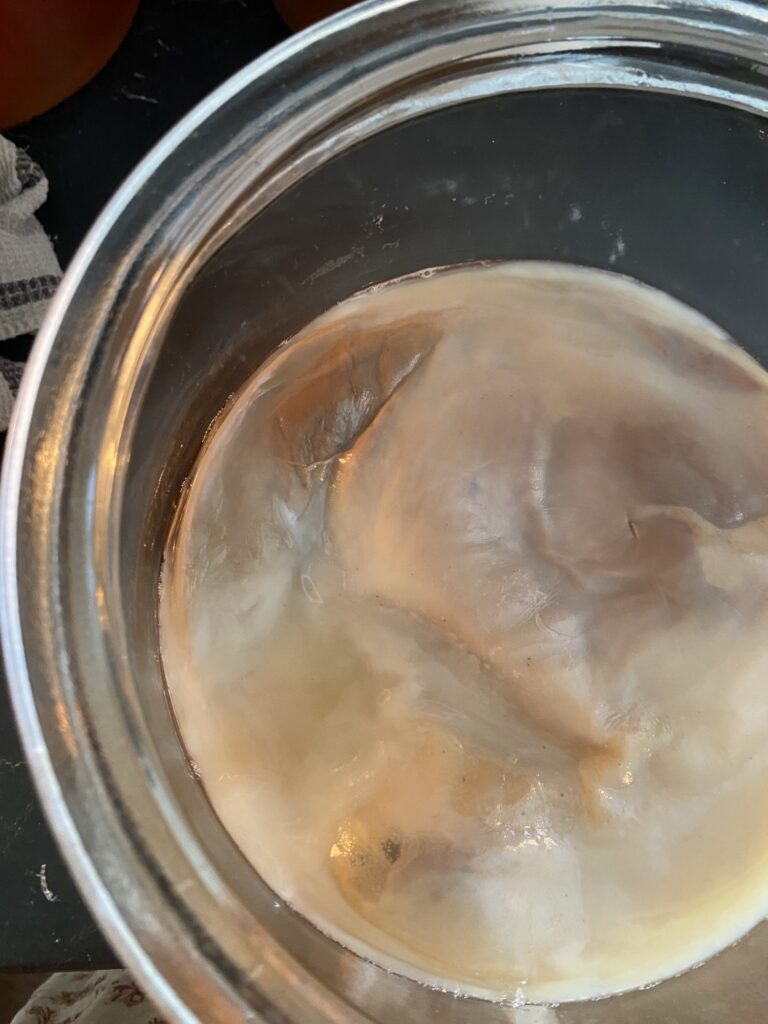
If you don’t have kombucha already, look around in your area to see if anyone makes it. I found my scoby over 12 years ago from a lady in our area. She gave me a piece of scoby sitting in a little kombucha which would be considered the starter. The scoby ferments the tea but you do need some already fermented tea in the jar with the scoby when making more.
You can also buy a dehydrated scoby online as a lot of places sell cultures. Cultures for Health is a place I’ve purchased sourdough starter and kefir grains from, they sell kombucha scobies too.
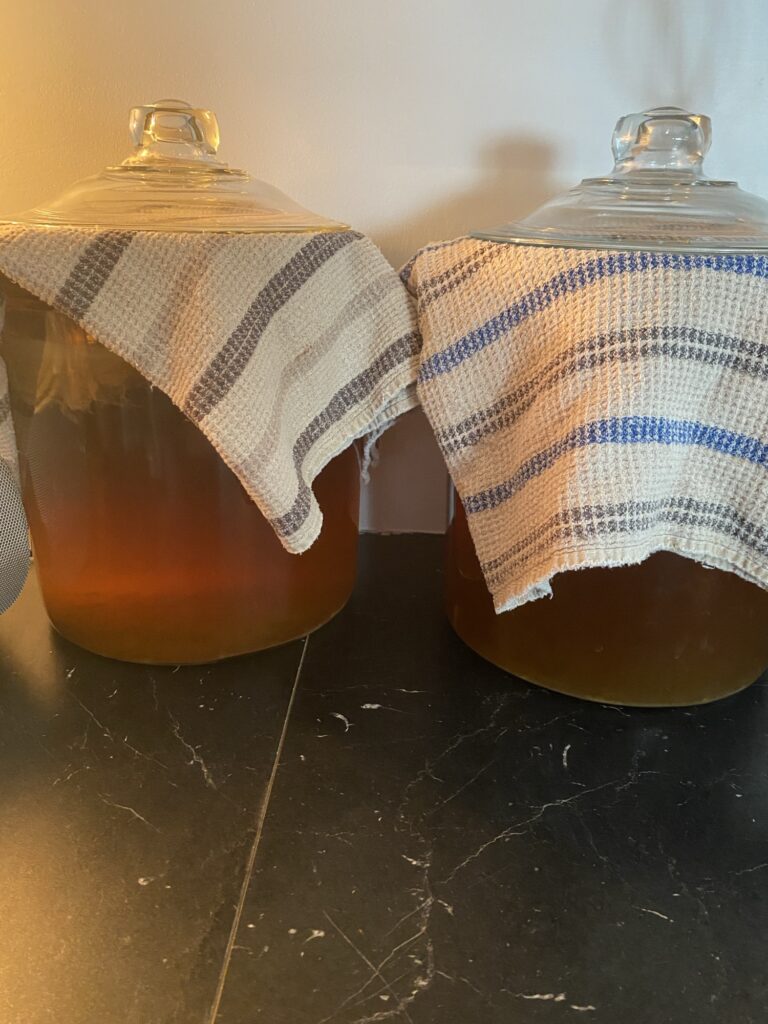
I rarely wash my kombucha brewing jar, as we pour it out to drink it, I just brew more and add it to the jar. I used to wash and boil the jar every time I brewed a fresh batch, and strangely, I had mold issues. I always keep several jars of small batch kombucha with pieces of scoby so that if I get mold or fly infestations (gross I know, but it can happen), I can throw it out and have a back up scoby to start more. After my mold issues i decided not to wash the jar between batches and I have had issues since. My theory is that with time the bacteria inoculates the jar thoroughly and by doing a continuous brew mold cant grow. That doesn’t mean I don’t wash my jars, I wash them probably once a year, I know that sounds wild, but kombucha is a living food and so long as you don’t get mold and give the kombucha yeast and bacteria a fresh supply of food (tea and sugar), it’s full of good bacteria to combat the bad.
Warmest Blessings,
Ashley