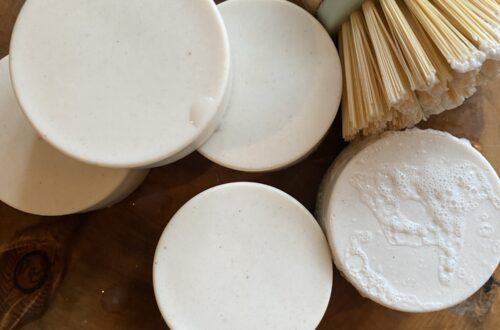
Washing dishes with a solid bar of soap has become my favorite way to wash dishes. I love the art of soap making because it’s simple and replaces every single soap I used to buy.
Dish soap
Shampoo
Hand and face
Body soaps
Cleaning floors, walls, tubs, sinks, and counter tops…
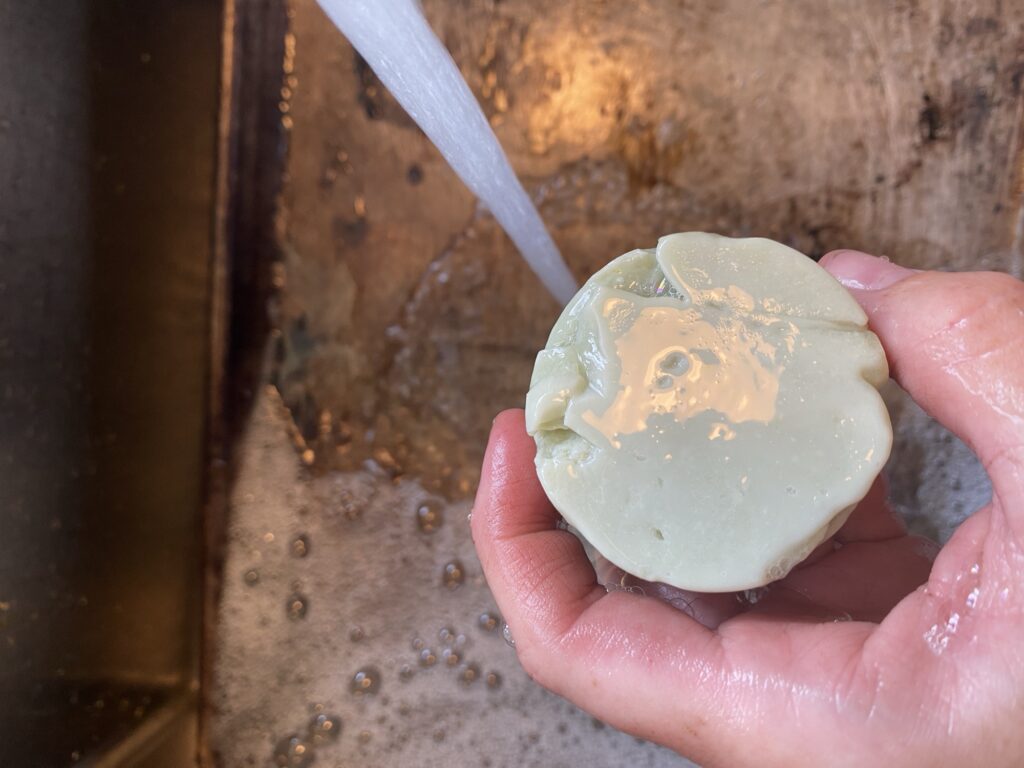
This recipe is made with coconut oil. I have tried SO many recipes with lard or tallow and I find that when it comes to dish soaps and cleaning soaps, a percentage of coconut oil is needed to create a harder, longer lasting, degreasing bar of soap.
Tallow, while a preferred fat, tends to create softer slimier bars of soap. It’s a great fat to use for shampoo bars, face bars and over all body bars because it creates a moisturizing lather that doesn’t strip the skin. Today however, I’m sharing a cleaning bar that can be used for dishes, counters, floors, scrubbing sinks and toilets… and in that case it’s best to use soap that doesn’t contain extra or leftover fat in it as it can clog drains or not wash off the thing being cleaned.
I do have a tallow based dish bar recipe though that you can find here. It’s also a great beginner soap recipe with the list of equipment and safety steps to making soap.
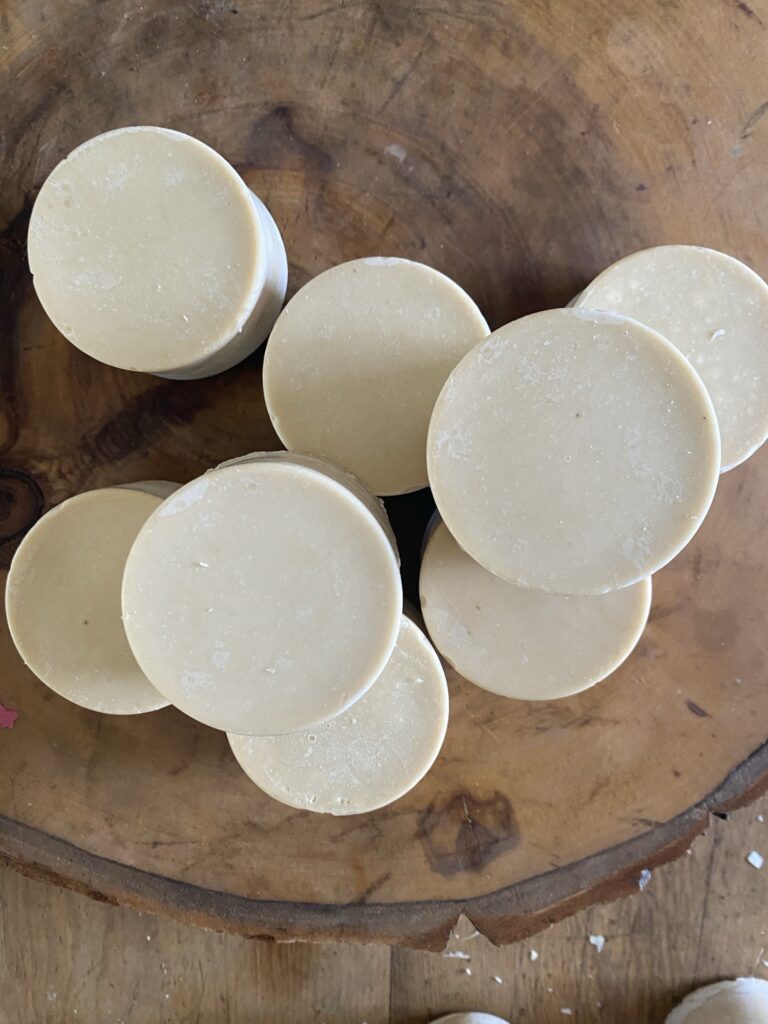
I have a created a variety of kitchen bar soap recipes but for today I’m sharing the first recipe I ever learned to make. Made fully with coconut oil, this is a very hard bar of soap, super degreasing. This is the perfect recipe to learn with. It’s great for washing dishes or creating a sudsy bucket of wash water to clean counters, walls and floors.
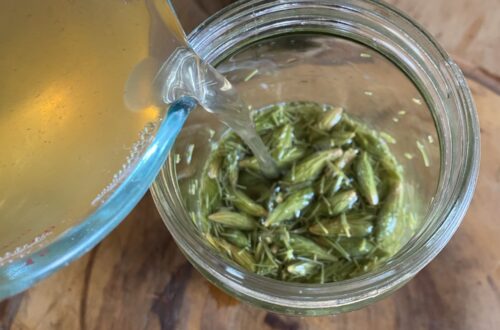
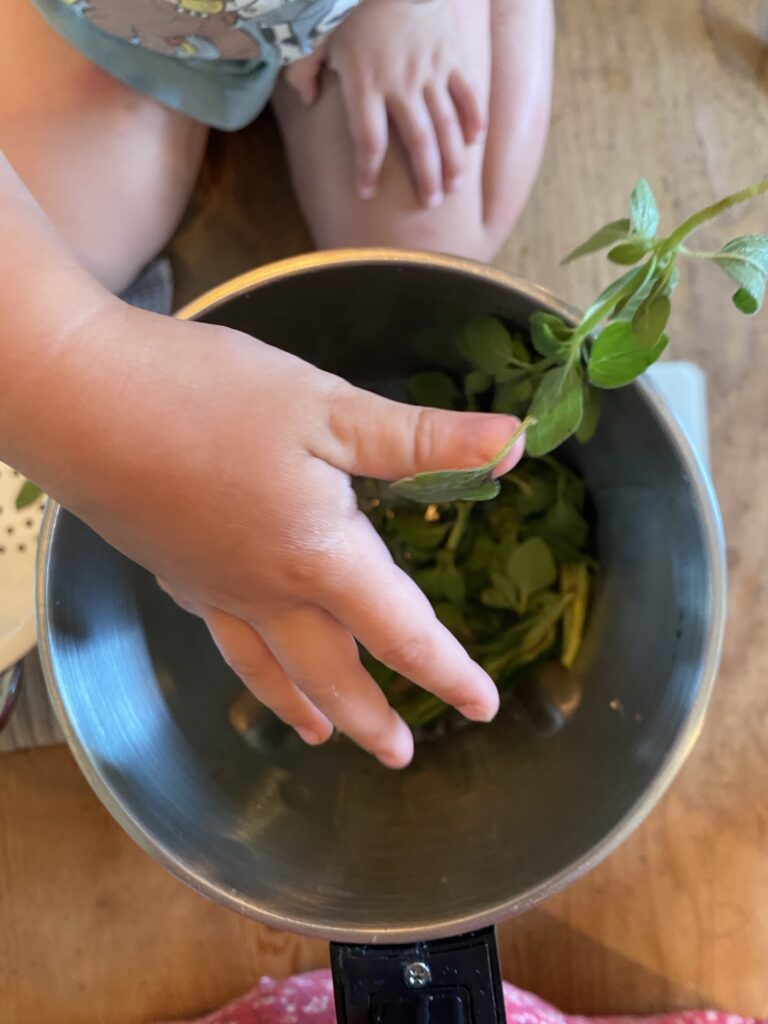
First step: infusing the coconut oil. This is optional but I wanted to try an herbal infused dish bar with herbs from my greenhouse. I have an oil infusing machine that heats and pulverizes the herbs to blend and infuse in the oils. You could also crush the herbs and put into the oil and gently heat on the stove for an hour.
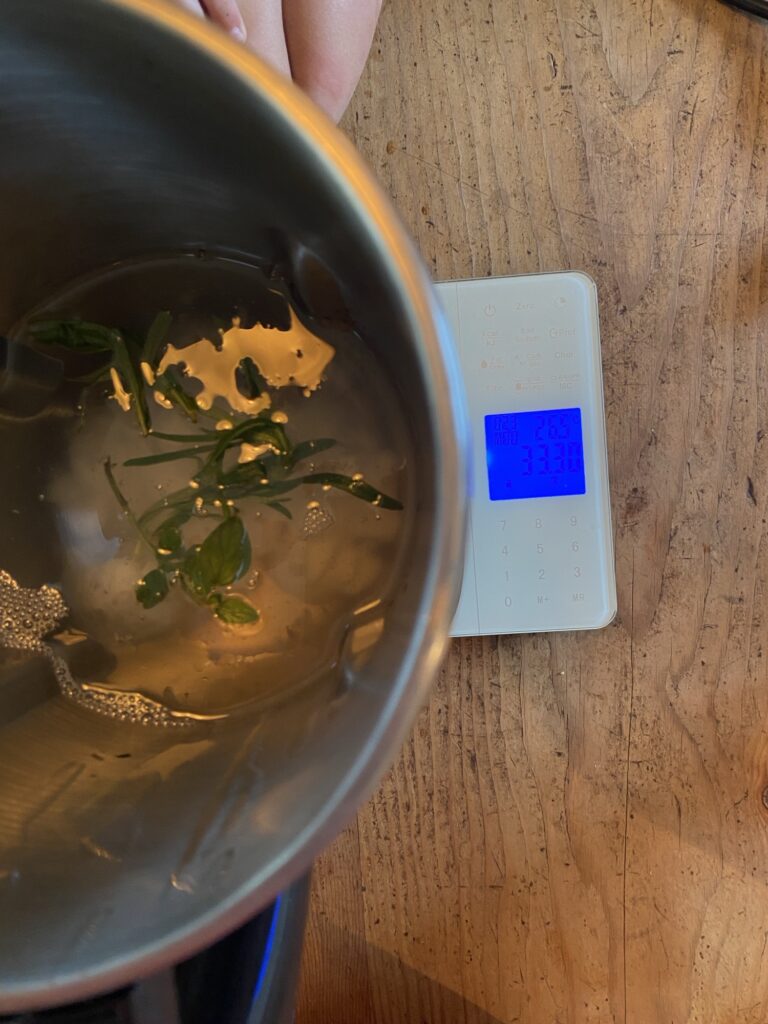
Weigh out 33 ounces of coconut oil then add herbs. I used oregano, sage and rosemary.
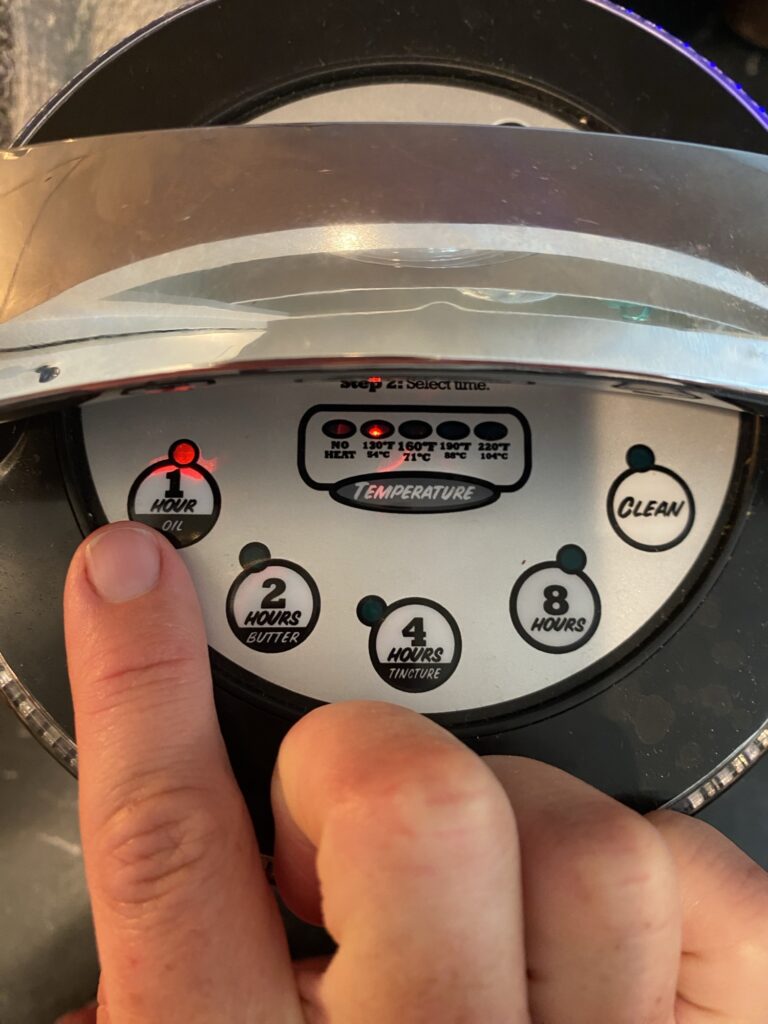
This is the top of my oil infuser. I set the one hour setting at 130F.
Once my oil is done infusing I proceed to make my soap.
Degreasing Dish Bar
33 ounces infused coconut oil
12 ounces of water
5.9 ounces of lye
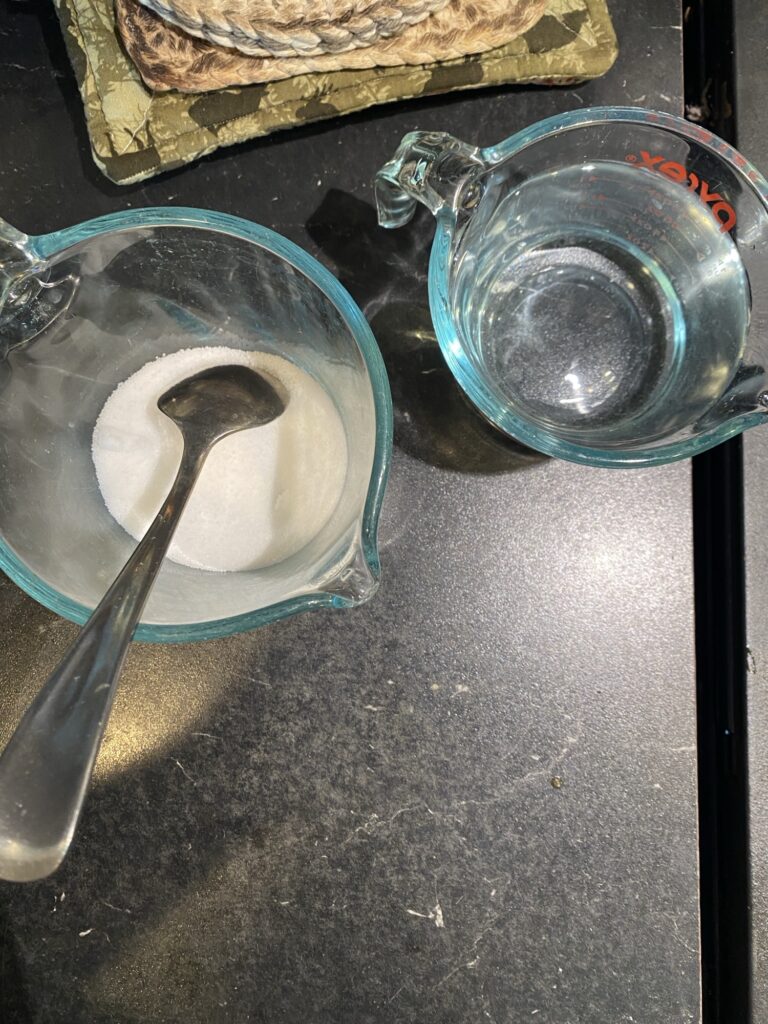
Carefully weigh out the lye. Set aside. Weigh out the water.
I mix my lye and water under my range hood to ensure I’m not breathing in the fumes. You could do this outside or near an open window. Either way, just be sure not to breathe the fumes in and ALWAYS pour the lye INTO the water. Not the other way around.
I pour my lye very slowly, stirring in a little at a time until all of my lye is stirred into my water. Set it aside to fully dissolve.
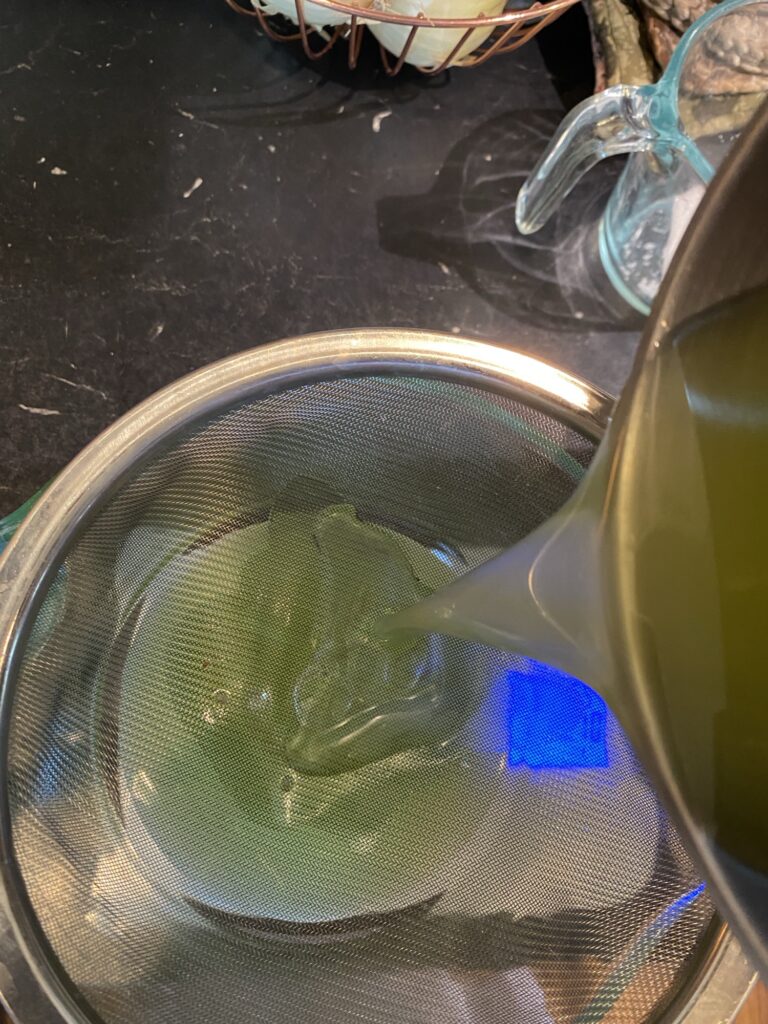
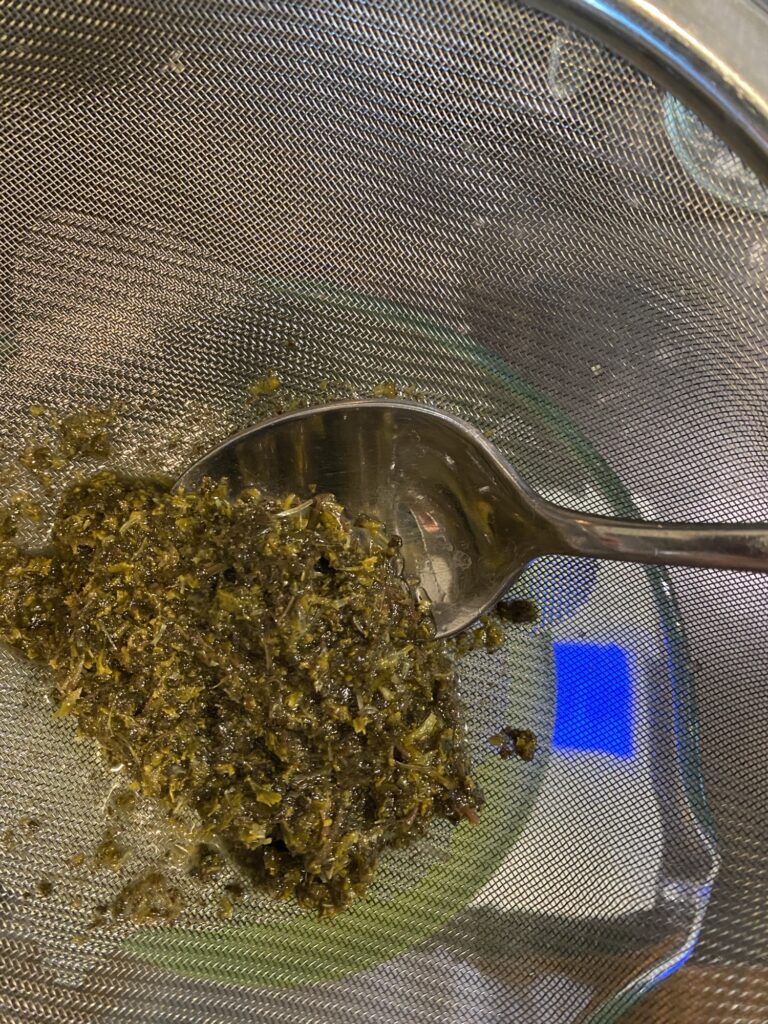
While the lye is dissolving strain out the herbs from the coconut oil. I just do this through a fine mesh sieve into the bowl I intend to mix my soap in.
Place the empty bowl on the scale. Zero out the scale. Now strain the infused oils into the bowl, pressing the herbs to get as much oil out as possible. It may not come to a full 33 ounces, you may need to to add a little more coconut oil, just be sure you have 33 ounces of coconut oil in total.
For this recipe, I don’t typically check my oil or lye temps. You can if you prefer but for a basic cleaning bar, I just don’t bother with this step. So long as I’m bringing my oils to trace before pouring into my molds, it will go through a gel phase as it sets up, which adds the hardness of the bar.
If you want to add essential oils to this, now is the time to weigh or measure those out. When I add essential oils to this I aim for about 1/2 to 1 TBSP of combine oils.
Oils that work great for cleaning and disinfecting are: clove, orange, tea tree, eucalyptus radiata, lemon.
You could choose any oils you prefer though.
Now that everything is weighed and measured out it’s time to mix the lye solution into the oils.
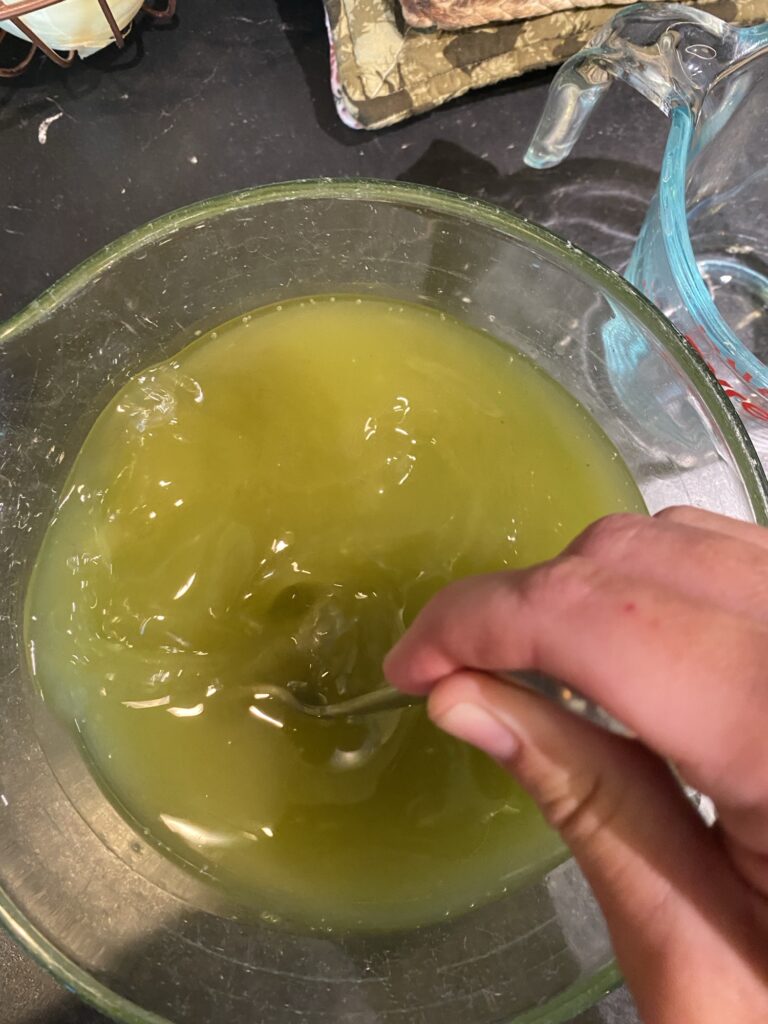
Slowly stir the lye solution into the oils. I like to stir for a few minutes before switching to my immersion blender.
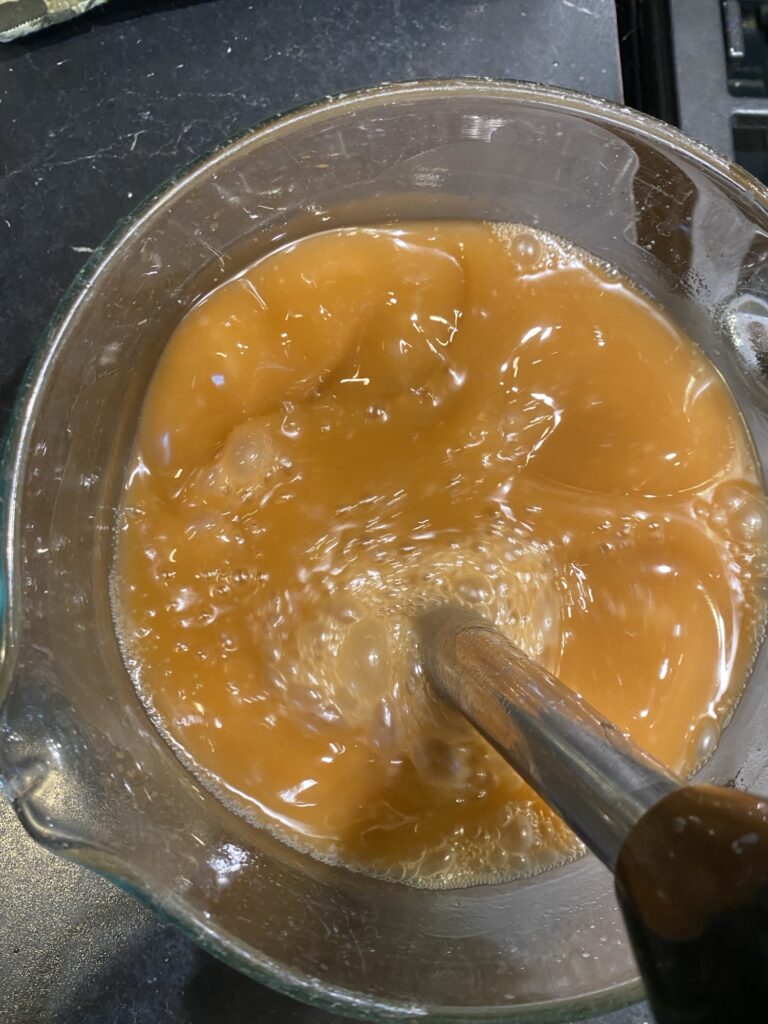
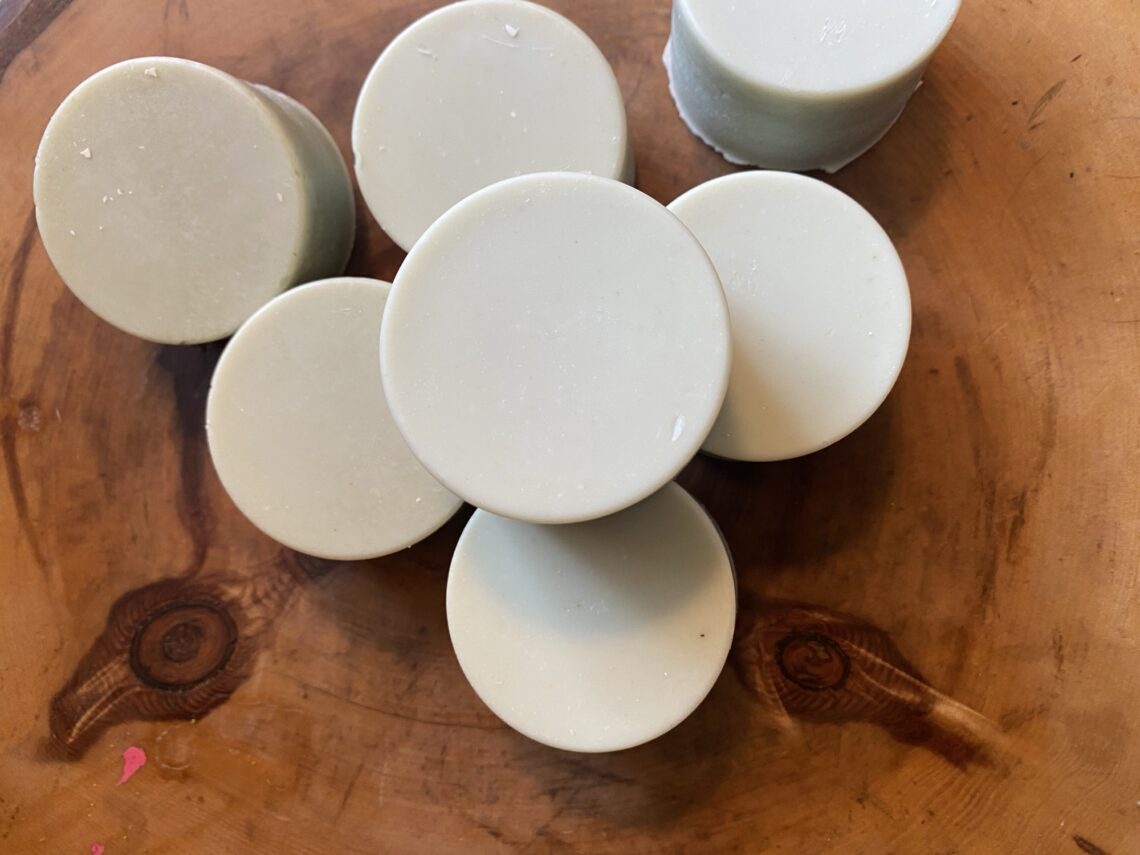
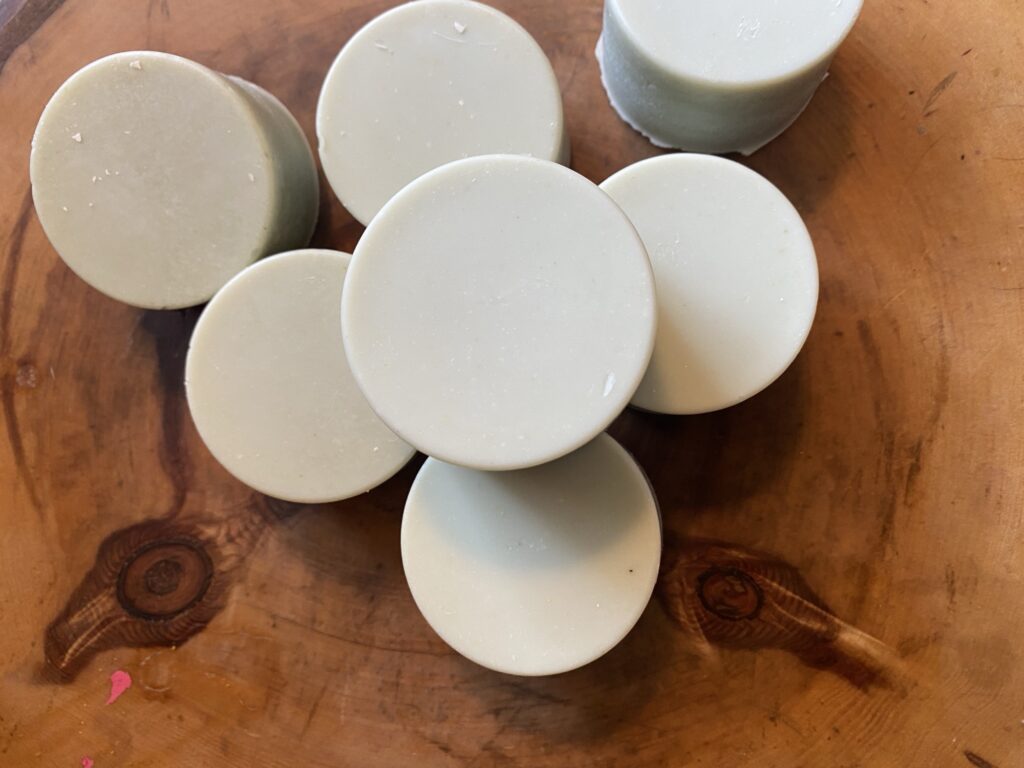
Because I didn’t cool my lye solution or freeze it, my herbal infusion burned just a bit, turning this orange color. That’s ok if that happens, once the soap sets up it turns back to a pretty herbal green color.
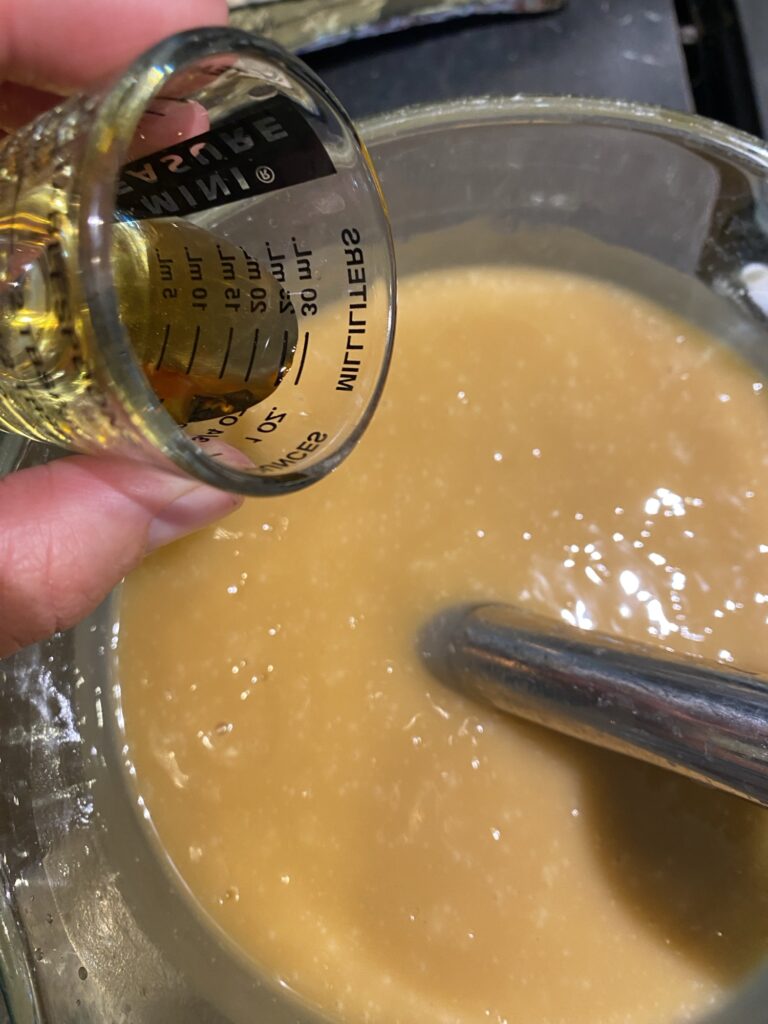
Once you reach trace, add the essential oils.
Mix well.
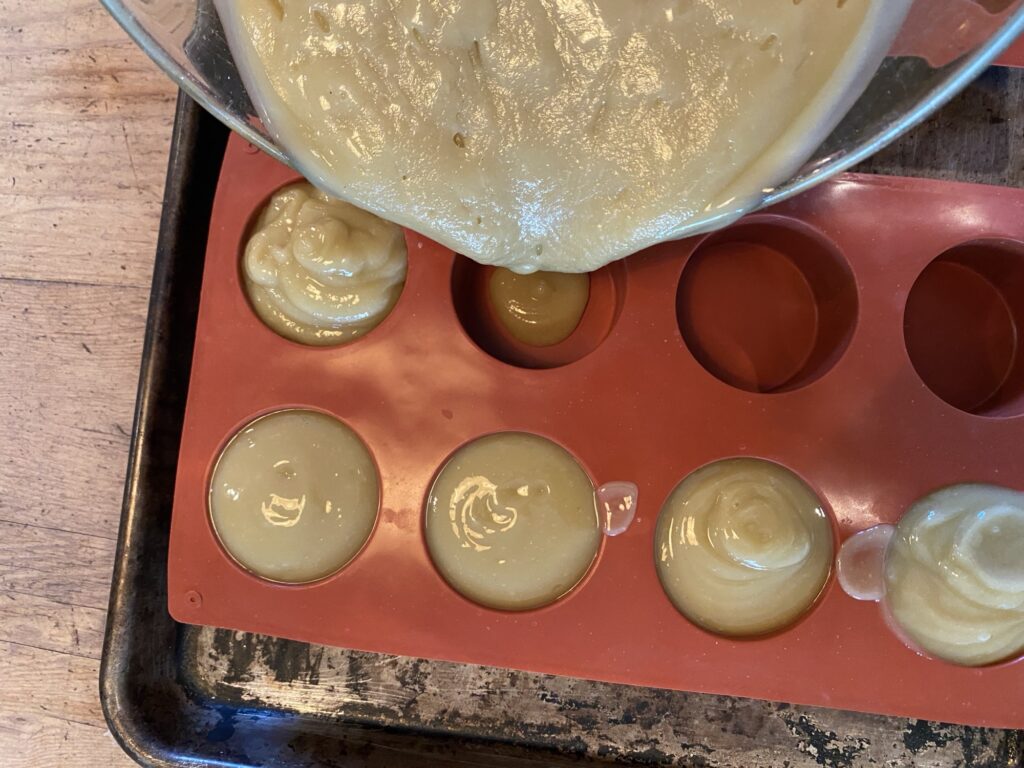
Now pour into mold/molds. I’m using these round silicone molds. Anything can be used as a mold so long as you can pop the finished soap out of it. When I first began making soap I lined a glass bread loaf pan with parchment and used that. You could use cardboard milk cartons cut open or cardboard boxes cut down to size.
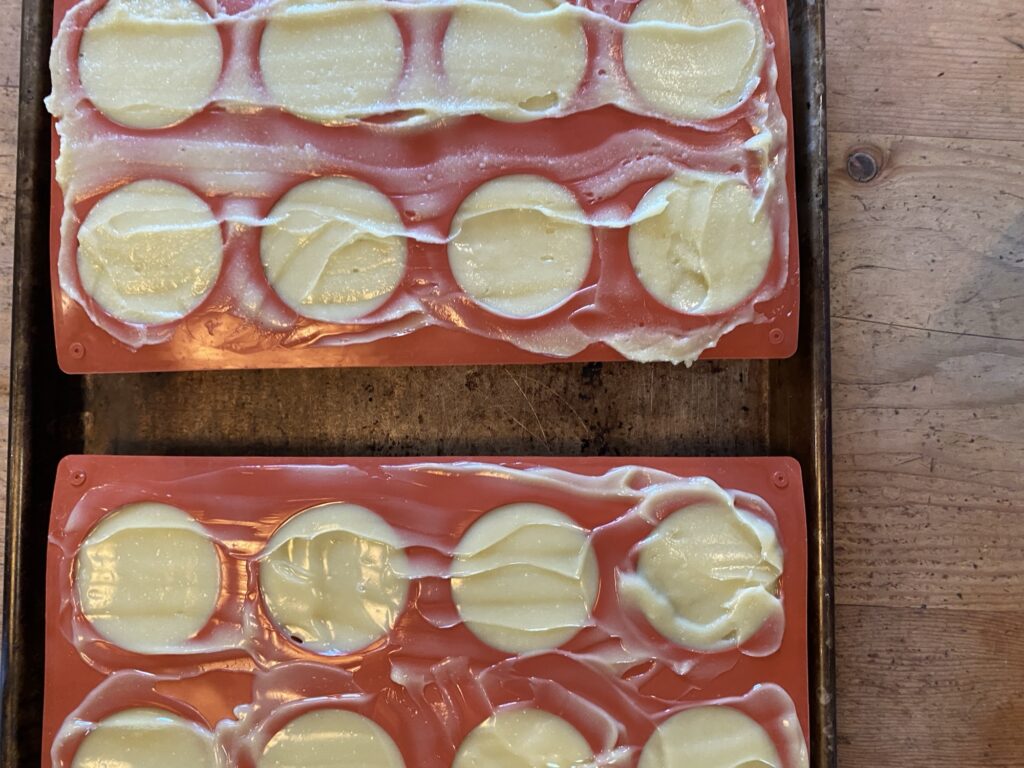
Because this is such a hard bar of soap, using smaller individual molds is best. If you don’t have that option and you need to cut the soap, check it in a few hours. It will still be hot but so long as you can un mold it you can then cut it. Waiting for the next day to cut will be very hard and slightly brittle. Once poured or cut, allow to sit for 24 hours.
Clean up
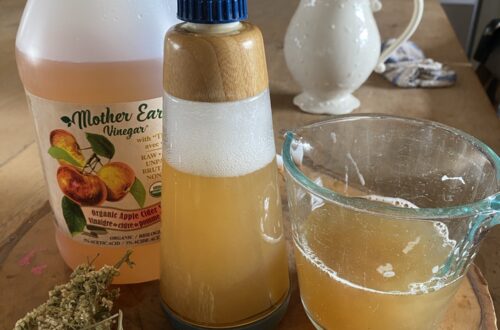
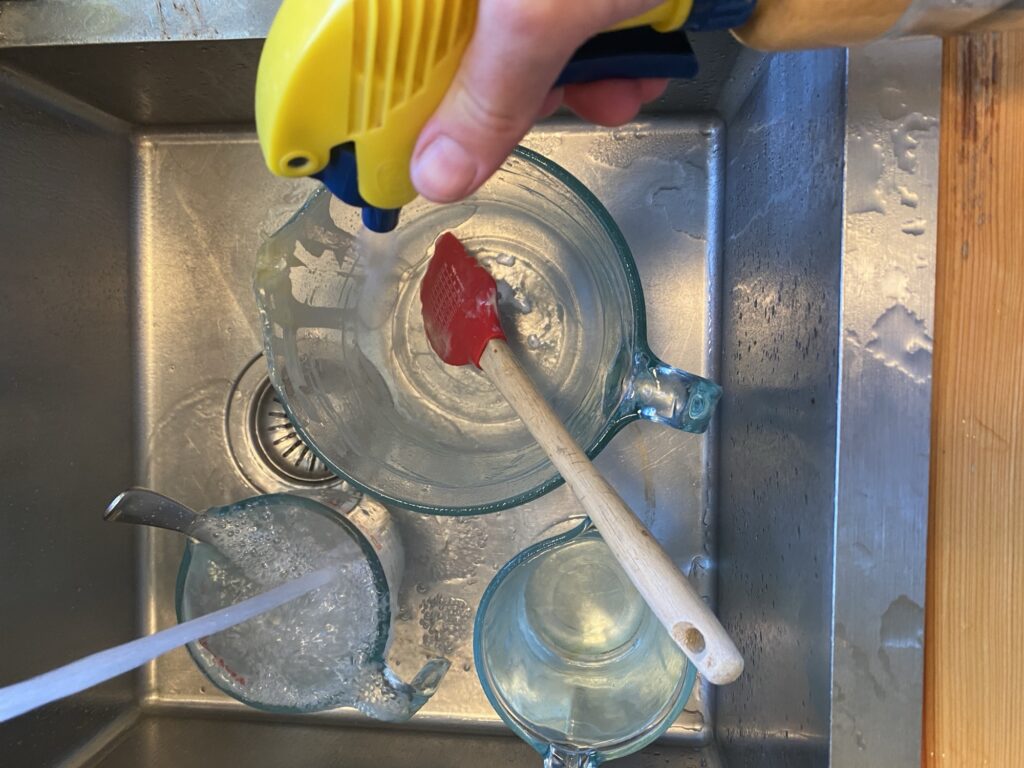
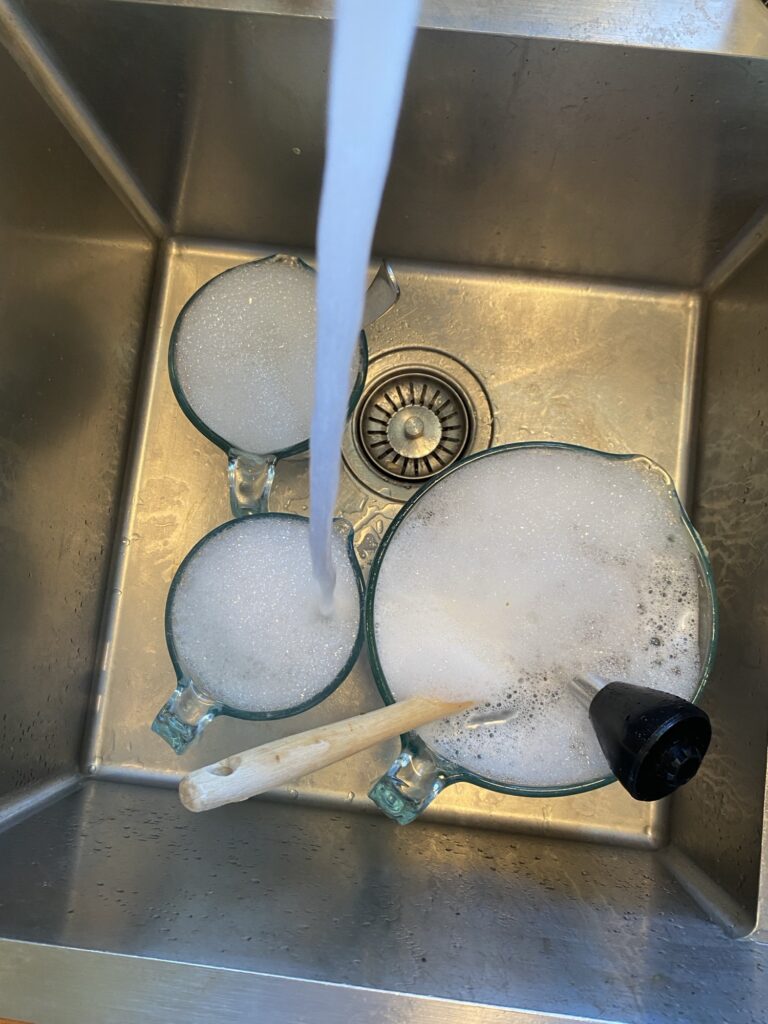
I spray my equipment with vinegar then soak in warm water. Rinse and soak in hot soapy water before washing in my dishwasher. My immersion blender obviously needs to be washed by hand.
I also spray my work space with vinegar and wipe well to be sure I’m cleaning/neutralizing any possible lye/batter that may have been splashed out.
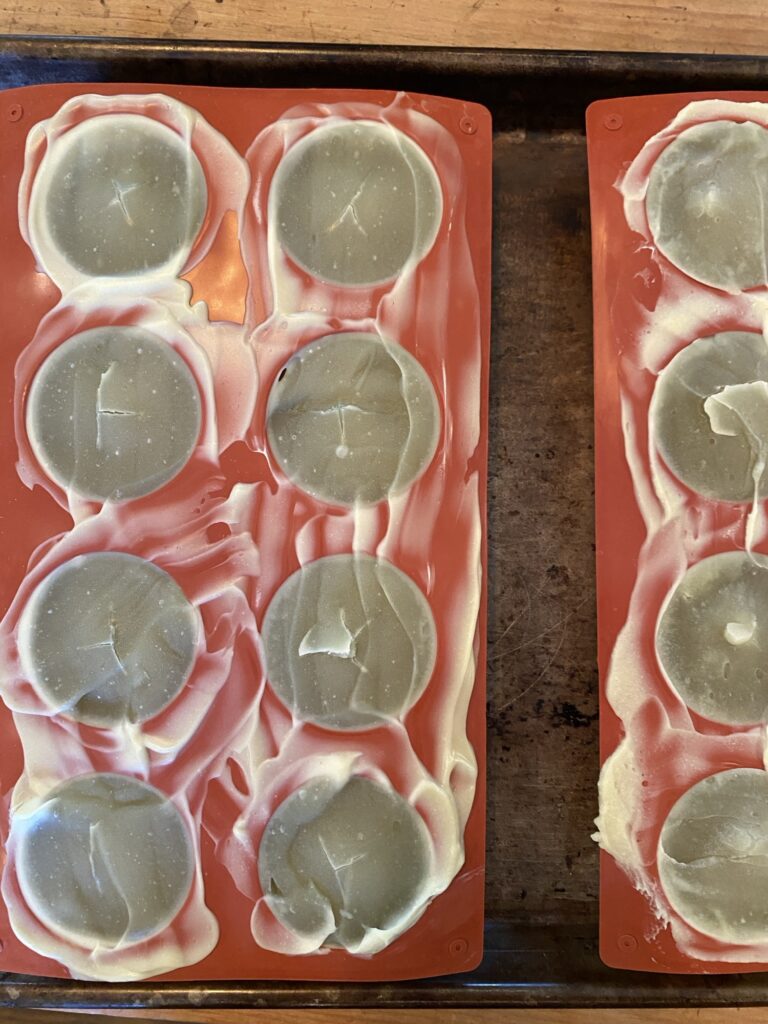
My soap super heated and cracked a little but I don’t mind because this is a cleaning bar. Superheating gels the soap creating a harder bar too.
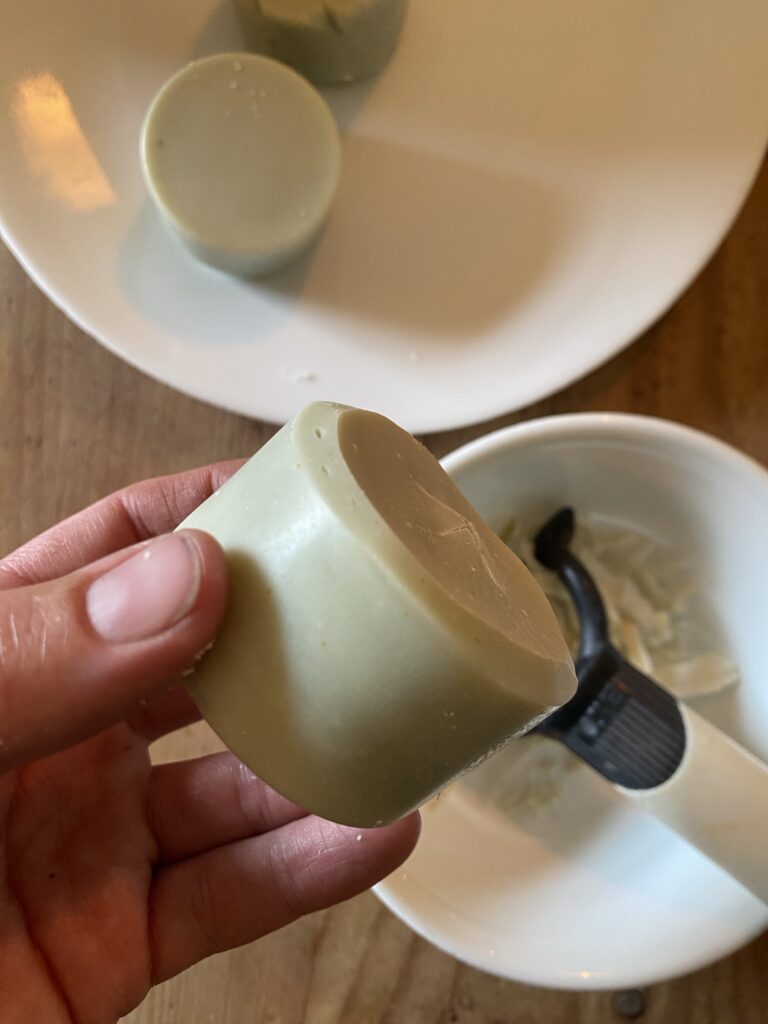
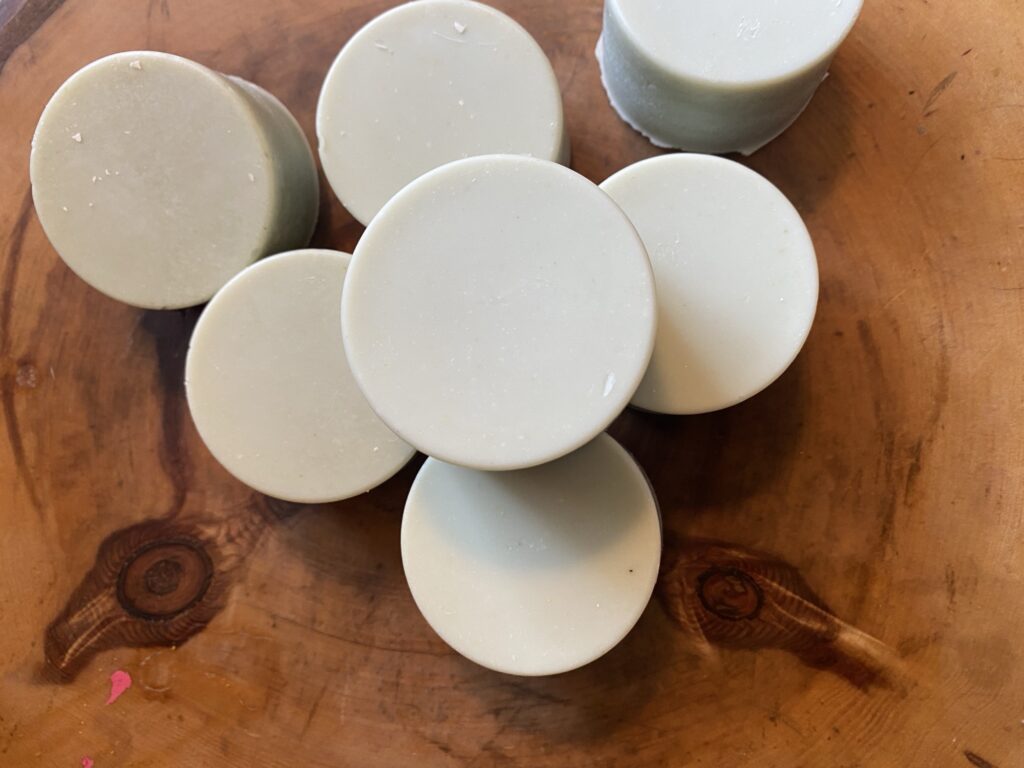
The next day I un mold and bevel the edges with a veggie peeler for a nicer finish. Leave in a well ventilated area to cure for 4-6 weeks before using or gifting.
Blessings,
Ashley