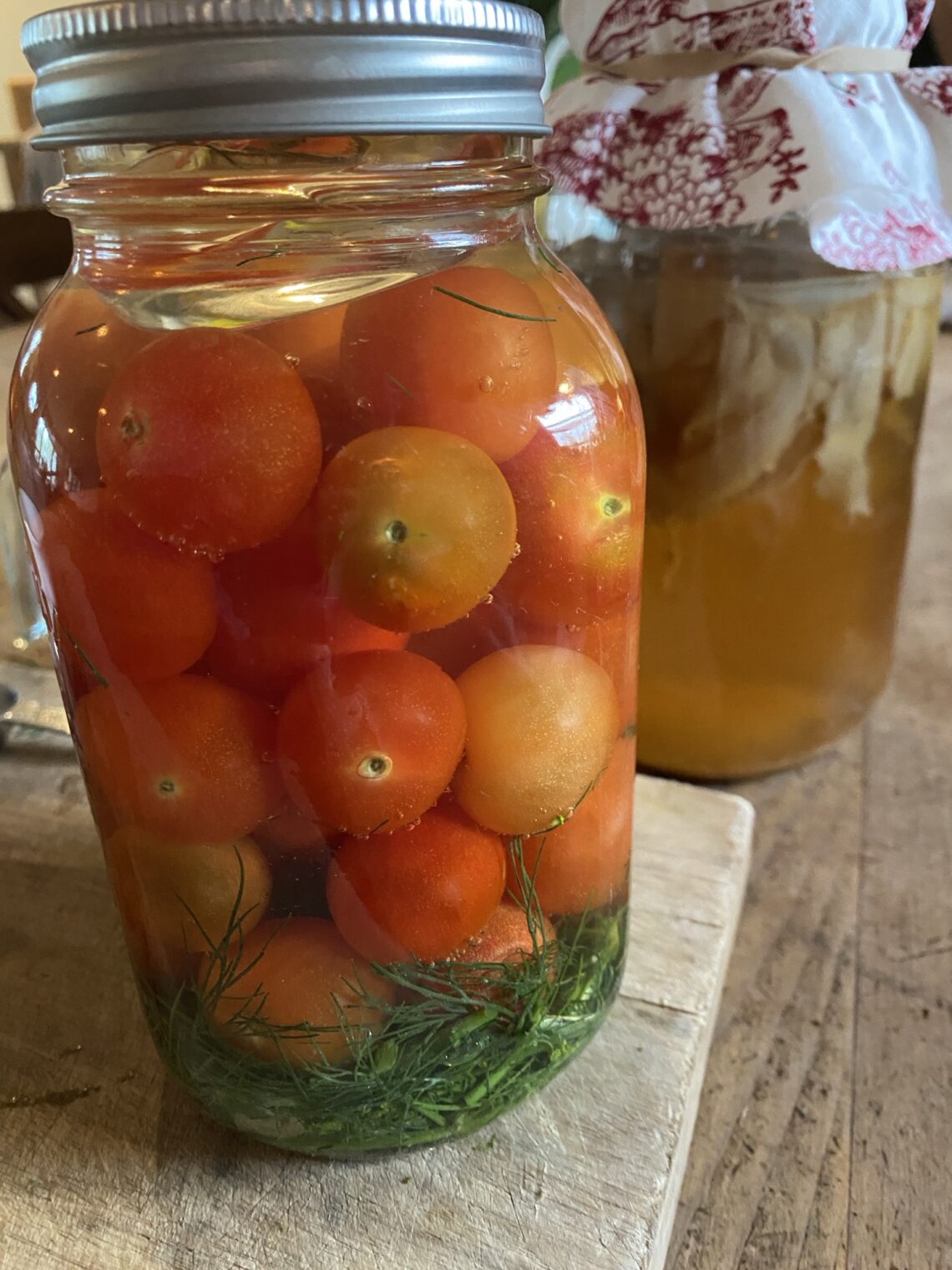
Wow. These fermented tomatoes are a must try! I’ve fermented a lot of vegetables and fruits over the years, but not tomatoes.
They have a bright, fresh effervescence taste. The texture definitely changes making these perfect to spread on toast or mix in sauces. I enjoyed just adding them to our meal and eating them as a side/garnish.
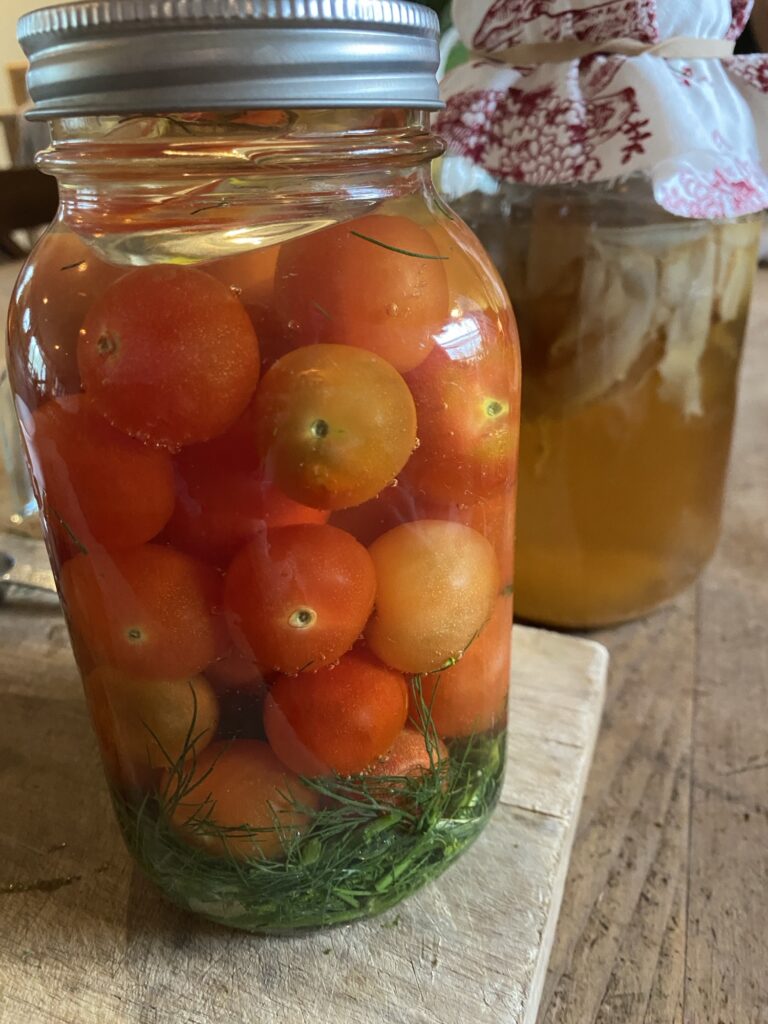
They’re easy to make and I’m using cherry tomatoes because that’s what we have in abundance in the gardens right now.
Ingredients I used:
Cherry tomatoes
Fresh dill
Garlic
Kombucha (as a starter but not necessary)
Sea salt and water (to make a brine)
Equipment needed for this recipe:
Knife
Cutting board
Quart jar
Fermenting weight (optional)
Fermenting lid (optional)
*for this recipe I found my tomatoes ended up floating to the top anyway, yet still stayed submerged. Just check it each day and make sure the tomatoes are staying under the brine so you don’t get mold.
*mold: unfortunately if you end up with mold you have to throw the whole ferment out. Composting it would be less disheartening;)
A study I read years ago found that even though the mold is on the top of the ferment, mold strains run throughout the entire jar.
*but wait! It could be something called kahm yeast. This will look like mold at first but upon closer inspection it’s a thick white film. It’s harmless and can be scraped aside and the product eaten. If it’s fuzzy, black, off color or smell, then it’s mold.
*depending on the temp of your kitchen this could take anywhere from one to two weeks to ferment.
*you don’t need fermenting lids, although they are convenient for letting out the built up CO2. However, you can also just loosely screw a plastic lid on your jar and burp it each day. Plastic is best as metal will rust.
When it comes to fermenting, I wash everything in hot soap water. I used to tediously run boiling water over my equipment, jars and lids but over the years I’ve found this to be unnecessary. Just think, clean, soap and water, clean hands, clean space. A non fragranc dish soap is best, if you’re interested to learn to make your own check out my Simple Cold Process Tallow Dish Soap Tutorial .
Once your equipment is clean, wash your veggies, I even rinse my garlic.
Make your brine by adding 1TBSP sea salt per 1 cup of water. Hymylayan pink salt or pickling salt works too, just don’t use iodized table salt. As for water, non chlorinated, non fluoridated water is best. I do four cups water to four tbsps of sea salt.
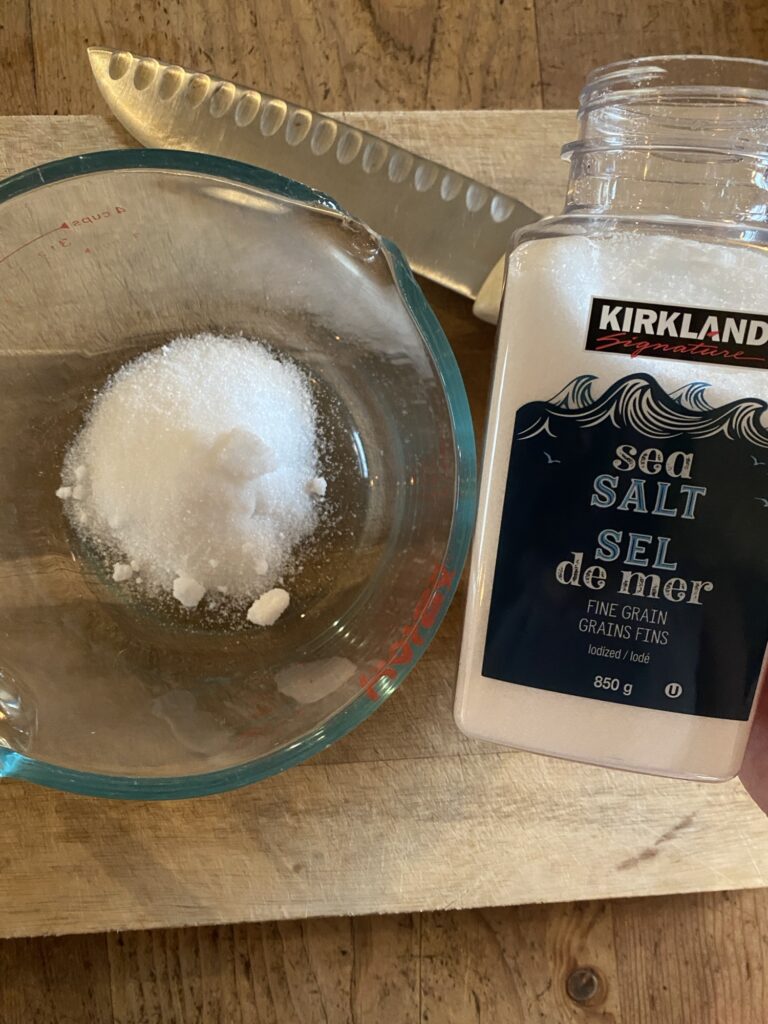
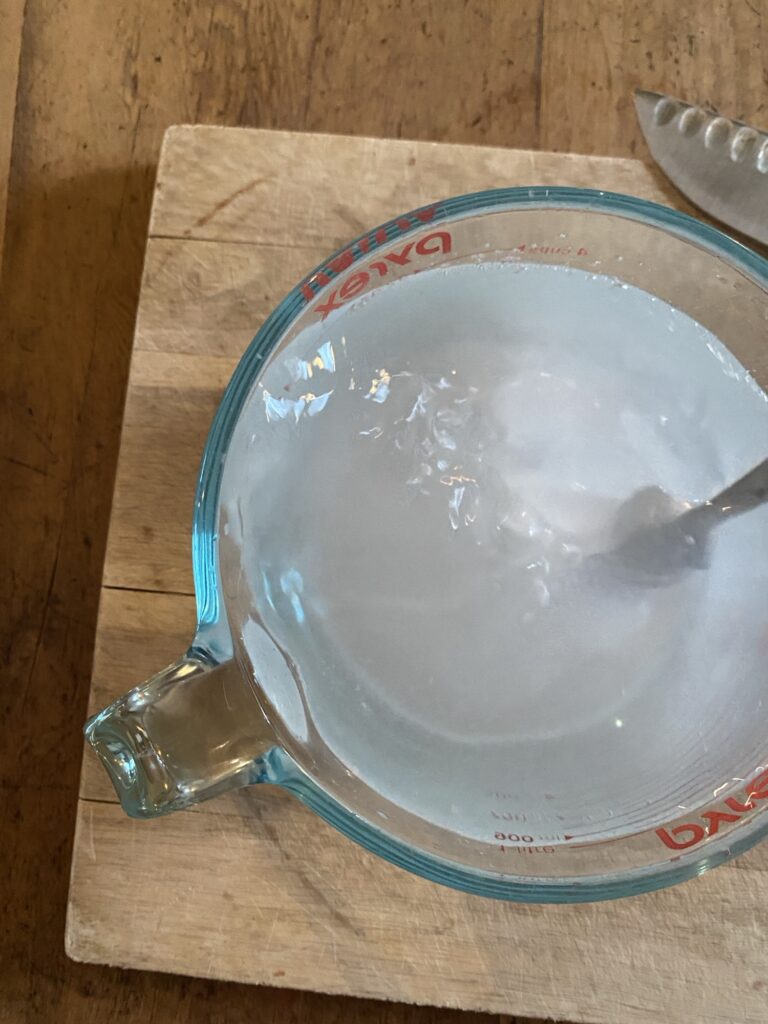
Stir the brine and set it aside, stirring occasionally until the salt dissolves.
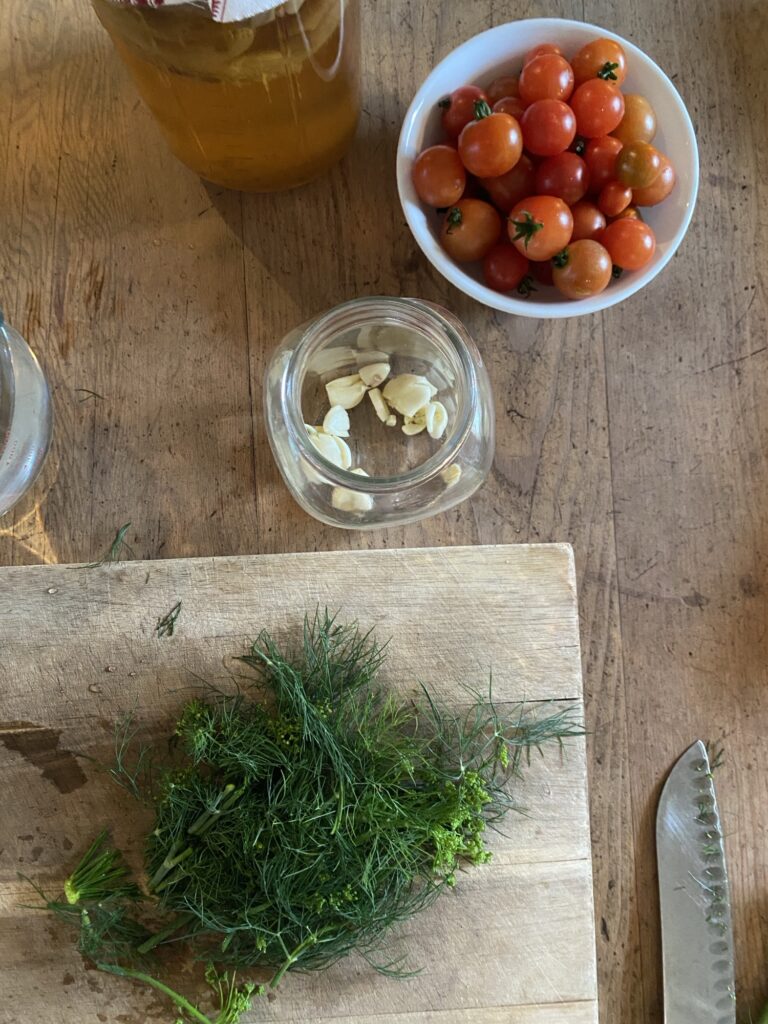
Peel and crush the garlic cloves. I used quite a few cloves, you can use as many as you prefer. Wash and chop fresh dill and just stuff it in the jar with the garlic. You could sprinkle in dried dill too if it’s what you have on hand.
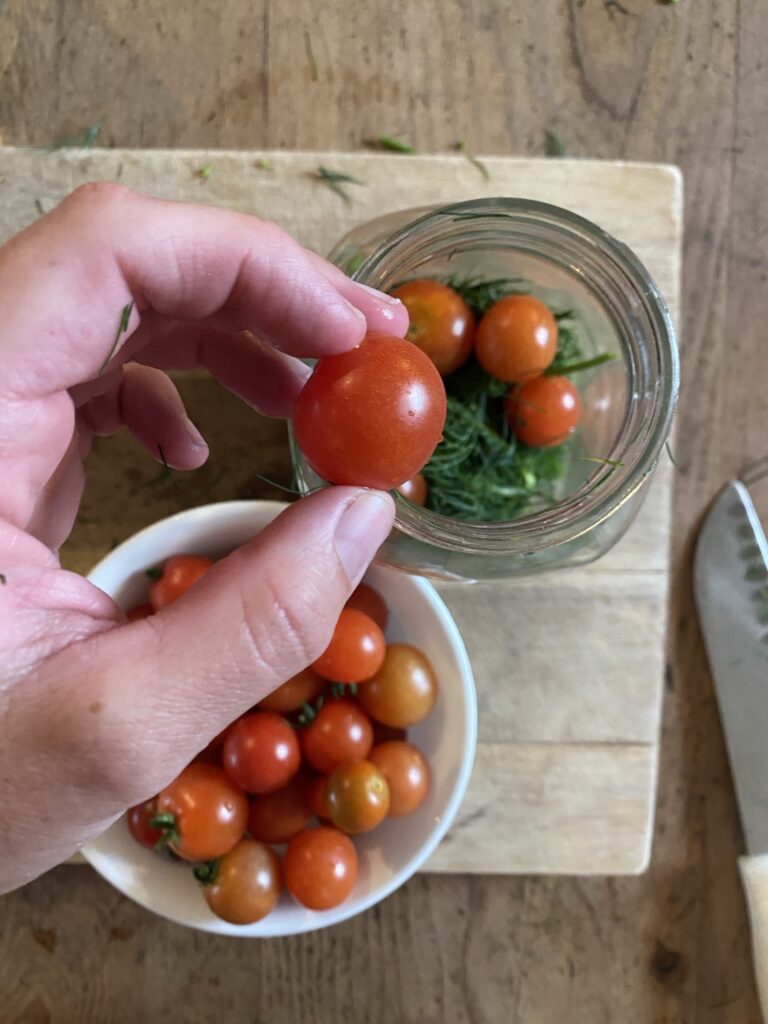
Fill the jar with the cherry tomatoes. I left mine whole but you could certainly cut them in half if you prefer.
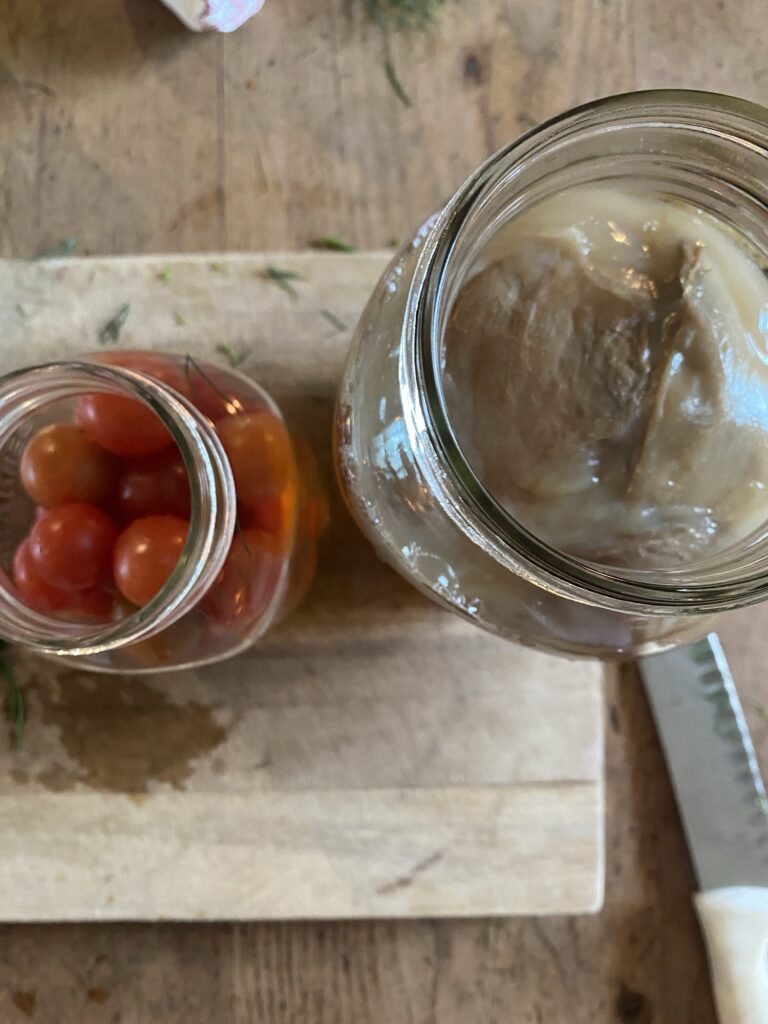
Leave about an inch or more head space. Pour in about an 8th of a cup of kombucha. This is optional. Then pour in the brine leaving space at the top.
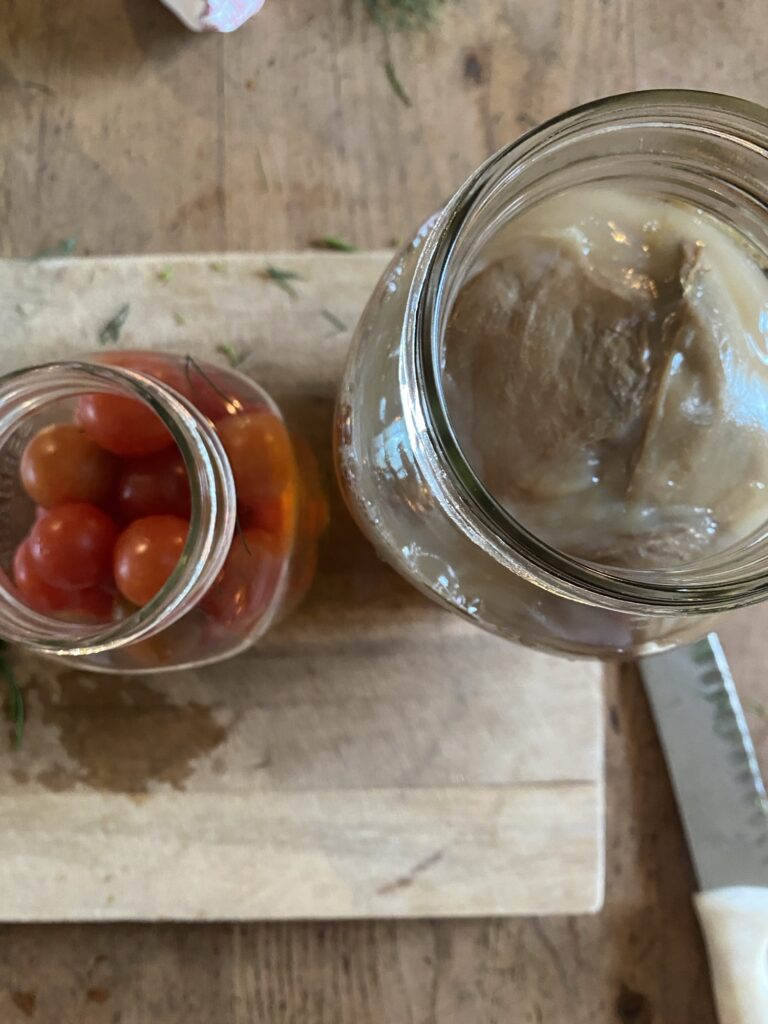
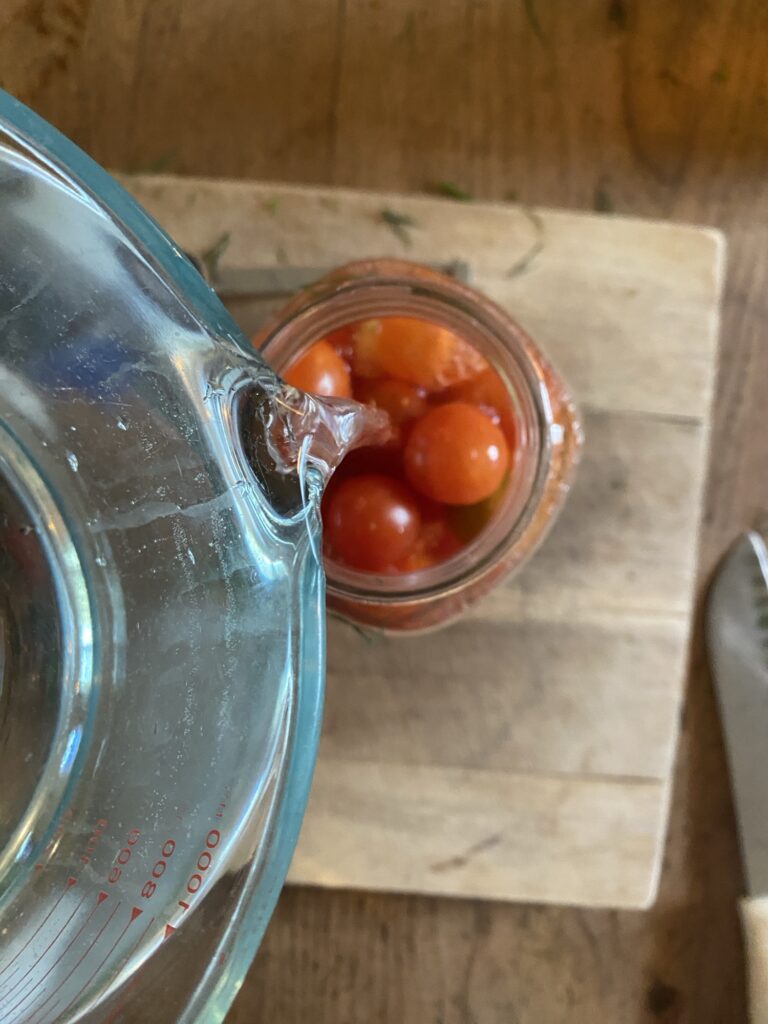
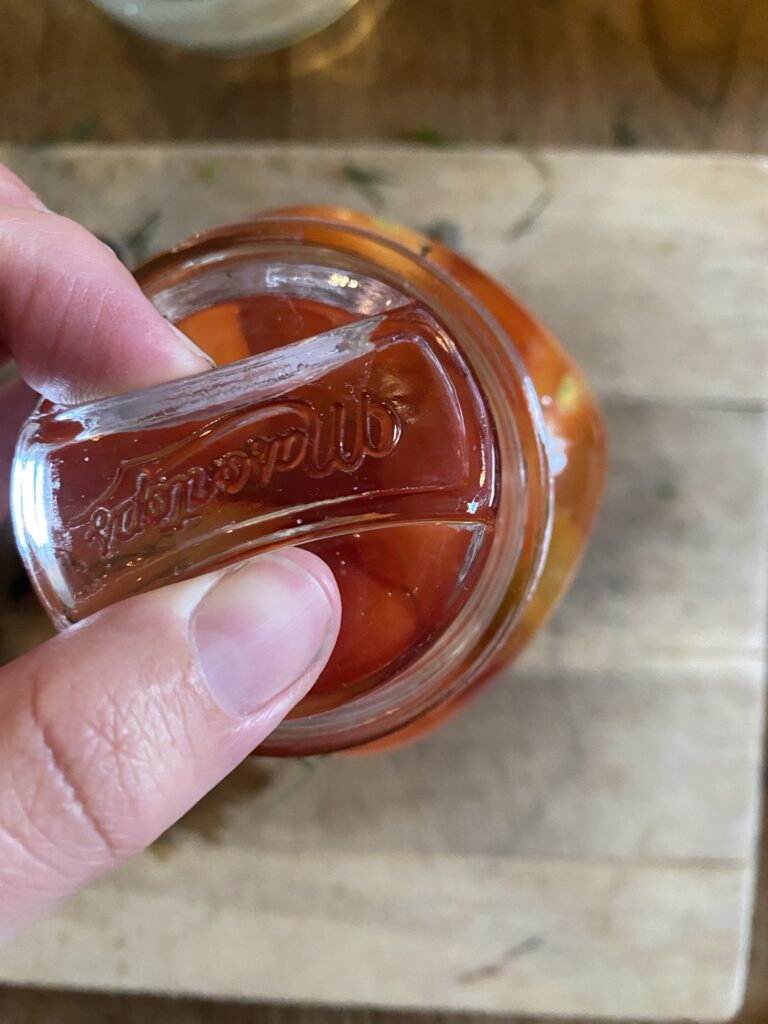
I placed a glass fermenting weight on top to hold my tomatoes down. However, I found that as the tomatoes fermented and softened, they shrank and ended up floating up and around the weight. They still stayed under the brine, but I think initially they needed something to hold them down. You could use a clean flat rock, or press in some cabbage leaves. You could even take a handful of fresh dill and fold it to create a press of sorts. Once they start fermenting and shrinking they’ll float as I mentioned, but they stay under the brine.
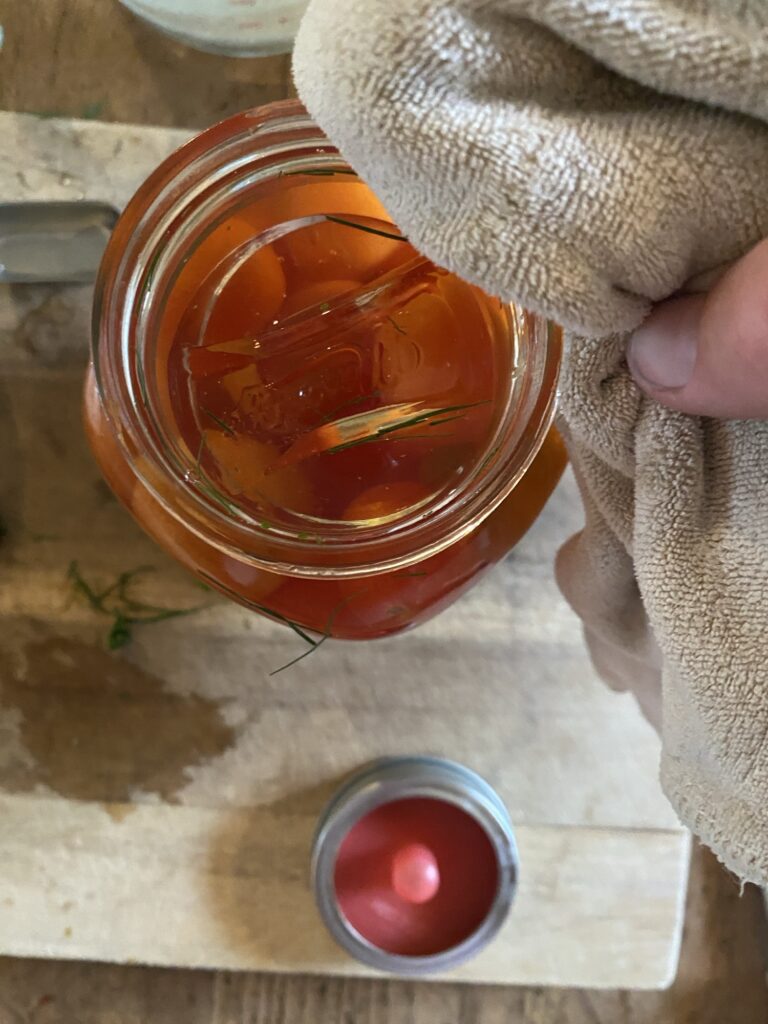
Wipe the rim of the jar before placing the lid on. I found my fermenting lids and weights on Amazon years ago.
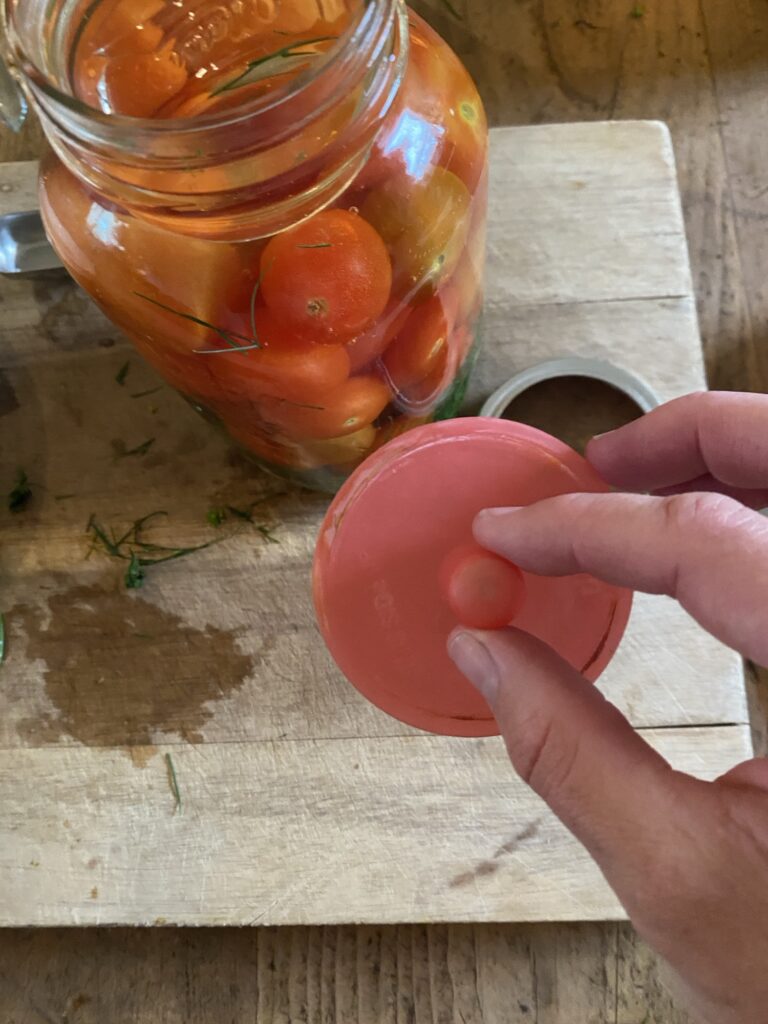
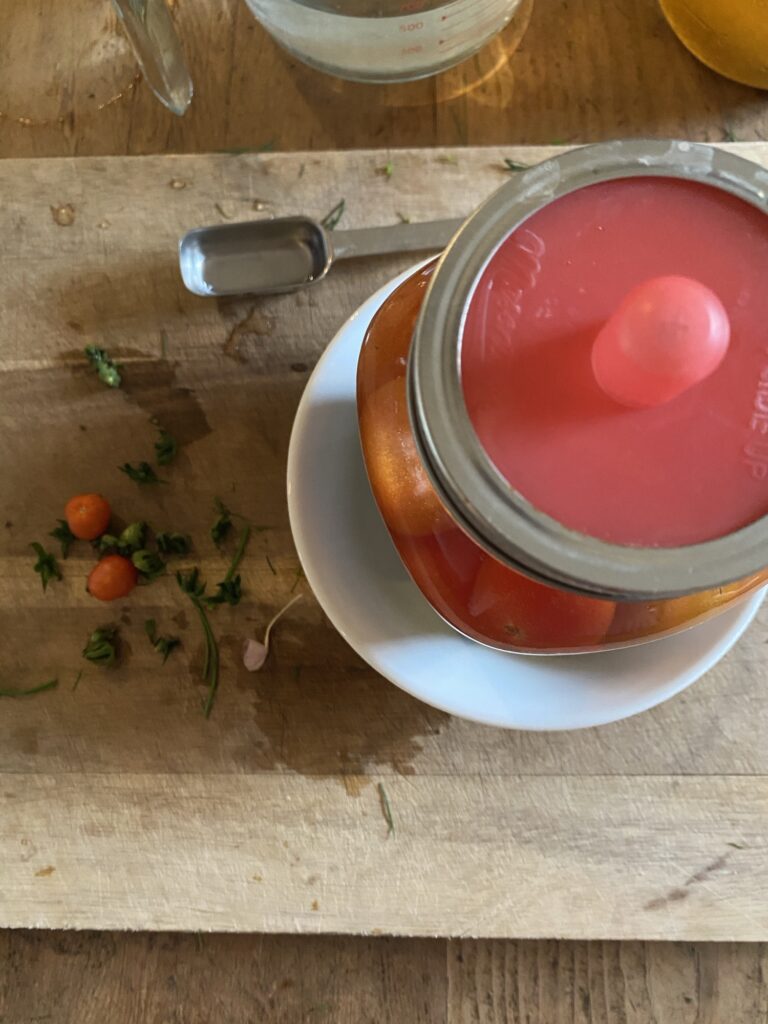
Place the jar in a bowl to catch any brine that might bubble out as it ferments.
Have fun fermenting!
Blessings,
Ashley

