When I started homeschooling I had no idea what a day should look like. I loved finding blogs written by homeschool moms sharing their days and curriculum. After a few years, YouTube became a thing, and I enjoyed (even more) the ability to watch a mom share how she structured her day with multiple kids, school, home care and self care.
Today I’m going to share a homeschool day with my younger kids.
If you’re new, I’m Ashley, mom of 8. I’ve been homeschooling for 12 years and currently have 6 kids “in school” as my oldest turned 18 mid year and is finishing 12th grade this spring.
My older four kids ages 11, 13, 15, 18 don’t need me as much. My 11 year old still joins my younger kids for read alouds with me in the morning but he is a voracious reader. Always with his nose in a book, so he too doesn’t need me as much. I plan to share how I homeschool my older kids but today I’m going to share a day with four kids, ages 2, 4, 6, 8.
Because homeschooling is never just school, I’m going to share how we work around meals, dishes, laundry and basic daily chores. These were always struggles for me when I was first learning how to keep a home and trying to involve children. When I added school I struggled even more. I’m not an expert but I do feel that after 18 years and 8 kids with another on the way, I received the best education through the ups and downs of working through our daily realities and “getting it all done.”
Ok, let me get to it.
The basic structure of our day has been pretty much the same for the last 10 plus years.
Mornings:
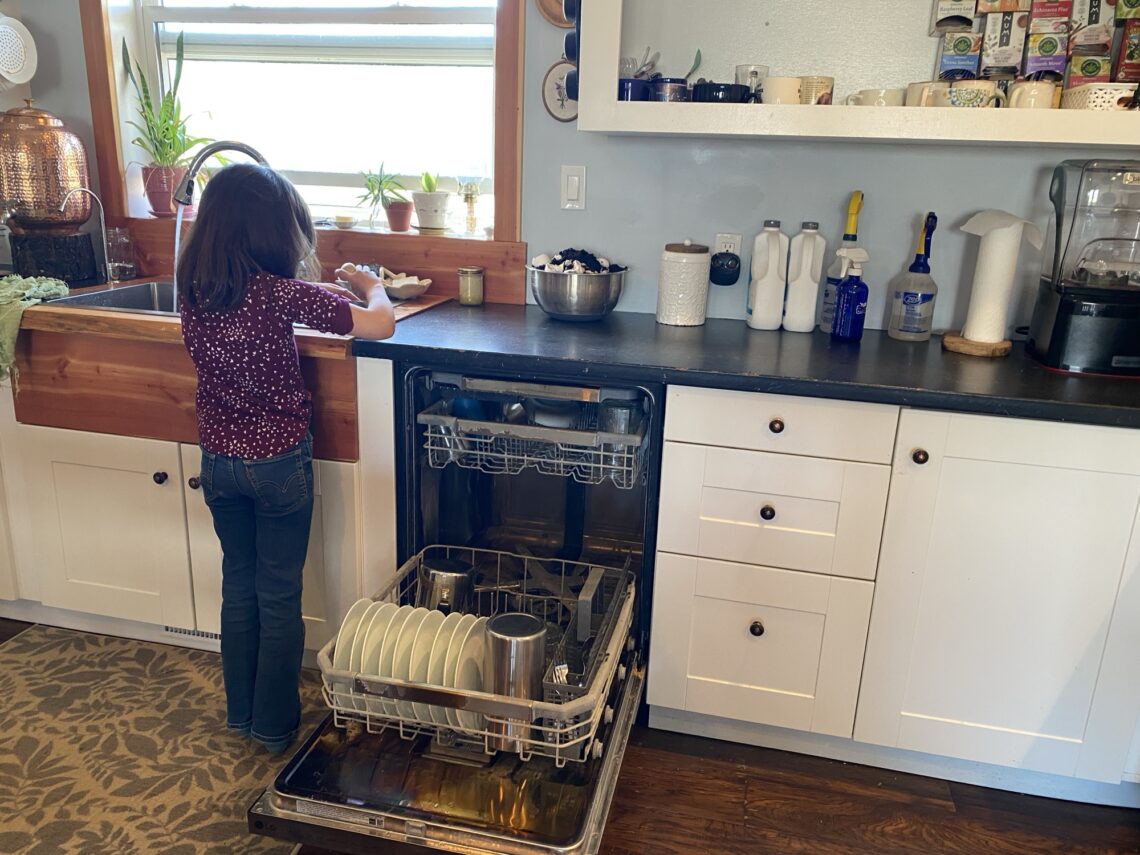
get dressed, tidy rooms, my oldest help their younger siblings make beds, my 8 year old makes my 2 year olds bed and gets her dressed. Everyone is responsible for getting their laundry to the right basket so I can move it to the wash later.
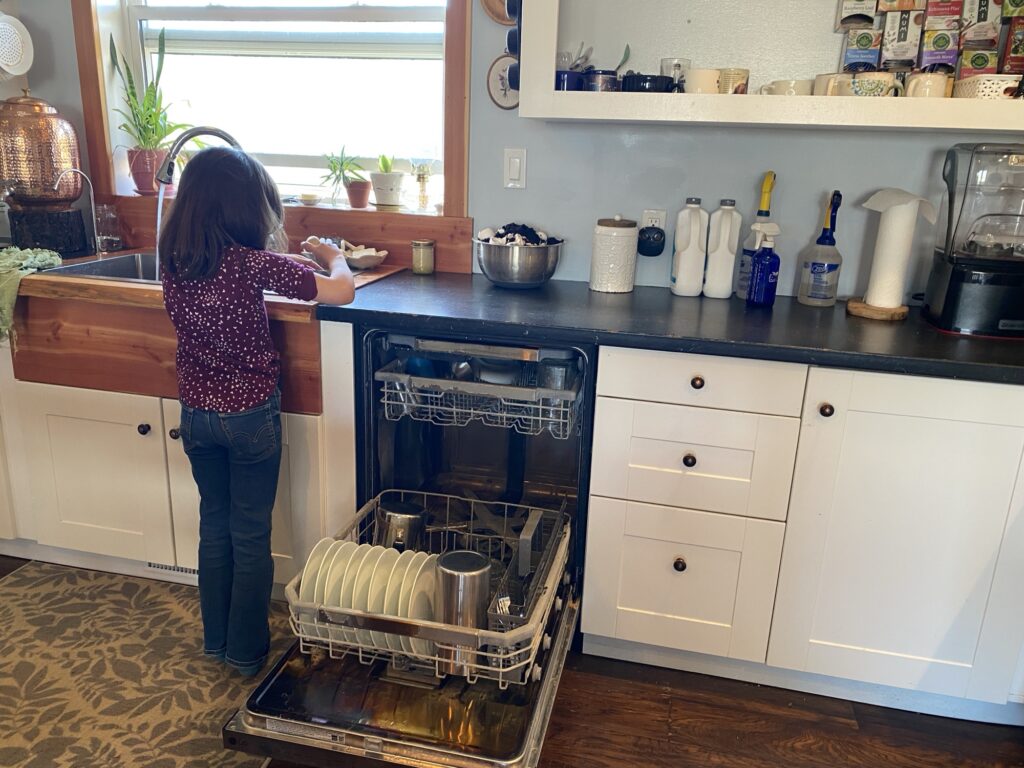
Breakfast is on rotation, what we eat and who makes it. My older four take turns. Breakfast clean up is done by my 6 and 8 year old. My 2 and 4 year old are learning to clear the table which requires me to guide them through it. During this time I’m also starting laundry and getting clean laundry to the kitchen table for my 6 and 8 year old to fold.
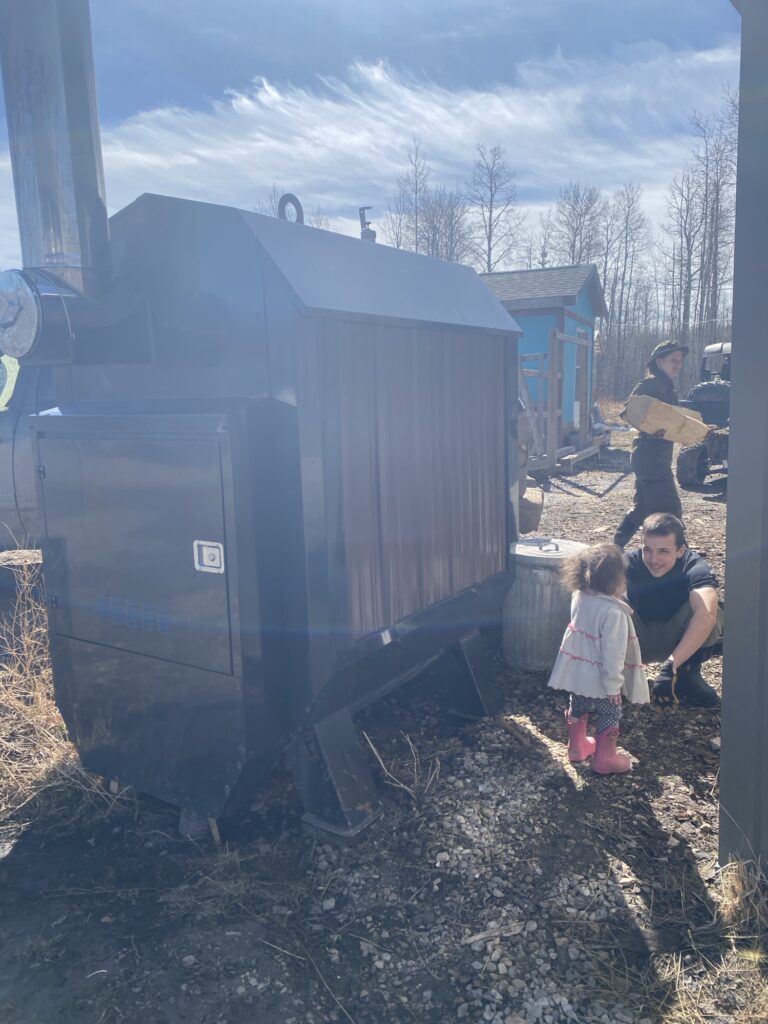
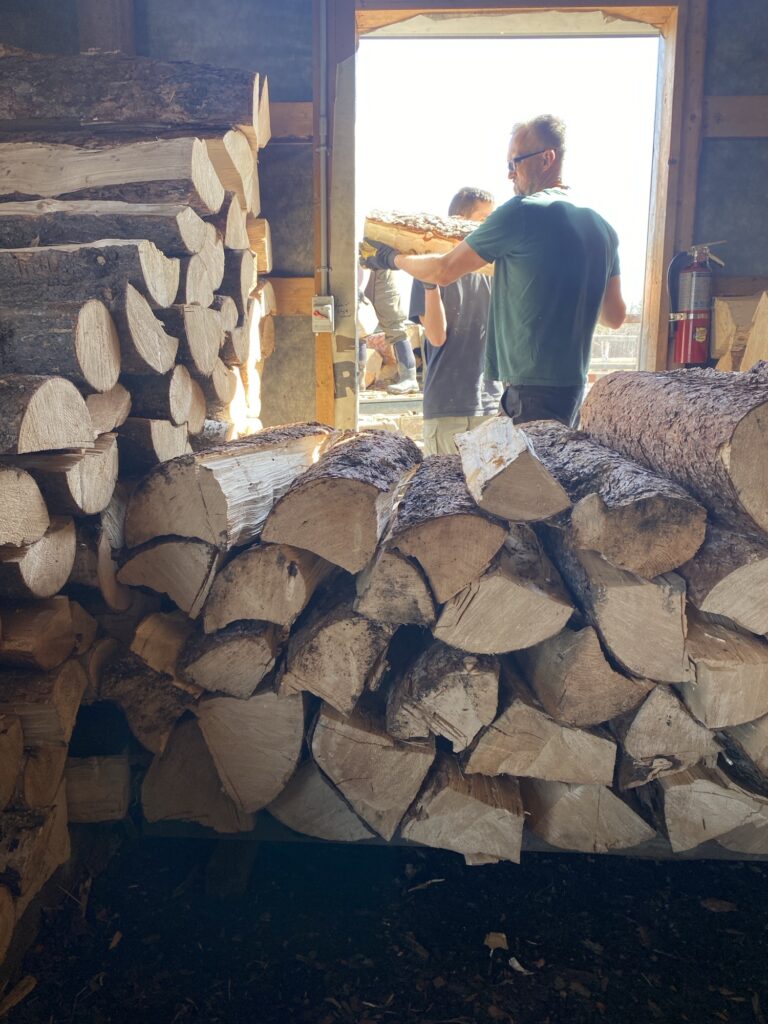
We are in firewood season before the roads become impassable so my older children head out to the woods with my husband for cutting trees, splitting, stack and bringing home to start our next winter’s firewood storage. We burn wood all summer too as we use it to heat our hot water, but we don’t need as much, thank goodness!
Once our home is tidy, we’ve eaten and the older kids have headed out, I begin morning read alouds with my younger four.
My 2 and 4 year old mostly play with blocks and potato heads but I have my 6 and 8 year sit quietly for the lessons.
I don’t do a lot of formal school with my younger children. I love to teach through literature. Reading kids good, rich stories goes a lot further in the development of who they become, in my opinion anyway. Reading introduces them to a wide range of scenarios, life problems and solutions. Listening to how others handle tricky situations gives them insight without needing to experience everything (or hopefully make too many life changing mistakes!)
I know for myself, I read constantly as a child and as an adult I often found solutions to dealing with certain situations and people by recalling stories, whether fiction or non.
Reading good stories also introduces kids to a wide range of vocabulary and proper sentence structure.
Beyond that, character, responsibility, observing and playing in nature… academics can easily be added as kids get older. Reading, writing and arithmetic are easy in comparison to learning how to work with others, put others first, work diligently even when we don’t feel like it and cultivating positive cheerful attitudes.
I only recently really started looking into Charlottes Mason and reading her ideas on how to education children. I love these two quotes of hers that I recently ran across:
Children are born with all the curiosity they will ever need. It will last a lifetime if they are fed upon a daily diet of ideas.
Thought breeds thought; children familiar with great thoughts take as naturally to thinking for themselves as the well nourished body takes to growing; and we must bear in mind that growth, physical, intellectual, moral, spiritual, is the sole end of education.
The habits of the child produce the character of man.
I don’t think I need to elaborate too much on these beautiful ideas, I wanted to share them to speak for many of the ways I homeschool.
Homeschool is cultivating the entire child, not just a shallow broad academia of facts and figures.
I love listening to Mom Delights on YouTube. She talks about the four pillars of school, the first being finding favor with God and man.
It’s easy to teach a kid to read and write. It’s quite another challenge to teach a child to humble themselves, love and surrender to God and put others first; seeking solutions and peace as best they can. Manners, genuine kindness and bearing one another’s burdens.
This is our first pillar and it is daily put into practice with how we each take care of the home and treat each other.
Ok, let me get to the books.
Our morning read alouds consist of Bible, science, history, reading.
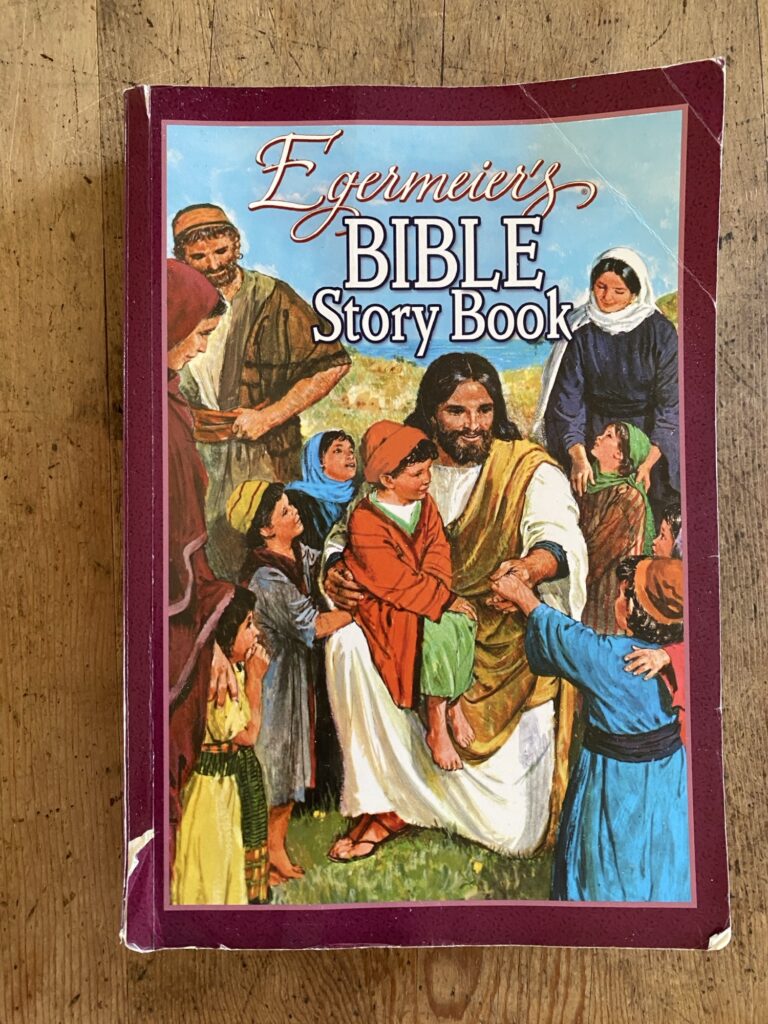
As a Christian mother, it is my first responsibility to teach my children the gospel. I love beginning with the Egermeier’s children’s Bible. The stories are short and easy to read, understand and discuss. The Bible verses that the stories are from are written with each story, in case you wanted to cross reference with the Bible while reading to your children. Teaching kids that they are uniquely , purposefully created and loved, by God and their parents, is a foundational necessity for building rooted confident adults.
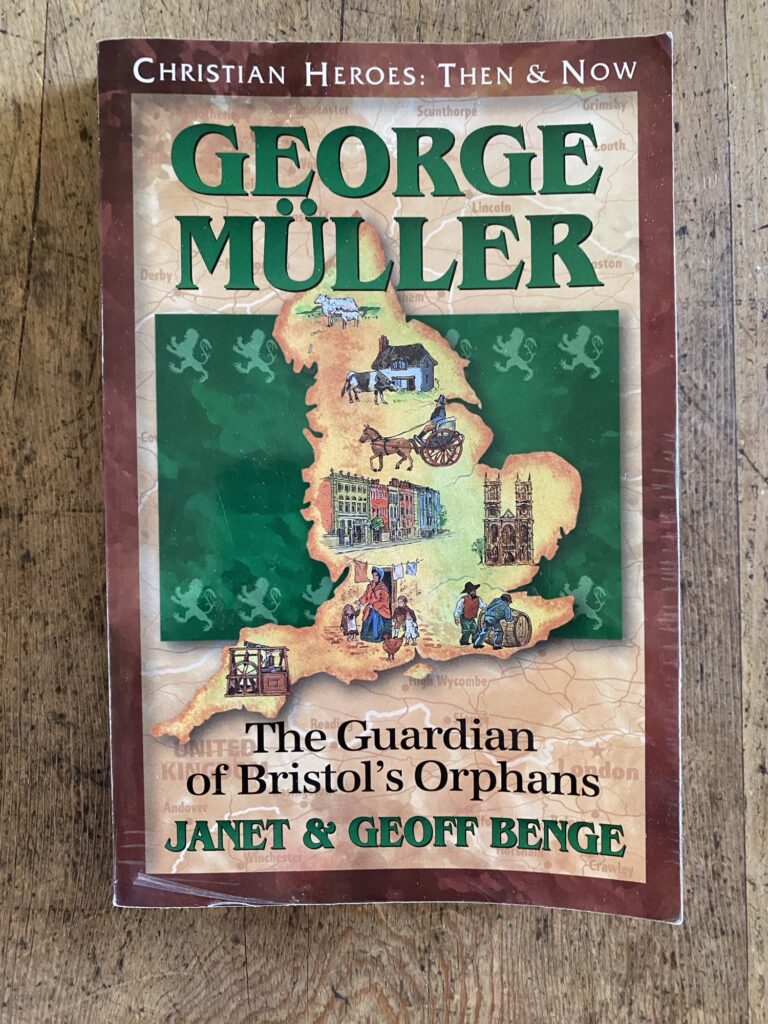
I love to teach history through literature. This is a true story about the Prussian missionary, George Muller and his wife who set their mission field in London. During one of the worst times in London’s history, a cholera outbreak has killed a large portion of the population and left many children as orphans. The government builds workhouses and many children end up being taken to them. We are also introduced to Charles Dickens, as he gave the poor a voice through his literature. Dickens was greatly concerned about the mistreatment of orphans and as the Mullers orphanage becomes more well known, Dickens writes to George asking to see his orphanage. George Muller, who built the orphanage only on prayer, shows Dickens every nook and cranny to show how the children are fed and educated. The Muller’s changed thousands of lives through the dedication to prayer and living below their means.
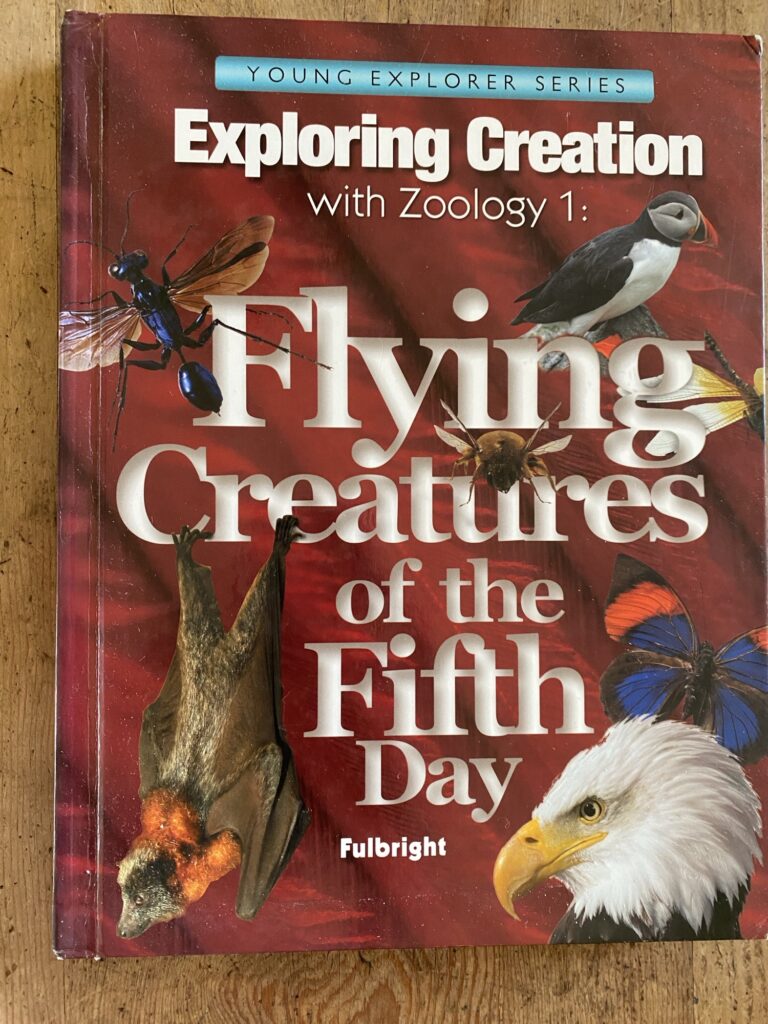
I love using Applogia for science. This is the first book in their series and it’s perfect for spring. We “do school” all year and I begin this book in early spring as my children use it to observe and explore the animals and insects we read about in it.
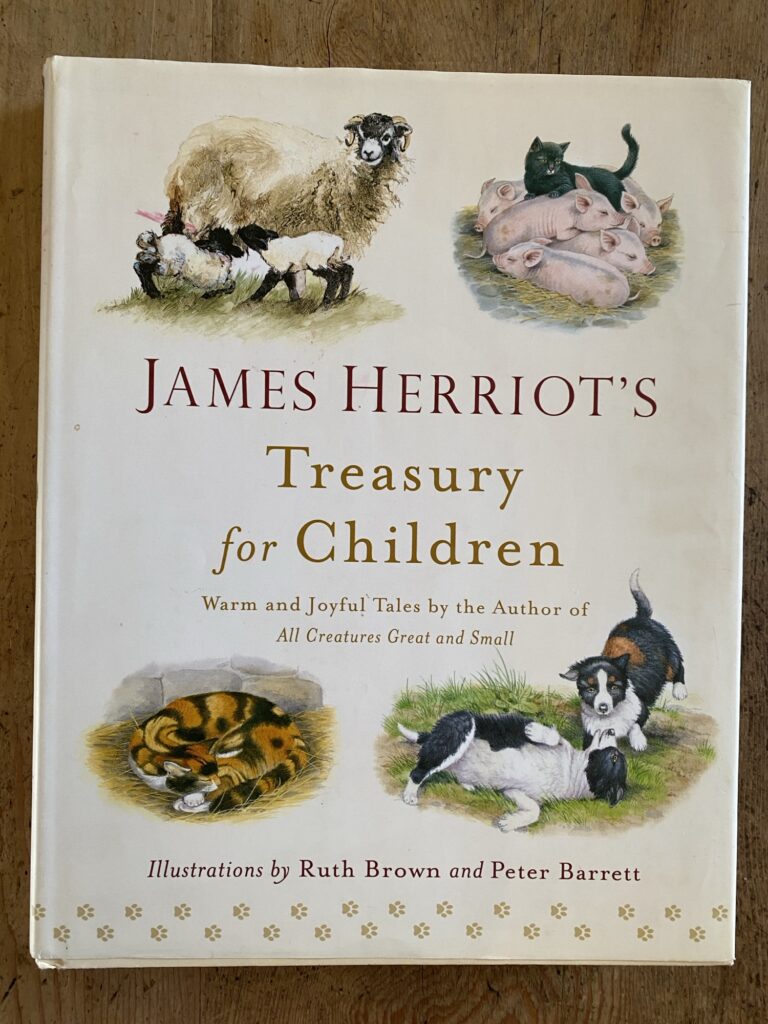
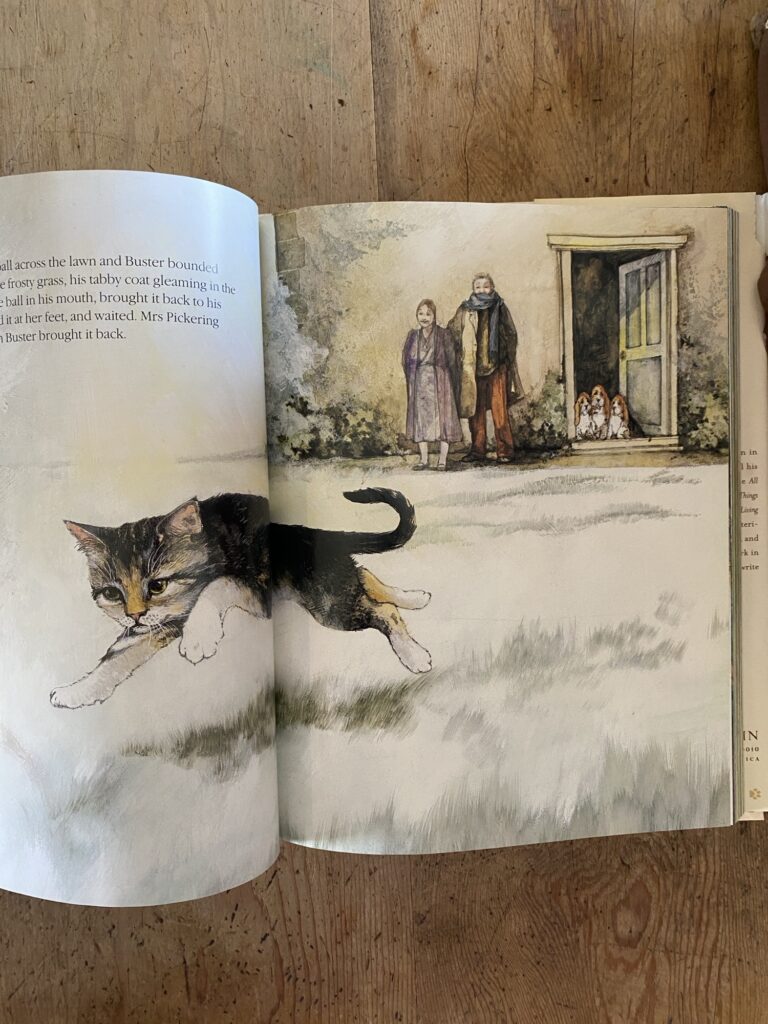
One of my favorite read alouds to begin with my younger children is this James Herriot’s Treasury for Children.
The stories are simple, yet charming and captivating. The vocabulary use is rich and introduces a lot of new words. This book follows the adventures of a country veterinarian in the English countryside.
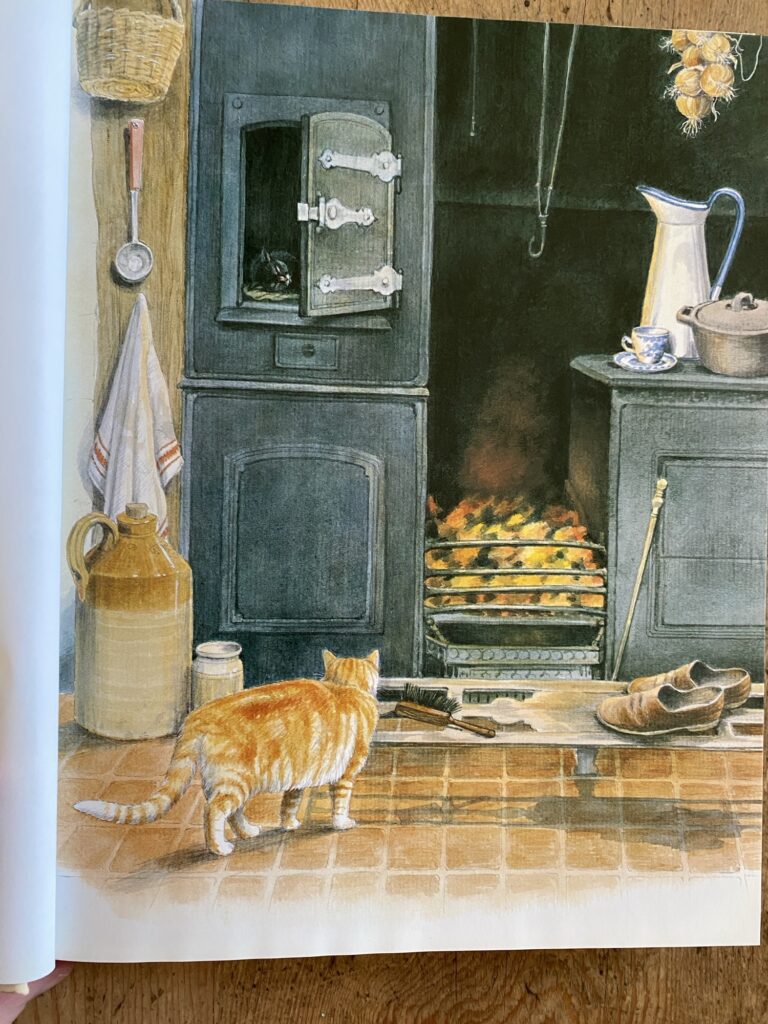
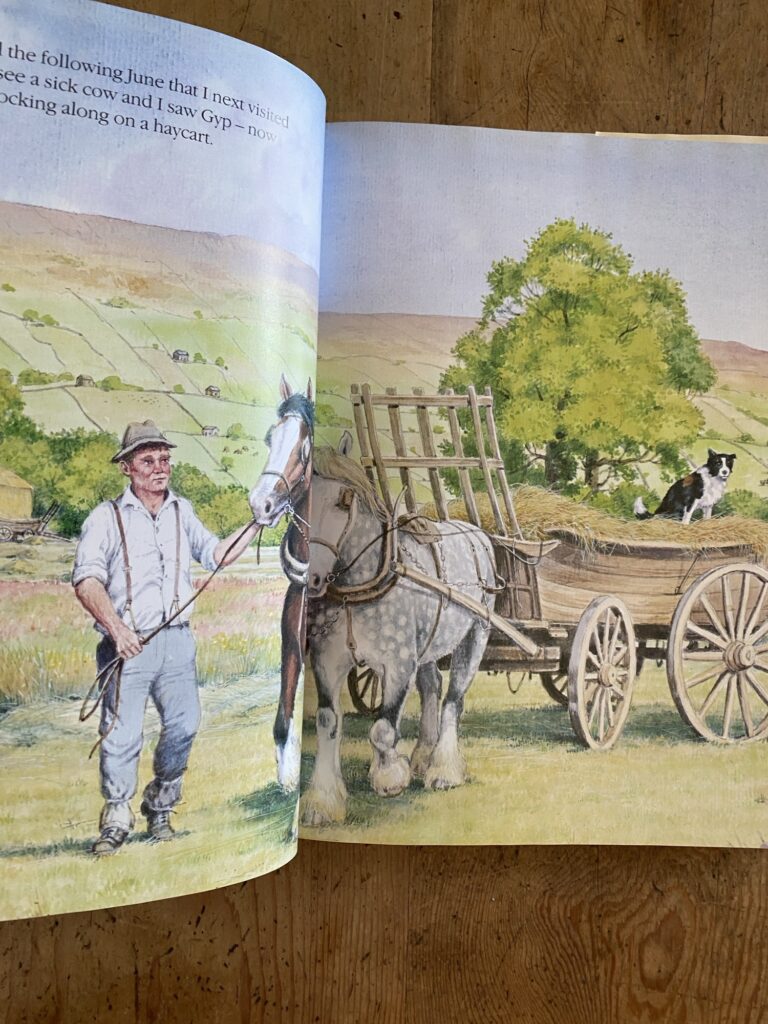
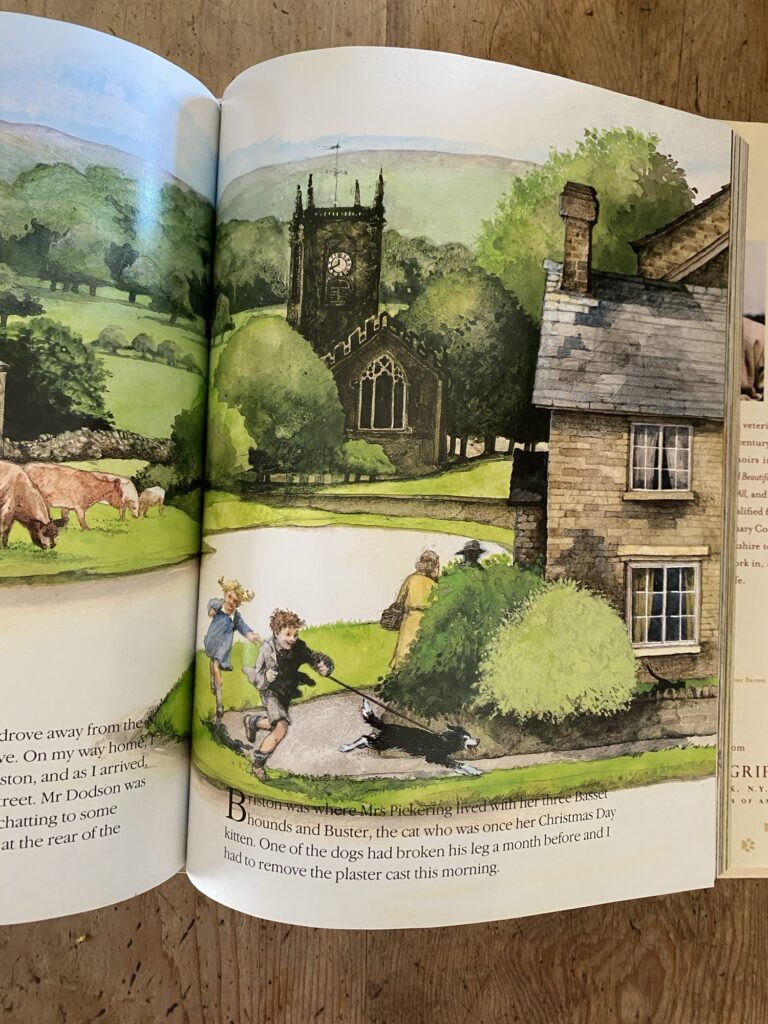
The pictures are absolutely beautiful and this book even captivates my busy 4 and 2 year old as they point out the animals and simply enjoy studying the artwork before I turn the page.
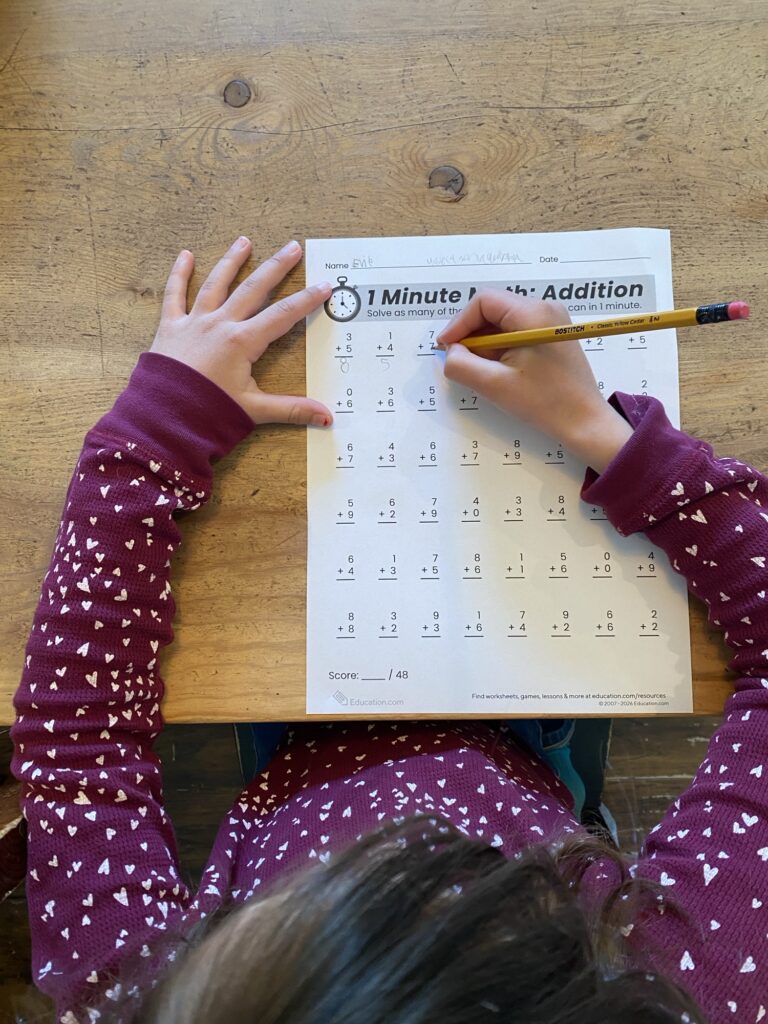
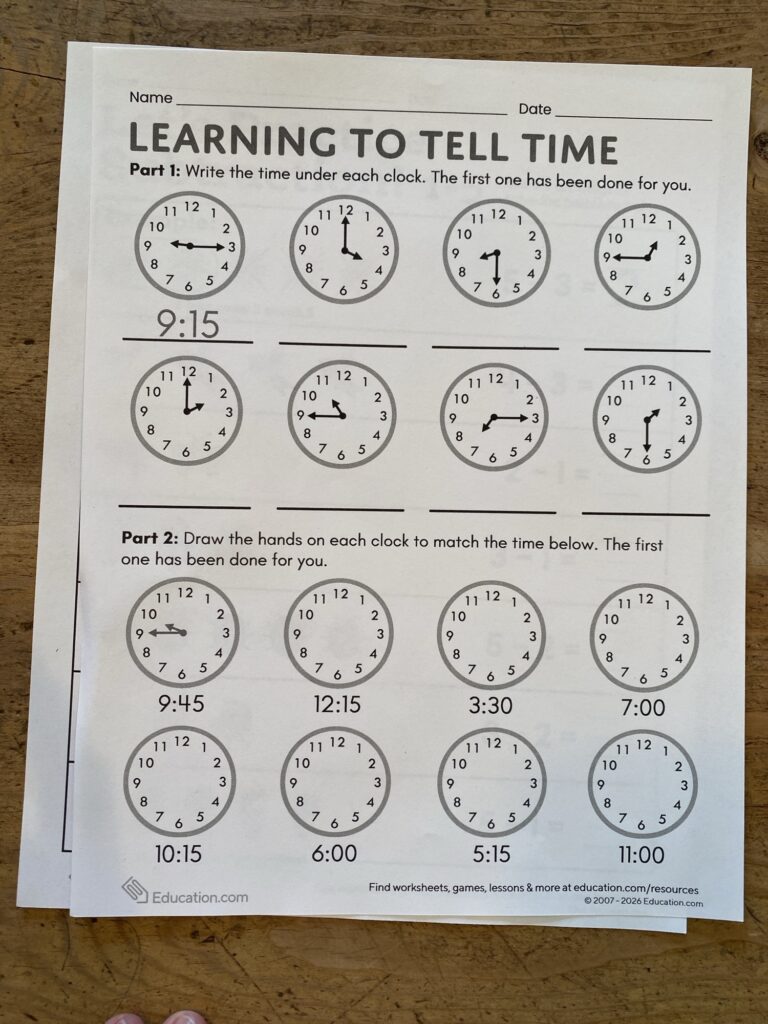
My daughter is working through learning her sums and telling analog time, so I just print out a few worksheets for her from educationDOTcom. This is a great website, I think I spent about $125 CAD for lifetime access. I can use it for all of my children and the worksheets range from preschool to 6th grade. There are a lot of coloring pages and my children enjoy dot to dot for counting and coloring, among other worksheets for fun.
I do not think young children need formal math though. Practice telling time daily, use small rocks, Cheerios, popsicle sticks for counting, skip counting and grouping. Math can be done in work and play as they count, add, subtract forks, spoons, dishes… Bringing kids into the kitchen to bake is a great way to teach fractions, dividing and multiplying. School/ learning should be proven to be applicable in life.
My 8 year old is also learning to read. She struggles with her speech so sounding out letters and words has been a bit of a challenge as we work on speech. I’m not too worried as I’ve had three children before her struggle with speech and now they speak, narrate, read and comprehend beautifully. It just took a little more work/time than with my other two older children who did not have speech issues.
We do tongue exercises and I recently purchased a special straw to help with tongue placement and strength. I do think it’s helping and I found it here: REMplenish straw
For drawing/art, learning to read, and copy work I love the Draw Write Now series.
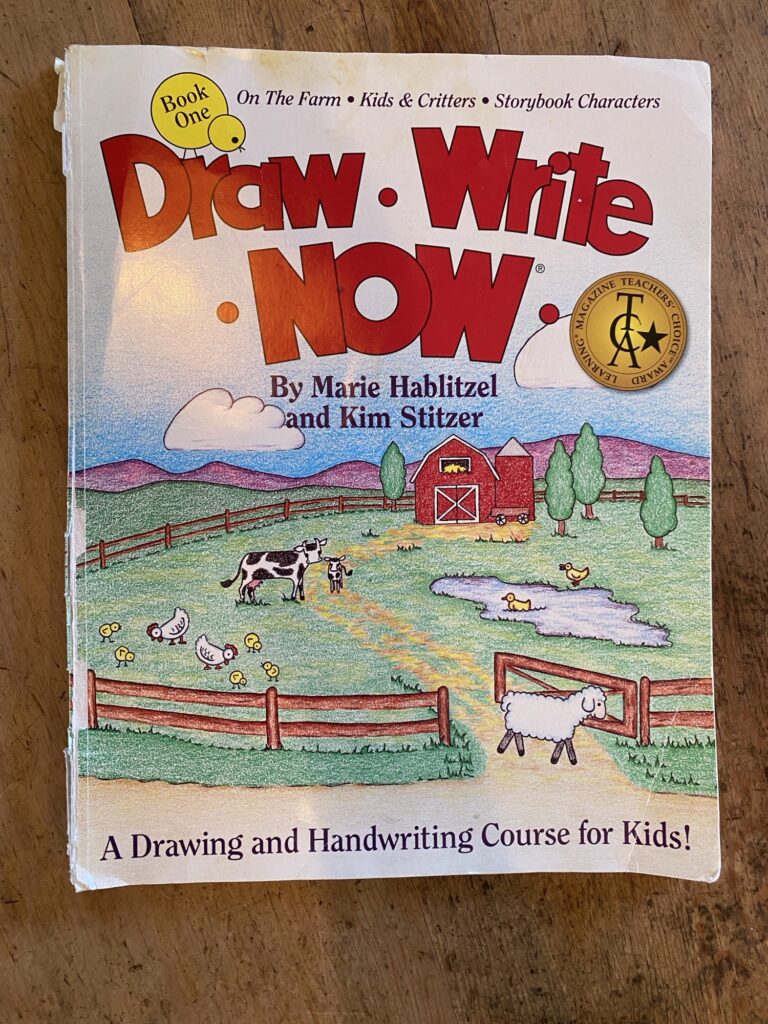
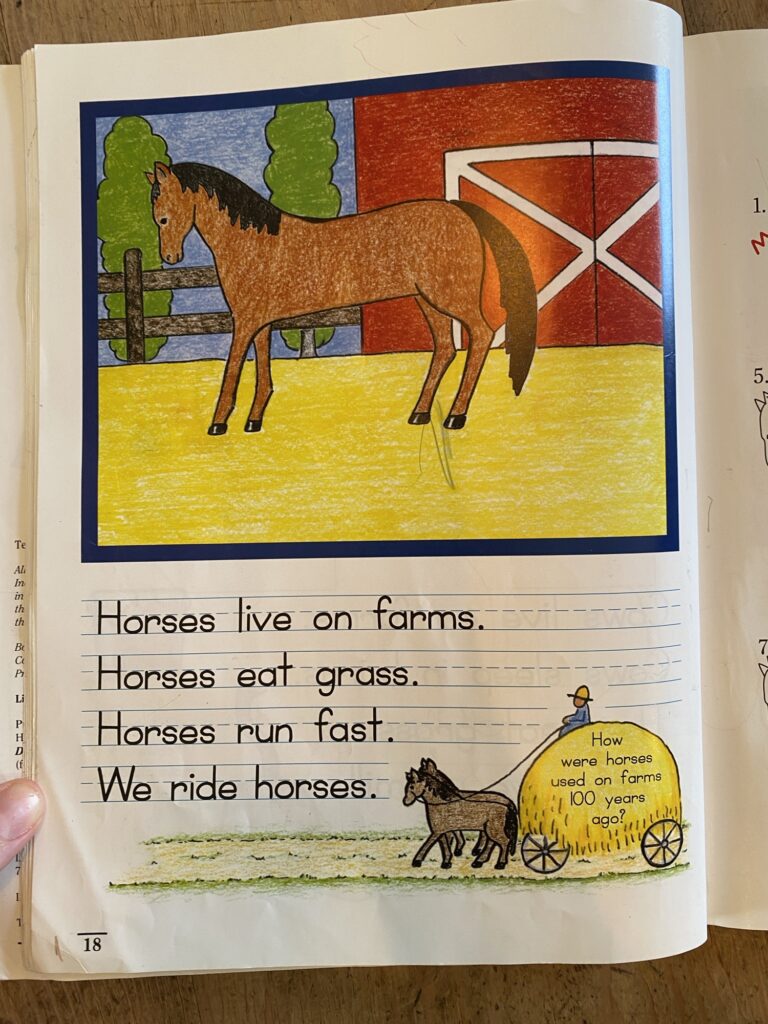
We read the sentences and work on letter recognition and sounding out.
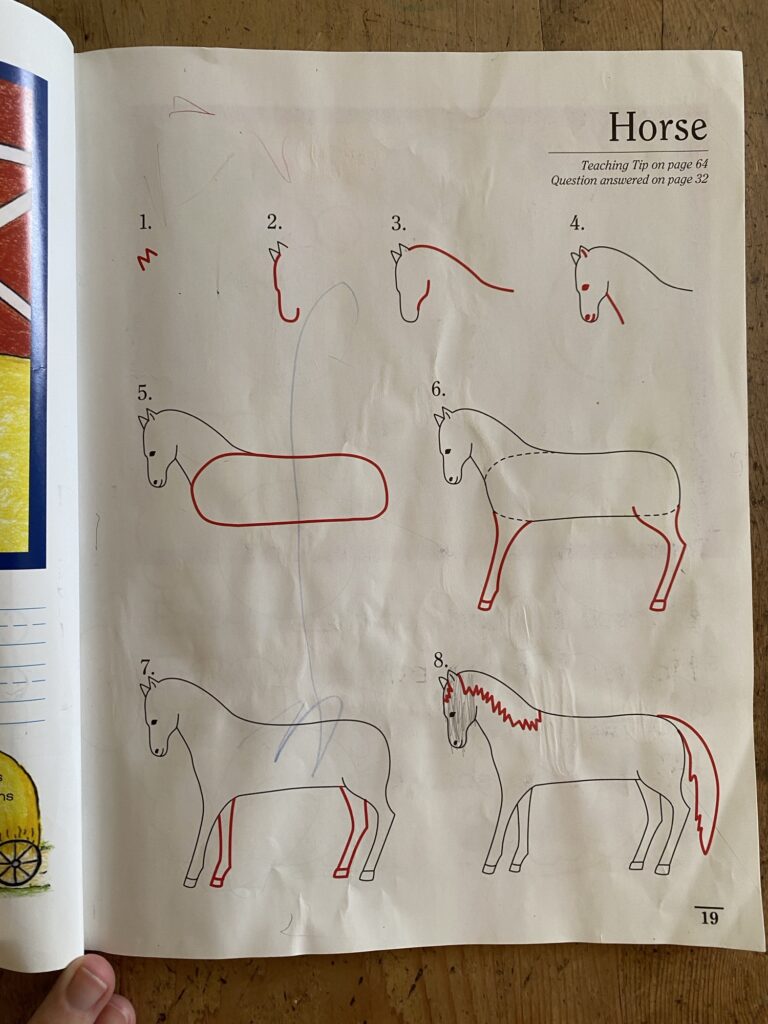
Through a series of easy movements, kids draw the pictures in steps, then color.
After coloring, the student carefully writes the sentences below the picture.
The main book can be used with multiple children, you can see mine is quite worn out because I started my oldest on this 12 years ago. The consumable is a note book with a blank area on the top of the page for the child to draw the picture, and a lined area on the bottom of the page for the child to write the sentences. so if you were buying for four children, you buy the main book plus four consumable notebooks, for example.
Sometimes I repurchase the consumable notebooks and sometimes I just use a spiral bound notebook.
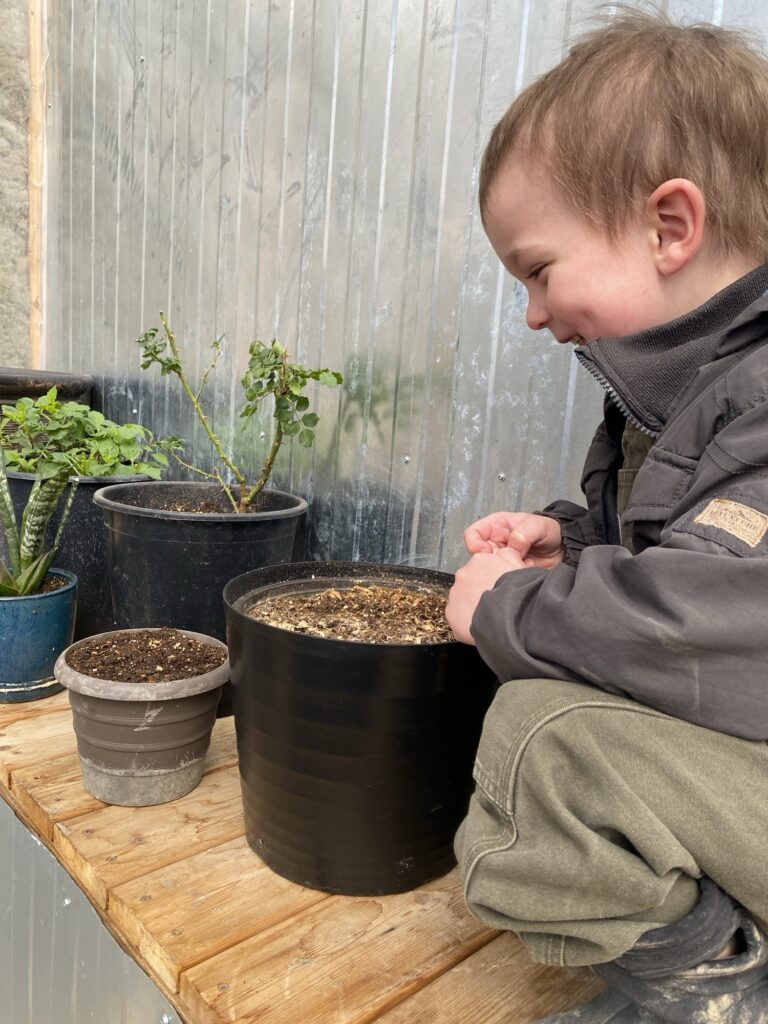
Before lunch, we head out to the greenhouse. I water and get beds ready for spring while my kids play on the deck. We are in bear season so I make my kids stay in the greenhouse to play unless my husband or father in law are home and working outside.
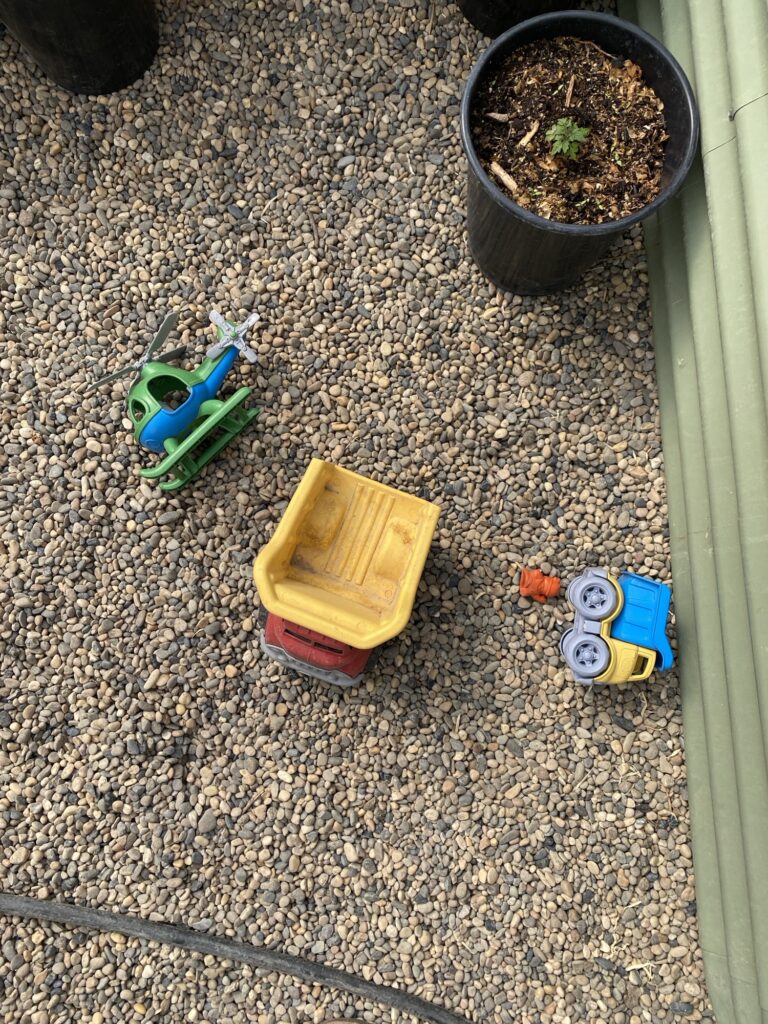
I love having this space in the winter too. These pebbles make a great math manipulative: grouping, skip counting, addition, subtraction, dividing and multiplying!
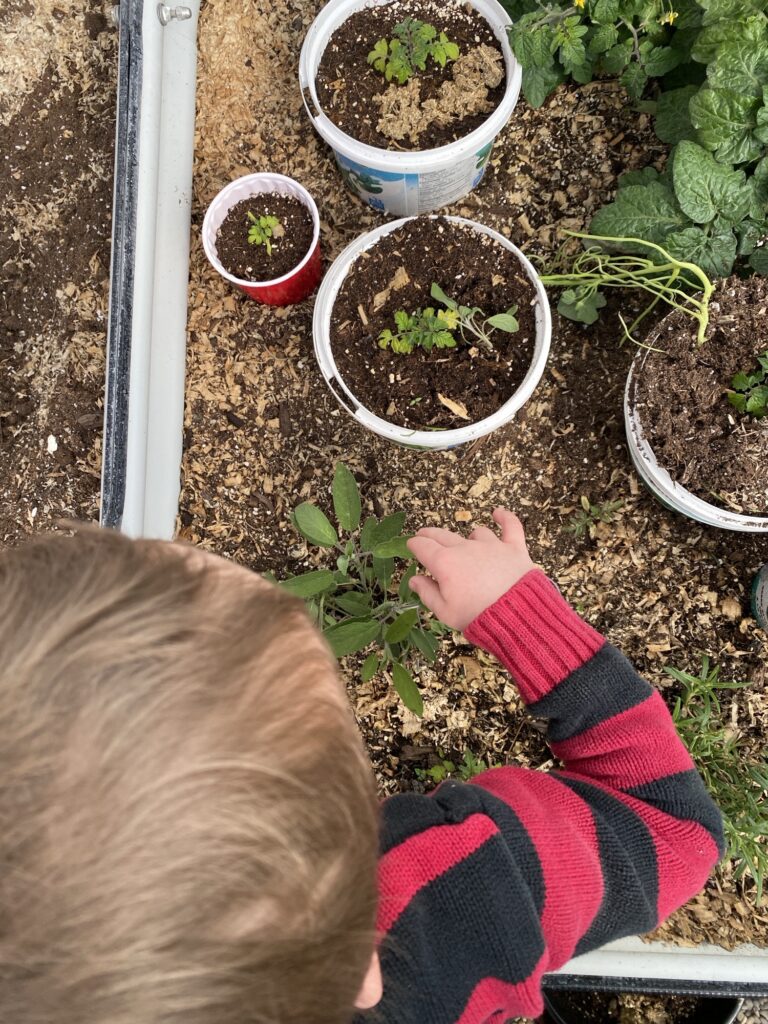
My children also have multiple planters with their own seeds growing into various plants. Photosynthesis, the life of an annual, why tree’s leaves turn colors in fall… so much learning to be had simply tending a greenhouse and playing outside!
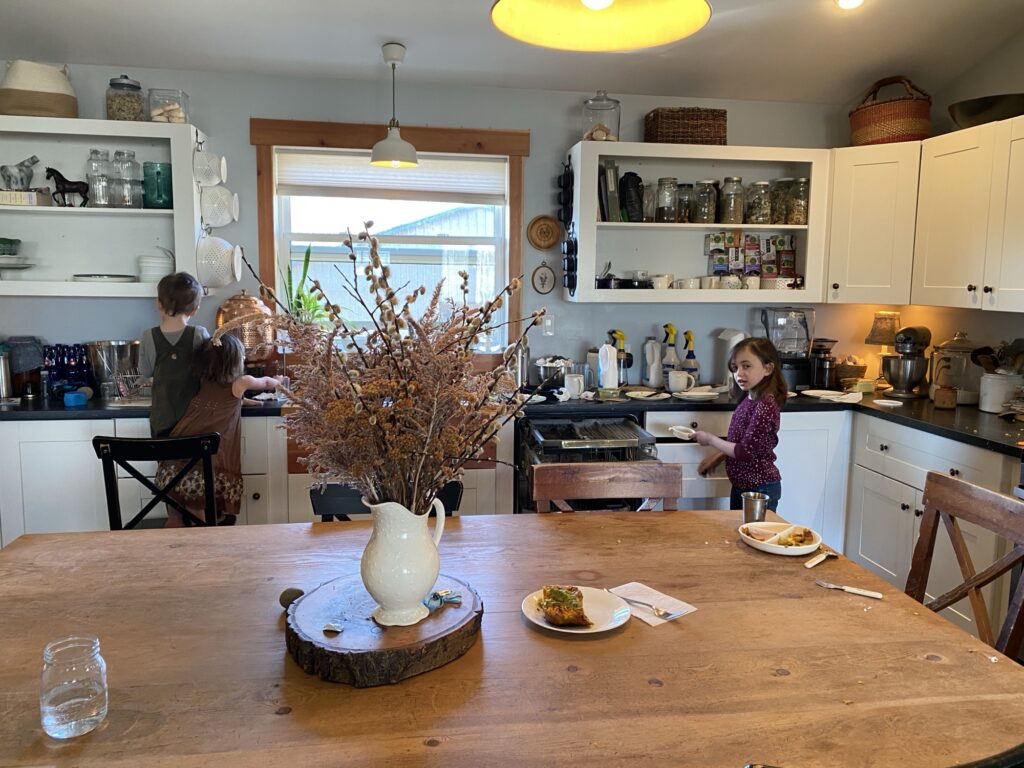
Lunch is similar to breakfast/morning. Eating, clean up, switching laundry, folding the next load then cleaning up for naps.
My 2, 4, and 6 year old go down for naps.
My older four have some free time to play computer games or work on their personal business ideas and passions.
My 8 year old usually plays with Lego with my 11 year old. Sometimes my 8 and 13 year old work on their harmonizing and music. Or my 18 year old will do an art lesson with my 8 year old. I love the Mark Kissler Draw Squad book.
And I… take a nap! I used to fight this. But Mama. Take a nap. The house will always be clean somewhere and dirty elsewhere. Keeping a home is a daily business and keeping clutter low and clothing/linens basic makes it easier to keep up a daily rhythm. (I plan to share more on this later). For example, in my younger years I struggled to get the laundry folded. I learned that at least washing it and having it in a clean basket so my husband wasn’t wearing dirty boxers to work was better than me exhausted with an overwhelming amount of dirty laundry. If your kids are too young to fold laundry, focus on washing. Focus on keeping the kitchen generally clean so it’s mentally easier for you to step in it to make supper later. Keep up the minimum (figure out what that is for you), for your mental health.
Take a nap. Even just 20 minutes, fully rest and relax your body. It will save you mentally, emotionally and physically.
Thats it! Supper is about the same. The more kids I have and the older they get, the easier life is. Having a general rhythm to your day also helps keep you and your kids on track. Kids are reassured and know what to expect with a consistent daily rhythm. I say “rhythm” because I feel thats more apt than schedule. “Schedule” sounds rigid to me and you definitely do not want rigidity. You need room in your day for possible temper tantrums, extra messes/accidents, mom not feeling well, or unforeseen interruptions.
A basic rhythm of breakfast, mid morning “school”, outdoor play, lunch, naps, more outdoor play and supper followed by more outdoor play in summer. Thats about what our schedule has looked like for the past ten years. We “school” year round so we can take breaks if necessary, sickness, more involved commitments outside the home, new babies… go with a loose structured rhythm that nurtures your mental health and keeps everyone on track.
I hope you enjoyed this post and maybe found something encouraging and useful. I’ll leave you with this quote I ran across the other day:
We homeschool not so our kids are insulated from the world. We homeschool to make sure the concrete has been hardened before we put heavy loads on it.
M.A.Franklin
Warmest blessings,
Ashley